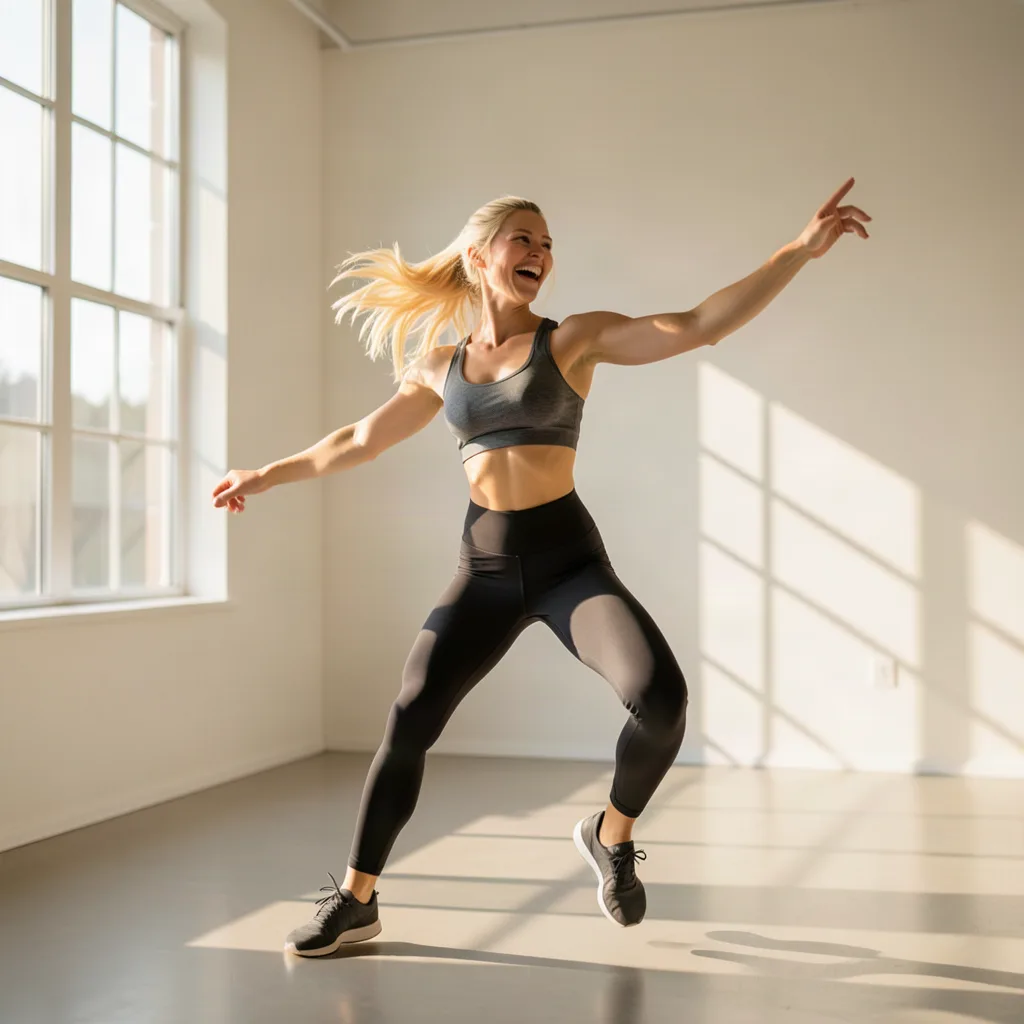
Julianne Hough has long been a household name in the world of professional dance, rising to fame on Dancing with the Stars and later transitioning into acting and singing. However, her most profound impact in recent years has come through her evolution as a wellness entrepreneur and the creator of a unique fitness philosophy known as Kinrgy. Julianne Hough’s dance cardio is not merely a collection of steps designed to burn calories; it is a holistic approach to movement that integrates dance, breathwork, meditation, and emotional expression. This article explores the depth of her method, providing you with a roadmap to transform your fitness routine into a soul-nourishing practice that honors both your physical body and your mental well-being.
Key takeaways
- Use the four elements—Earth, Water, Fire, and Air—to guide physical intensity and emotional focus during your workout.
- Practice the Kinrgy Shake to stimulate the lymphatic system, release muscle tension, and reset the nervous system.
- Perform movement snacks like a five-minute dance break to clear mental fog and boost circulation during the workday.
- Create a home sanctuary by dimming lights and removing mirrors to focus on internal sensations rather than aesthetics.
- Incorporate spinal waves and ribcage isolations to improve core strength, postural integrity, and multi-planar mobility.
The Philosophy of Kinrgy: Moving Beyond Traditional Fitness
To understand Julianne Hough’s dance cardio, one must first understand the concept of Kinrgy. The name itself is a portmanteau of “Kinetic” and “Energy,” reflecting the idea that movement is a powerful tool for shifting our internal state. Unlike traditional aerobics or high-intensity interval training (HIIT) that focuses primarily on external results like muscle definition or weight loss, Kinrgy focuses on how movement makes you feel on the inside.
Julianne often speaks about “Expanded Natural Movement,” which encourages participants to move in ways that feel organic to their bodies rather than strictly following a rigid choreography. This approach is rooted in the belief that we all have stagnant energy trapped within us due to stress, trauma, or the sedentary nature of modern life. By engaging in rhythmic, expressive movement, we can “shake out” this stagnation and reconnect with our authentic selves. It is a compassionate form of exercise that meets you where you are, whether you are a professional dancer or someone who has never stepped foot on a dance floor.
The Four Elements: Earth, Water, Fire, and Air
A cornerstone of Julianne’s dance cardio method is the use of the four natural elements to guide the movement and emotional journey. Each element corresponds to a different type of physical action and a different psychological focus, creating a well-rounded experience that addresses the whole person.
- Earth: This phase is about grounding and stability. The movements are heavy, centered, and often involve squats or stomping. Physically, it builds lower body strength; emotionally, it helps you feel secure and connected to your roots.
- Water: Transitioning into water involves fluid, undulating movements. Think of hip circles, spinal waves, and soft arms. This phase emphasizes flexibility and the ability to “go with the flow,” encouraging emotional release and grace.
- Fire: This is the high-intensity portion of the workout. It involves rapid movements, shaking, and powerful breathwork. Fire is designed to build heat, increase the heart rate, and ignite your inner passion and power. It is often where participants feel the most significant “breakthrough” in their energy.
- Air: The final element focuses on expansion and lightness. Movements are upward-reaching, airy, and expansive. It is a time for gratitude, visualization, and feeling a sense of freedom and limitless possibility.
By cycling through these elements, the workout provides a narrative arc that mirrors the complexities of human emotion, making it a deeply cathartic experience.
The Physical Benefits of Dance-Based Cardio
While the spiritual and emotional aspects of Julianne Hough’s dance cardio are significant, the physical benefits are equally impressive. Dance is a functional form of movement that engages the body in multiple planes of motion—forward, backward, side-to-side, and rotational. This is often lacking in traditional gym exercises like running or cycling, which are primarily linear.
Regularly practicing dance cardio improves cardiovascular endurance, as the constant movement keeps the heart rate elevated within an optimal aerobic zone. It also enhances coordination and proprioception (your body’s awareness of its position in space), which are vital for long-term mobility and injury prevention. Because dance requires the engagement of the core to maintain balance during turns and shifts in weight, it provides a functional abdominal workout that goes far beyond standard crunches.
Furthermore, the “shaking” movements often utilized in Julianne’s routines are excellent for the lymphatic system. Shaking helps stimulate lymph flow, which is crucial for detoxification and immune function. Unlike the circulatory system, the lymphatic system does not have a pump; it relies on muscle contraction and movement to stay active, making dance an ideal tool for internal health.
Essential Moves to Master for Beginners
If you are new to Julianne Hough’s style of dance cardio, the prospect of “expressive movement” might feel intimidating. However, the beauty of this method lies in its simplicity. You do not need to be a technical dancer to reap the rewards. Here are a few foundational moves to help you get started:
- The Kinrgy Shake: Stand with your feet hip-width apart and knees slightly bent. Begin to bounce gently, letting the vibration travel from your heels up through your legs, hips, torso, and shoulders. Allow your arms to hang loose. This move is designed to release tension and “reset” the nervous system.
- The Heart Opener: As you move to the rhythm, reach your arms wide to the sides and then pull them back, squeezing your shoulder blades together while lifting your chest toward the ceiling. This counteracts the “hunching” posture many of us adopt at desks and opens up the space for deeper breathing.
- The Grounded Stomp: Channeling the Earth element, take wide steps or stomps in place, feeling the connection between your feet and the floor. This builds power in the glutes and thighs while helping you feel present in the moment.
- The Spinal Wave: Starting from a slight crouch, slowly roll your spine up one vertebra at a time, letting your head be the last thing to rise, then reverse the movement. This promotes spinal health and mimics the fluid nature of the Water element.
Creating Your Home Dance Sanctuary
To fully immerse yourself in Julianne Hough’s dance cardio, your environment plays a crucial role. Since this practice is as much about mindset as it is about movement, creating a space that feels safe and inspiring is essential. You don’t need a professional studio; a small corner of your living room or bedroom will suffice.
Consider the lighting. If possible, dim the overhead lights and use soft lamps or even candles (safely placed) to create a more intimate atmosphere. This helps lower your inhibitions and allows you to focus inward rather than on how you look in a mirror. In fact, Julianne often suggests practicing without a mirror to shift the focus from external aesthetics to internal sensation.
Music is the heartbeat of dance cardio. Choose a playlist that resonates with you—something that moves from grounding beats to high-energy rhythms and eventually to calming melodies for the cool-down. If you are following a Kinrgy session, the music is curated to match the elemental journey, but if you are practicing solo, let your intuition guide your song choices. Finally, ensure you have enough room to move your arms and legs freely without hitting furniture, and consider a non-slip mat if you are on a hard floor.
Mindset and Emotional Release: Getting Out of Your Head
The biggest hurdle most people face when starting dance cardio is the “inner critic.” We are often conditioned to believe that we are “bad dancers” or that we look silly when moving expressively. Julianne’s method encourages a radical shift in mindset: moving for the “audience of one”—yourself.
To overcome the mental block, focus on the sensation of the movement rather than the shape of it. Instead of thinking, “Am I doing this right?” ask yourself, “How does my body want to move right now?” Use your breath as an anchor. If you find yourself getting stuck in your head, take a deep inhale through your nose and a forceful exhale through your mouth. This physical act of breathing helps bring you back into the present moment.
It is also helpful to set an intention before you begin. Are you looking to release frustration? Do you want to feel more joyful? Are you seeking clarity? By giving your movement a purpose, you transform the workout into a moving meditation. Remember, there is no “wrong” way to move in this practice. Every shake, sway, and jump is a valid expression of your energy.
Integrating Dance Cardio into a Busy Lifestyle
One of the most practical aspects of Julianne Hough’s approach is its flexibility. While a full 45-minute session is wonderful, you can still experience the benefits in much shorter increments. In a world where we are often time-poor, “movement snacks” can be a game-changer for your health.
Try a “Five-Minute Reset” in the middle of your workday. Put on one high-energy song and simply dance or shake out the stress of your meetings. This can boost your circulation and clear mental fog more effectively than another cup of coffee. For those with a more structured schedule, aim for three 20-minute sessions a week. This consistency allows your body to adapt to the physical demands while providing a regular emotional outlet.
You can also involve your family. Julianne’s routines are often joyful and accessible, making them a great way to bond with children or partners. Turning a workout into a family dance party removes the “chore” element of exercise and replaces it with play, which is a vital but often neglected component of adult wellness.
Nutrition and Hydration for High-Energy Movement
To sustain the energy required for a vigorous dance cardio session, fueling your body correctly is essential. Julianne herself advocates for a balanced, whole-foods approach that emphasizes hydration and anti-inflammatory ingredients. Because dance cardio involves significant sweating and rapid movement, staying hydrated is the number one priority.
Drink water throughout the day, not just during your workout. If you are doing a particularly intense session, consider adding electrolytes to your water to replenish the minerals lost through sweat. In terms of nutrition, focus on complex carbohydrates like sweet potatoes or quinoa a few hours before you dance to provide sustained energy. Post-workout, prioritize protein and healthy fats to aid in muscle recovery and keep your hormones balanced.
Listen to your body’s hunger cues. Dance cardio is an intuitive practice, and that intuition should extend to your kitchen. If you feel depleted, you may need more nutrient-dense calories; if you feel sluggish, you might need to increase your intake of fresh greens and water. The goal is to support your body so that it has the vitality to move with freedom and power.
Practical Guidance for Long-Term Success
Consistency in any fitness routine comes from finding joy in the process. To make Julianne Hough’s dance cardio a permanent part of your life, focus on variety and community. If you find yourself getting bored, change your playlist or try a different elemental focus. Explore different styles of music, from tribal beats to modern pop, to see how they influence your movement.
Seeking out a community, whether online or in-person, can also provide accountability and inspiration. Julianne’s Kinrgy platform offers a community of like-minded individuals who are all on a similar journey of self-discovery through movement. Sharing your experiences and hearing from others can normalize the emotional breakthroughs that often occur during these workouts.
Lastly, be compassionate with yourself. Some days you will have boundless energy and feel like a “Fire” goddess; other days, you might only have the energy for a slow, “Water”-like stretch. Both are equally valuable. By honoring the natural cycles of your energy, you ensure that dance cardio remains a life-enhancing tool rather than another item on your to-do list that causes stress.
The Science of Somatic Release: Rewiring the Nervous System through Dance
While the existing article touches on the concept of shaking out stagnation, the neurological underpinnings of Julianne Hough’s dance cardio go much deeper into the realm of somatic experiencing. This practice serves as a direct line of communication to the autonomic nervous system (ANS). When we engage in the Kinrgy-style shaking or high-intensity “Fire” movements, we are essentially stimulating the vagus nerve, the primary component of the parasympathetic nervous system. This stimulation helps the body transition from a state of sympathetic dominance—the “fight or flight” mode that characterizes modern stress—into a state of ventral vagal safety.
A key edge case to consider is the “freeze” response. Many individuals who experience chronic stress find that traditional cardio, like running on a treadmill, actually exacerbates their anxiety because the body interprets the high heart rate as a signal of danger. Julianne’s method counters this by incorporating expressive, non-linear movements. By moving in spirals, undulations, and unpredictable patterns, you signal to the brain that you are in a safe, creative environment rather than a survival-based one. This allows for a “top-down” and “bottom-up” approach to wellness: your mind sets the intention (top-down), while your body’s rhythmic movement recalibrates the nervous system (bottom-up).
For those dealing with high cortisol levels, the transition between elements is crucial. The shift from the high-octane “Fire” element to the expansive “Air” element mimics the biological process of completion. In nature, after a period of intense exertion, an animal will shake and then return to a state of rest. By intentionally mimicking this cycle in a dance session, you are teaching your body how to effectively complete the stress response cycle, preventing the long-term accumulation of stress hormones that lead to burnout and inflammation.
Elevating the Practice: Advanced Techniques and Rhythmic Complexity
Once you have mastered the foundational moves like the Heart Opener and the Grounded Stomp, you can begin to layer in technical complexity to further challenge the brain-body connection. Julianne’s background in professional ballroom and contemporary dance often informs these subtle shifts. One way to elevate your dance cardio is through the use of isolations. Instead of moving the whole body as one unit, try to isolate specific regions—the ribcage, the pelvis, or even the individual joints of the fingers. Ribcage isolations, in particular, require deep engagement of the intercostal muscles and the transverse abdominis, providing a sophisticated core workout that enhances postural integrity.
Another advanced technique involves syncopation and playing with the “pocket” of the music. Instead of dancing strictly on the beat (the 1, 2, 3, 4), try dancing on the “and” (the upbeat) or delaying a movement slightly to create a sense of tension and release. This rhythmic play is not just for show; it enhances neuroplasticity by forcing the brain to create new neural pathways as it processes complex timing. It also deepens the meditative aspect of the workout, as it requires a high level of presence and focus to maintain syncopated rhythms while keeping the physical intensity high.
For those looking to increase the physical demand, consider the concept of “level changes.” Instead of staying at a standing height, incorporate movements that take you down to the floor and back up again. This mimics the functional movements of everyday life but adds a layer of artistic expression. A “Water” element transition might involve a slow, controlled descent into a deep side lunge or a floor-based spinal roll. These transitions build eccentric strength—the ability of muscles to lengthen under tension—which is essential for protecting the joints and building long, lean muscle fiber.
Navigating Emotional Breakthroughs: The Role of Shadow Work in Movement
One aspect of Julianne Hough’s method that sets it apart from traditional fitness is its willingness to engage with the “shadow”—the parts of ourselves we often suppress, such as anger, grief, or deep-seated fear. While the “Air” element focuses on gratitude and light, the “Fire” and “Earth” elements provide a safe container for the expression of more primal emotions. This is often where participants experience a “cathartic release,” which might manifest as tears, a sudden burst of laughter, or a vocal release like a shout or a heavy sigh.
When practicing at home, it is important to know how to navigate these moments. If a difficult emotion arises during a vigorous shaking sequence, the tendency might be to stop and analyze it. However, the Kinrgy philosophy encourages you to stay in the movement. Use the emotion as fuel for the dance. If you feel anger, let that anger inform the sharpness of your movements or the weight of your stomps. This is a form of active processing that allows the emotion to move through the body rather than becoming trapped in the fascia or musculature.
An important edge case is the “emotional hangover.” Occasionally, after a particularly deep session of expressive dance, you may feel vulnerable or tired for a few hours. This is a normal part of the energetic shift. To support yourself during this time, prioritize grounding activities after your workout. This could include a warm bath with Epsom salts, journaling about the sensations you felt, or simply sitting quietly with your hands on your belly. This integration phase is just as important as the dance itself, as it allows the emotional insights gained during movement to take root in your conscious mind.
Adapting Movement to Your Biological Rhythms and Cycles
A truly holistic approach to dance cardio acknowledges that our energy levels are not static; they fluctuate based on biological cycles, including the circadian rhythm and, for many, the infradian rhythm (the menstrual cycle). Julianne’s elemental framework is perfectly suited for this kind of intuitive adaptation. Rather than forcing a high-intensity “Fire” workout every day, you can tailor your session to match your current internal state.
During the follicular phase (the week after your period), when estrogen is rising, you may find you have the stamina for longer, more complex choreography and higher-intensity intervals. This is the time to push your limits in the “Fire” and “Earth” categories. However, during the luteal phase (the week before your period), when progesterone dominates, your body may crave more “Water” and “Air” movements. Focusing on fluid, low-impact stretches and gentle swaying can help alleviate symptoms like bloating or irritability without overtaxing the adrenal system.
For those navigating menopause or high-stress periods of life, the “Earth” element becomes your greatest ally. Focus on slow, weighted movements that emphasize the connection to the floor. This helps regulate the nervous system and provides a sense of stability when external life feels chaotic. By syncing your dance practice with your biology, you move away from the “no pain, no gain” mentality and toward a sustainable, life-long relationship with fitness that honors your body’s changing needs.
Breath as the Engine: Advanced Pranayama for Dancers
While the existing article mentions the importance of breath as an anchor, mastering specific breathing techniques can significantly enhance the efficacy of dance cardio. In Julianne’s method, the breath is used as a tool to generate internal heat and move energy through the chakras or energetic centers of the body. One effective technique to integrate is “Breath of Fire” (Kapalabhati), which involves short, powerful exhales through the nose while snapping the navel back toward the spine. This can be performed during the “Fire” element to rapidly increase oxygenation and mental clarity.
Conversely, during the “Water” phase, practicing “Ocean Breath” (Ujjayi) can help maintain a steady internal temperature while calming the mind. This involves breathing through the nose with a slight constriction in the back of the throat, creating a soft whispering sound. This type of breath encourages the muscles to relax into the movement, allowing for a greater range of motion in the hips and spine. It also helps to keep the heart rate in a steady aerobic zone, preventing the “gasping” for air that often occurs during poorly regulated cardio.
An often-overlooked aspect of breath in dance is the “vocal exhale.” Making sound—whether it’s a hum, a “ha” sound, or a sigh—helps to release tension in the jaw and pelvic floor, which are anatomically linked. If you find your hips are tight during a routine, try opening your mouth and letting out a soft sound on the exhale. You will likely find that your physical movements become more fluid and less restricted. This integration of sound and breath turns the workout into a full-body resonance practice, clearing the throat chakra and encouraging authentic expression.
The Sonic Experience: Utilizing Frequency and BPM for Energetic Alignment
The music used in Julianne Hough’s dance cardio is far more than background noise; it is a carefully calibrated tool designed to influence your brainwaves. To optimize your home practice, it is helpful to understand the relationship between Beats Per Minute (BPM) and the four elements. “Earth” tracks typically sit at a lower BPM (around 60-90), with heavy bass and tribal percussion that encourages a slower, more deliberate pace. “Water” tracks often feature ambient, flowing melodies with less emphasis on a hard beat, allowing for more improvisational, fluid movement.
When you transition into “Fire,” the BPM usually climbs to 125-140, which is the “sweet spot” for cardiovascular conditioning. This tempo encourages the heart to beat in rhythm with the music, creating a state of physiological entrainment. Interestingly, some Kinrgy sessions also utilize specific Solfeggio frequencies—tones like 528 Hz (often called the “love frequency”) or 417 Hz (associated with facilitating change). These frequencies are believed to have specific healing properties, and while the science is still emerging, many practitioners find that dancing to music tuned to these frequencies enhances the sense of peace and clarity following a workout.
To create your own high-vibration playlist, look for tracks that build in intensity. Start with deep, grounding drums, move into melodic, synth-heavy tracks for fluidity, and peak with high-energy electronic or world music. Finish with ethereal, airy soundscapes that have no discernible beat. This sonic arc guides your brain from a state of active Beta waves (alert and focused) into Alpha waves (relaxed and creative) and potentially even Theta waves (meditative and deeply intuitive) by the end of the session.
Beyond the Dance: Recovery and Complementary Practices for Longevity
To sustain a high-energy dance cardio practice over the long term, you must pay equal attention to the “yin” side of fitness: recovery. Because dance involves a lot of lateral movement and repetitive impact, certain muscle groups can become overactive. The hip flexors, calves, and lower back are common areas of tension for dancers. Integrating myofascial release—using a foam roller or a tennis ball—can help break up adhesions in the fascia and improve blood flow to these overworked areas.
Complementary practices like Pilates or functional strength training are also highly recommended. Pilates, in particular, focuses on the deep stabilizing muscles of the core and the small intrinsic muscles of the feet, both of which are vital for the balance and precision required in dance. Strengthening the gluteus medius through side-lying leg lifts or clamshells will protect your knees during the pivots and turns common in Julianne’s routines. Furthermore, because dance is so expressive and often involves “opening” the front of the body, practices that strengthen the posterior chain (the back, glutes, and hamstrings) are essential for maintaining a balanced physique.
Finally, do not underestimate the power of rest. Julianne often emphasizes that “rest is a form of movement.” It is the movement of the body’s internal repair systems. Aim for at least one or two days a week where your only “movement” is a gentle walk in nature or a restorative yoga session. This allows the neural pathways you’ve been building during your dance cardio to solidify and ensures that you return to the dance floor with renewed vigor and enthusiasm, rather than exhaustion. By viewing recovery as an essential part of the Kinrgy cycle, you transform your fitness routine into a sustainable lifestyle that supports your health for decades to come.
Frequently Asked Questions
Do I need to have a dance background to do Julianne Hough’s dance cardio?
No, absolutely not. In fact, many people find that having no formal training allows them to move more freely because they aren’t worried about technical perfection. The method is built on “natural movement,” which is inherent to every human body. The focus is on rhythm, expression, and feeling, rather than complex choreography or footwork. If you can move your body, you can do this workout.
How many calories can I expect to burn in a typical session?
While calorie burn varies depending on your body weight, intensity level, and the duration of the session, dance cardio is a highly efficient form of exercise. A vigorous 45-minute session can burn anywhere from 300 to 600 calories. However, the Kinrgy philosophy encourages participants to move away from calorie-tracking and instead focus on the “energetic shift” and how much stronger and more vibrant they feel after the session.
What equipment do I need to get started?
One of the best things about this workout is that it requires almost no equipment. You simply need a small space to move and some music. Most people prefer to dance barefoot to better feel the connection to the ground (especially during the Earth element), but you can wear supportive athletic shoes if you have foot or ankle concerns. Comfortable, breathable clothing that allows for a full range of motion is recommended.
Is dance cardio safe for people with joint issues?
Dance cardio can be modified to be very low-impact. If you have joint concerns, you can keep your feet closer to the ground, avoid jumping, and focus more on the fluid, “Water”-style movements. Because you are in control of your own range of motion, you can listen to your body and adjust the intensity as needed. Always consult with a healthcare professional before starting a new exercise routine if you have pre-existing injuries.
How is this different from Zumba or other dance fitness programs?
While programs like Zumba focus largely on following a specific set of steps to Latin-inspired music for a cardiovascular workout, Julianne Hough’s method is more of a mind-body-spirit practice. It incorporates elements of shadow work, emotional release, and meditation. It uses the four elements as a psychological framework and places a heavy emphasis on breathwork and the “shaking” technique to regulate the nervous system, making it a more holistic wellness tool than a standard fitness class.
Related posts:
 Julianne Hough Shares Her Beauty VIP List and It’s Everything
 Kinrgy Is The New Fitness Craze Everyone’s Excited About—Here’s What It Entails
 Quick Cardio Fix: Tracy Anderson’s 7-Minute Heart-Pumping Workout Video
 PHA Bodyweight Workout: Efficient Fitness Anywhere, Anytime
 Meet the Fitness Scene’s Dance Cardio Divas
 What Is Dance Cardio? A Cheat Sheet to This Fun Fitness Hybrid
 Essential Fire Safety Guidelines
 Dance Cardio for Marathon Training