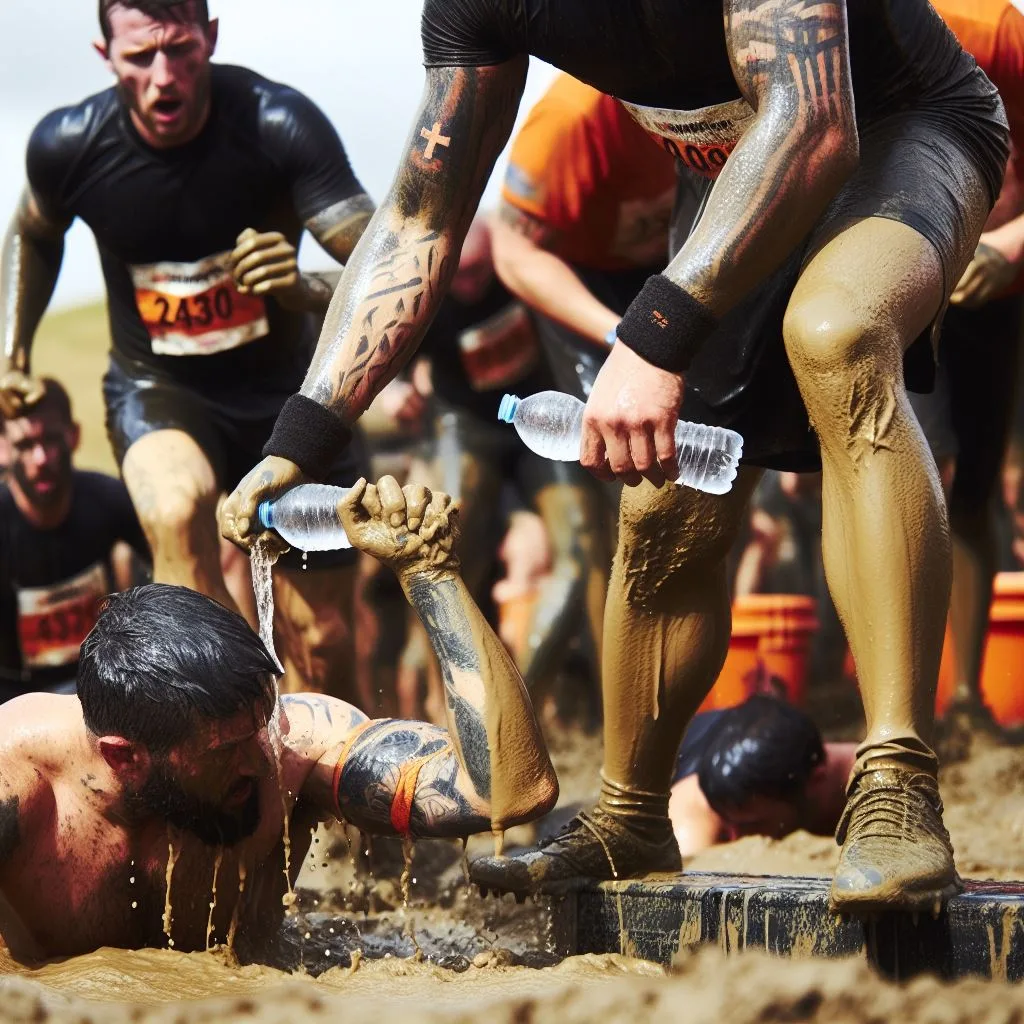
Testing One’s Limits Safely
Tough Mudder races, known for their extreme obstacles over long distances, can certainly seem daunting. However, experienced organizers and medical staff work hard to ensure events are as safe as possible within reason. They aim to allow participants an environment to test their limits, not compromise wellbeing.
Key takeaways
- Trained medical personnel are stationed throughout the course to provide immediate assistance for injuries or distress.
- Participants can choose to bypass any obstacle that exceeds their personal fitness level or comfort zone.
- Mandatory pre-race safety briefings cover essential techniques for safe falling and maintaining a buddy system.
- Consistent safety updates and obstacle improvements are implemented based on participant feedback and incident data.
- Individuals with significant medical conditions or mobility limitations should avoid participating for their own safety.
Medical Personnel on Standby
There are always trained medical personnel on standby throughout the courses. Participants are encouraged to help others in need and alert staff at any sign of injury or distress. Aid stations also provide water, snacks and moral support.
Safety Briefings for All
Before each event, mandatory briefings cover things like obstacles, safe falling techniques, buddy systems and monitoring health. Participants are reminded it’s not a competition and to assist others. Groups often organize to train together and look out for each other.
Options to Bypass Obstacles
No one is forced to take on obstacles they consider beyond their abilities. There are always options to go around them. Participants set their own safety limits based on personal health and fitness levels.
Continual Safety Improvements
Over the years, Tough Mudder has continually updated safety protocols and obstacle designs based on feedback. The number of injuries compared to participation is extremely low, but any are taken seriously to prevent future incidents.
FAQ
What safety measures are in place?
Safety measures include medical personnel, briefings, bypass options, a buddy system and continual safety improvements based on feedback.
Can anyone participate in Tough Mudder?
Anyone in reasonable health can participate, as people can choose their own level of participation based on personal fitness and bypass obstacles if preferred.
Do participants need to train beforehand?
Training beforehand, even just cardio and some basic strength training, allows participants to better enjoy themselves safely for the duration of courses.
What if someone gets injured on the course?
There are trained medical personnel stationed throughout the courses ready to provide assistance if someone becomes injured or distressed during an event.
Who should not participate in a Tough Mudder?
Those with significant medical conditions or mobility issues should avoid participation for their own health and wellbeing.
The Invisible Threat: Managing Waterborne and Soil-Based Pathogens
While the physical obstacles of a Tough Mudder are visible and intimidating, some of the most significant safety risks are microscopic. Because these races take place on agricultural land, construction sites, or wilderness areas, the mud and standing water can harbor a variety of pathogens. One of the primary concerns is Leptospirosis, a bacterial disease spread through the urine of infected animals, which can linger in damp soil and water. Participants with open cuts, scrapes, or even those who accidentally swallow muddy water are at risk. Symptoms can range from high fever and headaches to more severe complications like kidney damage or meningitis if left untreated.
To mitigate these risks, safety protocols extend beyond the course itself to the post-race cleanup. It is vital for participants to seek out the pressurized rinse stations immediately after crossing the finish line. Scrubbing with soap and clean water helps remove the film of potentially contaminated silt. Furthermore, medical experts advise Mudders to monitor their health for up to three times the usual incubation period of common stomach flu—roughly 10 to 14 days. If a participant develops a persistent cough, unexplained fever, or gastrointestinal distress shortly after an event, they should inform their physician specifically about their exposure to stagnant water and mud, as standard diagnostic tests might miss zoonotic infections common to farm environments.
Another edge case involves Campylobacter, a bacterium often found in animal feces that can cause severe diarrhea. Outbreaks have historically occurred when heavy rains wash agricultural runoff into the race pits. Safety-conscious participants often use waterproof bandages for even the smallest abrasions and avoid submerging their heads in water that appears particularly stagnant. While the organizers do their best to test water sources, the sheer scale of the courses makes it impossible to guarantee a sterile environment. Therefore, personal hygiene—specifically avoiding eating with muddy hands at the mid-course snack stations—is a critical, often overlooked safety layer.
Thermal Regulation and the Physiology of Cold Shock
Tough Mudder events are famous for the “Arctic Enema,” an obstacle involving a plunge into a dumpster filled with ice-chilled water. While it is a mental challenge, it presents a legitimate physiological risk known as the cold shock response. When the body is suddenly submerged in water near freezing temperatures, the heart rate spikes and the lungs undergo an involuntary gasp reflex. For individuals with undiagnosed underlying heart conditions, this sudden cardiovascular strain can be dangerous. Safety staff at these specific obstacles are trained to look for signs of “cllawing” or disorientation, where a participant loses the motor skills required to climb out of the tank.
The risk of hypothermia isn’t limited to the ice bath; it is a cumulative threat, especially in spring or autumn events. Wet clothing, combined with wind at higher elevations of the course, can lead to a steady drop in core body temperature. This is particularly dangerous for leaner participants who lack the insulation of body fat. Safety marshals monitor for the “umbles”—stumbling, mumbling, and fumbling—which are early indicators that a participant’s cognitive and motor functions are failing due to cold. To stay safe, Mudders are encouraged to wear synthetic, moisture-wicking fabrics rather than cotton, which holds water and accelerates heat loss through conduction.
Conversely, in summer events, heatstroke is the primary environmental hazard. The combination of high physical exertion and thick mud—which can act as an insulating layer on the skin—prevents the body from cooling itself through sweat evaporation. Edge cases involve participants who over-hydrate with plain water, leading to hyponatremia (dangerously low sodium levels), which can mimic the symptoms of heatstroke. Utilizing the electrolyte drinks provided at aid stations is not just a matter of performance, but a safety requirement to maintain the delicate chemical balance needed for nerve and muscle function during extreme endurance efforts.
Biomechanical Safety: Preventing Acute Orthopedic Injuries
The uneven terrain of a Tough Mudder course is a frequent source of lower-limb injuries, particularly lateral ankle sprains and ACL tears. Unlike road running, the surface of a Mudder course is unpredictable; a foot can land on a hidden rock, slide into a deep rut, or get stuck in thick, suction-like clay. To minimize these risks, participants should focus on a shorter stride length and a mid-foot strike, which provides a more stable base of support than a long, heel-striking gait. Safety also depends heavily on footwear choice; shoes with deep lugs (tread) are essential for maintaining traction on slick inclines, preventing the uncontrolled slides that lead to groin strains or hip injuries.
Obstacles like the “Berlin Walls” or “Everest” involve significant vertical elements that test the integrity of the shoulder complex. A common injury occurs when a participant is being pulled up a wall by their arms; if the person pulling is too forceful or the participant’s muscles are fatigued, the humerus can be pulled out of the glenoid labrum, resulting in a dislocation. Safe technique involves the person on top of the wall grabbing the climber’s harness or forearm (the “wrist-to-wrist” grip) rather than just the hand, which provides a more secure and stable connection. Participants are also advised to avoid “dead-hanging” with relaxed shoulders; keeping the scapula engaged protects the rotator cuff from the sudden jerks that occur when a teammate tries to assist them.
Landing safety is another critical pillar of orthopedic health. Obstacles that involve jumping from heights, such as “King of the Swingers,” require a specific landing mechanic to dissipate force. Landing with locked knees is a recipe for tibial plateau fractures or spinal compression. Instead, the “PLF” (Parachute Landing Fall) technique—landing with knees slightly bent and rolling onto the side of the leg and shoulder—is the safest way to handle high-impact descents. While the landing pits are usually filled with deep water or soft mulch, the consistency can change throughout the day as thousands of people pack the material down, making later-day landings significantly harder and riskier.
Electrical Hazards and Cardiovascular Considerations
One of the most controversial elements of Tough Mudder is “Electroshock Therapy,” where participants run through a field of dangling wires that deliver pulses of up to 10,000 volts. While the amperage is extremely low—meaning it is designed to be painful rather than lethal—it still poses specific risks. The primary danger isn’t the shock itself, but the body’s reaction to it. A sudden shock can cause a violent muscle contraction, leading to accidental falls or collisions with other participants. For this reason, the safety briefing emphasizes running through the wires with one’s arms shielding the face to prevent a shock to the eyes or temples, which can be particularly disorienting.
There are strict medical contraindications for electrical obstacles. Anyone with a pacemaker, an internal cardiac defibrillator, or a history of epilepsy is strictly prohibited from attempting these sections. Furthermore, because the shocks cause rapid muscle firing, there is a theoretical risk of inducing cardiac arrhythmia in individuals with pre-existing, often undiagnosed, heart conditions. While such incidents are statistically rare, the presence of Automated External Defibrillators (AEDs) at these specific obstacle stations is a non-negotiable safety standard. Participants are encouraged to listen to their bodies; if they feel heart palpitations or significant chest tightness after a shock, they must report to the medical tent immediately for an EKG strip.
The wet environment compounds the electrical risk. Mud is a conductor, and while the obstacles are engineered to isolate the current to the wires, the surrounding ground can sometimes carry a residual “tingle.” Safety teams monitor the ground moisture and the integrity of the transformer units throughout the day. If a participant has any metal implants from previous surgeries (such as plates or screws in a limb), they may experience a more localized, intense sensation during the shock. While not usually dangerous to the hardware itself, the localized pain can cause a reflexive flinch that leads to a secondary injury, such as a tripped ankle or a collision with a fellow runner.
The Physics of Team Obstacles and Collective Safety
Many Tough Mudder obstacles are designed to be impossible to complete alone, necessitating a reliance on the “human chain” or collective lifting. This introduces a unique set of safety dynamics where the well-being of one participant is literally in the hands of others. In obstacles like “The Block Ness Monster,” where participants must rotate a large, heavy floating block to climb over it, the risk of finger entrapment is high. Safety protocols dictate that participants should never place their hands in the gaps between the block and the side walls, and communication is vital—shouting “rotating” or “stopping” ensures that no one is caught off guard by the heavy machinery of the obstacle.
The “Hero Carry” is another area where collective safety is paramount. This involves one participant carrying another over a set distance. The risk here is twofold: the carrier may suffer a lower back injury due to improper lifting form, and the person being carried may fall if the carrier loses their footing in the mud. To minimize risk, the carrier should use a “fireman’s carry” or a piggyback style that keeps the weight centered over their hips, rather than straining the lumbar spine. If there is a significant weight discrepancy between partners, safety marshals often intervene to suggest a bypass or a more balanced pairing to prevent a collapse that could injure both parties.
Crowd dynamics also play a role in safety, particularly at the base of steep obstacles like “Everest.” As people congregate to help others up, the area can become a bottleneck. The safety risk here is a “trample” or “pile-on” scenario if a runner coming down the ramp loses control. Organizers manage this by limiting the number of people at the summit and the base at any one time. Participants are taught to clear the landing or exit zone of an obstacle immediately after finishing to prevent collisions with the next person coming through. This culture of looking backward to ensure the path is clear for the next Mudder is a foundational element of the event’s safety ethos.
Equipment-Based Risk Mitigation and Footwear Logistics
The gear a participant chooses to wear is their first line of defense against injury and infection. One common mistake is wearing loose-fitting clothing or jewelry. Rings, in particular, are a major safety hazard on obstacles involving climbing or hanging; “degloving” injuries, where a ring catches on a bolt or a wire and strips the skin from the finger, are a documented risk in extreme obstacle racing. Safety guidelines strongly recommend removing all jewelry and wearing tight-fitting compression gear that won’t snag on the barbed wire found in obstacles like “Kiss o’ Mud.”
Footwear is perhaps the most critical piece of safety equipment. Beyond traction, the shoe must have adequate drainage. Shoes that retain water become heavy, increasing the load on the hip flexors and knees, which leads to premature fatigue. Fatigue is the precursor to almost all injuries on the course, as it causes a breakdown in form and decision-making. Furthermore, shoes must be broken in well before the race. A new, stiff shoe can cause severe blistering in the first three miles; in a muddy environment, a burst blister is an immediate gateway for the bacteria mentioned earlier. Many experienced Mudders use gaiters to prevent small pebbles and grit from entering the shoe, which can cause abrasions that turn into infected sores over the course of a 10-mile race.
Eye protection is an edge case worth considering. While most participants do not wear goggles, those who wear contact lenses are at an increased risk of corneal abrasions or infections if muddy water gets trapped behind the lens. Safety experts suggest that contact lens wearers use daily disposables and carry a spare pair in a waterproof pouch, or better yet, wear prescription sports goggles. Protecting the eyes from the grit and potential chemical irritants (like the dyes used in some mud pits) is a small but significant step in ensuring a participant doesn’t have to withdraw due to a preventable sensory injury.
Recognizing Delayed Medical Emergencies Post-Event
The safety window for a Tough Mudder does not close the moment a participant crosses the finish line. Some of the most serious conditions associated with extreme exertion have a delayed onset. Rhabdomyolysis, often called “rhabdo,” is a condition where over-exerted muscle tissue breaks down and releases a protein called myoglobin into the bloodstream, which can cause acute kidney failure. Participants should be vigilant for signs such as tea-colored or cola-colored urine, extreme muscle swelling, and weakness that feels disproportionate to the effort exerted. This is an emergency that requires immediate hospital intervention and IV fluids to flush the kidneys.
Another post-race safety concern is the 72-hour window for respiratory issues. Inhaling aerosolized mud or contaminated water during a fall can lead to “aspiration pneumonia.” If a participant develops a persistent cough, shortness of breath, or a crackling sound in their lungs in the days following the event, it is not just a common cold. This condition can escalate quickly and requires a medical evaluation to ensure that the lungs are clear of debris and bacteria. The adrenaline of the event often masks these symptoms initially, so the post-race buddy system—where teammates check in on each other for several days—is a vital safety protocol.
Finally, there is the risk of “delayed-onset concussion symptoms.” A participant might take a minor bump to the head during an obstacle, feel fine due to the adrenaline, and continue the race. However, intracranial pressure or a slow bleed can manifest hours later as a worsening headache, nausea, or light sensitivity. Safety-conscious Mudders should follow the “no-head-impact” rule: if you hit your head hard enough to feel dazed, even for a second, the safe choice is to retire from the race and undergo a neurological screening. The culture of “powering through” can be dangerous when it comes to brain health, and the most seasoned Mudders know that the ultimate sign of toughness is having the wisdom to stop when a serious injury is suspected.
Related posts:
 Spartan Race vs. Tough Mudder: How the Two Muddy Obstacle Courses Compare
 Funny Running Stories About Runners’ Diarrhea
 80 Group Therapy Activities, Ideas and Exercises
 Dangers of Over-Stretching
 What to Know About Using the Bathroom While Running a Marathon
 Seawheeze Lululemon Marathon
 Mud: The Secret to Softest, Cleanest Hair Ever
 7 Extreme Races That Will Unleash Your Inner Athlete