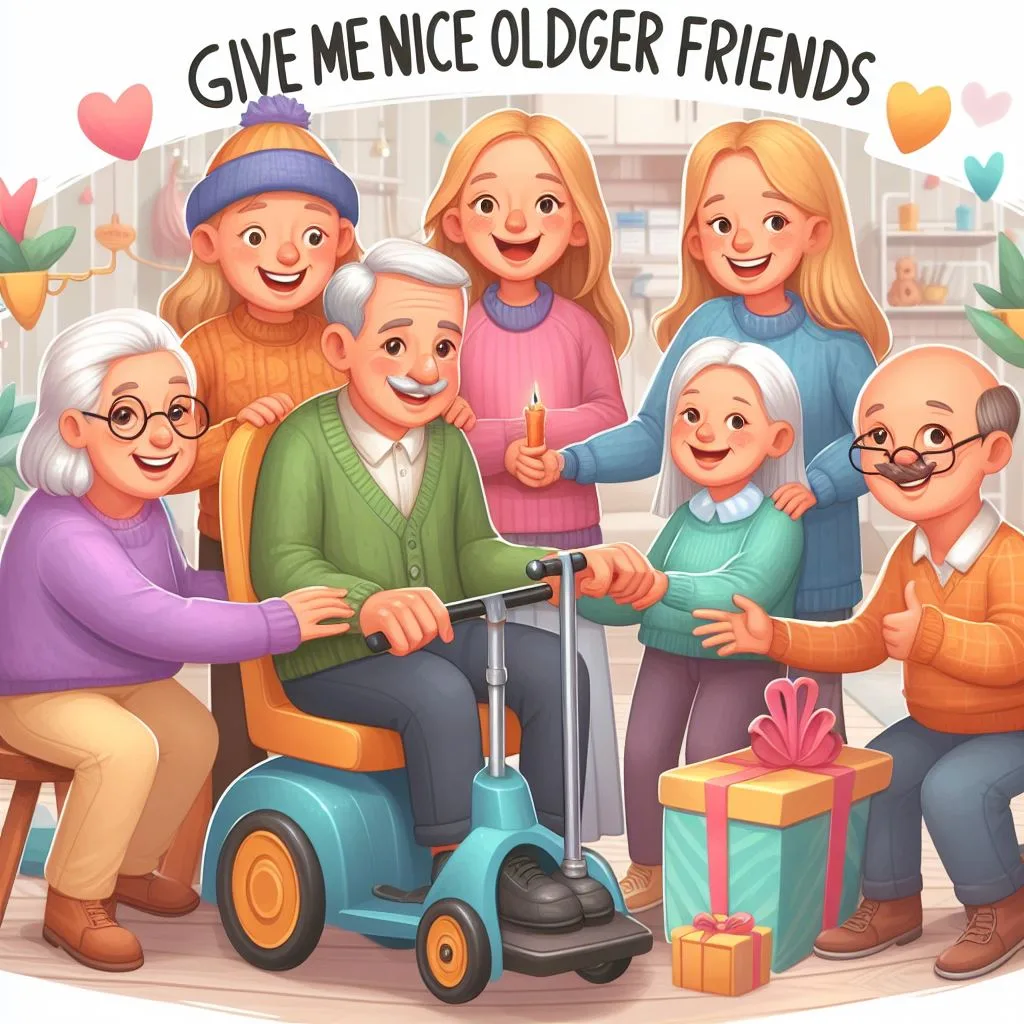
As we journey through life, the value of friendships cannot be overstated—especially ones that cross generational lines. Making older friends can enrich our lives in myriad ways, offering wisdom, different perspectives, and an unparalleled depth of experience. In this article, we explore the benefits of such friendships and how to cultivate them.
Why Seek Out Older Friends?
Older individuals often have a wealth of knowledge and life experiences that they can share. They can provide guidance, support, and even serve as mentors. Additionally, these friendships can break down age-related stereotypes and promote understanding across generations.
Where to Meet Older Friends
There are numerous places where you can connect with older individuals. Volunteer at community centers, join clubs or groups focused on shared interests, or participate in local events. Always be open to striking up a conversation—you never know where it might lead.
Building the Friendship
Once you’ve met someone you’d like to befriend, take the time to build that relationship. Be respectful of their time and experiences, and be sure to listen as much as you speak. Shared activities and regular communication can help strengthen the bond.
Overcoming Challenges
Generational differences can present challenges, such as differing views or technological gaps. Approach these differences with an open mind and a willingness to learn and adapt. Remember that at the heart of every friendship is a mutual respect and appreciation for one another.
Decoding the Etiquette of Intergenerational Dialogue
Communication between different age groups often requires a subtle recalibration of one’s social radar. While younger generations may be accustomed to the rapid-fire, shorthand nature of digital messaging and “pithy” social media interactions, older adults frequently value a more measured, deliberate pace of conversation. This isn’t just about the speed of speech; it’s about the structure of the exchange. In many cases, older friends appreciate the “lost art” of the long-form anecdote. When an older friend begins a story that seems to meander, resist the urge to steer them back to the point or check your phone. Often, the value lies in the journey of the narrative—the descriptive details of a world that no longer exists or the emotional context of a past decision.
Active listening takes on a heightened importance here. It involves more than just nodding; it requires engaging with the specific vocabulary and cultural touchstones of their era. For instance, references to historical events, defunct brands, or specific social norms provide a rich tapestry for deeper questioning. Instead of glossing over a term you don’t recognize, ask for clarification. This demonstrates genuine interest and validates their life experience. Furthermore, be mindful of the “interrupt culture” that permeates modern professional life. In a multi-generational friendship, allowing for comfortable silences can be a sign of respect and intimacy. It gives both parties time to process the weight of what has been shared, moving the relationship beyond superficial pleasantries into a space of mutual contemplation.
Another nuance involves the use of slang and contemporary jargon. While you shouldn’t feel the need to scrub your personality, being overly reliant on current internet slang can create a linguistic barrier. Conversely, avoid “talking down” to an older friend by over-explaining modern concepts unless they ask. The goal is to find a linguistic middle ground where both parties feel seen and understood. Pay attention to non-verbal cues as well; eye contact and posture often carry more weight for those who grew up in an era where face-to-face interaction was the primary mode of connection. By slowing down and honoring the cadence of their communication, you build a foundation of trust that allows the friendship to flourish.
Exploring the “Time Wealth” Dynamic
One of the most profound differences in making older friends is the varying perception and availability of time. Many older adults, particularly those who are retired or semi-retired, possess what sociologists call “time wealth.” While a younger person might be juggling a burgeoning career, young children, and the constant hum of the “hustle,” an older friend may have a more expansive schedule. This creates a unique dynamic where the older friend can provide a grounding influence. Their presence serves as a reminder that life is not merely a series of checkboxes to be cleared, but a sequence of moments to be inhabited.
However, this discrepancy in schedules requires careful management. It is important to be transparent about your own time constraints without making the older friend feel like they are an “appointment” squeezed between meetings. On the flip side, recognize that having more free time does not mean an older person is always available. Many have vibrant social calendars, volunteer commitments, or family duties. When planning outings, consider the “early bird” advantage. Many older adults prefer daytime activities or early dinners to avoid the fatigue associated with late nights or the stress of driving in the dark. Aligning your schedule with theirs occasionally—such as meeting for a Tuesday morning coffee instead of a Friday night drink—can significantly lower the barrier to regular interaction.
This time wealth also allows for deep-dive activities that younger peers might find too time-consuming. An older friend might be the perfect companion for a four-hour gallery visit, a slow-paced gardening project, or a long afternoon spent researching genealogy. They often have the patience for tasks that require meticulousness and steady progress. By leaning into this different rhythm, you can discover a sense of calm and focus that is often missing from modern, high-pressure social circles. The friendship becomes a sanctuary from the frantic pace of the outside world, offering a space where “doing nothing” together is actually doing something very valuable.
Bridging the Experiential Gap Through Shared Projects
While conversation is the bedrock of any friendship, shared projects provide a practical framework for bonding across generations. These projects act as a “third object” that both people can focus on, reducing the pressure of direct eye contact or constant dialogue. For example, collaborating on a creative endeavor—like restoring a piece of vintage furniture, compiling a community cookbook, or even starting a small container garden—allows for a natural exchange of skills. You might bring the physical strength or the ability to source niche supplies online, while they bring decades of practical “know-how,” troubleshooting skills, and the wisdom of having made (and fixed) every mistake in the book.
Consider the power of the “skill-swap.” Perhaps your older friend is a master of a fading craft like woodworking, analog photography, or traditional baking. In exchange for teaching you these skills, you can offer insights into modern tools that might enhance their hobbies, such as using digital design software for their quilting patterns or setting up an online shop for their crafts. This creates a sense of reciprocity that is vital for a balanced friendship. It prevents the relationship from feeling like a one-way street of “help” and instead fosters a partnership of equals where both parties are contributors.
These projects also provide a natural way to navigate the “awkward phases” of a new friendship. When you are both focused on a specific task—like identifying a bird species in the park or organizing a local neighborhood watch—the conversation flows more organically. It moves from the task at hand to personal anecdotes and eventually to deeper life philosophies. Furthermore, the tangible results of a shared project serve as a lasting testament to the friendship. Seeing a plant thrive or a repaired clock tick provides a sense of collective achievement that strengthens the emotional bond and creates a shared history that transcends the age gap.
Navigating the Shift from Mentorship to Mutual Peerage
When we seek out older friends, there is often an underlying assumption of mentorship. While the wisdom of an elder is a significant draw, a true friendship must eventually move beyond the teacher-student dynamic to become a relationship of peers. This transition can be tricky. It requires the younger person to step up and share their own vulnerabilities and insights, and it requires the older person to be willing to learn from someone with less life experience. If the relationship remains strictly a mentorship, it can become lopsided, leading to “caregiver fatigue” or a sense of paternalism that stifles genuine connection.
To foster peerage, look for common ground that has nothing to do with age. This could be a shared passion for a specific genre of film, a mutual political concern, or a similar sense of humor. When you discuss these topics, engage as an equal. Don’t be afraid to respectfully disagree or offer a perspective that challenges theirs. A friend who always agrees with you because of your age is not a friend; they are a follower. Conversely, an older friend who only offers advice without ever listening to your perspective is a counselor, not a peer. Healthy friendships thrive on the friction of differing ideas and the support of shared values.
It is also important to share your own successes and struggles. Sometimes, younger people feel they shouldn’t “burden” an older friend with their problems, or they feel their problems are trivial compared to what the older person has lived through. However, sharing your life—the messy parts included—is what builds intimacy. An older friend will likely appreciate being trusted with your confidence and will often have a unique perspective on your situation, having seen similar patterns play out over decades. By allowing yourself to be the one who provides support or a listening ear when they face challenges, you solidify the “mutual” in your mutual respect.
Managing Physical and Cognitive Accessibility in Social Outings
Practicality is the unsung hero of intergenerational friendships. As we age, our physical needs change, and being a good friend means being proactive about these requirements without being patronizing. When planning outings, the environment matters just as much as the activity. For instance, a trendy new restaurant might have great food, but if it has high-top stools, loud industrial acoustics, and dim lighting, it may be physically uncomfortable or even exclusionary for an older friend. Opt for venues with comfortable seating, good lighting (to help with reading menus or seeing faces), and a noise level that allows for easy conversation.
Accessibility also extends to the “logistics of the day.” Consider the distance from the parking lot to the destination. If you’re planning a walk in a park, look for trails that have frequent benches for resting. Be mindful of temperature; older adults often feel the cold more acutely or may be more sensitive to extreme heat. Simply asking, “Would you prefer a place with indoor seating?” or “Should we pick a spot that doesn’t have stairs?” shows that you value their comfort and presence. It removes the burden from them to have to bring up their limitations, which can sometimes be a point of pride or embarrassment.
In cases where cognitive changes, such as mild memory loss, are a factor, patience and adaptability are key. If a friend repeats a story, listen as if it’s the first time, or gently use it as a springboard to a related topic. Focus on the emotional truth of the interaction rather than the factual accuracy of every detail. The goal of the outing is connection, not a memory test. By creating a “low-friction” environment where physical and cognitive needs are quietly accommodated, you allow the older friend to fully engage in the joy of the outing rather than worrying about the logistics of their participation.
The Role of Storytelling in Deepening Connections
Every older person is a living library, but accessing those volumes requires the right “library card”—the art of the thoughtful question. To move beyond surface-level small talk, ask questions that invite narrative rather than simple yes/no answers. Instead of asking “Did you like your job?”, try asking “What was the most unexpected challenge you faced in your career, and how did it change you?” or “What is a piece of technology from your youth that you miss the most?” These questions signal that you aren’t just looking for facts, but for the emotional resonance of their history.
Storytelling is a two-way street. Don’t hesitate to share stories from your own life, even if they feel “modern” or vastly different from theirs. The human elements of these stories—ambition, heartbreak, discovery, and fear—are universal. You might find that your struggle with a modern office dynamic mirrors a struggle they had forty years ago in a completely different industry. These parallels are the threads that weave a friendship together. By sharing your own narratives, you give them permission to be a part of your world, just as they are inviting you into theirs.
Furthermore, consider the value of “oral history” as a formal activity. If your older friend is open to it, you might suggest recording some of their stories. This isn’t just a way to preserve history; it’s a profound act of validation. It says, “Your life and your perspective are important enough to be saved.” This can be a very moving experience for an older adult who may feel that the world has moved on without them. The process of reflecting on one’s life in the presence of an interested, empathetic listener can be incredibly therapeutic for them and enlightening for you, providing a sense of continuity and legacy that enriches both of your lives.
Embracing Emotional Resilience and the Reality of Loss
One of the more challenging aspects of making older friends is the inevitable reality of health decline and loss. While it can be tempting to avoid these topics to keep things “light,” true friendship requires showing up during the hard times. This means being a steady presence when they face a health scare, lose a spouse, or have to move into a more restrictive living environment. You don’t need to have the “right” words; often, just being there—offering to run an errand, bringing over a meal, or simply sitting in silence—is more than enough.
Older friends often have a different relationship with grief than younger people. They have likely experienced more loss and may have developed a hard-won emotional resilience. Observing how they navigate these challenges can provide you with a powerful blueprint for your own future. They can offer a perspective on what truly matters when life gets difficult, helping you to reframe your own stressors. At the same time, don’t assume that because they are older, they are “used to” loss. Each new grief is significant, and having a younger friend who is willing to acknowledge that pain can be a great comfort.
FAQ
How do I approach an older individual to start a friendship?
Approach them with genuine interest and kindness. Discuss shared interests or ask for their opinion on a topic to start a meaningful conversation.
What activities can I suggest to do with my older friend?
Consider activities such as taking a walk, attending a cultural event, or sharing a meal. Choose something that is enjoyable and comfortable for both of you.
How can I communicate effectively despite a technological gap?
Be patient and willing to teach or learn new technologies. Alternatively, stick to more traditional means of communication like phone calls or face-to-face conversations.
What if we have different views on important topics?
Respect their perspective and share yours politely. Friendships can thrive on healthy discussions and can be an opportunity for both of you to grow.
Are there any organizations that can help me meet older friends?
Yes, organizations such as senior centers, community groups, and social clubs often have programs designed to foster intergenerational friendships.
Related posts:
 What Is Compersion and Why It Might Save Your Relationship
 Do You Really Need Less Sleep as You Age?
 Friendship Worthiness
 PHA Bodyweight Workout: Efficient Fitness Anywhere, Anytime
 Signs of High Emotional Intelligence in Friends
 Friendship Revival: How to Reconnect with Friends After Months of Social Distance
 Setting Healthy Friend Boundaries
 Quarantine Relationships: When Things Move Too Fast