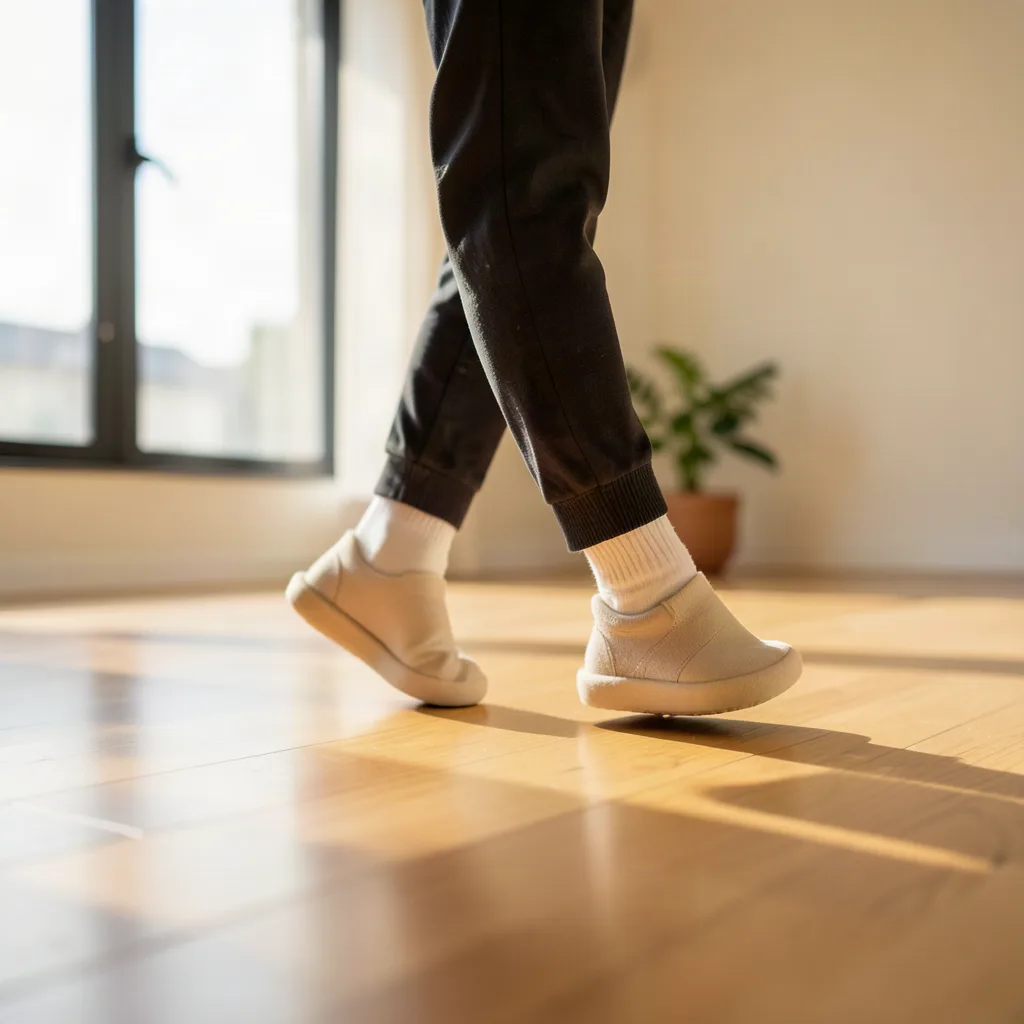
Walking is a simple, everyday activity that can feel surprisingly noisy when you’re trying to move silently through a quiet office, a shared apartment, or a library. Whether you’re a night‑shift worker who needs to avoid waking a partner, a parent keeping a toddler’s nap undisturbed, or simply someone who enjoys the meditative quality of soft steps, learning how to make your footsteps lighter and quieter can improve comfort, reduce stress, and even prevent minor injuries caused by harsh foot strikes. This guide walks you through the science behind footstep sound, the gear you can choose, the body mechanics you can refine, and the environmental tweaks that together create a whisper‑quiet stride.
Key takeaways
- Transition from a heel-strike to a mid-foot or fore-foot landing to distribute impact force and reduce sharp thuds.
- Select footwear with flexible midsoles and low-profile heels to dampen sound and improve overall comfort.
- Incorporate daily exercises like calf raises and toe curls to strengthen the muscles that support a smoother, quieter gait.
- Use area rugs, felt furniture pads, or acoustic underlayment to absorb floor vibrations and prevent echoing.
- Practice mindful walking or use biofeedback tools to maintain a consistent cadence and monitor your footfall pressure in real-time.
1. Why Footsteps Make Noise: The Basics of Impact and Surface
Every step you take generates three main forces:
- Impact force – the collision of your heel (or forefoot) with the ground.
- Vibration transmission – the way that impact energy travels through the shoe, foot, and floor.
- Acoustic emission – the sound waves released when the floor vibrates.
Hard surfaces such as tile, hardwood, or concrete reflect most of the impact energy back, creating a sharp “clack.” Softer surfaces like carpet or rubber absorb more energy, reducing the audible result. Your body’s biomechanics also matter: a heavy heel‑strike concentrates force in a small area, while a mid‑foot or fore‑foot landing spreads the load, often producing a softer sound.
2. Choosing Footwear That Dampens Sound
Footwear is the first line of defense against noisy steps. Look for the following features:
- Flexible midsoles – EVA or PU foams that compress easily absorb impact.
- Soft outsoles – rubber compounds (e.g., Vibram® lite) that grip without hard clacking.
- Low‑profile heels – a heel height of 1–2 cm reduces the lever effect that amplifies impact.
- Fit and stability – shoes that hug the foot prevent excess sliding, which can create squeaks.
Examples:
- Minimalist trainers like the Merrell Trail Glove provide a thin, flexible sole that lets you feel the ground while still offering cushioning.
- Indoor slippers with memory‑foam footbeds (e.g., Gaiam® Yoga Slip‑On) are perfect for hardwood floors.
- Running shoes with a “soft‑landing” design, such as the Brooks Ghost series, spread impact across the forefoot.
Remember to replace shoes when the midsole compresses beyond 50 % of its original thickness; a worn sole loses its ability to absorb sound.
3. Refining Your Walking Technique
Even the quietest shoes can’t compensate for a heavy, jarring gait. Small adjustments to how you move can make a big acoustic difference.
3.1. Adopt a Mid‑Foot or Fore‑Foot Landing
Instead of striking the ground first with the heel, aim to land gently on the middle of the foot. This spreads the impact over a larger surface area and reduces the sharp “thud.” Practice by walking on a carpeted floor, focusing on the sensation of the ball of the foot making contact first.
3.2. Shorten Your Stride
A longer stride often forces you to over‑extend, leading to a heavier heel‑strike. Shortening each step by about 10 % encourages a quicker, lighter turnover. Use a metronome set to 120‑130 beats per minute to maintain a consistent cadence.
3.3. Engage Your Core and Glutes
Stabilizing the pelvis with core activation reduces unnecessary vertical motion. When the pelvis stays level, the foot lands more evenly, producing less bounce and less noise.
3.4. Practice “Silent Walk” Drills
Place a lightweight object (e.g., a paper cup) on the floor and walk past it without disturbing it. This drill trains proprioception and forces you to adjust foot placement and pressure.
4. Strengthening Muscles and Enhancing Flexibility
Strong, flexible muscles support a smoother gait. Focus on the following areas:
- Calves and Achilles tendon – tight calves cause a rigid heel‑strike. Perform standing calf raises and gentle ankle circles daily.
- Intrinsic foot muscles – exercises like toe curls and short‑foot drills improve arch support, allowing the foot to flatten naturally on contact.
- Hip abductors and extensors – side‑lying leg lifts and clamshells stabilize the pelvis, preventing wobble that can create extra foot‑slap sounds.
A sample weekly routine (20 minutes per session) might look like:
- Warm‑up: 5 minutes of light marching in place.
- Calf raises: 3 sets × 15 reps.
- Toe‑spread and hold: 3 sets × 30 seconds.
- Clamshells: 3 sets × 12 reps per side.
- Short‑foot drill: 2 sets × 20 seconds per foot.
- Cool‑down: ankle rolls and hamstring stretch.
5. Modifying Your Home Environment for Quiet Steps
Even the best technique can be amplified by a reverberant floor. Simple home adjustments can dramatically lower footstep volume.
5.1. Add Soft Floor Coverings
Area rugs, especially those with a dense underlay, absorb vibrations. Choose low‑pile options for easy cleaning but ensure the rug is thick enough (≥ ¼ inch) to dampen impact.
5.2. Use Felt Pads Under Furniture
Hard furniture legs can bounce sound back into the room. Attaching felt pads reduces this reflection, making the overall acoustic environment quieter.
5.3. Install Quiet‑Floor Underlayment
If you’re renovating, consider a cork or rubber underlayment beneath hardwood or laminate. These layers act as a shock absorber, cutting footstep noise by up to 50 % according to building‑science studies.
5.4. Choose Soft‑Footed Slippers for Nighttime
For late‑night trips to the kitchen, a pair of memory‑foam slippers with a rubber sole provides cushioning without the hard click of a shoe.
6. Mindful Practices to Enhance Quiet Movement
Quiet footsteps are not just a physical skill; they’re also a mental habit. Incorporating mindfulness helps you stay aware of pressure and sound.
- Breath‑synchronized walking – inhale for two steps, exhale for two steps. The rhythm encourages a steady, gentle cadence.
- Body scan meditation – before walking, spend a minute scanning from head to toe, noting any tension that might cause stiff movements.
- Sound awareness drills – stand in a quiet room, lift one foot, and listen to the subtle shift in air. This heightens your auditory feedback loop, making you more attuned to footfall sounds.
7. Lifestyle Adjustments That Support Light Steps
Beyond training and gear, everyday choices influence how your body moves.
- Maintain a healthy weight – excess body mass increases impact forces, making each step louder. A balanced diet and regular activity help keep weight in a range that supports gentle footfalls.
- Stay hydrated – well‑hydrated muscles are more pliable, reducing stiffness that can lead to hard strikes.
- Get adequate sleep – fatigue often results in sloppy gait patterns. Aim for 7‑9 hours per night to keep proprioception sharp.
1. Measuring and Quantifying Footstep Noise
Before you can improve, you need a reliable baseline. A scientific approach begins with a calibrated sound level meter (SLM) or a reputable smartphone app that records decibel (dB) values in A‑weighting (dBA), which mirrors human hearing. Set the meter at ear height (approximately 1.5 m) and place it 1 m away from the footfall point to capture the true acoustic emission without excessive room reverberation.
- Establish a quiet reference – Record the ambient noise level in the same space with no movement. Subtract this value from subsequent measurements to isolate footstep sound.
- Standardize the test stride – Walk a straight 5‑meter line, maintaining a consistent cadence (e.g., 120 steps/min). Use a metronome or a pacing app to keep the rhythm identical across trials.
- Repeat for reliability – Perform three recordings per shoe or surface condition and average the peak dBA values. This mitigates random spikes caused by foot‑slip or floor irregularities.
Once you have a baseline, track progress weekly. Many athletes keep a simple spreadsheet with columns for date, shoe model, surface type, peak dBA, and subjective rating (1‑10). Over time you’ll notice trends such as a 3‑5 dB drop after switching to a softer insole or a 7 dB reduction when adding a rug underlay.
For those who prefer visual feedback, software like Audacity or the free program REW (Room EQ Wizard) can display a waveform and a frequency spectrum of each footfall. Quiet steps often show a shift of energy from the 1‑2 kHz range (sharp “click”) toward lower frequencies (a muted thump). Targeting this spectral shift can guide material choices and technique tweaks.
Case study: A night‑shift nurse recorded a baseline of 68 dBA on hospital linoleum while wearing standard clogs. After swapping to a custom‑molded cork orthotic and adding a 3‑mm rubber floor mat in the hallway, her average peak fell to 61 dBA – a 7 dB reduction, which translates to roughly halving the perceived loudness.
2. Advanced Materials and Custom Orthotics
Beyond off‑the‑shelf shoes, the foot‑floor interface can be engineered with purpose‑built materials. The most effective quiet‑making layers combine high compression set (to stay thin) with viscoelastic damping (to convert kinetic energy into heat rather than sound).
- Cork composites – Natural cork is lightweight, compressible, and has an intrinsic ability to absorb vibrations. Modern cork‑filled EVA blends retain the feel of foam while adding a micro‑cellular structure that dissipates impact. These are ideal for people who need a thin insole that won’t alter shoe fit.
- Silicone‑gel pads – A 2‑mm silicone gel sheet placed under the metatarsal heads spreads load and reduces the “pop” that occurs when the forefoot contacts hard tiles. Gel pads are especially useful for users with high arches, where the forefoot bears a disproportionate share of the force.
- Visco‑polyurethane (VPU) layers – VPU exhibits a time‑dependent response: it feels firm at low speeds but becomes markedly softer under rapid impact, making it perfect for silent walking. Some boutique orthotic manufacturers now offer VPU inserts that can be trimmed to the exact footprint of the shoe.
- 3‑D‑printed lattice orthotics – Using a flexible polymer such as TPU, designers can create a lattice structure tuned to the wearer’s gait pattern. By adjusting the cell size and wall thickness, the orthotic can be made to target specific frequency bands that contribute most to audible footfall.
When selecting or commissioning a custom orthotic, consider these edge cases:
- Flat‑footed walkers often experience excessive pronation, which can cause the heel to slap the floor. A medial arch support combined with a low‑profile heel cup reduces heel‑to‑floor impact while preserving a quiet stride.
- Individuals with diabetic neuropathy need extra cushioning to avoid pressure points. A multi‑layer orthotic—cork base, VPU mid‑layer, and a thin gel top—offers both safety and acoustic benefit.
- People who alternate between indoor and outdoor surfaces may benefit from a modular system: a removable cork insert for quiet indoor floors and a thicker EVA insert for outdoor durability.
Installation tips: Trim the orthotic to the exact insole shape, then secure it with a non‑slip adhesive spray if the shoe’s interior is smooth. Test the fit by walking on a hard surface while listening for any new squeaks; a poorly seated orthotic can create friction noise.
3. Floor Architecture and Surface Treatments
Even the most refined gait will be amplified by a resonant floor. Architects and interior designers use several strategies to break the vibration chain before it reaches the ear.
- Floating floor systems – These consist of a sub‑floor that “floats” on a resilient underlayment (often rubber or cork) rather than being nailed directly to the joists. The decoupling reduces the transmission of impact forces by up to 45 % according to acoustic engineering studies.
- Resilient underlayment – A 5‑mm layer of mass‑loaded vinyl (MLV) beneath hardwood or laminate adds mass and damping. When combined with a 10‑mm foam underlay, the result is a hybrid that absorbs both low‑frequency thuds and high‑frequency clicks.
- Interlocking acoustic tiles – Modular rubber tiles with a raised “honeycomb” pattern lock together, creating a continuous surface that dissipates energy. They are popular in gyms and studios where quiet footfall is essential.
- Acoustic mats for stair treads – Staircases are notorious for echoing footfalls. A thin (< 3 mm) rubber mat adhered to each tread, coupled with a felt backing on the riser, reduces impact noise by roughly 6 dB without altering stair dimensions.
Edge scenarios to keep in mind:
- Multi‑unit apartments often have concrete slabs that transmit sound vertically. Installing a floating floor on top of the existing slab, followed by a thin carpet, can dramatically lower neighbor complaints.
- Historic buildings may prohibit heavy underlayment. In such cases, a lightweight cork underlay paired with a thin woven rug provides a reversible solution that respects preservation guidelines.
- Outdoor decks can be treated with a rubberized “quiet‑deck” coating, which adds a thin viscoelastic skin over the wood, preserving aesthetics while muting footfall.
When retrofitting, always test a 1‑square‑meter sample area before committing to a full‑room installation. Walk across the sample with your usual footwear and measure the dBA change; this pilot test prevents costly over‑engineering.
4. Wearable Technology and Biofeedback for Silent Gait
Modern sensors turn the abstract concept of “quiet steps” into quantifiable data that can be acted upon in real time. Smart insoles equipped with pressure‑sensing arrays (often 16‑32 sensors per foot) transmit live metrics to a companion app via Bluetooth.
- Impact‑force alerts – When a peak pressure exceeds a user‑defined threshold (e.g., 200 kPa), the insole vibrates gently, prompting the wearer to soften the next footfall.
- Stride‑symmetry visualisation – Heat‑map displays show whether weight is distributed evenly across the forefoot, mid‑foot, and heel. Imbalances often correlate with louder steps because a concentrated load creates a sharper acoustic pulse.
- Auditory playback – Some apps record the actual footfall sound and overlay a “quiet‑target” tone. Users learn to align their footfall with the lower‑volume reference, a technique similar to musical pitch training.
Practical implementation:
- Calibrate the insole on a known quiet surface (e.g., carpet) to set a baseline.
- Choose a “quiet‑zone” threshold based on your baseline measurements—typically 5‑7 dB below your average peak.
- During a 10‑minute walking session, aim for a 90 % compliance rate (i.e., 90 % of steps stay under the threshold).
- Review the post‑session report to identify problem phases (e.g., the first minute after starting, or when turning corners).
Edge cases:
- Users with prosthetic limbs may experience a different pressure profile. Adjust the sensor sensitivity and set a higher threshold for the prosthetic side while still encouraging a soft heel‑off.
- People with limited Bluetooth connectivity (e.g., in remote cabins) can export raw CSV data via USB and analyse it offline.
- Children often find the vibration cue distracting. For them, visual cues on a tablet (color‑changing circles) work better.
Integrating biofeedback into daily routines creates a closed‑loop learning system: perception → data → adjustment → perception, accelerating the transition from conscious effort to automatic quiet walking.
5. Specialized Training for Quiet Movement in Professional Contexts
Several occupations demand near‑silence as a core competency. Training protocols from these fields can be adapted for anyone seeking stealthy steps.
- Stage combat and theatre – Actors rehearse “silent footwork” on a sprung stage using soft‑foam tiles. Drills include walking backward while maintaining a metronome, and moving while holding a prop that amplifies any vibration (e.g., a thin glass bottle). The goal is to keep the prop steady, which forces the performer to minimize impact.
- Surgical scrub technicians – In operating rooms, a single footstep can distract a surgeon. Training involves walking on a rubberized mat with a stethoscope placed on the floor to listen for “clicks.” Trainees receive immediate auditory feedback and adjust weight distribution accordingly.
- Military and law‑enforcement stealth units – Specialized courses teach “soft‑foot” techniques on various terrains (gravel, sand, metal grating). Participants wear lightweight boots with a removable “quiet‑sole” made of neoprene. The curriculum includes night‑vision navigation, where visual cues are limited, forcing reliance on proprioception.
- Security guards in museums – Guard training includes walking on polished marble while carrying a briefcase. The briefcase’s weight shifts the center of mass, challenging the guard to keep footfalls muted despite the added load.
Key drills that translate across professions:
- Weighted‑shoe walk – Slip a 1‑kg sandbag into a shoe and practice a mid‑foot landing. The extra mass teaches the body to engage the ankle and calf muscles more gently.
- “Silent‑step” obstacle course – Lay out a series of low‑profile obstacles (e.g., foam blocks) on a hard floor. The participant must traverse the course without triggering a sound‑sensor pad placed beneath each block.
- Sound‑masking walk – Play a low‑volume ambient track (e.g., rain) while walking; the goal is to keep footfall volume below the background level, reinforcing an intuitive volume ceiling.
Adapting these drills for home use is straightforward: replace professional‑grade mats with a yoga mat, use a kitchen timer instead of a metronome, and employ a cheap decibel meter app for feedback. Consistency—five minutes of focused practice three times a week—produces measurable reductions in footstep noise within a month.
6. Psychological and Sensory Strategies to Maintain Quietness
Physical adjustments are only half the equation; the brain must stay tuned to subtle auditory cues. Below are proven mental techniques that reinforce a low‑impact gait.
- Auditory masking rehearsal – Before entering a quiet environment, spend 30 seconds listening to a recording of soft wind or distant ocean waves. Visualise each step blending into that ambient sound, creating a mental “quiet‑zone” that the nervous system strives to protect.
- Progressive proprioceptive scaling – Begin a walk with the intention of feeling a 1‑centimeter lift off the ground, then gradually reduce that lift by a millimeter every ten steps. This micro‑adjustment trains the brain to fine‑tune force output without conscious over‑thinking.
- Trigger‑based habit stacking – Pair a quiet‑step cue with an existing habit, such as “when I turn the light on, I will take three soft steps before moving further.” The cue anchors the quiet‑walking intention to a routine action, increasing consistency.
- Visualization of soft surfaces – Close your eyes and picture walking on a thick moss carpet or a cloud. The mental image reduces muscle co‑contraction, naturally softening the strike.
- Use of binaural beats – Listening to a 40 Hz binaural beat while walking can entrain the brain’s motor cortex to a slower, smoother rhythm, encouraging a more deliberate stride.
Edge considerations:
- High‑stress environments – In a panic situation, the body defaults to a hard, rapid gait. Pre‑emptive mental rehearsal (5‑minute “quiet‑walk” meditation) can embed a calmer motor pattern that resurfaces under stress.
- Sleep deprivation – Fatigue dulls proprioceptive acuity, leading to louder steps. A short power‑nap (15‑20 minutes) before a quiet‑required task can restore sensory precision.
- Individuals with auditory processing disorders – They may not perceive footfall sound clearly enough to self‑correct. In such cases, rely more heavily on tactile feedback (e.g., a thin foam strip under the heel) rather than auditory cues.
By integrating these psychological tools with the mechanical strategies discussed earlier, the quiet‑walking habit becomes a holistic practice—one that engages body, mind, and environment in harmony.
FAQ
1. Will wearing thick, cushioned shoes make my steps quieter?
Thick cushioning can absorb impact, but if the shoe’s sole is too rigid, the vibration may still travel to the floor. Choose shoes with a flexible midsole and a soft rubber outsole. A balance of cushioning and flexibility yields the quietest result.
2. Can I make my existing shoes quieter without buying new ones?
Yes. Adding a thin insole made of gel or cork can add a layer of sound‑absorbing material. Additionally, applying a silicone spray to the outsole can soften the material slightly, reducing harsh clicks on hard floors.
3. How much does stride length affect footstep noise?
Long strides tend to increase vertical displacement, which amplifies impact. Reducing stride length by about 10 % typically lowers the peak impact force by 5‑8 %, translating to a noticeable reduction in audible “thump.”
4. Are there specific exercises for people with flat feet?
People with low arches often land heavily on the heel. Strengthening the intrinsic foot muscles (toe curls, short‑foot drills) and performing arch‑support stretches (e.g., seated foot‑flex with a towel) can improve arch function, encouraging a softer mid‑foot landing.
5. Is it possible to walk silently on tile without any special shoes?
It is, but it requires technique and surface treatment. A mid‑foot strike, a short, controlled stride, and a soft‑sole insole can dramatically reduce noise. Adding a thin area rug or a rubber floor mat in high‑traffic zones also helps.
Related posts:
 Finding Supportive Shoes
 Meghan Markle’s High Heel Hack
 Can You Really Wear Street Sneakers at the Gym?
 Smart Shoe Shopping Tips Everyone Should Know
 Common Sneaker Questions Answered
 Fall Boots That Don’t Sacrifice Comfort for Style
 Step Into Compassion: The Best Vegan Shoe Brands Making Waves
 Stretches to Relieve Foot Pain