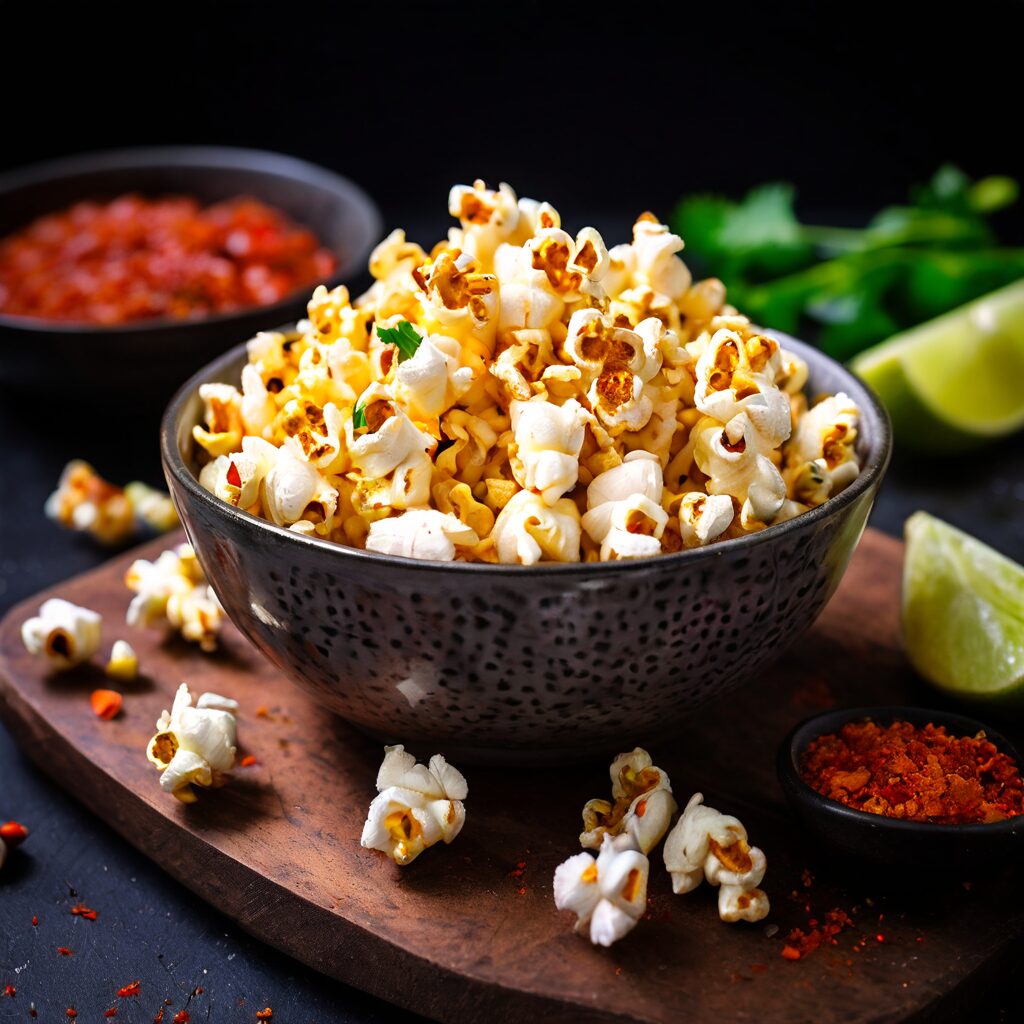
Looking for a delicious and unique way to spice up your snack time? This Masala popcorn recipe is the perfect blend of flavors that will tantalize your taste buds. It’s easy to make, healthy, and a great alternative to regular popcorn. Discover how to make this savory treat in your own kitchen!
Ingredients for Masala Popcorn
- 1/2 cup of popcorn kernels
- 2 tablespoons of vegetable oil
- 1 teaspoon of turmeric powder
- 1 teaspoon of cumin powder
- 1 teaspoon of coriander powder
- 1/2 teaspoon of red chili powder (adjust to taste)
- 1 teaspoon of chaat masala
- Salt to taste
- 2 tablespoons of butter or ghee
- Fresh cilantro for garnish (optional)
Step-by-Step Instructions
- Prepare the Popcorn: Heat the vegetable oil in a large pot over medium heat. Add the popcorn kernels and cover the pot with a lid. Shake the pot occasionally to ensure even popping. Once the popping slows down, remove the pot from heat and transfer the popcorn to a large bowl.
- Make the Masala Mix: In a small bowl, combine the turmeric powder, cumin powder, coriander powder, red chili powder, chaat masala, and salt. Mix well.
- Season the Popcorn: Melt the butter or ghee in a small pan. Drizzle it over the popcorn and toss to coat evenly. Sprinkle the masala mix over the popcorn and toss again to ensure even distribution of spices.
- Garnish and Serve: If desired, garnish with fresh cilantro. Serve immediately and enjoy your spicy masala popcorn!
Health Benefits of Masala Popcorn
Masala popcorn is not only a tasty snack but also comes with various health benefits. The spices used in this recipe, such as turmeric and cumin, are known for their anti-inflammatory properties. Additionally, popcorn is a whole grain that is high in fiber, making it a healthy choice for snacking.
Tips for Perfect Masala Popcorn
- Adjust the Spices: Feel free to adjust the amount of red chili powder based on your spice tolerance. You can also experiment with other spices to create your own unique flavor.
- Use Fresh Spices: For the best flavor, use fresh spices. Ground spices lose their potency over time, so it’s important to use fresh ones for this recipe.
- Even Coating: To ensure even coating of the masala mix, toss the popcorn well and shake the bowl while adding the spices.
Mastering the Physics of the Perfect Pop
To elevate masala popcorn from a simple snack to a gourmet experience, one must understand the science behind the kernel. Every popcorn kernel contains a tiny droplet of water stored inside a circle of soft starch. As the kernel heats up, the water expands, creating pressure against the hard outer shell. When the temperature hits approximately 355 degrees Fahrenheit (180 degrees Celsius), the hull ruptures, and the starch expands into a white, fluffy foam. To ensure every kernel reaches this potential without burning the spices, temperature control is paramount. Many home cooks make the mistake of adding spices too early in the popping process. Because ground spices like turmeric and chili powder have incredibly low burn points, they can turn bitter and acrid if exposed to the high heat required to pop the corn. The secret lies in the “test kernel” method: place three kernels in your oil and wait for them to pop. This indicates the oil is at the perfect temperature for the rest of the batch, ensuring a rapid pop that prevents the corn from becoming tough or chewy.
Steam is the enemy of crispness. While the lid must remain on the pot to prevent a kitchen-wide mess, a tightly sealed lid traps the steam released by the kernels, which then settles back onto the popcorn, making it soggy. To achieve that professional, light-as-air crunch, slightly offset the lid or use a lid with a venting hole. If your pot doesn’t have a vent, simply leave a tiny crack open. This allows the moisture to escape while keeping the heat and the kernels contained. Furthermore, the type of pot matters. A heavy-bottomed stainless steel pot or a cast-iron Dutch oven provides the most even heat distribution, preventing hot spots that lead to unpopped kernels (colloquially known as “old maids”) or charred remains at the bottom of the pan.
Advanced Fat Profiles: Beyond Basic Butter
While the existing recipe utilizes butter or ghee, the choice of fat significantly dictates the final flavor profile and the “mouthfeel” of the masala popcorn. Ghee, or clarified butter, is the gold standard in Indian culinary traditions for a reason. Because the milk solids have been removed, ghee has a much higher smoke point than regular butter, allowing it to coat the popcorn without burning or smoking. It also provides a rich, nutty backbone that complements earthy spices like cumin and coriander beautifully. For those seeking a more pungent, authentic North Indian flavor, mustard oil (sarson ka tel) is an exceptional alternative. It must be heated until it reaches its smoking point to mellow its raw intensity before being used to toss the popcorn. This adds a sharp, waspy kick that pairs perfectly with extra red chili powder and black salt.
For a lighter, vegan-friendly version that doesn’t compromise on flavor, refined coconut oil is a stellar choice. Unlike virgin coconut oil, the refined version has a neutral taste but retains a high smoke point, providing a crisp texture that doesn’t feel greasy. If you are looking for a fusion twist, consider infusing your fats before they ever touch the popcorn. You can gently heat your oil with crushed garlic cloves, a sprig of curry leaves, or even a few dried red chilies for ten minutes, then strain the oil. This creates a multi-dimensional flavor base where the essence of the aromatics is baked into the fat itself, ensuring that every single crevice of the popcorn carries a hint of seasoning.
The Art of the Tadka: Tempering Your Spices
In Indian cooking, the technique of “tempering” or “tadka” involves frying spices in hot fat to unlock their essential oils and aromas. Applying this to masala popcorn transforms the snack. Instead of simply sprinkling dry powders over the corn, try creating a seasoned oil infusion. In a small tempering pan (tadka pan), heat your ghee or oil and add whole spices first. Mustard seeds should be added until they begin to splutter, followed by a pinch of hing (asafetida), which provides an umami-rich, onion-like depth. Once the whole spices are toasted, turn off the heat and immediately stir in your ground spices: turmeric, chili powder, and amchoor (dried mango powder). The residual heat is enough to cook the spices without scorching them.
Drizzling this hot, aromatic oil over the freshly popped kernels ensures a much more uniform distribution than dry powder alone. The oil acts as a carrier, pulling the microscopic spice particles into the nooks and crannies of the popcorn. To take this further, consider the “double-seasoning” method. Use a light dusting of fine salt immediately after popping while the corn is still steaming, then follow up with the tempered oil masala. This layers the flavors, ensuring that the saltiness is structural while the masala provides the aromatic finish. If you find the spices are still clumping, use a large stainless steel bowl and a wide-reaching tossing motion—think of the way a chef tosses a stir-fry—to ensure every piece is lacquered in the golden, spicy oil.
Regional Variations and Flavor Extensions
Masala popcorn is a versatile canvas that can be adapted to reflect the diverse culinary map of India. For a South Indian-inspired version, often referred to as “Curry Leaf Popcorn,” the key ingredients are fresh curry leaves, roasted chana dal (split chickpeas), and a hint of black mustard seeds. The curry leaves should be fried in the oil until they are translucent and shatteringly crisp; they provide an herbal, citrusy note that balances the heat of the chili. Another popular variation is the “Bombay Street Style,” which leans heavily on tanginess. To achieve this, increase the Chaat Masala and add a generous pinch of Kala Namak (Himalayan Black Salt). Kala Namak has a distinctive sulfurous aroma that mimics the flavor of eggs and provides a savory depth that is quintessential to Indian street snacks.
For those who enjoy Indo-Chinese fusion, a “Schezwan Masala” version can be created by mixing dry ginger powder, garlic powder, and a touch of Szechuan peppercorn into the base masala mix. This creates a numbing, spicy sensation that is addictive. If you prefer a bit of crunch and protein, you can toss in roasted peanuts or “sev” (crunchy chickpea flour noodles) after the popcorn is seasoned. The peanuts absorb the masala oil and become little nuggets of flavor interspersed throughout the light popcorn. For an even more complex profile, try a “Panch Phoron” blend—a five-spice mix of fenugreek, nigella, cumin, black mustard, and fennel seeds—ground into a fine powder. This Bengali-inspired twist offers a sophisticated bitter-sweet-savory balance that is rarely found in commercial snacks.
Fine-Tuning the “Dust”: Texture and Adhesion
A common complaint with homemade flavored popcorn is that the spices settle at the bottom of the bowl, leaving the top layers bland and the bottom layers overwhelmingly salty. The solution lies in the particle size of your spices. Standard table salt and store-bought spice powders are often too heavy and coarse to stick to the smooth surfaces of the popcorn. For professional results, take your masala mix—the salt, cumin, coriander, and chili—and pulse it in a clean coffee grinder or spice mill for 30 seconds. This creates a “spice dust” or a flour-like consistency. The finer the particles, the better they will adhere to the popcorn via static electricity and the thin film of oil.
Another professional tip involves the use of a “binder” beyond just fat. If you want a lower-fat version but still need the spices to stick, you can use a very fine mist of lime juice or apple cider vinegar applied with a food-grade spray bottle. The acidity not only helps the spices adhere but also provides a bright, zesty contrast to the earthy turmeric and cumin. However, you must work quickly and toss the popcorn vigorously to prevent the liquid from making the kernels wilt. If you are using the butter method, try browning the butter (beurre noisette) before adding the spices. The toasted milk solids in the browned butter add a caramel-like sweetness that acts as a perfect foil for the sharp heat of the red chili powder.
Storage, Longevity, and Rescuing Stale Popcorn
While masala popcorn is best consumed immediately, environmental factors like humidity can quickly turn a crisp snack into a rubbery disappointment. If you live in a humid climate, the salt and chaat masala in the recipe will actually draw moisture out of the air and into the popcorn. To prevent this, if you aren’t serving it right away, let the popcorn cool completely to room temperature before sealing it. Storing warm popcorn in a container creates condensation, which is the fastest way to ruin the texture. Use a glass jar with a rubber gasket or a high-quality vacuum-seal container for the best results.
If you find that your masala popcorn has lost its crunch after a day or two, do not throw it away. You can easily “re-crisp” it in the oven. Spread the popcorn in a single layer on a large baking sheet and place it in a preheated oven at 250 degrees Fahrenheit (120 degrees Celsius) for about 5 to 10 minutes. This low heat evaporates the absorbed moisture without further cooking the corn or burning the spices. In fact, this secondary heating often intensifies the flavor of the masala as the oils are re-activated. Another edge-case use for leftover masala popcorn is as a crunchy topping for Indian soups like Mulligatawny or even crushed and used as a savory “breading” for fried paneer or chicken strips, providing a built-in spice profile and a unique texture.
The Umami Factor: Secret Ingredients for Depth
To truly push your masala popcorn into the gourmet category, consider incorporating ingredients that provide “umami”—the fifth basic taste. While traditional recipes rely on salt, adding a teaspoon of nutritional yeast to your masala mix can provide a nutty, cheesy flavor that is completely vegan. Nutritional yeast is a flakey, inactive yeast that is a staple in plant-based kitchens, and its savory profile matches perfectly with the earthy notes of cumin. Another secret ingredient used by street vendors is a tiny amount of powdered sugar or jaggery powder. You won’t taste the sweetness directly, but a half-teaspoon helps to balance the high acidity of the chaat masala and the heat of the chilies, creating a more rounded and addictive flavor profile.
For an even more intense savory kick, a pinch of dried mushroom powder or a tiny drop of soy sauce added to the melting butter can work wonders. If using soy sauce, be sure to reduce the added salt in the recipe to compensate. These additions create a “long” flavor that lingers on the palate. Lastly, don’t overlook the importance of the popcorn variety itself. While standard yellow kernels are great for volume, “Mushroom” style popcorn kernels pop into large, round spheres that are sturdier and have more surface area for the masala to cling to, compared to the traditional “Butterfly” shape which has fragile wings that often break off during the tossing process. By choosing the right kernel and the right umami boosters, you can transform a simple bowl of popcorn into a complex, multi-layered culinary experience.
FAQ
1. Can I use microwave popcorn for this recipe?
Yes, you can use microwave popcorn. Simply pop the popcorn according to the package instructions and then follow the steps for making the masala mix and seasoning the popcorn.
2. Is this recipe vegan?
Yes, this recipe can be made vegan by using vegetable oil and replacing the butter or ghee with a plant-based butter.
3. How long does masala popcorn stay fresh?
Masala popcorn is best enjoyed fresh. However, you can store any leftovers in an airtight container for up to 2 days. The popcorn may lose some of its crunchiness over time.
4. Can I add other ingredients to this popcorn recipe?
Absolutely! Feel free to add nuts, seeds, or even dried fruit to your masala popcorn for added flavor and texture.
5. What is chaat masala?
Chaat masala is a tangy and salty spice blend commonly used in Indian cuisine. It typically consists of dried mango powder, cumin, coriander, dried ginger, salt, pepper, and other spices. It adds a unique flavor to the popcorn.
Related posts:
 Healthy Homemade Peanut Butter Cup Recipe
 15-Minute Dairy-Free Dinner Ideas
 Keto Mexican Night: Cauliflower Enchiladas That Actually Taste Amazing
 The Best Popcorn Makers for Movie Night at Home
 Delicious Ground Chicken Recipes
 The Best Spices for Better Digestion and Gut Health
 Dark Chocolate Popcorn Bark: A Smart and Indulgent Snack
 Instant Pot Apple Butter Recipe