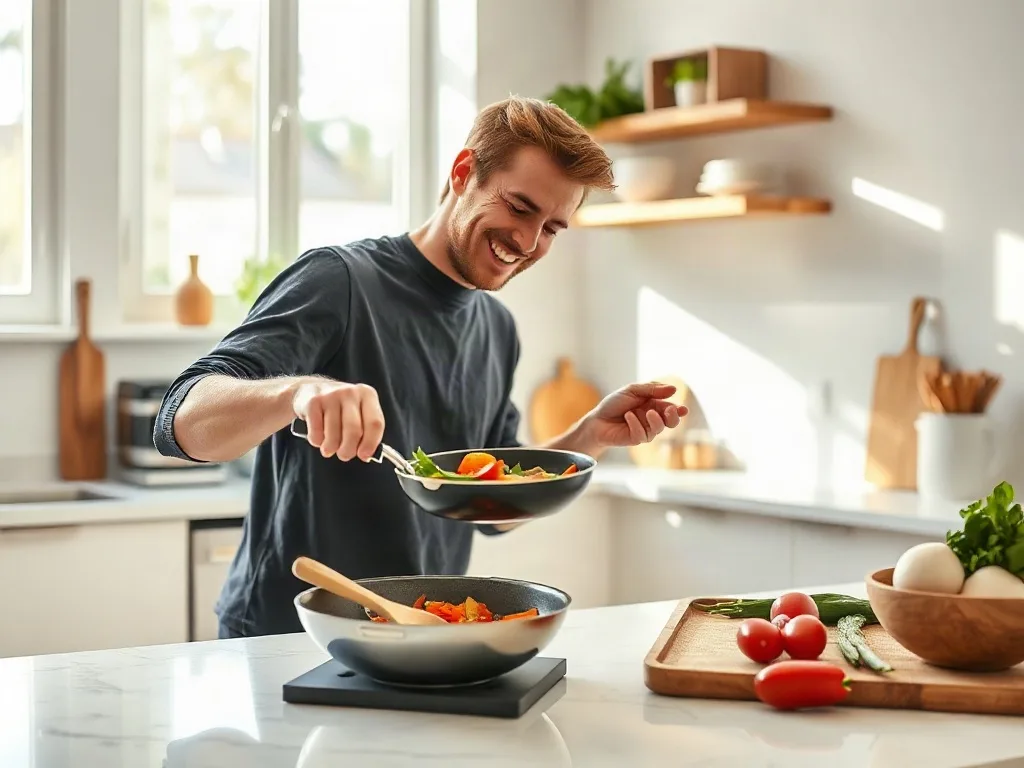
There is a peculiar kind of frustration that comes with staring at a recipe that serves four when you are the only person sitting at the table. You find yourself wondering if it is truly worth the effort to chop an entire onion, sear a piece of protein, and scrub three different pans just for a twenty-minute meal. For many, the act of cooking for one often devolves into a cycle of repetitive toast, overpriced takeout, or the dreaded “third day of leftovers” where the food has lost its soul and you have lost your appetite.
Key takeaways
- Prepare versatile bases like grains, proteins, and sauces separately to mix and match different meals throughout the week.
- Use the freezer for portioned meats and frozen vegetables to minimize waste and ensure ingredients are always available.
- Scale recipes by half instead of quarters to provide dinner and lunch, or whisk eggs to measure partial amounts.
- Invest in smaller appliances like air fryers or 2-quart slow cookers that are more efficient for single-serving portions.
- Turn solo meals into a ritual by setting the table, avoiding digital screens, and focusing on mindful eating habits.
However, cooking for one doesn’t have to be a chore or a reminder of solitude. When approached with the right strategy, solo cooking is actually a profound act of self-care. It is the only time in your life when you have absolute autonomy over the menu—no compromising on ingredients, no catering to a picky partner, and no fighting over what to watch while you eat. The secret to mastering this art without losing your mind lies in shifting your perspective from “scaling down” to “building up.” By focusing on versatility, smart shopping, and mindful rituals, you can turn your kitchen into a sanctuary of nourishment rather than a source of stress.
The Psychology of Solo Dining: Shifting Your Mindset
The biggest hurdle to cooking for one is often mental. We are conditioned to view “dinner” as a communal event. When that communal element is missing, the effort required to prepare a meal can feel disproportionate to the reward. This is where the “survival mode” mentality kicks in, leading to a diet of cereal and frozen pizzas. To break this cycle, you must redefine what a “proper meal” looks like.
Instead of viewing a solo meal as a diminished version of a family dinner, view it as a bespoke experience. You are the only customer in your restaurant, and you get to decide exactly how the meal fits your current mood, energy level, and nutritional needs. When you stop trying to recreate the experience of a multi-person meal and start embracing the efficiency of solo dining, the process becomes liberating. You can eat your dinner in the bath, on the balcony, or standing up in the kitchen—the rules are whatever you want them to be.
Compassion for yourself is key here. Some nights, the most loving thing you can do for yourself is to have a “charcuterie plate” of cheese, nuts, and fruit. Other nights, the act of slowly stirring a risotto can be a meditative way to unwind from a stressful workday. By removing the expectation that every meal must be a “production,” you lower the barrier to entry and make healthy eating sustainable.
Mastering the Art of “Component Cooking”
The most common mistake solo cooks make is following traditional recipes from start to finish every single night. This leads to burnout and massive food waste. The alternative is Component Cooking. Instead of making a specific dish (like a Chicken Stir-Fry), you prepare individual components that can be mixed and matched throughout the week.
Think of your fridge as a palette of flavors. Spend one afternoon preparing a few versatile bases:
- A Grain: Cook a large batch of quinoa, brown rice, or farro. These keep well for 4-5 days and serve as the foundation for bowls, salads, or side dishes.
- A Protein: Roast two chicken breasts, bake a block of tofu, or boil a few eggs. Having a ready-to-eat protein eliminates the “I’m too tired to cook” excuse.
- A Roasted Vegetable: Fill a sheet pan with broccoli, carrots, and bell peppers. Roast them all at once with olive oil and salt.
- A “Magic” Sauce: Make one versatile dressing—like a lemon-tahini or a spicy peanut sauce—that can transform these components into entirely different cuisines.
With these components ready, dinner becomes an assembly project rather than a cooking project. Monday might be a Mediterranean bowl with quinoa, roasted carrots, chicken, and tahini. Tuesday could be a stir-fry using the same quinoa, broccoli, tofu, and peanut sauce. By decoupling the preparation from the assembly, you save hours of time and reduce the mental load of deciding what to eat every single evening.
Strategic Shopping for the Solo Cook
Grocery shopping for one is a balancing act. You want variety, but you don’t want to throw away half a head of cabbage every Friday. The key is to shop for multi-use ingredients and utilize the freezer strategically.
The Power of the Freezer: The freezer is a solo cook’s best friend. Avoid buying large bags of fresh spinach that wilt in three days; buy frozen spinach or peas instead. You can take out exactly the handful you need for a soup or pasta. Similarly, buy meat or fish in bulk, portion them into individual freezer bags immediately, and freeze them flat to save space. This ensures you always have a protein on hand without the risk of it spoiling in the fridge.
Buying Small and Smart: Look for the “loose” produce section. Instead of buying a pre-packaged bag of six apples, buy two. Instead of a whole head of celery if you only need one stalk, see if your store sells smaller portions. If you must buy a large quantity of a perishable item, plan its lifecycle. For example, if you buy a large bag of kale, use it for salads on day one, sauté it for a side on day three, and blend it into a smoothie on day five.
The Rotisserie Chicken Hack: One of the most efficient tools for the solo cook is the store-bought rotisserie chicken. It provides high-quality protein for several meals: shredded for tacos on night one, sliced for a salad on night two, and the remaining carcass can be simmered with water and scrap vegetables for a rich bone broth.
The Magic of Batch Cooking and Freezing
There is a difference between meal prep (making five identical containers of chicken and broccoli) and batch cooking. Batch cooking is about making a large quantity of a single, freezer-friendly item and portioning it out. This prevents “leftover fatigue,” where you grow tired of the same flavor profile by Wednesday.
Focus on “liquid gold” meals—dishes that actually taste better after they’ve sat for a day or two and freeze beautifully:
- Chilis and Stews: A large pot of turkey chili or lentil stew can be divided into single-serving glass jars.
- Soups: Minestrone or butternut squash soup freezes perfectly.
- Casseroles: Lasagna or shepherd’s pie can be cut into individual squares and wrapped in foil.
- Sauces: Make a big batch of marinara or curry base. Freeze them in ice cube trays; once frozen, pop the cubes into a bag. Now you have perfectly portioned flavor bombs to add to any meal.
When you freeze these meals, label them with the date and a brief description. This creates your own “homemade frozen dinner” section in your freezer, providing a healthy alternative to processed meals on those nights when your energy is at zero.
Scaling Recipes Without the Math Headache
Most recipes are written for four to six people. Attempting to divide these by four often leads to confusing measurements (like “1/8 of a teaspoon of baking powder”) or impossible situations (like using half an egg). Here is how to handle scaling without losing your mind.
The Egg Dilemma: If a recipe calls for one egg but you only need half, crack the egg into a small bowl, whisk it thoroughly, and then measure out two tablespoons. Alternatively, use the other half for a small side of scrambled eggs the next morning.
The “Rounding” Rule: In savory cooking, you can be more flexible. If a recipe calls for 1/4 teaspoon of a spice for four people, a “pinch” is usually sufficient for one. Don’t stress over precise measurements for seasonings; taste as you go and adjust. Your palate is a better guide than a calculator.
The 50% Strategy: Instead of dividing by four, try dividing by two. This gives you a dinner for tonight and a lunch for tomorrow. This is often the most efficient way to cook, as it justifies the use of a standard-sized pan and requires less meticulous measuring while still preventing excessive waste.
Essential Tools for Single-Serving Meals
The equipment you use can either make solo cooking a breeze or a nightmare. If you are using a massive 12-inch skillet to fry one egg, you’re creating unnecessary cleanup. Investing in a few smaller tools can change your entire experience.
The Air Fryer: This is arguably the ultimate tool for the solo cook. It heats up instantly, requires no preheating of a giant oven, and is perfect for small portions of vegetables, proteins, or toasted sandwiches. It provides that “roasted” texture without the energy cost of a full oven.
The Small Slow Cooker or Instant Pot: A 2-to-3 quart slow cooker is ideal for making small batches of soup or tenderizing a single piece of meat without having a gallon of liquid left over.
The Cast Iron Skillet (10-inch): While smaller is often better, a medium cast iron skillet is incredibly versatile. You can sear a steak on the stove and move it directly into the oven, reducing the number of pots you have to wash.
Quality Glass Containers: Invest in a set of matching, leak-proof glass containers. There is a psychological satisfaction in seeing your organized components in the fridge, which makes you more likely to use them and less likely to order takeout.
Quick-Win Recipes and Flavor Profiles
To avoid boredom, focus on flavor profiles rather than strict recipes. This allows you to use whatever you have on hand while keeping the meals exciting. A simple formula for a balanced solo meal is: Base + Protein + Veggie + Acid + Crunch.
Example 1: The Mediterranean Bowl
Base: Quinoa | Protein: Chickpeas or Grilled Chicken | Veggie: Cucumber and Tomato | Acid: Lemon juice and Olive oil | Crunch: Feta cheese and toasted almonds.
Example 2: The Asian-Inspired Stir-Fry
Base: Brown rice or Rice noodles | Protein: Shrimp or Tofu | Veggie: Snap peas and Carrots | Acid: Rice vinegar and Soy sauce | Crunch: Toasted sesame seeds.
Example 3: The Hearty Autumn Plate
Base: Mashed sweet potato | Protein: Pan-seared salmon | Veggie: Sautéed kale | Acid: Apple cider vinegar glaze | Crunch: Pumpkin seeds.
By focusing on these five elements, you ensure your meal is nutritionally complete and hits all the sensory notes (salty, sour, crunchy, soft), which prevents the feeling of dissatisfaction that often comes with simple “solo” meals.
Reducing Food Waste in a Single-Person Household
Food waste is the primary source of guilt for the solo cook. To combat this, adopt a “First In, First Out” (FIFO) system. Move older produce to the front of the fridge and newer items to the back. This simple habit prevents that forgotten bag of spinach from becoming a science project in the crisper drawer.
The “Everything” Soup/Frittata: Once a week, have a “clear out the fridge” night. Almost any combination of leftover vegetables and proteins can be transformed into a delicious frittata (just add eggs) or a vegetable soup (just add broth). This not only reduces waste but also takes the pressure off of planning a meal for that specific night.
Preserving Fresh Herbs: Fresh herbs are often the first thing to go. To keep them fresh, treat them like flowers: trim the stems and place them in a small jar of water in the fridge. For hardier herbs like rosemary or thyme, wrap them in a damp paper towel and store them in a reusable silicone bag. If they are about to turn, chop them up and freeze them in olive oil inside an ice cube tray for an instant flavor base for future sautéing.
Turning Dinner into a Ritual of Self-Care
The final piece of the puzzle is the environment. When we cook for others, we naturally set the table and create an atmosphere. When we cook for ourselves, we often eat over the sink or in front of a laptop. This reinforces the idea that solo dining is a utilitarian task rather than a pleasure.
To master the art of cooking for one, you must treat yourself with the same hospitality you would offer a guest. This doesn’t require a five-course meal; it requires intentionality.
- Set the Stage: Use your favorite plate, not the chipped one. Put a cloth napkin on the table. Light a candle or put on a curated playlist.
- Mindful Preparation: Instead of rushing through the chopping to get to the eating, try to find the rhythm in the process. Notice the smell of the garlic hitting the pan and the sound of the sizzle.
- Digital Detox: Try eating one meal a day without a screen. This allows you to actually taste your food and check in with your hunger and fullness cues, turning the meal into a moment of mindfulness.
When you invest in the experience of the meal, the effort of cooking feels rewarded. You are no longer just “feeding yourself”; you are nourishing your body and mind. This shift in perspective is what ultimately prevents you from losing your mind and helps you find joy in the quiet, creative space of your own kitchen.
Building the Solo Pantry: Your Foundation of Flavor
While strategic shopping handles the perishables, a well-curated pantry is what prevents the “I have nothing to eat” panic when you are too exhausted to visit the store. For the solo cook, the pantry shouldn’t just be a storage area; it should be a library of flavor shortcuts that allow you to build complex meals from simple bases. The goal is to stock ingredients with a long shelf life that can be used in small quantities across various cuisines.
The Umami Arsenal: To avoid the blandness often associated with quick solo meals, keep a collection of “umami bombs.” These are concentrated flavor agents that add depth without requiring hours of simmering. Consider stocking miso paste, soy sauce, Worcestershire sauce, anchovy fillets, and tomato paste. A single teaspoon of miso stirred into a bowl of sautéed greens or a drop of fish sauce in a stir-fry provides the savory complexity that usually takes a professional kitchen to achieve. Because these items are salty and preserved, they last for months in the fridge, making them perfect for one person.
Dry Goods for Versatility: Instead of buying only one type of grain, stock a variety of small-portion dry goods. Red lentils are a solo cook’s secret weapon because they cook faster than green lentils and don’t require soaking, making them ideal for a quick 15-minute dhal. Couscous is another essential; it requires only boiling water and five minutes of resting, providing a base for a meal when you don’t even have the energy to turn on a burner. Keep a variety of canned beans (chickpeas, cannellini, black beans) and a high-quality olive oil and a neutral oil (like avocado or grapeseed) for different heat requirements.
The Spice Strategy: Avoid buying the largest container of a spice if you only use it once a month. Instead, look for smaller tins or invest in a few “universal blends” like Everything Bagel seasoning, Italian herbs, or Taco seasoning. However, keep the basics—smoked paprika, cumin, garlic powder, and crushed red pepper—on hand. These allow you to shift a meal from Mediterranean to Mexican or Middle Eastern in seconds, preventing the palate fatigue that comes from a limited ingredient list.
The Energy-Based Menu System: Tiering Your Effort
One of the most overlooked aspects of solo cooking is the fluctuation of daily energy. Some days you return home with the mental capacity to experiment with a new technique; other days, the mere act of boiling water feels like a marathon. When you force yourself to follow a rigid meal plan, you are more likely to give up and order takeout when your energy dips. The solution is to categorize your meals into Energy Tiers.
Tier 1: The “Emergency” Meal (5-10 Minutes). These are the non-negotiable safety nets. They require almost zero active cooking. Examples include a high-protein yogurt bowl with nuts and honey, a piece of sourdough toast with avocado and a pre-boiled egg, or a simple tuna salad using canned tuna and a pre-made dressing. These meals aren’t about culinary excellence; they are about preventing the “hunger-induced decision paralysis” that leads to expensive delivery apps.
Tier 2: The “Standard” Assembly (15-30 Minutes). This is where your component cooking pays off. This tier involves assembling pre-prepped items or using quick-cook ingredients. A typical Tier 2 meal might be an air-fryer salmon fillet paired with a handful of frozen peas and a scoop of pre-cooked quinoa. It is balanced, healthy, and requires minimal cleanup, making it the sustainable baseline for your weekday routine.
Tier 3: The “Culinary Project” (60+ Minutes). Reserve these for your high-energy days, usually weekends. This is the time for slow-braising, testing a complex new recipe, or making a large batch of something to freeze. By designating specific days for “projects,” you remove the guilt of not cooking “properly” during the week. The joy of a Tier 3 meal comes from the process itself—the chopping, the stirring, and the sensory experience—rather than just the nutritional outcome.
Sophisticated Solo Dining: Handling High-End Ingredients
Many solo cooks avoid luxury ingredients—like ribeye steaks, scallops, or fresh halibut—because they are sold in multi-packs that are too expensive or too large for one person. However, you don’t have to sacrifice gourmet experiences just because you are dining alone. The trick is to negotiate with your suppliers and rethink your portions.
The Butcher’s Request: Don’t feel restricted by the pre-wrapped trays in the meat aisle. Visit the butcher counter and ask for a specific weight or a single, thick-cut steak. Most butchers are happy to cut a custom portion of a larger roast or a single filet mignon. If you must buy a larger piece of meat, such as a pork tenderloin, sear the entire thing but only slice off what you need for tonight. The remaining portion can be chilled and used in a different context—like a cold pork salad or a stir-fry—the next day, ensuring the meat stays fresh and the flavor evolves.
Seafood Strategies: Fresh seafood is the most perilous item for the solo cook due to its short shelf life. To avoid waste, utilize the “frozen-to-fresh” pipeline. High-quality frozen scallops or shrimp are often flash-frozen at sea and are just as nutritious as fresh ones. For fresh fish, buy a single fillet and eat it the day of purchase. If you find a deal on a larger piece of salmon, poach the whole side in a low-temperature oven; the gentle heat prevents it from drying out, and the leftovers are far more versatile than pan-fried fish, as they can be flaked into pasta or spread on crackers with cream cheese.
The “Single-Serving Luxury” Mindset: Instead of trying to make a full-scale gourmet dinner, focus on one luxury element. Instead of a three-course meal, make a simple pasta but top it with a small amount of high-quality truffle oil or a shaving of aged Pecorino. This allows you to enjoy the prestige of high-end ingredients without the financial or physical waste of a full-sized production.
The Art of the Hybrid Meal: Semi-Homemade Shortcuts
There is a misconception that cooking for one must be an “all or nothing” endeavor—either you make everything from scratch, or you eat a processed frozen meal. The most sustainable path is the Hybrid Meal, where you combine a store-bought shortcut with fresh, nutrient-dense additions. This reduces the labor of cooking while maintaining the health benefits of a home-cooked meal.
Elevating Frozen Staples: Frozen dumplings or potstickers are an excellent solo base. Instead of just steaming them, sear them in a pan and then toss them with a bag of fresh baby spinach and a splash of soy sauce and ginger. You’ve transformed a processed snack into a balanced meal in under ten minutes. Similarly, a store-bought rotisserie chicken (as mentioned previously) can be hybrid-ized by pairing it with a fresh, homemade slaw of shredded cabbage, lime, and cilantro.
The “Pre-Cut” Trade-off: While pre-cut vegetables are more expensive per pound, for a solo cook, the cost is often offset by the reduction in waste. If buying a whole butternut squash means you throw away half of it, buying a container of pre-cubed squash is actually the more economical choice. Use these shortcuts for the “grunt work”—like peeling and chopping hard root vegetables—and spend your energy on the flavor-building steps like sautéing and seasoning.
Pantry-to-Plate Upgrades: Use pre-made sauces as a starting point rather than a finished product. A jar of basic marinara can be elevated by sautéing a few fresh cloves of garlic and a handful of cherry tomatoes before adding the sauce. A store-bought pesto can be thinned with a bit of pasta water and brightened with a squeeze of fresh lemon and a sprinkle of red pepper flakes. This approach gives you the speed of a pre-made meal with the taste and nutritional profile of a scratch-made dish.
The Evolution of a Meal: Beyond Simple Leftovers
The psychological barrier to cooking for one is often the dread of “the third day of leftovers.” The mistake is treating a leftover as a static object—something you simply reheat in the microwave. To avoid this, practice Meal Evolution, where the base of dinner tonight becomes a completely different dish tomorrow.
The Three-Stage Transformation: Imagine you roast a piece of salmon with asparagus and baby potatoes on Sunday night.
Stage 1 (The Original): A classic roasted salmon dinner.
Stage 2 (The Repurpose): On Monday, flake the remaining cold salmon into a bowl of mixed greens with a lemon-caper vinaigrette, using the leftover cold potatoes as a hearty addition.
Stage 3 (The Transformation): On Tuesday, use the last of the salmon to create a quick salmon cake by mixing it with a bit of mayo, breadcrumbs, and green onion, then pan-frying it.
By changing the texture (roasted $
ightarrow$ raw/cold $
ightarrow$ fried) and the flavor profile (lemon/herb $
ightarrow$ vinaigrette $
ightarrow$ savory cake), you trick your brain into experiencing three different meals from one cooking session.
Grain Repurposing: A pot of brown rice is a versatile canvas. Night one, it’s a side for a stir-fry. Night two, it’s the base for a breakfast porridge with cinnamon, almond milk, and berries. Night three, it’s pulsed in a food processor with herbs and an egg to make homemade rice cakes. This prevents the “monotony of the grain” and ensures that your batch-cooked bases are fully utilized before they spoil.
The Sauce Pivot: If you have leftover curry sauce or a heavy cream sauce, don’t just pour it over the same protein. Use it as a poaching liquid for a piece of white fish, or stir it into a bowl of soup to add richness. By shifting the application of the sauce, you change the identity of the meal entirely.
Seasonal Solo Strategies: Adapting to the Calendar
The needs of a solo cook shift with the seasons. The effort required to roast a root vegetable in December is different from the desire for a crisp salad in July. Adapting your strategy to the season prevents burnout and ensures you are eating produce when it is most affordable and nutrient-dense.
Summer: The No-Cook Assembly. In the heat of summer, avoid the oven entirely. Focus on “assemblies” rather than “recipes.” This is the season for gazpacho, shrimp cocktails, and large salads with pre-cooked proteins. Utilize the grill if you have one; grilling a batch of corn or zucchini on a Sunday allows you to add charred, smoky flavors to your weekday bowls without heating up your kitchen. Focus on acids—vinegars, citrus, and fresh herbs—to keep the meals feeling light and refreshing.
Autumn/Winter: The Low-and-Slow Comfort. This is the golden era for the small slow cooker or Instant Pot. Transition your focus to “one-pot” meals that provide warmth and satiety. This is the time to experiment with braised meats, hearty stews, and root vegetable mashes. Because these dishes are typically high-volume, this is the best season for the batch-and-freeze method. A single Sunday spent making a large pot of beef bourguignon can provide several high-quality dinners throughout the week, requiring only a quick reheat and a fresh side of steamed greens to feel like a new meal.
Spring: The Fresh Transition. Spring is the time to reintroduce fresh, green produce. Focus on quick-sautéing techniques—think asparagus, peas, and radishes. This is the ideal time to pivot your component cooking from heavy grains like farro to lighter options like quinoa or arugula. Use a light lemon-butter sauce or a mint pesto to mirror the freshness of the season, keeping the preparation time short and the flavors bright.
Frequently Asked Questions
How do I stop getting bored with the same leftovers?
The key is to avoid making “complete dishes” in bulk. Instead, use the Component Cooking method. If you have cooked chicken and quinoa, don’t just eat them the same way every day. Change the sauce and the vegetable. One day it’s a pesto-based pasta with chicken; the next, it’s a taco bowl with the same chicken but with salsa and avocado. Changing the flavor profile (e.g., moving from Italian to Mexican) keeps the palate engaged even when the base ingredients are the same.
What are the best proteins for someone cooking for one?
Eggs are the gold standard for solo cooks because they are affordable, nutrient-dense, and incredibly versatile. Tofu is another excellent choice as it can be frozen and thawed without losing much quality. Frozen shrimp are also ideal because they defrost quickly and can be used in exact quantities. For meat, chicken thighs are more forgiving than breasts when reheated, and ground meats (turkey, beef, or lamb) are easy to portion out and freeze in small patties or crumbles.
Is it cheaper to cook for one or buy pre-made single meals?
In the long run, cooking for one is significantly cheaper, provided you shop strategically. Pre-made single meals often carry a “convenience tax” and are frequently higher in sodium and preservatives. By buying staples like grains, legumes, and frozen vegetables in bulk and using the batch-cooking method, you can lower your cost per meal. The initial investment in time for a batch-cooking session pays off in both money saved and better health outcomes.
How do I handle recipes that require a whole can of something (like tomato paste or coconut milk)?
Never throw away the remainder of a can. Tomato paste can be scooped out with a spoon and frozen in small dollops on parchment paper; once frozen, slide them into a bag. Coconut milk can be frozen in ice cube trays. Even opened cans of beans can be drained and frozen in small portions. Most canned goods freeze surprisingly well if they are stored in airtight containers or bags.
What should I do if I have zero motivation to cook after work?
This is where your “Component Prep” and “Freezer Stash” become vital. On your high-energy days (usually weekends), do the heavy lifting—the chopping, roasting, and boiling. When you hit a wall on a Tuesday evening, your goal shouldn’t be to “cook,” but to “assemble.” Having a pre-roasted tray of veggies and a pre-cooked grain means your meal is only 5 minutes of assembly away, which is often the difference between a healthy home-cooked meal and a delivery app order.
Related posts:
 Delicious Ground Chicken Recipes
 Quick Healthy Dinners for When You Have Zero Energy to Cook
 15-Minute Dairy-Free Dinner Ideas
 Easy Trader Joe’s Dinner Ideas
 Magic Avocado Sauce Recipe
 The Meal Prep Master Class That Will Save You Hundreds Every Month
 NYC’s Healthiest Meal Delivery Services That Actually Taste Amazing
 High-Protein Foods That Pack a Serious Nutritional Punch