
The jump-lunge-squat combination is a powerful full-body exercise that builds explosive strength, endurance, and coordination in a single flowing movement. Whether you’re training for athletic performance, fitness challenges, or simply want to maximize your workout efficiency, this combo delivers results when executed with proper form and progression. In this guide, we’ll break down each component, show you how to link them together seamlessly, and provide modifications for every fitness level.
Key takeaways
- Master individual squats and lunges for two weeks each before attempting the full explosive combination to prevent injury.
- Perform 6-10 cycles per set with 60-90 seconds of rest between three to five sets for optimal results.
- Land softly on the entire foot rather than just the toes to protect joints and ensure stability during jumps.
- Inhale during the descent of the squat and lunge, then exhale forcefully during the upward drive and jump phases.
- Beginners should modify the move by removing the jump or reducing depth until strength and balance improve.
Understanding the Individual Components
Before combining these three movements, it’s essential to master each one independently. The jump, lunge, and squat each engage different muscle groups and movement patterns, and understanding their mechanics ensures you can perform the combo safely and effectively.
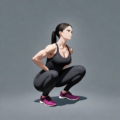
The squat forms the foundation of lower body strength training. It primarily targets your quadriceps, glutes, and hamstrings while engaging your core for stability. A proper squat involves descending with your weight in your heels, keeping your chest upright, and lowering until your thighs are roughly parallel to the ground. Your knees should track over your toes, and your back should maintain its natural curve throughout the movement.
The lunge isolates each leg individually, addressing strength imbalances and improving single-leg stability. During a forward lunge, you step one leg forward, lower your body until both knees form approximately 90-degree angles, then push through your front heel to return to standing. Lunges challenge your balance and proprioception while building unilateral leg strength that translates to better athletic performance and injury prevention.
Jumping introduces the explosive element. A jump squat combines the squatting motion with an explosive takeoff, engaging fast-twitch muscle fibers and building power. This plyometric component elevates your heart rate quickly, making the combo an efficient cardiovascular tool alongside strength development.
The Proper Progression Strategy
Jumping straight into the full combo without foundational work invites injury and frustration. A logical progression allows your body to adapt and builds confidence with proper form.
Start by spending 1-2 weeks mastering bodyweight squats. Focus on depth, alignment, and breathing. Practice 3-4 sets of 8-12 repetitions two to three times weekly, resting adequately between sessions. Once squats feel solid, introduce stationary lunges with the same volume and intensity. Spend another 1-2 weeks here, ensuring you can perform controlled lunges on both legs without balance issues.
Next, add jump squats in isolation. Begin with low-intensity variations like small hops from a quarter squat position. Practice explosive power gently—your connective tissues need time to adapt to impact. Perform 3 sets of 5-8 repetitions, twice weekly, with at least one rest day between sessions. Your goal is controlled explosiveness, not maximum height.
Once each movement feels natural, begin linking them. Start with a slow-motion version: perform a bodyweight squat, then a controlled lunge, then return to standing. Execute this at a deliberate pace, focusing on smooth transitions and form. After several sessions, gradually increase speed while maintaining control. Only when this feels stable should you add the jumping element.
Step-by-Step Execution Guide
The jump-lunge-squat combo flows as a continuous sequence. Here’s exactly how to perform it:
Begin in a standing position with your feet hip-width apart, arms at your sides or slightly bent for balance assistance. Take a breath and engage your core by drawing your belly button toward your spine without holding your breath entirely.
From standing, perform a squat: lower your body by bending your hips and knees, sending your hips backward as if sitting into a chair. Keep your weight distributed through your entire foot with emphasis on your heels. Lower until your thighs reach roughly parallel to the ground, maintaining an upright torso. At the bottom of your squat, plant your feet firmly.
Explosively push through your feet to extend your hips and knees, and as you reach standing height, immediately transition into a forward lunge. Step one foot forward, keeping your torso upright as your front leg accepts your body weight. Lower into the lunge until both knees form approximately 90-degree angles, with your back knee hovering just above the ground. Your front shin should remain relatively vertical.
From the lunge position, push through your front heel to return to standing, bringing your rear leg forward to meet your front leg. As your feet come together and you reach standing position, explosively jump, driving your arms upward to assist the movement. Land softly by bending your knees immediately upon impact to absorb force, then settle into a squat position to begin the next repetition.
For a typical set, perform 6-10 complete cycles (one cycle equals squat, lunge, jump). Rest 60-90 seconds between sets. Beginners should start with 3 sets; intermediate and advanced athletes can progress to 4-5 sets.
Modifications for Every Fitness Level
Not everyone begins at the same fitness level, and that’s entirely appropriate. Modifications ensure you can access this exercise safely regardless of your current conditioning.
For beginners or those returning from injury, perform the combo without the explosive jump component. Execute a controlled squat, then a controlled lunge, then stand and walk forward two steps before beginning the next repetition. This significantly reduces impact while teaching movement patterns. Alternatively, hold onto a sturdy object like a counter or resistance band anchored at chest height for balance support.
Another beginner modification involves reducing range of motion. Instead of descending until thighs reach parallel, lower only partway into a quarter or half squat. Similarly, lunge depth can be reduced. As strength and confidence build over weeks, gradually increase depth.
For intermediate exercisers with solid form but seeking additional challenge, add resistance. Hold dumbbells at your sides or a kettlebell at chest height during the entire sequence. Even light weight (8-12 pounds per hand) significantly increases demand. You can also slow the movement tempo, spending 2-3 seconds on each lowering phase and 1-2 seconds on the rising phase.
Advanced athletes can perform the combo with substantial external load, use only one leg for the lunge (alternating legs each repetition), or increase jump height and explosiveness. Some advanced variations include performing the combo on an elevated surface like a step or adding a lateral component where you lunge to the side instead of forward.
Breathing and Core Engagement Techniques
Proper breathing prevents dizziness, maintains core pressure, and optimizes force production. Many people hold their breath during intense exercise, which can elevate blood pressure excessively and limit oxygen delivery to working muscles.
Here’s the breathing pattern for the jump-lunge-squat combo: Inhale as you begin your descent into the squat, maintaining that breath through the bottom position. This breath-hold during the squat helps stabilize your spine through the heaviest portion of the movement. Exhale forcefully as you drive upward from the squat and into the lunge.
Inhale again as you lower into the lunge, and exhale as you stand from the lunge. Finally, inhale as you prepare for the jump, then exhale explosively as you drive upward and land from the jump. This rhythm becomes natural with practice.
Throughout all three movements, maintain core engagement by drawing your belly button toward your spine with moderate intensity—not so tight that you can’t breathe, but firm enough to brace your trunk. Your core protects your lower back and improves force transfer from your lower body through your torso.
Programming the Combo Into Your Routine
Strategic programming prevents overuse injuries while maximizing adaptation and results. The jump-lunge-squat combo is intense, demanding recovery time between sessions.
Beginners should perform the combo 2 times weekly with at least 2-3 days separating sessions. This might look like Monday and Thursday, allowing adequate recovery while building consistency. Include 1-2 days of lower-intensity activity like walking or easy cycling on the days between.
Intermediate athletes can increase frequency to 2-3 times weekly, alternating between heavy sessions (lower reps with added resistance) and moderate sessions (standard tempo with bodyweight). Always include at least one full rest day between high-intensity sessions.
Combine the combo with complementary exercises. On days when you perform the jump-lunge-squat combo, add 1-2 additional exercises like leg curls, calf raises, or hip thrusts. This balanced approach targets all lower body muscle groups and prevents muscular imbalances.
Periodize your training by varying volume and intensity across 3-4 week cycles. Week one focuses on higher reps with lower intensity to build work capacity. Week two increases intensity and external load while slightly reducing reps. Week three pushes intensity further, and week four reduces volume for recovery before the cycle repeats.
Common Mistakes and How to Fix Them
Even with clear instructions, certain mistakes appear frequently. Recognizing and correcting them accelerates progress and prevents injury.
The most common mistake is allowing your knees to cave inward during the squat or lunge. This places excessive stress on the inside of your knee joint and indicates weak glutes or poor motor control. Fix this by focusing on pushing your knees outward throughout both movements. Some athletes find it helpful to imagine “screwing your feet into the ground” without actually turning them—this cue activates the external rotators and stabilizers that keep knees tracked properly.
Another frequent error is rounding your lower back during the squat. This happens when descent occurs too quickly, control is lost, or hip mobility limitations force excessive forward lean. Correct this by reducing depth until you can maintain a neutral spine, improving hip mobility through dedicated stretching, or using a lighter load. Never sacrifice spinal alignment for depth or weight.
Incomplete foot contact during landing is also common, particularly with the jump component. Landing on your toes instead of your entire foot concentrates impact in vulnerable areas and reduces stability. Consciously land with weight distributed across your whole foot, as if splaying your toes slightly. This distributes forces more safely.
Many people skip the transition between movements or rush through them, losing control. The combo requires a deliberate flow, not chaotic switching. Practice slowly until transitions feel smooth, then gradually increase speed. Quality always precedes speed.
Nutrition and Recovery Considerations
Exercise is just one component of results. Without proper nutrition and recovery, your body cannot adapt and improve.
Consume adequate protein to support muscle repair—aim for 0.7-1 gram per pound of body weight daily, distributed across 3-5 meals. This provides amino acids necessary for muscle protein synthesis, which increases when you perform resistance training like the jump-lunge-squat combo.
Time your carbohydrates strategically. Consume a small amount 1-2 hours before your workout to fuel the session. Include carbohydrates in your post-workout meal alongside protein and fat to refill glycogen stores and support recovery. This might be a chicken and rice meal, Greek yogurt with granola and berries, or a smoothie with fruit and protein powder.
Prioritize sleep—7-9 hours nightly allows your nervous system and muscles to recover fully. During sleep, growth hormone increases, protein synthesis accelerates, and mental stress decreases. Poor sleep undermines all other recovery efforts. If you’re training 3+ times weekly, sleep becomes even more critical.
Stay hydrated throughout the day and during your workout. Even mild dehydration impairs performance, thermoregulation, and cognitive function. Drink water consistently rather than waiting until you’re thirsty.
Consider active recovery on your rest days. A 20-30 minute walk, easy swim, or gentle yoga session improves blood flow without creating additional fatigue. This supports recovery and often enhances how you feel psychologically.
Tracking Progress and Adjusting Your Training
Progressive overload—gradually increasing demands on your body—drives continued improvement. Without tracking your efforts, you cannot systematically progress.
Keep a simple workout log noting the date, number of sets and repetitions, any external load used, and how the session felt. After 2-3 weeks, review your log and identify trends. Are you completing more repetitions than before? Did you use additional weight? Did the movements feel smoother? These observations guide your next adjustments.
Progress using one of these methods: increase repetitions (perform 8 reps instead of 6), add sets (5 sets instead of 4), increase resistance (hold 15-pound dumbbells instead of 10-pound), slow the tempo (spend 3 seconds lowering instead of 2), or reduce rest periods (rest 45 seconds instead of 60). Vary which progression method you use across 4-week blocks to maintain adaptation.
Every 6-8 weeks, perform a test session where you assess your current capability. This might be maximum repetitions of the combo with proper form, or using a target weight and counting completed repetitions. This benchmark provides concrete feedback and motivation for continued effort.
Energy System Development and Metabolic Adaptation
The jump-lunge-squat combo challenges multiple energy systems simultaneously, creating distinct metabolic demands that adapt your body over time. Understanding these systems helps you structure your training for specific goals and recognize how your body is changing.
During the explosive jump phase, your phosphocreatine (PCr) system dominates, providing immediate energy for 6-10 seconds of maximum effort. This system regenerates quickly during rest periods, which is why the 60-90 second rest between sets allows substantial recovery. The squat and lunge phases tap into anaerobic glycolysis, breaking down glucose without oxygen to fuel intense muscular contractions. After approximately 30-90 seconds of accumulated work, your aerobic system kicks in, utilizing oxygen to produce sustained energy.
When you perform 3-5 sets of this combo with minimal rest, you’re training all three systems in a single session. Over weeks of consistent practice, your mitochondria multiply (the powerhouses of your cells), capillary density increases to deliver oxygen more efficiently, and your muscles develop greater capacity to buffer lactate—the metabolic byproduct that causes the burning sensation during intense effort. This adaptation means movements that felt exhausting in week two feel manageable by week six.
The metabolic aftereffect extends beyond your workout. Intense exercise like this combo elevates your metabolic rate for hours afterward, a phenomenon called excess post-exercise oxygen consumption (EPOC). Your body continues burning calories as it repairs muscle damage, restores energy stores, and returns hormone levels to baseline. This afterburn effect is particularly pronounced with high-intensity sequences that challenge multiple energy systems, making the combo efficient for body composition goals even in relatively brief sessions.
If your goal is cardiovascular improvement, structure sets with minimal rest (45 seconds instead of 90) to maintain elevated heart rate. If your goal is maximum strength, use longer rest periods (2-3 minutes) and heavier resistance to fully recover between sets. Most people benefit from moderate rest periods (60-90 seconds) that challenge both strength and conditioning simultaneously.
Addressing Movement Asymmetries and Imbalances
The lunge component of this combo reveals and addresses strength imbalances between your left and right sides. Most people have a dominant leg that’s stronger or more coordinated, and a weaker or less stable side. Without attention, these asymmetries compound over time, creating postural distortions and increasing injury risk.
Pay close attention during the lunge phase to notice which leg naturally steps forward—this is typically your dominant side. In the basic combo, you may alternate legs, but this still masks imbalances because you return to center after each repetition. A more revealing approach is to perform 6 consecutive lunges on one leg before switching, which exposes strength and stability differences clearly. If your left leg feels shaky or fatigues faster than your right, you’ve identified an asymmetry worth addressing.
Correct asymmetries by increasing volume on the weaker side. After completing your standard combo sets, perform 1-2 additional sets of lunges emphasizing your weaker leg. Step forward with that leg consistently while your stronger leg remains back, rather than alternating. This unilateral focus builds stability and strength on the lagging side. Within 3-4 weeks, you’ll notice improved balance and control.
Asymmetries also manifest during the squat phase. Some people shift their weight to one side at the bottom of the squat—you’ll notice your torso leans slightly, or one knee tracks differently. This usually indicates that one hip is tighter or one side’s glutes are weaker. Address this by filming yourself from behind during squats, noting any lateral shift. Place a light dumbbell or kettlebell on the tighter side to create external feedback—any shift becomes immediately obvious. Practice maintaining perfect symmetry with this cue.
The jump component can also reveal asymmetries. Do you propel yourself straight up, or do you rotate or lean? A asymmetrical jump often indicates uneven hip strength or core instability. Practice single-leg hops (holding onto a support) alternating between legs to build stability on each side independently. This prepares you for more balanced bilateral jumping and reduces injury risk.
Environmental Considerations and Exercise Variations
Where and how you perform this combo can be modified based on available space, equipment, environmental conditions, and training goals. Each variation emphasizes different qualities while maintaining the core movement pattern.
On slippery surfaces like polished gym floors or wet pavement, reduce jump height and explosive power to maintain foot contact and control. Your nervous system automatically applies braking force, which reduces work efficiency but increases safety. Similarly, soft surfaces like sand or grass require greater stabilizer activation because the ground shifts beneath your feet. These uneven surfaces are actually valuable training grounds because they challenge your proprioception and smaller stabilizing muscles that are often neglected on stable surfaces. A few sessions monthly on varied terrain significantly improves overall movement quality and injury resilience.
Temperature extremes affect performance. In hot environments, your body diverts blood to skin for cooling, reducing oxygen delivery to working muscles and decreasing strength and power output. You’ll likely feel more fatigued at lower intensity. Maintain hydration and reduce volume slightly. In cold environments, muscles are stiffer initially, so extended warm-ups (15-20 minutes) become essential before attempting explosive movements. Cold muscles cannot perform at full capacity and are more prone to injury.
Altitude training adds unique demands. At elevations above 5,000 feet, oxygen availability decreases, making the same workout feel significantly harder. Your body adapts by increasing red blood cell production over 2-3 weeks, which improves oxygen-carrying capacity. If you travel to altitude, expect reduced performance for the first several sessions, then gradual adaptation. Don’t attempt personal records at altitude until you’ve acclimated for at least a week.
Space limitations offer variations too. In confined areas, reduce lunge depth and distance, or perform stationary lunges without stepping forward. If you lack floor space for full range squats, step up onto a platform or box, which reduces the depth required while maintaining muscle activation. For jump components with low ceilings, focus on speed and rate of force development rather than maximum height—performing faster repetitions with less vertical displacement maintains training stimulus safely.
Integrating Unilateral Training and Single-Leg Progressions
Once you’ve mastered the bilateral (two-legged) version of the jump-lunge-squat combo, progressing to unilateral work dramatically increases demand and reveals movement quality issues that bilateral training masks.
Single-leg squats, often called pistol squats, require tremendous leg strength, mobility, and balance. Most people cannot perform a full pistol squat initially, so progress gradually. Start by performing a regular bilateral squat while holding a resistance band looped around a rack or sturdy object at chest height. As you squat, gradually release tension on the band, applying 10-20 percent of your weight through the band with one leg. Your other leg stays extended for balance. Over weeks, reduce band assistance as your single-leg strength improves.
Alternate this with assisted single-leg squats where you hold light dumbbells at your sides for counterbalance, or perform partial single-leg squats to a box or bench—your bottom touches the surface before standing again, reducing the range required. Within 6-8 weeks of progressive single-leg squat work, you’ll gain the strength for deeper, unassisted repetitions.
Single-leg deadlifts offer another unilateral variation. Stand on one leg, bend your hip and knee slightly while extending your other leg behind you for counterbalance. Lower your torso forward, maintaining a neutral spine and keeping your standing leg relatively straight. This movement challenges hip stability, posterior chain strength, and balance simultaneously. Perform 8-10 repetitions per leg as a complement to the bilateral combo.
Single-leg jump squats, where you explosively extend one leg while the other remains bent, build incredible unilateral power. These are advanced—only attempt these after mastering bilateral jumps consistently. Start by performing a single-leg jump squat while holding onto a support, then progress to free-standing attempts. Even advanced athletes perform only 3-5 repetitions per leg before fatigue compromises control.
Incorporating one unilateral session weekly while maintaining 1-2 bilateral sessions creates comprehensive development. The bilateral work builds absolute strength and power, while unilateral work improves balance, coordination, and addresses side-to-side imbalances that bilateral training cannot detect.
Plyometric Periodization and Deload Strategies
The jump component is a plyometric movement that places significant demand on your nervous system and connective tissues. Strategic periodization prevents adaptation plateaus and reduces overuse injury risk from constant high-impact training.
A typical training block lasts 4 weeks. Week one focuses on controlled jumps with moderate intensity—perform the full combo with bodyweight, emphasizing smooth landings and proper form rather than maximum height or speed. This builds a foundation and allows your tendons and ligaments to gradually adapt to impact. Week two increases jump height and explosiveness while maintaining same volume. Week three pushes intensity further, perhaps adding light resistance (holding dumbbells) or increasing reps. Week four reduces volume significantly—perform only 2 sets instead of 4-5, and reduce reps from 8-10 to 5-6. This deload week allows your nervous system and connective tissues to recover fully before the next block begins.
Every 12 weeks, take a full deload week where you perform only bodyweight movements with reduced intensity and volume. Instead of the jump-lunge-squat combo, perform the same movements at slow, controlled tempo without the explosive jump component. This thorough recovery period allows accumulated fatigue to dissipate, hormones to rebalance, and tissues to adapt fully before returning to high-intensity work.
Some advanced athletes employ a daily undulating periodization model where daily sessions vary in intensity. A Monday session might emphasize heavy resistance with low reps. Wednesday features moderate resistance with moderate reps at faster tempo. Friday focuses on explosive power with light resistance and quick repetitions. This variation maintains adaptation stimuli while distributing stress across different qualities and recovery demands.
Listen to your body throughout periodization. If you enter a week feeling fatigued despite adequate sleep, consider reducing volume by 20-30 percent that week rather than rigidly following your plan. Soreness lasting more than 3-4 days after training indicates excessive volume. Persistent joint aching (distinct from muscle soreness) warrants a deload week. These adjustments prevent overtraining and keep training sustainable long-term.
Sport-Specific Applications and Transfer to Athletic Performance
The jump-lunge-squat combo develops qualities directly transferable to numerous sports and athletic endeavors. Understanding these connections helps you appreciate how this general training translates to specific performance improvements.
In basketball, the explosive jump translates directly to vertical jump and rebounding ability. The single-leg stability developed during lunges improves lateral cutting and direction changes without losing balance or power. Players who include this combo report visible improvements in jump height and court agility within 4-6 weeks.
Soccer players benefit from enhanced unilateral leg strength developed through lunging—kicking power and accuracy improve as each leg becomes independently strong. The cardiovascular component matches the stop-start, high-intensity nature of soccer. The combo performed 2-3 times weekly in the off-season builds the conditioning foundation that allows higher-intensity activity during competitive season.
American football, particularly for skill positions requiring explosive lateral movement and vertical ability, directly benefits from this combo. Defensive backs performing single-leg squat variations and explosive jump work show improved ability to stick with receivers and explode at the snap. Running backs develop better change-of-direction capabilities through enhanced glute and hip strength.
Track and field athletes, particularly sprinters, appreciate the explosive power developed through jump components and the single-leg strength gains that improve stride length and power each cycle. Distance runners benefit from the muscular endurance and injury resilience that comes from lower body strength training, which often is neglected in pure running training.
Tennis players utilize the same movement patterns frequently—explosive lateral lunges to reach wide shots, explosive jumps for overhead movements, and powerful squat-like movements for court positioning. Training this combo builds the specific strength and coordination for these demands.
Even non-athletes pursuing general fitness notice improved ability in daily activities. Climbing stairs becomes easier. Standing from sitting requires less effort. Moving heavy objects feels more controlled. These real-world benefits often matter more than abstract performance metrics.
Advanced Tempo Variations and Movement Velocity Training
Movement tempo—how quickly or slowly you perform the exercise—creates different training effects that advance beyond basic progression methods. Manipulating tempo challenges your body in novel ways and continues driving adaptation when adding weight or reps becomes impractical.
Standard tempo uses approximately 2 seconds for lowering (eccentric phase), a brief pause at the bottom, and 1-2 seconds for rising (concentric phase). This balanced approach develops moderate strength and hypertrophy.
Slow eccentric tempo involves 3-5 seconds for the lowering phase while maintaining 1-2 seconds for rising. This increases time under tension, creates greater metabolic stress, and builds substantial muscular endurance and hypertrophy. Time under tension is limited to perhaps 3 sets of 6-8 repetitions because the movement becomes very demanding, but even brief sessions build significant muscle.
Fast concentric tempo involves explosive rising phases taking less than 1 second while controlling the lowering phase at normal speed. This emphasizes power development and fast-twitch fiber recruitment. The combo becomes more athletic and sport-specific when performed this way. The drawback is that fast movements require perfect form—any breakdown in positioning is magnified at speed, increasing injury risk. Only progress to faster tempos after mastering controlled tempo thoroughly.
Contrast training alternates between heavy loads at slow tempo and explosive movements at moderate load. Perform 2 heavy squats at slow tempo, then immediately follow with 6 explosive jump squats at bodyweight. The heavy movement primes your nervous system, and your body responds to the subsequent explosive movement with enhanced power output. This advanced technique requires excellent form and recovery capacity.
Paused tempo involves holding positions for 1-3 seconds at challenging points. Perform a squat and hold the bottom position for 2 seconds before rising. This eliminates momentum and forces your muscles to work continuously, building significant strength. Paused tempos are particularly effective for addressing sticking points where you struggle to move from the bottom position.
Varying tempo weekly maintains adaptation and addresses different quality development. A typical four-week cycle might emphasize slow eccentric tempo week one, normal tempo week two, explosive tempo week three, and paused tempo week four. This comprehensive approach develops balanced strength, power, endurance, and technique.
Recovery Modalities and Injury Prevention Strategies
The jump-lunge-squat combo creates substantial muscle damage and nervous system fatigue that demands recovery strategies beyond sleep and nutrition. Active management of recovery accelerates adaptation and maintains training consistency.
Foam rolling addresses muscle tightness and may improve recovery when performed post-workout or on rest days. Spend 60-90 seconds rolling your quads, glutes, and calves—the primary muscles worked during the combo. Foam rolling immediately reduces soreness perception and may enhance blood flow, though the research on long-term benefits is mixed. Include it in your routine primarily because many athletes report subjective improvement and it costs nothing.
Stretching post-workout remains valuable despite evolving research. After your session, perform 30-second stretches for your quads, glutes, hip flexors, and hamstrings. This maintains mobility that gets progressively restricted by repeated training. Avoid ballistic stretching (bouncing); use static stretches where you settle into a position and hold it quietly. Include dedicated mobility work 2-3 times weekly—15-20 minute sessions specifically targeting hip and ankle mobility significantly improve squat depth and lunge stability.
Contrast water therapy involves alternating between hot and cold water immersion, which may accelerate recovery through enhanced blood flow and reduced inflammation perception. Perform 3-4 cycles of 3 minutes cold followed by 1 minute hot water. This is most accessible at facilities with pools or hot tubs, making it less practical for home training, but if available, include it post-workout on heavy training days.
Compression garments worn post-workout may reduce soreness perception and support blood flow, though research on meaningful performance benefits is limited. They’re most valuable for perception benefits—the psychological recovery boost of feeling supported often matters as much as any measurable physiological benefit.
Massage, particularly sports massage from trained professionals, addresses muscle tightness and movement restrictions that prevent optimal recovery. Monthly sessions maintain mobility and catch developing issues before they become problems. Self-massage using hands or tools offers similar benefits more affordably, though professional massage provides superior results.
Proper warmup prevents injury more effectively than recovery modalities. Before performing the combo, spend 5-10 minutes performing dynamic movements—leg swings, bodyweight lunges, light jogging, and gradual squat work. This elevates core temperature, lubricates joints, and prepares your nervous system for intense effort. A thorough warmup may prevent more injuries than all recovery modalities combined.
Frequently Asked Questions
How many calories does the jump-lunge-squat combo burn? Calorie expenditure varies based on body weight, intensity, and individual metabolism, but most people burn 8-12 calories per minute during this exercise. A 10-minute session (including rest periods) might burn 80-120 calories. The real value lies in increased metabolism in the hours following the workout and long-term muscle building, which increases resting metabolic rate. Prioritize consistent effort over calorie counting.
Is this combo suitable for people with knee problems? This exercise involves significant knee flexion and impact, making it contraindicated for certain knee injuries. If you have current knee pain, consult your physical therapist or physician before attempting this combo. Modified versions like stationary lunges and squats without jumping may be appropriate even with mild knee concerns. Proper form and gradual progression significantly reduce injury risk in healthy individuals.
How quickly will I see results? Strength improvements typically appear within 2-4 weeks as your nervous system becomes more efficient at recruiting muscle fibers. Visible muscle development usually requires 6-8 weeks of consistent training combined with adequate nutrition. Cardiovascular improvements can occur within 1-2 weeks. Consistency matters far more than intensity—three well-executed sessions weekly outperforms sporadic high-intensity efforts.
Can I perform this combo on consecutive days? This is not recommended for most people. The jump-lunge-squat combo is demanding, requiring substantial recovery. Performing it on consecutive days increases injury risk and can lead to overtraining, characterized by decreased performance, elevated resting heart rate, mood disturbances, and illness. Even advanced athletes typically space these sessions 2-3 days apart. If you train daily, alternate between this high-intensity combo and lower-intensity activities like steady-state cardio or mobility work.
What equipment do I need? You can perform the combo with just bodyweight. For added challenge, you can use dumbbells, kettlebells, barbells, or resistance bands. If you’re modifying for beginners, a sturdy chair, counter, or TRX system for balance support is helpful. Beyond these, no specialized equipment is necessary. This makes the combo accessible at home, in a gym, or outdoors.
Related posts:
 How to Change Your Fitness Routine to Avoid Plateau
 Kate Hudson’s Latest Obsession: The High-Energy Workout Called PloyoJam
 15-Minute No-Equipment HIIT
 Get Stronger with Charlee Atkins
 The Ultimate Guide to Lunge Variations That Actually Work
 PHA Bodyweight Workout: Efficient Fitness Anywhere, Anytime
 Perfect Your Squat Form
 Six Powerful Toning Moves from Jenna Dewan