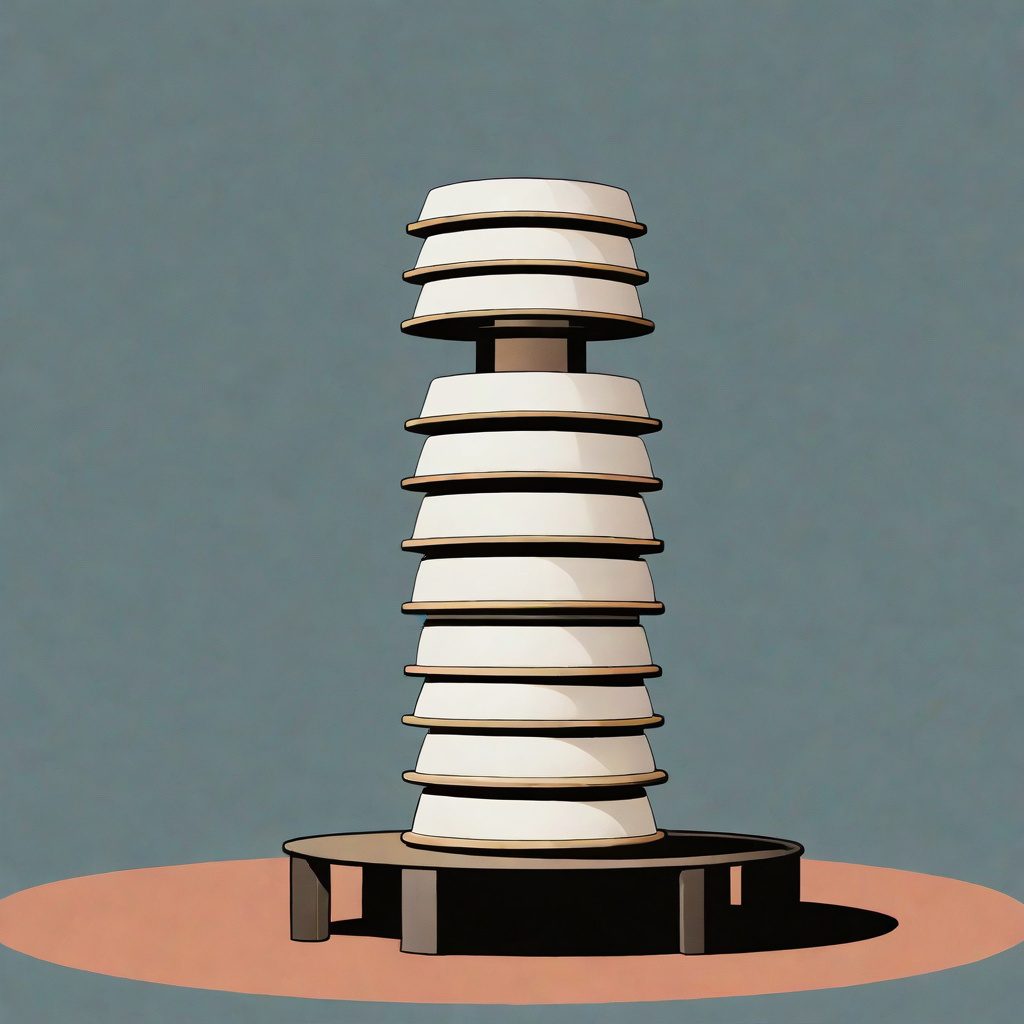
The struggle to build new, positive habits is a universal human experience. Most of us start the year with ambitious goals—meditating daily, exercising every morning, or reading more books—only to find that by February, the initial surge of motivation has evaporated. The primary reason for this failure isn’t a lack of willpower or discipline; rather, it is a failure of system design. We attempt to graft new behaviors onto a void, hoping that sheer effort will bridge the gap. This is where the concept of habit stacking becomes a transformative tool for personal growth.
Habit stacking is a strategy that leverages the existing neural pathways in your brain to make the adoption of new behaviors almost automatic. Instead of relying on a vague reminder or a fickle sense of motivation, you anchor a new habit to an existing one. By using a behavior you already perform without thinking as a trigger, you create a seamless transition into the new activity. This method transforms the daunting task of “starting a new life” into a series of manageable, linked actions.
The Science Behind the Stack
To understand why habit stacking works, we must look at how the brain handles repetition. Our brains are designed for efficiency. When we perform an action repeatedly, the neural connections associated with that action strengthen through a process called long-term potentiation. Eventually, the behavior becomes a “habit,” meaning the brain no longer needs to consciously decide to do it; the cue triggers the action automatically.
These established habits are like well-paved highways in the brain. When you attempt to start a brand-new habit from scratch, you are essentially trying to carve a new path through a dense jungle. It requires immense cognitive effort and willpower. Habit stacking allows you to “hitch a ride” on an existing highway. By placing a new behavior immediately after an established one, you utilize the momentum of the old habit to propel you into the new one. You are not creating a new trigger; you are simply extending an existing chain of events.
The Basic Formula for Success
The beauty of habit stacking lies in its simplicity. The core logic follows a specific linguistic formula that removes ambiguity from your routine. The formula is: “After [Current Habit], I will [New Habit].”
Ambiguity is the enemy of consistency. If you tell yourself, “I want to start meditating more,” your brain has no clear signal of when to begin. However, if you say, “After I pour my morning cup of coffee, I will meditate for one minute,” you have created a precise trigger. The act of pouring the coffee becomes the biological “start button” for the meditation.
To make this formula effective, the current habit must be something you do every single day without fail. It should be a non-negotiable part of your routine, such as brushing your teeth, boiling the kettle, or closing your laptop at the end of the workday. The more ingrained the anchor habit is, the more powerful the stack becomes.
Choosing the Right Anchor
Not every existing habit is a suitable anchor. To build a sustainable stack, you must evaluate your current routines based on frequency, timing, and emotional state. A poor anchor is one that is inconsistent or occurs at unpredictable times. For example, “After I go to the gym” is a poor anchor if you only go to the gym three times a week. The goal is to find a daily, rhythmic anchor.
Consider these common, high-reliability anchors:
- Morning Rituals: Waking up, using the bathroom, drinking water, or making coffee.
- Work Transitions: Opening your laptop, sitting in your office chair, or finishing your first meeting.
- Home Transitions: Walking through the front door, taking off your shoes, or putting your keys on the counter.
- Evening Rituals: Brushing your teeth, putting on pajamas, or plugging in your phone for the night.
When selecting an anchor, also consider the “energy match.” If you want to implement a high-energy habit, like a quick set of jumping jacks, anchor it to something that already wakes you up. If you want to implement a calming habit, like gratitude journaling, anchor it to a wind-down activity like getting into bed.
Starting Small: The Power of Micro-Habits
One of the most common mistakes people make with habit stacking is trying to stack too much, too fast. They attempt to go from “After I wake up, I will…” to a 90-minute routine involving yoga, journaling, cold showers, and reading. This creates a high barrier to entry, and the moment life becomes stressful, the entire stack collapses.
The secret to long-term success is the concept of micro-habits. The goal is to make the new habit “too small to fail.” Instead of aiming for 20 minutes of meditation, aim for one minute. Instead of reading a chapter of a book, read one page. Instead of a full workout, do five push-ups.
This approach works because it focuses on the act of showing up rather than the magnitude of the result. Once the neural connection between the anchor and the new habit is solidified, you can gradually increase the intensity. It is far easier to scale up a habit that is already established than it is to force a large habit into existence through sheer will.
Designing Your Personal Habit Stack
Once you understand the formula and the importance of micro-habits, you can begin designing your stacks. Rather than just one single stack, you can create “chains” of habits that lead into one another, creating a flow for your day.
Example: The Productive Morning Stack
1. After I wake up, I will drink a glass of water. (Anchor $
ightarrow$ New Habit)
2. After I drink my water, I will stretch for two minutes. (New Habit $
ightarrow$ New Habit)
3. After I stretch, I will write my top three priorities for the day. (New Habit $
ightarrow$ New Habit)
Example: The Work-Life Boundary Stack
1. After I close my laptop for the day, I will clear my desk of clutter. (Anchor $
ightarrow$ New Habit)
2. After I clear my desk, I will take three deep breaths to signal the end of work. (New Habit $
ightarrow$ New Habit)
3. After I take three breaths, I will change into my comfortable home clothes. (New Habit $
ightarrow$ New Habit)
Example: The Evening Wind-Down Stack
1. After I brush my teeth, I will put my phone in the charger in another room. (Anchor $
ightarrow$ New Habit)
2. After I put my phone away, I will write one thing I am grateful for today. (New Habit $
ightarrow$ New Habit)
3. After I write my gratitude, I will read two pages of a book. (New Habit $
ightarrow$ New Habit)
When designing these, keep the transitions logical. The physical movement from one task to the next should feel natural. If your stack requires you to move from the kitchen to the bedroom and back to the kitchen, you are adding unnecessary friction that may lead to the habit’s failure.
Overcoming Common Obstacles
Despite a perfect plan, you will encounter friction. The most common obstacle is the “broken chain,” where a chaotic day prevents you from completing your stack. The psychological danger here is the “all-or-nothing” mentality, where one missed day leads to total abandonment.
To counter this, adopt the rule of “Never Miss Twice.” Missing one day is an accident; missing two days is the start of a new habit. If you miss a stack, don’t judge yourself. Simply focus on the very next anchor. The goal is not perfection, but consistency over time.
Another obstacle is “stack bloat,” where the chain becomes so long that it feels like a chore. If you find yourself dreading your stack, it is a sign that the habits have become too large or the chain is too long. The solution is to prune. Remove the habits that aren’t serving you or break one long stack into two smaller ones anchored to different parts of the day.
Finally, address physical friction. If your new habit is “After I pour my coffee, I will take my vitamins,” but the vitamins are kept in a high cabinet in a different room, you have created friction. Place the vitamins right next to the coffee maker. Design your environment to support your stack.
Tracking Progress and Refining the Process
Visibility is a powerful motivator. When you can see your progress, your brain releases dopamine, which reinforces the behavior. Using a simple habit tracker—whether it is a digital app or a physical calendar with X’s—provides a visual reward for completion.
However, tracking should not become a source of stress. Instead, use it as data. If you notice you consistently fail at a specific part of your stack, don’t blame your willpower; analyze the anchor. Is the anchor too vague? Is the new habit too difficult? Is there too much friction in the environment? Use your tracker to identify where the system is breaking down and refine the stack accordingly.
Every few weeks, conduct a “habit audit.” Ask yourself: Is this habit still serving my goals? Does this stack still fit my current lifestyle? As your life changes—perhaps you start a new job or move to a new home—your anchors will change. Be willing to detach a habit from an old anchor and stack it onto a new one.
Integrating Mindfulness into Your Stacks
Habit stacking isn’t just for physical productivity; it is a potent tool for mental health. Many of us struggle with mindfulness because we forget to do it until we are already stressed. By stacking mindfulness onto mundane activities, you integrate peace into your day without needing extra time.
Consider these mindfulness stacks:
- The Red Light Reset: After I hit a red light while driving, I will take one deep, conscious breath.
- The Hand-Washing Moment: After I turn on the faucet to wash my hands, I will notice the temperature of the water on my skin for five seconds.
- The Doorway Pause: After I touch the doorknob to enter my home, I will let go of the stress of the workday.
These “micro-mindfulness” stacks prevent the accumulation of stress throughout the day. Instead of waiting for a weekend retreat to relax, you are performing dozens of tiny resets every day, keeping your nervous system regulated.
Long-term Sustainability and Evolution
The ultimate goal of habit stacking is to reach a point where the behaviors are so automated that they no longer require conscious thought. At this stage, the “stack” has become a part of your identity. You are no longer “someone trying to meditate”; you are “a person who meditates after coffee.”
As you master this process, avoid the trap of rigidity. The purpose of a routine is to support your life, not to constrain it. If a rigid stack makes you feel anxious or trapped, give yourself permission to be flexible. The most sustainable systems are those that are robust enough to provide structure but flexible enough to accommodate the unpredictability of being human.
Remember that growth is an iterative process. You will experiment, you will fail, and you will refine. The magic is not in the perfect stack, but in the commitment to keep designing a life that works for you, one small link at a time.
Integrating Temptation Bundling into Your Stacks
While the basic habit stacking formula focuses on the sequential nature of behavior, it doesn’t always account for the internal resistance we feel toward “should” activities. This is where temptation bundling—a strategy developed by behavioral economists—can supercharge your stacks. Temptation bundling is the act of pairing an action you want to do with an action you need to do. When integrated into a habit stack, this transforms a chore into a reward-based experience, significantly lowering the psychological barrier to entry.
To implement this, identify a high-frequency pleasure (the “want”) and anchor it strictly to the new habit in your stack (the “need”). The rule must be absolute: you are only allowed to engage in the rewarding activity while performing the habit. For example, if you struggle to maintain a consistent exercise routine, your stack might look like this: “After I put on my gym shoes, I will start my workout, and only while working out will I listen to my favorite true-crime podcast.” The podcast becomes the immediate reward that pulls you through the friction of the exercise.
This approach is particularly effective for habits that feel tedious or draining. Consider these practical bundles within a stack:
- The Chore-Audio Bundle: “After I start the dishwasher, I will tidy the kitchen counters while listening to my favorite upbeat playlist.”
- The Learning-Leisure Bundle: “After I sit down for my lunch break, I will read one professional development article while eating my favorite treat.”
- The Admin-Atmosphere Bundle: “After I open my budget spreadsheet, I will light a specific scented candle and play lo-fi beats.”
The edge case here is “reward dilution.” If you allow yourself to listen to that favorite podcast during other times of the day, the bundle loses its power because the reward is no longer exclusive to the habit. To maintain the neurological link, the pleasure must be gated behind the effort. By bundling temptation into your stack, you move from relying on discipline to relying on desire.
Adaptive Stacking for Unpredictable Environments
A common point of failure for habit stacks is the “environment shift.” Most people design their stacks based on a static home or office environment. However, when you travel for work, get sick, or move to a new city, your physical anchors may disappear. If your stack is “After I sit in my ergonomic office chair, I will write my to-do list,” and you find yourself working from a hotel desk or a coffee shop, the trigger is gone, and the habit often collapses.
To solve this, you must develop “Portable Stacks” and “If-Then Contingencies.” A portable stack relies on universal anchors—actions that occur regardless of geography. Instead of anchoring to a specific piece of furniture, anchor to a biological or portable event. For example, instead of “After I sit in my office chair,” use “After I open my laptop.” Whether you are in Tokyo or your living room, you will always open your laptop to work.
Beyond portability, you can implement “If-Then” planning to handle edge cases where your primary anchor is unavailable. This creates a secondary backup system that preserves the momentum of the habit. Consider these adaptive strategies:
- The Travel Contingency: “If I am in a hotel and cannot use my usual morning coffee anchor, then I will use the act of shutting off my phone alarm as the trigger for my stretching routine.”
- The Illness Modification: “If I am too sick to perform my full gym stack, then I will replace the workout with five minutes of mindful breathing after I take my medication.”
- The Schedule Shift: “If my morning meeting is moved to 7 AM, displacing my meditation stack, then I will stack my meditation after my first glass of water during the lunch hour.”
By designing for volatility, you stop viewing a change in scenery as a reason to quit. You transition from a rigid system to a resilient one. The goal is to decouple the habit from the location and couple it more tightly to the sequence of your day.
Social Anchors and Interpersonal Stacking
Most habit stacking advice focuses on solitary actions, but our lives are deeply social. We spend a significant portion of our day reacting to the behaviors of others. By utilizing “Social Anchors,” you can leverage the predictable actions of your partner, children, or colleagues as triggers for your own positive behaviors. This effectively turns your social environment into a network of reminders.
Social stacking works best when the other person’s habit is consistent and non-negotiable. For example, if your spouse always makes tea at 4 PM, that is a high-reliability anchor. Your stack becomes: “After my spouse starts the kettle, I will take two minutes to clear my email inbox.” In this scenario, you aren’t relying on your own memory or a timer; you are relying on a social cue that is already embedded in the household rhythm.
In a professional setting, social anchors can help manage workplace stress and productivity. Consider these examples:
- The Meeting Reset: “After my manager closes the Zoom call, I will stand up and stretch for thirty seconds before starting the next task.”
- The Collaborative Cue: “After my teammate asks for a status update, I will take one deep breath to ensure I respond calmly and clearly.”
- The Family Transition: “After my children put their backpacks by the door, I will put my phone in the ‘charging station’ to be fully present with them.”
The primary risk with social anchors is “dependency friction.” If the person you are anchoring to changes their routine or is absent, your trigger disappears. To mitigate this, always have a personal backup anchor. If your spouse doesn’t make tea one afternoon, have a secondary trigger—like the clock hitting 4 PM—to ensure the habit still occurs. When used correctly, social stacking transforms your relationships from potential distractions into catalysts for personal growth.
The Architecture of Environmental Priming
While habit stacking provides the temporal trigger (the “when”), environmental priming provides the visual trigger (the “how”). Priming is the act of arranging your physical space to make the next step in your stack inevitable. If there is a gap between your anchor and your new habit, your brain will look for the path of least resistance. If that path leads away from your habit, the stack will fail.
Effective priming involves reducing the “activation energy” required to transition from the anchor to the habit. If your stack is “After I brush my teeth, I will floss,” but the floss is tucked away in a drawer under a pile of towels, you have created a cognitive gap. Priming means placing the floss directly on top of the toothpaste tube. The visual cue reinforces the temporal cue, creating a double-layered trigger.
To master environmental priming, apply these three principles to your stacks:
- Visual Salience: Make the tools for your new habit impossible to ignore. If you want to read after you get into bed, place the book on your pillow in the morning. The book is a physical manifestation of the intention.
- Friction Reduction: Remove every single micro-obstacle. If your stack involves taking vitamins after breakfast, pre-sort them into a daily pill organizer. Searching for the right bottle is friction; grabbing a pre-set tray is seamless.
- Contextual Zoning: Dedicate specific areas of your home to specific stacks. If you have a “deep work” stack, only perform those habits at a specific desk or in a specific chair. Eventually, simply entering that physical zone will prime your brain for the entire stack of behaviors.
An edge case arises when you over-prime, leading to “cue blindness.” If your environment is cluttered with too many reminders, your brain begins to treat them as background noise. To prevent this, use high-contrast priming. Use a brightly colored sticky note or a specific object that doesn’t belong in that space to grab your attention and signal the start of the stack.
Managing Cognitive Load and the Willpower Budget
A sophisticated habit stack can inadvertently become a source of decision fatigue if not managed correctly. Every time you have to consciously remember the next step in a long chain, you consume a small amount of mental energy. If you place a complex, high-effort stack during a time of day when your cognitive load is already peaked—such as the middle of a stressful workday—you are more likely to experience “stack collapse.”
To optimize your stacks, you must align them with your biological energy peaks and troughs. This is known as “Energy Mapping.” High-effort habits (those requiring deep focus or physical exertion) should be stacked during your peak energy windows, while low-effort, restorative habits should be stacked during your energy dips.
Consider these strategic placements based on cognitive load:
- Peak Energy (Morning): Stack your most challenging habits here. “After I drink my first glass of water, I will tackle my hardest work task for 60 minutes.” Because your willpower budget is full, you can handle the friction of a difficult habit.
- The Afternoon Slump (2 PM – 4 PM): Avoid stacking high-willpower tasks here. Instead, stack “maintenance” or “restorative” habits. “After I finish my mid-afternoon snack, I will do a two-minute desk stretch.” This uses a low-energy habit to recharge your system rather than drain it.
- The Evening Wind-Down: Stack habits that signal safety and relaxation. “After I put on my pajamas, I will write my to-do list for tomorrow.” By offloading tomorrow’s worries onto paper, you reduce the cognitive load on your brain as you try to sleep.
If you find yourself dreading your routine, it is often a sign that your “willpower-to-reward ratio” is off. You are spending too much mental energy on the execution and not receiving enough immediate satisfaction. To fix this, either shorten the stack, reduce the difficulty of the micro-habit, or introduce a temptation bundle to offset the cognitive cost.
Emotional Anchors and Internal Triggering
Most habit stacking relies on external, physical anchors (e.g., “After I pour coffee”). However, the most advanced form of stacking utilizes internal, emotional anchors. This involves using a recurring feeling or mental state as the trigger for a new behavior. While harder to master, emotional stacking allows you to regulate your mood and reactions in real-time, moving the practice from productivity into the realm of emotional intelligence.
The formula shifts slightly: “When I feel [Emotion/Sensation], I will [New Habit].” The key is to identify a specific, recurring internal cue that usually leads to a negative or neutral outcome and redirect it toward a positive action.
Practical examples of emotional stacks include:
- The Anxiety Pivot: “When I feel the first surge of anxiety before a presentation, I will press my big toes firmly into the floor to ground myself.”
- The Frustration Reset: “When I feel the urge to snap at a colleague during a stressful meeting, I will take one slow breath and count to three.”
- The Boredom Bridge: “When I feel the itch to mindlessly scroll through social media, I will instead take three deep breaths and ask myself what I actually need in this moment.”
The difficulty with emotional anchors is that they are often “invisible” until the emotion has already peaked. To make these stacks work, you must practice “interoception”—the ability to sense the internal state of your body. Start by labeling the emotion as it happens: “I am feeling tension in my shoulders.” Once you can identify the physical sensation associated with the emotion, that sensation becomes the anchor. This transforms a reactive life into a proactive one, where your emotions are no longer obstacles but are instead the very triggers that prompt your growth.
Graduating the Stack: From Trigger to Identity
The final stage of mastering habit stacking is knowing when to let the stack go. The ultimate goal of any habit system is not to be a lifelong slave to a checklist, but to integrate the behavior so deeply into your identity that the anchor is no longer necessary. This is the process of “graduating” the habit. When a behavior moves from being triggered to being intrinsic, the external anchor can actually become a crutch that limits your flexibility.
You know a habit is ready for graduation when you feel a sense of “cognitive itch” if you skip the habit, even if you forget the anchor. For example, if you have stacked reading after your morning coffee for six months, you may find that on a day you don’t have coffee, you still feel a strong, natural urge to read. This indicates that the neural pathway is now self-sustaining.
To graduate a habit and transition it into an identity-based behavior, follow these steps:
- The Variable Anchor Test: Intentionally change your anchor. If you usually meditate after coffee, try meditating after a shower. If the habit persists despite the change in trigger, it is no longer dependent on the stack; it is becoming part of who you are.
- Identity Labeling: Shift your internal dialogue from the action to the identity. Instead of saying, “I am stacking reading after coffee,” start saying, “I am a reader.” This shifts the motivation from an external sequence to an internal standard.
- The Fluid Integration: Allow the habit to float. Instead of a rigid “After X, then Y,” allow the habit to happen whenever the opportunity arises. This prevents the habit from becoming a chore and allows it to integrate naturally into various contexts of your life.
By viewing habit stacking as a scaffolding system, you recognize that scaffolding is temporary. It is there to support the structure while the concrete sets. Once the identity is solidified—once you are no longer “someone trying to exercise” but “an athlete”—the scaffolding can be removed, leaving behind a permanent, effortless part of your character.
Frequently Asked Questions
Q: How many habits can I realistically stack at once?
A: While it varies by individual, it is best to start with one new habit added to one anchor. Once that feels automatic (usually after 2-4 weeks), you can add a second link to the chain. Attempting to stack five new habits simultaneously often leads to overwhelm. Focus on the quality of the connection rather than the quantity of the habits.
Q: What if I don’t have any consistent daily habits to use as anchors?
A: Everyone has anchors, even if they feel unconscious. Think of the most basic biological needs: waking up, using the restroom, eating, or showering. If you truly feel you lack anchors, create a “master anchor,” such as setting a specific alarm on your phone. The act of turning off that alarm becomes the anchor for your first stack.
Q: Does habit stacking work for negative habits I want to break?
A: Habit stacking is primarily for building positive behaviors. To break a negative habit, you generally need to identify the trigger and “replace” the action. However, you can use habit stacking to create a “replacement routine.” For example, if you habitually snack when you sit down at your desk (the anchor), you can stack a new habit: “After I sit at my desk, I will drink a glass of water first.” This creates a positive interruption in the old pattern.
Q: How long does it take for a stacked habit to become automatic?
A: The popular myth is that it takes 21 days, but research suggests it varies wildly depending on the complexity of the habit and the person. Some habits take 18 days, others take 254. The key is to ignore the calendar and focus on the feeling of “frictionless execution.” When you no longer have to remind yourself to do the habit because the anchor triggers it naturally, it has become automatic.
Q: Can I stack habits that are completely unrelated to each other?
A: Yes. There does not need to be a logical thematic connection between the anchor and the new habit. For example, “After I brush my teeth, I will do two push-ups” makes perfect sense even though dental hygiene and strength training are unrelated. The connection is temporal (time-based) and sequential, not thematic.
Related posts:
 The Best Cold Brew Coffee Makers for a Refreshing Drink
 Second Life Magic: Turn Finished Candles Into Morning Coffee Companions
 Brain-Boosting Foods
 Coffee’s Hidden Superpower: Antioxidants That Outshine Most Superfoods
 MAC Stack Mascara Review
 The Best Time to Drink Coffee in the Morning
 The Sweet Science: Why Honey in Your Coffee Is a Game-Changer
 Understanding Anchor Partners