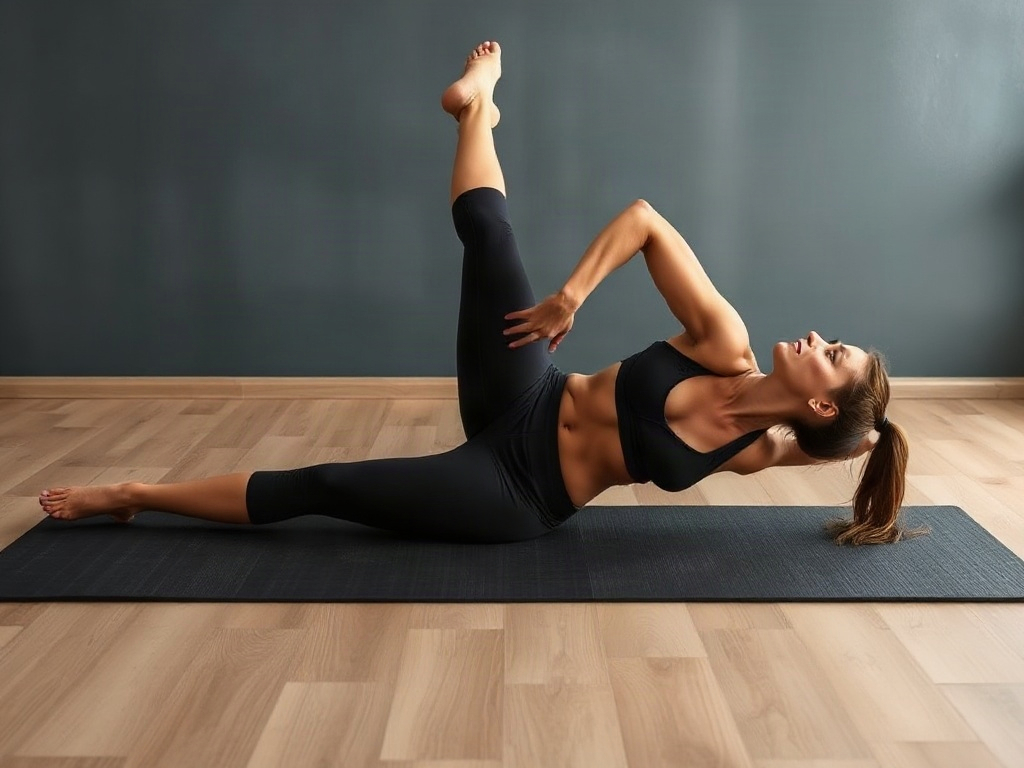
Mastering the Pilates Rollu2011Up is more than just a movement; itu2019s a gateway to a stronger core, improved posture, and heightened body awareness. This classic mat exercise targets the deep abdominal muscles, hip flexors, and hamstrings while encouraging a gentle spinal articulation that many practitioners find both challenging and rewarding. In this article weu2019ll break down the precise technique needed to perform the rollu2011up safely, explore the physiological benefits you can expect, and provide practical tips for integrating the exercise into a balanced fitness routine. Whether youu2019re a seasoned Pilates enthusiast or a beginner looking to enhance your overall strength, understanding the nuances of the rollu2011up can transform your practice and help you avoid common pitfalls that lead to strain or ineffective results.
Why the Rollu2011Up Matters
The Pilates Rollu2011Up is often introduced early in mat work because it teaches the principle of spinal control before moving into more dynamic sequences. It forces the practitioner to engage the transverse abdominis, the deepest layer of core musculature, which stabilizes the lumbar spine and supports the pelvis. This activation not only improves intrau2011abdominal pressure but also creates a solid foundation for more advanced movements such as the Hundred or the Corkscrew.
Research shows that controlled spinal articulation, as practiced in the rollu2011up, can increase proprioception and reduce loweru2011back pain when performed correctly. A 2018 study published in the Journal of Bodywork and Movement Therapies found that participants who incorporated the rollu2011up into a twiceu2011weekly routine reported a 30u202f% reduction in chronic lumbar discomfort after eight weeks. The exercise also promotes mindful breathing; as you roll up, you exhale fully, reinforcing the mindu2011body connection that is central to Pilates philosophy.
Practically, the rollu2011up serves as a diagnostic tool. If you experience pinching in the lower back or difficulty maintaining a neutral spine, the movement will highlight these issues early, allowing you to adjust alignment before they become ingrained habits. This makes it an essential component of any fitness program aimed at injury prevention and longu2011term spinal health.
Anatomy of the Rollu2011up
The Rollu2011up engages a network of muscles that work in concert to create a smooth, controlled curve. The primary movers include the rectus abdominis, which assists in the upward flexion, and the hip flexors (iliopsoas) that draw the legs and pelvis toward the ribcage. The deep core musclesu2014transverse abdominis and multifidusu2014act as stabilizers, keeping the spine in a neutral position throughout the movement.
Key joint actions involve the thoracic spine articulation, the pelvis tilt, and the shoulder blade retraction. The shoulder blades should stay stable on the mat, while the scapular muscles (serratus anterior and rhomboids) support the upper body as you rise. The hips must remain in a neutral alignment; excessive anterior pelvic tilt can compress the lumbar vertebrae and diminish the exerciseu2019s effectiveness.
Understanding the kinetic chain helps you troubleshoot discomfort. If you notice tension in the lower back, examine the engagement of the transverse abdominisu2014if itu2019s not sufficiently activated, the lumbar spine may be forced into flexion prematurely. Conversely, tight hip flexors can cause the pelvis to tip forward, increasing strain on the sacroiliac joint. Stretching the hip flexors and practicing pelvic curls beforehand can mitigate these issues.
Stepu2011byu2011Step Technique
Follow these sequential cues to master the rollu2011up:
- Setup: Lie supine on a mat with legs extended, arms reaching toward the ceiling. Press the lower back into the floor by engaging the transverse abdominis. Keep the chin slightly tucked to protect the cervical spine.
- Inhale: Prepare by lengthening the spine. Imagine a string pulling the crown of your head upward, creating space between each vertebral segment.
- Exhale and Initiate: Begin by gently rolling the tailbone toward the ceiling, then allow the lumbar spine to lift off the mat one vertebra at a time. Keep the arms and shoulders stationary; they should remain in the same position overhead.
- Continue the Roll: As you move up, think of reaching the pubic bone toward the ribcage while maintaining a long neck. The shoulders should not drop toward the ears; instead, keep them relaxed and away from the ears.
- Peak Position: When the shoulder blades begin to lift off the mat, you are at the top of the rollu2011up. Hold briefly, breathing deeply, then start the controlled descent.
- Descent: Inhale as you begin to lower, allowing the spine to return to the mat vertebra by vertebra. Keep the core engaged to guide the movement and prevent momentum from taking over.
- Repeat: Perform 5u20118 repetitions, focusing on the quality of each segment rather than the number of repeats.
Practical tip: Use a yoga block or a rolled towel under the sacrum if you feel any pinching in the lower back. This slight elevation can help maintain neutral spinal alignment while you build core strength.
Common Mistakes and How to Fix Them
Even seasoned practitioners can fall into habitual errors when performing the rollu2011up. Recognizing these pitfalls and correcting them ensures safety and maximizes benefit.
- Overu2011arching the Lower Back: Many people allow the lumbar spine to lift as a single unit, creating a Cu2011shape curve. This places excessive stress on the intervertebral discs. Fix: Focus on lifting one vertebra at a time, engaging the transverse abdominis before each segment moves.
- Pulling with the Arms: Using the arms to pull the torso up reduces core activation and can cause shoulder strain. Fix: Keep the arms stationary, breathing into the core. Imagine the arms as a fixed point from which the spine rotates.
- Tight Hip Flexors: Excessive tension in the hip flexors forces the pelvis into anterior tilt, compromising spinal neutral. Fix: Perform a gentle hip flexor stretch before the exercise and practice a pelvic curl to release tightness.
- Loss of Neck Neutral: Dropping the chin or allowing the neck to flex can compress cervical vertebrae. Fix: Keep the chin level with the sternum, and imagine a string pulling the crown of the head up while maintaining a long spine.
- Rushing the Movement: Speed reduces control and defeats the purpose of mindful articulation. Fix: Use a metronome or count each vertebral segment aloud, ensuring each phase lasts 2u20113 seconds.
Actionable guidance: Record yourself performing the rollu2011up on video. Review the footage to spot any of the above mistakes. If you notice a pattern, pause and correct the alignment before continuing the set.
Benefits for Strength
The rollu2011up is a comprehensive strength builder because it recruits multiple muscle groups simultaneously. The core musclesu2014particularly the transverse abdominis and rectus abdominisu2014are continuously engaged to control the spinal articulation. This activation not only enhances muscular endurance but also improves the ability to generate force in daily activities such as lifting, bending, and twisting.
Research from the American Council on Exercise indicates that exercises emphasizing spinal stabilization, like the rollu2011up, increase core muscle activation by up to 40u202f% compared to traditional crunches. The movement also strengthens the hip flexors and hamstrings, which are often overlooked in conventional abdominal workouts. Balanced strength across these muscle groups reduces the risk of imbalances that can lead to injuries during sports or functional tasks.
Practical example: After mastering the rollu2011up, you can progress to the Pilates Hundred, which builds upon the same core engagement but adds rapid arm movements. This progression demonstrates how the rollu2011up serves as a foundational exercise for more advanced cardiovascularu2011core combos.
Tip: To amplify strength gains, incorporate resistance bands around the thighs during the rollu2011up. The added tension forces the glutes and adductors to work, creating a more integrated strengthening effect.
Benefits for Flexibility
Beyond strength, the rollu2011up promotes flexibility in the posterior chain and thoracic spine. The gentle flexion and extension sequence lengthens the hip flexors, hamstrings, and lower back muscles, which are often tight due to prolonged sitting or highu2011impact activities.
A 2020 systematic review highlighted that controlled spinal articulation improves thoracic mobility, which in turn supports better posture and reduces shoulder tension. The rollu2011up also encourages a full range of motion in the lumbar spine, helping to maintain disc hydration and nutrient diffusion.
Practical tip: Hold the top position of the rollu2011up for a slow, conscious exhale. This brief pause allows the muscles to relax and lengthen, deepening the stretch. Aim for a 5u2011second hold, gradually increasing as flexibility improves.
Integration suggestion: Pair the rollu2011up with a childu2019s pose or a supine hamstring stretch after your workout. This combination maximizes the lengthening effect while cooling down the nervous system.
Benefits for Core Stability and Posture
Core stability refers to the ability to maintain intrau2011abdominal pressure and muscle tone without compromising movement quality. The rollu2011up trains the deep abdominal wall to respond automatically, creating a solid platform for all other exercises. This stability translates into better posture by aligning the pelvis and reducing excessive lumbar curvature.
Studies in kinesiology have shown that participants who practiced Pilates mat exercises, including the rollu2011up, exhibited a 15u202f% increase in trunk muscle endurance after six weeks. Improved endurance directly correlates with the capacity to sustain upright posture for longer periods, reducing fatigue and associated neck pain.
Practical example: After a long workday, perform a single rollu2011up with a slow exhale. The gentle activation of the transverse abdominis can reset the pelvis and relieve tension built up from sitting.
Tip: Combine the rollu2011up with a pelvic floor contraction (Kegel) during the exhale phase. This dual engagement of the core and pelvic floor enhances overall stability and can benefit both athletes and expectant mothers.
The Breath-Powered Roll-Up: Timing and Intra-Abdominal Dynamics
The relationship between respiration and spinal articulation is the invisible architecture of the roll-up, yet it is frequently overlooked by practitioners who view breath merely as a biological necessity rather than a mechanical driver. In the Pilates methodology, the exhale is not a passive byproduct of the movement; it is the ignition switch for the deep core. When you consciously exhale during the ascent of the roll-up, the diaphragm domes upward, creating a hydraulic force that pulls the transverse abdominis inward and downward against the lumbar spine. This synchronization establishes intra-abdominal pressure, which acts as a natural weight belt, stabilizing the vertebral column against the gravitational pull of the torso.
To master this dynamic, practitioners must adopt lateral thoracic breathing, where the breath expands into the lower ribs and back rather than hiking the shoulders. This lateral expansion creates a three-dimensional balloon effect within the abdominal cavity, allowing the obliques to lengthen on the inhale and powerfully engage on the exhale. A common dysregulation occurs when the breath becomes shallow and trapped in the upper chest; this shallow breathing activates the accessory respiratory muscles, such as the scalenes and sternocleidomastoid, which then tug on the cervical spine and cause the neck to compress during the roll-up. By extending the exhale to a count of six or eight, you force the deep core to sustain its contraction for a longer duration, effectively building muscular endurance in the deep stabilizers.
A practical drill to synchronize breath and movement is the breath pulse technique. As you articulate the spine off the mat, imagine releasing a small puff of air from the mouth with each vertebral segment that lifts. This creates a rhythmic, cascading engagement that prevents the practitioner from using momentum. The edge case here involves individuals with asthma or chronic obstructive pulmonary disease, who may experience anxiety about breathlessness during the exertion phase. For these practitioners, modifying the breath to an inhale at the peak of the roll-up and a controlled exhale during the descent ensures oxygenation remains steady without compromising the core stability required for spinal safety.
Furthermore, the psychological impact of breath cannot be overstated. Anxiety often manifests as a breath-hold or a hitch in the respiratory rhythm, which locks the ribcage and prevents the thoracic spine from articulating freely. By cultivating a continuous, ocean-sounding breath, the practitioner signals to the autonomic nervous system that the movement is safe, thereby reducing the protective muscle guarding around the spine. This mental shift transforms the roll-up from a purely mechanical task into a meditative practice, where the breath acts as the thread weaving together the body and the mind.
Adapting the Movement: Props, Equipment, and Accessibility
While the mat roll-up is the quintessential expression of the exercise, the human body comes in infinite shapes and sizes, and the rigid demands of a mat can sometimes exclude those with specific structural limitations or injuries. Utilizing props and specialized equipment allows the principles of the roll-up to be preserved while accommodating individual biomechanical needs. The Pilates Reformer, for instance, offers a dynamic variation where the footbar provides a tactile and resistance anchor. By hooking the toes under the footbar and rolling up with straight legs, the practitioner receives immediate feedback if the heels lift, indicating a loss of hamstring length and a compensatory anterior pelvic tilt. The resistance of the spring also dictates the speed of the descent, forcing a more controlled eccentric contraction of the abdominals.
The Magic Circle, or toning circle, is an invaluable tool for modifying the roll-up to enhance core integration. Squeezing the circle between the inner thighs activates the adductors and deep external rotators, which synergistically support the pelvic floor and the transverse abdominis. This added tension creates a holistic core engagement that prevents the pelvis from tilting forward as the spine curls up. Similarly, placing the circle behind the back, nestled between the thoracic spine and the mat, provides a sensory cue for those who struggle with thoracic extension; the pressure of the circle against the spine reminds the practitioner to lift the chest and articulate over the ball rather than collapsing into a C-shape.
For individuals with severe osteopenia or osteoporosis, a full roll-up where the spine flexes into a deep C-curve can be contraindicated due to the risk of vertebral compression fractures. In these cases, a supported roll-up using a bolster or a stack of pillows under the thoracic spine allows the practitioner to experience the segmental articulation of the lumbar and lower thoracic spine without bearing the full weight of the head and shoulders. The edge case of pregnancy also requires significant modification; in the second and third trimesters, the laxity of the round ligaments and the shifting center of gravity make a full roll-up painful and potentially harmful. Keeping the knees deeply bent and using a rolled towel under the sacrum to elevate the pelvis reduces the stretch on the anterior abdominal wall while still permitting the deep core to engage.
The Wunda Chair offers another dimension of adaptation, particularly the capital side where the pedal provides resistance. A seated roll-up on the chair with the hands pressing into the pedal forces the practitioner to generate more intra-abdominal pressure to overcome the downward force of the pedal. This variation is excellent for athletes who need to build core strength under load. Additionally, using a foam roller as a mat alternative challenges the proprioceptive system; the unstable surface forces the deeper spinal stabilizers, such as the multifidus, to fire at a higher intensity to maintain balance during the articulation, effectively turning a simple mat exercise into a complex neurological workout.
Therapeutic Applications: Rehabilitation and Spinal Health
Beyond the fitness studio, the roll-up serves as a critical tool in physical therapy and rehabilitation, offering a low-impact method to restore spinal mobility and retrain the neuromuscular system. For patients recovering from minor disc herniations or lumbar microdiscectomies, the slow, segmental articulation of the roll-up encourages the diffusion of synovial fluid into the intervertebral discs without the shear forces associated with sudden, uncontrolled bending. This controlled loading acts as a nutritional pump for the discs, promoting healing and reducing chronic stiffness. Physical therapists often prescribe the pelvic curl, the foundational precursor to the roll-up, to re-educate the deep core after prolonged bed rest or surgical intervention, ensuring the spine can safely bear the weight of the torso before progressing to the full articulation.
In the management of scoliosis, the roll-up is modified to address the asymmetric nature of the spinal curve. Practitioners are cued to emphasize the lengthening of the concave side of the spine while gently curving the convex side, effectively using the exercise as a de-rotational force. This targeted articulation helps to balance the muscular hypertonicity often found on one side of the spine in scoliotic individuals. For those suffering from hyperkyphosis, a condition characterized by an excessive forward rounding of the thoracic spine, the roll-up acts as a counter-maneuver. By actively articulating the thoracic spine into flexion at the bottom of the movement and extending it at the peak, the exercise temporarily alleviates the chronic hyperextension pattern that often strains the cervical and lumbar regions.
The fascial system plays a profound role in these therapeutic applications. The thoracolumbar fascia, a dense sheet of connective tissue spanning the lower back, plays a crucial role in transferring force during the roll-up. When this fascia becomes restricted due to poor posture or injury, the roll-up can feel restrictive and painful. In rehabilitation settings, practitioners use myofascial release techniques on the posterior chain before attempting the roll-up, ensuring the fascia can glide smoothly over the underlying musculature. An example of this integration is a patient with chronic lower back pain who finds that rolling up over a foam roller immediately relieves their discomfort by decompressing the facet joints; this sensory feedback allows the brain to re-map the movement pattern away from pain.
However, the therapeutic application of the roll-up has strict boundaries. The edge case of an acute disc herniation with nerve impingement requires complete avoidance of forward flexion under load, as this can exacerbate the compression of the nerve root. In such instances, the roll-up is replaced by prone stabilization exercises or extensions until the acute inflammation resolves. Similarly, individuals with ankylosing spondylitis, an inflammatory arthritis that can cause the vertebrae to fuse, must approach the roll-up with extreme caution. While maintaining mobility is the goal, forcing an articulation through a fused segment can cause micro-trauma to the adjacent mobile segments, making a gentle, supported range of motion essential.
Progressive Overload: Advanced Variations and Prerequisite Movements
Transitioning from a basic pelvic curl to a full leg extension roll-up is a graduated ladder of motor control, and skipping the intermediate steps is a primary cause of injury and frustration. The first progression is the knee fold roll-up, where the thighs are perpendicular to the mat and the knees are bent at ninety degrees. This drastically shortens the lever arm, removing the hamstrings from the equation and allowing the practitioner to focus purely on the abdominal curl without the pelvis tilting forward. Once this variation can be performed with a neutral spine and controlled breath, the next step is the straight leg roll-up, where the legs remain extended and the inner thighs gently rotated inward to facilitate pelvic stability.
The hamstrings act as antagonists to the roll-up; if they are excessively tight, they will pull the pelvis into a posterior tilt during the ascent, effectively cutting off the range of motion and forcing the lumbar spine to compensate. To prepare for the straight leg variation, a detailed hamstring preparation is necessary. Lying supine with a strap looped around the foot, the practitioner performs gentle pulses while maintaining the lower back pressed into the mat. This isolates the hamstring length without the complexity of the full roll-up. The edge case here involves the hypermobile individual, who often uses their connective tissue rather than muscle to achieve the range of motion. These practitioners can usually touch their toes easily but lack the muscular control to articulate the spine segment by segment. They must be cued to micro-bend the elbows and actively engage the hamstrings to create a muscular brace, preventing the joints from absorbing the load.
Once the straight leg roll-up is mastered, the advanced variations begin to introduce rotational and reaching elements. The single leg extension requires one leg to hover two inches off the mat while the other remains extended, demanding the obliques to work overtime to prevent lateral rotation of the pelvis. The next tier is the roll-up with a reach, where the arms extend overhead past the head at the peak of the articulation. This variation requires intense shoulder stabilization and latissimus dorsi engagement to keep the shoulders grounded, transforming the exercise into a full-body integration movement. The pinnacle of this progression is the rolling like a ball, where the practitioner curls into a tight ball and rocks back and forth, requiring an advanced level of balance and core compression.
Another sophisticated variation is the roll-up with a twist, where the practitioner articulates up to the shoulder blades and then rotates to place one hand behind the head, reaching the opposite elbow toward the opposite knee. This introduces the transverse plane of motion, challenging the obliques and the quadratus lumborum to stabilize the pelvis while the spine rotates. An example of a prerequisite failure is the practitioner who attempts the twist but allows the bottom hip to lift off the mat; this indicates that the obliques are not yet strong enough to control the rotation, and they should regress to the straight leg roll-up to rebuild the necessary foundational strength before adding the twist.
Integrating the Rollu2011up into Your Routine
Consistency is key to reaping the full spectrum of benefits. For beginners, start with 3u20115 repetitions, focusing on alignment and breath. As proficiency grows, increase to 8u201110 reps or incorporate variations such as the u201cRollu2011up with Leg Extensionu201d or u201cRollu2011up with Opposite Arm and Leg Reach.u201d
Weekly programming suggestions:
- Mat Day 1: Warmu2011up with catu2011cow
Related posts:
 Lindsay Ellingson’s Stress-Relieving Yoga Move
Rotational Core Exercises for Strength
Perfect Your Glute Bridge
Dealing with Low Back Pain While Sleeping
Lena Dunham Demonstrates the Perfect Cat-Cow Pose for Beginners
Fitness Trainers Say This Move Beats Squats Every Time
New Mom Strong: A Gentle Core Recovery Workout for Post-Pregnancy Bodies
Thoracic Spine Stretches Guide
Lindsay Ellingson’s Stress-Relieving Yoga Move
Rotational Core Exercises for Strength
Perfect Your Glute Bridge
Dealing with Low Back Pain While Sleeping
Lena Dunham Demonstrates the Perfect Cat-Cow Pose for Beginners
Fitness Trainers Say This Move Beats Squats Every Time
New Mom Strong: A Gentle Core Recovery Workout for Post-Pregnancy Bodies
Thoracic Spine Stretches Guide