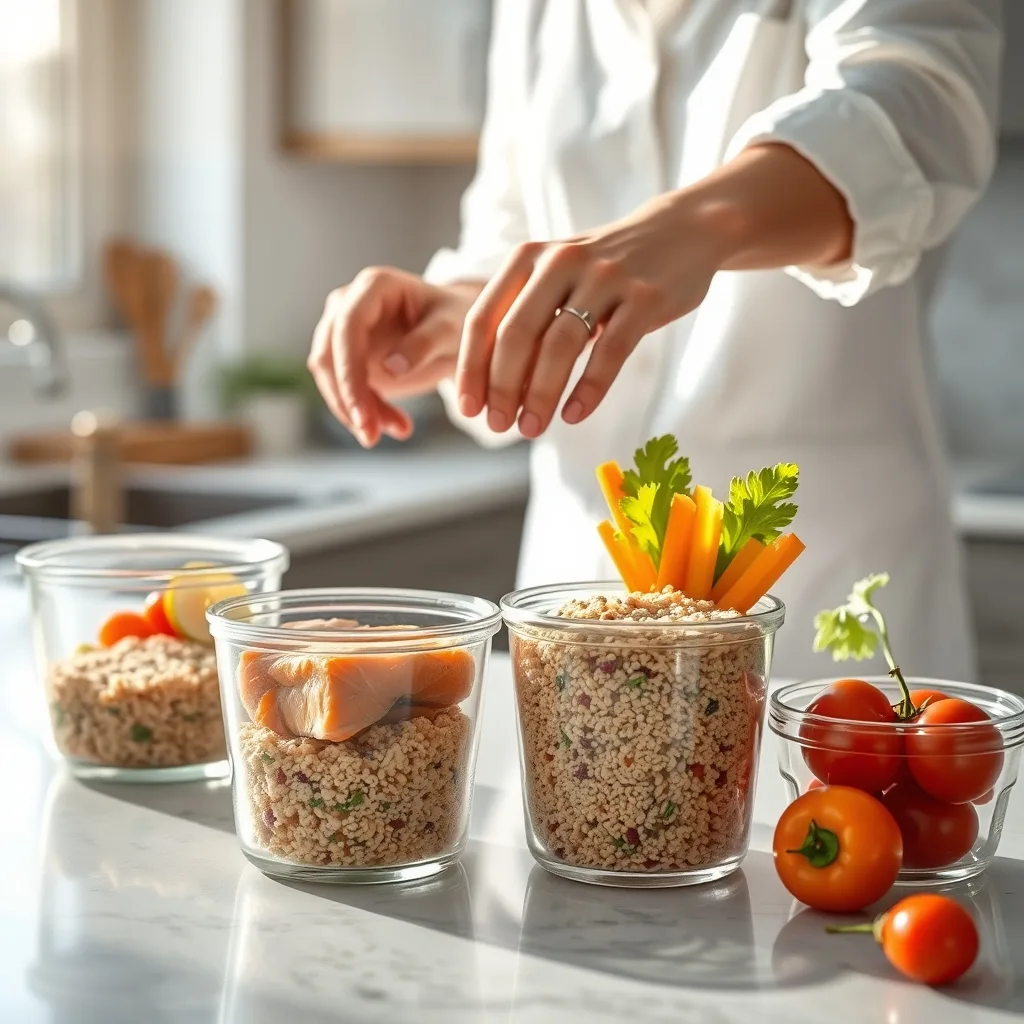
In the high-pressure environment of a modern career, the choice between convenience and nutrition often feels like a zero-sum game. When deadlines loom and energy levels dip, the temptation to rely on processed takeout or vending machine snacks is immense. However, meal prepping is not merely about cooking in bulk; it is a strategic time-management system that safeguards your physical health and mental clarity. By reclaiming control over your nutrition, you reduce decision fatigue and ensure that your body remains fueled for professional demands.
Key takeaways
- Prep proteins, grains, and vegetables separately to allow for versatile, mix-and-match meal combinations throughout the busy work week.
- Store sauces in separate jars and add fresh herbs or citrus just before eating to maintain texture and flavor.
- Prioritize complex carbohydrates and lean proteins to stabilize blood sugar and maintain cognitive performance during long work shifts.
- Apply a First-In, First-Out inventory system and label containers with dates to ensure food safety and reduce waste.
- Utilize kitchen automation like food processors and slow cookers to minimize manual labor and increase prep efficiency.
The Psychology of Decision Fatigue and Nutrition
Decision fatigue is a real phenomenon for busy professionals who spend their workdays making high-stakes choices. By the time you reach the evening, your willpower is often depleted, making the “easy” choice of unhealthy takeout seem inevitable. Meal prepping serves as a cognitive offloading strategy. When your meals are already planned and prepared, you eliminate the daily mental burden of deciding what to eat. This creates a predictable environment where healthy choices become the default, allowing you to reserve your mental energy for your professional responsibilities rather than navigating the logistics of dinner.
Establishing a Sustainable Prep Workflow
The biggest mistake professionals make is attempting an ambitious, day-long kitchen marathon that leads to immediate burnout. Instead, treat your meal prep like a project management task. Start by identifying your “anchor meals”—the two or three dishes you can rotate throughout the week. Dedicate a specific window, such as Sunday afternoon or Monday morning, to handle the heavy lifting. Use a “modular” approach: instead of cooking complete dishes, focus on prepping protein, grains, and washed produce separately. This allows you to mix and match components throughout the week, preventing the monotony that often leads to abandoning a meal plan.
Selecting Gear for Efficiency and Longevity
Your equipment dictates the ease of your prep. Invest in high-quality, airtight glass containers that are microwave and dishwasher safe. Glass is preferable because it does not retain odors or leach chemicals, and it allows you to see exactly what you have in the fridge, which reduces food waste. Additionally, consider a vacuum sealer if you plan on prepping for more than five days at a time; this keeps ingredients fresh significantly longer. A sharp chef’s knife and a large, stable cutting board are non-negotiable tools that cut down prep time by allowing you to handle large volumes of vegetables safely and quickly.
Optimizing Proteins for Versatility
Protein is the cornerstone of satiety, yet it is often the most time-consuming component to cook. To optimize, utilize hands-off cooking methods. Sheet-pan roasting is a game-changer; you can roast chicken breasts, salmon fillets, or tofu blocks simultaneously at the same temperature. Alternatively, a slow cooker or pressure cooker can turn tougher, budget-friendly cuts of meat into tender meals while you work on other tasks. Once cooked, store proteins in simple, neutral marinades. This ensures that you can transform a plain chicken breast into a taco bowl, a salad topper, or a stir-fry component depending on your mood and the time you have available that evening.
The Art of the “No-Cook” Component
Not every element of your meal needs to be cooked. Incorporating raw, nutrient-dense components reduces your time in the kitchen and adds vital textures to your diet. Pre-washed leafy greens, pre-cut vegetable sticks, and canned legumes (like chickpeas or black beans) are essential for busy professionals. By keeping a “pantry of staples”—such as quinoa, brown rice, canned beans, nuts, and seeds—you can assemble a nutritionally balanced meal in under five minutes. Focus on high-fiber additions that keep your blood sugar stable, preventing the afternoon slump that often follows heavy, carb-laden lunches.
Managing Storage and Food Safety
Food safety is paramount when you are dealing with pre-prepared meals. Always allow hot food to cool to room temperature before sealing it, but do not leave it out for more than two hours. Store your meals in the order you intend to eat them, placing the Thursday and Friday meals toward the back of the refrigerator. If you are prepping for a full week, consider freezing half of your portions on Sunday. This ensures that by Wednesday, your meals are still fresh rather than bordering on spoiled. Label your containers with the date of preparation to maintain a clear inventory of what needs to be consumed first.
Smart Shortcuts for the Time-Poor
If your schedule is particularly erratic, leverage the grocery store’s pre-prep services. Buying pre-chopped onions, jarred minced garlic, or bagged slaw mix might cost a few dollars more, but the time saved is a valuable investment in your health. Another strategy is to “cook once, eat twice.” Whenever you are preparing dinner, double the portion. This creates an automatic lunch for the following day without requiring a separate prep session. This habit of incremental prep is often more sustainable than the traditional “all-or-nothing” weekend prep approach.
Adapting Your Strategy to Changing Schedules
Rigidity is the enemy of consistency. Acknowledge that your professional life is dynamic and your meal prep strategy must be flexible. If you have a client dinner on Thursday, do not prep for a Thursday night meal. If you have an unexpectedly light week, use that time to prepare more complex, batch-cooked meals like stews or chilis that can be frozen for busier weeks ahead. By viewing your meal prep as a fluid system that adjusts to your professional calendar, you are far more likely to maintain the habit long-term.
Mastering the “Flavor Bridge” Technique
One of the primary reasons professionals abandon meal prep is the perception that refrigerated food lacks the depth of flavor found in freshly cooked meals. The solution lies in the “Flavor Bridge” technique: preparing a concentrated flavor base that can be applied to different proteins or grains at the moment of consumption. Instead of pre-saucing your dishes, which often leads to soggy textures, create a small batch of a versatile chimichurri, a spicy peanut reduction, or a lemon-tahini dressing. Store these in small, leak-proof jars. When you are ready to eat, a single tablespoon of these high-impact flavor bridges transforms a neutral base of grilled chicken and quinoa into a completely different culinary experience. This approach provides the variety of a restaurant menu while retaining the convenience of a home-cooked meal.
The Logistics of Temperature Management
For professionals who are constantly on the move, temperature management is a critical, often overlooked component of meal quality. If your lunch involves a salad, the proximity of your warm protein to your cold greens can lead to early wilting. Utilize insulated, dual-compartment lunch systems that allow you to keep hot items hot and cold items cold. If you do not have access to a refrigerator at your workstation, invest in a high-quality thermal bag with integrated ice packs. For those who enjoy warm meals but lack a microwave, consider a portable electric lunch box that plugs into a standard wall outlet or USB port. This allows you to heat your meal gently at your desk, ensuring you are not dependent on the communal office kitchen, which is often a source of unnecessary distraction and queuing.
Strategic Herb and Acid Finishing
The difference between a meal that feels like ‘leftovers’ and one that feels like a freshly prepared dish is often found in the final garnish. As you store your components, focus on the ‘shelf-stable’ textures and flavors, but reserve the ‘bright’ elements for the last second. Pack a small container of fresh herbs—cilantro, parsley, or basil—and a wedge of lemon or lime. Adding these at the point of consumption provides a burst of acidity and freshness that cuts through the muted flavors of refrigerated food. This simple habit elevates the sensory experience of your meal, making it feel like a deliberate culinary choice rather than a utilitarian necessity to fuel your work day.
Managing Macro-Nutrient Density for Cognitive Performance
Not all calories are created equal when it comes to maintaining mental acuity throughout a grueling eight-hour shift. Focus your meal prep on stabilizing blood glucose levels by pairing complex carbohydrates with healthy fats and lean proteins. For instance, avoid simple, high-glycemic grains that lead to an insulin spike and subsequent ‘afternoon crash.’ Instead, choose slow-burning fuel sources like farro, wild rice, or lentils. Incorporate sources of Omega-3 fatty acids, such as walnuts or chia seeds, which can be easily sprinkled over your prepped meals. By intentionally designing your meals to support cognitive endurance, you turn your lunch hour into a strategic tool for maintaining productivity, rather than a period of lethargy caused by poor nutritional choices.
The “Zero-Waste” Inventory Rotation
Efficient meal prep should not result in a refrigerator full of half-used produce. Adopt a “first-in, first-out” (FIFO) system for your refrigerator shelves. Dedicate a specific bin for items that need to be used within 48 hours. When planning your weekly prep, look at what remains from the previous week and integrate those ingredients into your new rotation. For example, if you have half a bag of spinach left, incorporate it into a frittata or a blended green smoothie base for your morning. This circular approach to ingredients reduces food waste, lowers your grocery bill, and forces you to be creative with your flavor profiles, preventing the stagnation that comes from eating the exact same meal structure every single week.
Leveraging Kitchen Automation for High-Volume Prep
For the time-poor professional, automation is the key to scaling meal prep without increasing your time investment. Invest in tools that handle labor-intensive tasks independently. A food processor with a slicing and shredding disc can turn a mountain of raw vegetables into salad bases or stir-fry ingredients in seconds, a task that would take twenty minutes by hand. An immersion circulator (sous-vide) allows you to cook proteins to the exact desired temperature without the risk of overcooking or the need for constant monitoring. By shifting the labor to your appliances, you can maximize your output while you focus on other professional or personal tasks, turning your kitchen into a highly efficient production line that requires minimal manual intervention.
Mastering the “Flavor Bridge” Technique
One of the primary reasons professionals abandon meal prep is the perception that refrigerated food lacks the depth of flavor found in freshly cooked meals. The solution lies in the “Flavor Bridge” technique: preparing a concentrated flavor base that can be applied to different proteins or grains at the moment of consumption. Instead of pre-saucing your dishes, which often leads to soggy textures, create a small batch of a versatile chimichurri, a spicy peanut reduction, or a lemon-tahini dressing. Store these in small, leak-proof jars. When you are ready to eat, a single tablespoon of these high-impact flavor bridges transforms a neutral base of grilled chicken and quinoa into a completely different culinary experience. This approach provides the variety of a restaurant menu while retaining the convenience of a home-cooked meal.
The Logistics of Temperature Management
For professionals who are constantly on the move, temperature management is a critical, often overlooked component of meal quality. If your lunch involves a salad, the proximity of your warm protein to your cold greens can lead to early wilting. Utilize insulated, dual-compartment lunch systems that allow you to keep hot items hot and cold items cold. If you do not have access to a refrigerator at your workstation, invest in a high-quality thermal bag with integrated ice packs. For those who enjoy warm meals but lack a microwave, consider a portable electric lunch box that plugs into a standard wall outlet or USB port. This allows you to heat your meal gently at your desk, ensuring you are not dependent on the communal office kitchen, which is often a source of unnecessary distraction and queuing.
Strategic Herb and Acid Finishing
The difference between a meal that feels like ‘leftovers’ and one that feels like a freshly prepared dish is often found in the final garnish. As you store your components, focus on the ‘shelf-stable’ textures and flavors, but reserve the ‘bright’ elements for the last second. Pack a small container of fresh herbs—cilantro, parsley, or basil—and a wedge of lemon or lime. Adding these at the point of consumption provides a burst of acidity and freshness that cuts through the muted flavors of refrigerated food. This simple habit elevates the sensory experience of your meal, making it feel like a deliberate culinary choice rather than a utilitarian necessity to fuel your work day.
Managing Macro-Nutrient Density for Cognitive Performance
Not all calories are created equal when it comes to maintaining mental acuity throughout a grueling eight-hour shift. Focus your meal prep on stabilizing blood glucose levels by pairing complex carbohydrates with healthy fats and lean proteins. For instance, avoid simple, high-glycemic grains that lead to an insulin spike and subsequent ‘afternoon crash.’ Instead, choose slow-burning fuel sources like farro, wild rice, or lentils. Incorporate sources of Omega-3 fatty acids, such as walnuts or chia seeds, which can be easily sprinkled over your prepped meals. By intentionally designing your meals to support cognitive endurance, you turn your lunch hour into a strategic tool for maintaining productivity, rather than a period of lethargy caused by poor nutritional choices.
The “Zero-Waste” Inventory Rotation
Efficient meal prep should not result in a refrigerator full of half-used produce. Adopt a “first-in, first-out” (FIFO) system for your refrigerator shelves. Dedicate a specific bin for items that need to be used within 48 hours. When planning your weekly prep, look at what remains from the previous week and integrate those ingredients into your new rotation. For example, if you have half a bag of spinach left, incorporate it into a frittata or a blended green smoothie base for your morning. This circular approach to ingredients reduces food waste, lowers your grocery bill, and forces you to be creative with your flavor profiles, preventing the stagnation that comes from eating the exact same meal structure every single week.
Leveraging Kitchen Automation for High-Volume Prep
For the time-poor professional, automation is the key to scaling meal prep without increasing your time investment. Invest in tools that handle labor-intensive tasks independently. A food processor with a slicing and shredding disc can turn a mountain of raw vegetables into salad bases or stir-fry ingredients in seconds, a task that would take twenty minutes by hand. An immersion circulator (sous-vide) allows you to cook proteins to the exact desired temperature without the risk of overcooking or the need for constant monitoring. By shifting the labor to your appliances, you can maximize your output while you focus on other professional or personal tasks, turning your kitchen into a highly efficient production line that requires minimal manual intervention.
Frequently Asked Questions
How can I prevent my prepped meals from tasting soggy or bland after three days? To prevent sogginess, keep sauces, dressings, and crunchy toppings separate until you are ready to eat. For freshness, use high-quality glass containers and add fresh herbs or a squeeze of lemon juice just before consuming to brighten the flavors.
What are some high-protein, low-effort snacks for the office? Hard-boiled eggs, Greek yogurt cups, individual servings of nuts or seeds, and high-quality beef or turkey jerky are excellent options. These require zero prep and provide the protein necessary to keep you focused between meetings.
Is it safe to freeze every type of food for meal prep? Most cooked proteins and grains freeze well. However, avoid freezing vegetables with high water content, such as raw cucumbers or lettuce, as they will turn mushy. Soups, stews, and casseroles are the best candidates for long-term freezer storage.
How do I handle food prep if I have a very small kitchen? Focus on “assembly-based” meal prep rather than “cooking-based” prep. Use your small space to organize ingredients like canned goods, pre-washed greens, and quick-cooking grains. Use a portable burner or a single multi-cooker to minimize the need for a full stove setup.
What is the best way to start meal prepping if I have never done it before? Start small. Do not try to prep every meal for the week. Begin by prepping just your lunches for three days. Once you master that routine and see the benefits in your workday energy, gradually increase the scope to include breakfasts or dinners.
Related posts:
 Instant Pot Healthy Recipes That’ll Change Your Meal Prep Game
 The Meal Prep Master Class That Will Save You Hundreds Every Month
 Beyond Breakfast: The Plant-Based Sausage That’s Changing the Morning Game
 The Chef Revolution Transforming School Lunch One Healthy Meal at a Time
 NYC’s Healthiest Meal Delivery Services That Actually Taste Amazing
 5 Healthy Lunch Recipes Under $3 for Your Work Week
 Healthy Lunch Ideas
 The Meal Prep Mistakes Sabotaging Your Healthy Eating