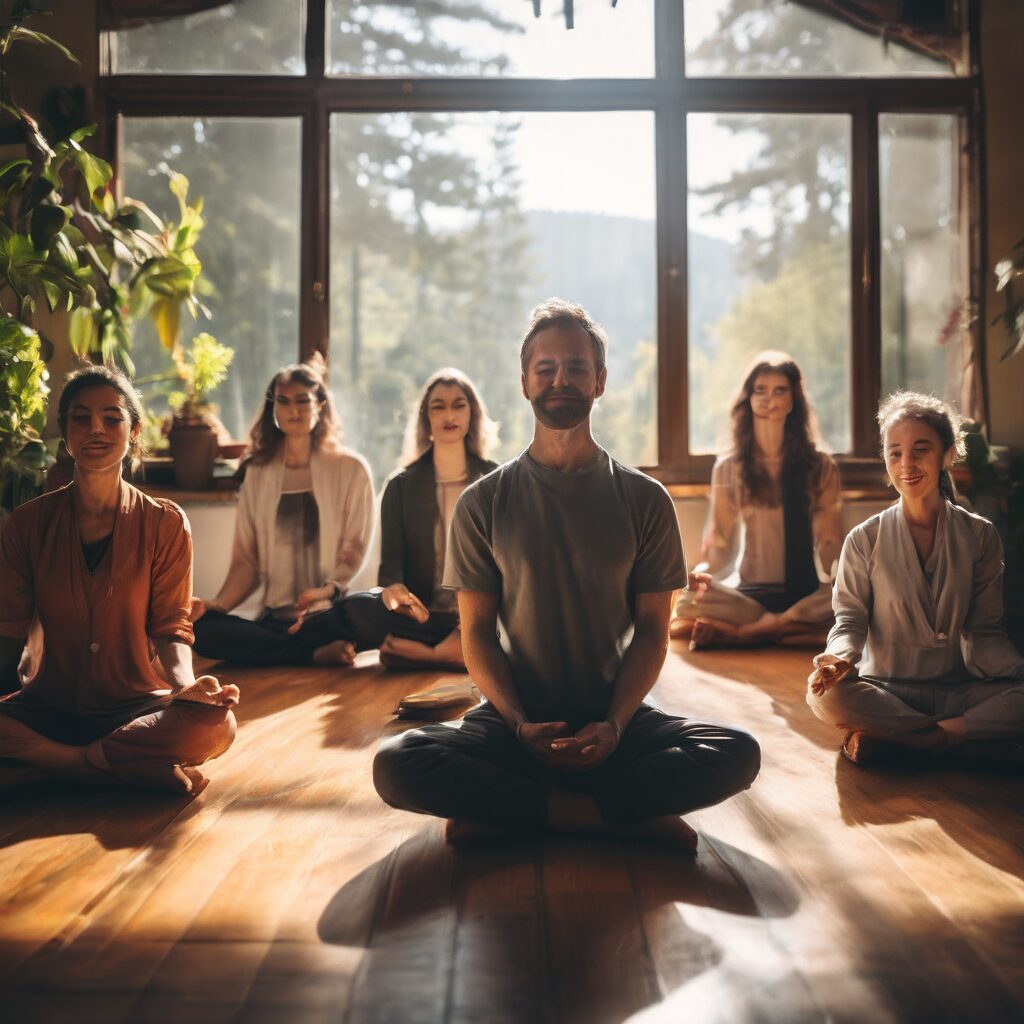
Introduction to Meditation and Its Benefits
In today’s fast-paced world, finding moments of peace can be challenging. Meditation offers a pathway to inner calm and mental clarity. With the right guidance, anyone can learn to meditate and enjoy its profound benefits, including reduced stress, improved focus, and enhanced emotional well-being.
1. Sharon Salzberg
Sharon Salzberg is a renowned meditation teacher and author who has been instrumental in bringing mindfulness and loving-kindness meditation to the West. Her accessible teachings make it easy for beginners to start their meditation journey.
- Focus: Loving-kindness meditation
- Notable Work: “Real Happiness: The Power of Meditation”
- Website: sharonsalzberg.com
2. Jack Kornfield
Jack Kornfield is a co-founder of the Insight Meditation Society and Spirit Rock Meditation Center. With decades of experience, Kornfield’s teachings blend traditional Buddhist practices with modern psychology, making meditation accessible to all.
- Focus: Insight meditation
- Notable Work: “A Path with Heart”
- Website: jackkornfield.com
3. Tara Brach
Tara Brach is a clinical psychologist and meditation teacher known for her work in mindfulness-based cognitive therapy. Her teachings focus on self-compassion and acceptance, helping individuals to sit with themselves in a gentle and loving way.
- Focus: Mindfulness and self-compassion
- Notable Work: “Radical Acceptance”
- Website: tarabrach.com
4. Jon Kabat-Zinn
Jon Kabat-Zinn is the creator of the Mindfulness-Based Stress Reduction (MBSR) program, which has been widely adopted in medical and therapeutic settings. His practical approach demystifies meditation, making it accessible to people from all walks of life.
- Focus: Mindfulness-Based Stress Reduction (MBSR)
- Notable Work: “Wherever You Go, There You Are”
- Website: mindfulnesscds.com
5. Pema Chödrön
Pema Chödrön is an American Buddhist nun and teacher who has authored numerous books on meditation and mindfulness. Her teachings emphasize embracing the present moment and cultivating an open heart, making meditation approachable for everyone.
- Focus: Mindfulness and compassion
- Notable Work: “When Things Fall Apart”
- Website: pemachodronfoundation.org
Integrating Micro-Meditations into a High-Stakes Workflow
For those struggling to carve out thirty minutes of silence, the concept of micro-meditations offers a pragmatic bridge between professional chaos and internal stillness. Rather than viewing meditation as a discrete event that requires a dedicated room or cushion, practitioners can treat it as a “state of being” that is accessible between meetings or during transit. A micro-meditation might involve nothing more than a three-breath reset: inhale for four counts, hold for four, and exhale for eight. This physiological intervention signals the parasympathetic nervous system to down-regulate the stress response, providing an immediate buffer against decision fatigue. By anchoring these moments to existing habits—such as the time it takes for a coffee machine to brew or the duration of an elevator ride—you create a “trigger-response” loop that prevents the day from eroding your mental bandwidth.
The Role of Somatic Anchoring in Emotional Regulation
While many focus on the mental aspect of meditation, the body is the primary vessel where emotions manifest. Somatic anchoring involves shifting the focus from the racing mind to the physical sensations of the present moment. If you notice a tightening in the chest or a clenching of the jaw, use those physical cues as “bells of mindfulness.” Instead of analyzing the stress, scan your body for points of tension and consciously soften them. This practice is particularly effective for high-achievers who are prone to dissociation; it forces the brain to reconnect with the body, creating a grounded foundation that makes “sitting with oneself” less of an abstract intellectual exercise and more of a tactile, manageable experience.
Navigating the “Dark Night” and Resistance in Practice
It is a common misconception that meditation should always feel tranquil. In reality, deep practice often brings suppressed emotions and unresolved anxieties to the surface. This period of resistance, sometimes colloquially called the “dark night” of the soul, is not a failure of technique but a sign that the practice is working. When you stop distracting yourself with screens or constant activity, the silence becomes loud. The key is to shift your relationship with these sensations from one of aversion to one of curiosity. Treat your internal turbulence as weather patterns—fleeting, temporary, and ultimately harmless—rather than as objective truths about your character. Developing this “observer ego” allows you to watch your thoughts without being hijacked by them, a skill that translates directly to better emotional regulation in personal and professional conflicts.
Customizing Your Environment for Sensory Stability
For beginners, the environment is often the greatest obstacle to consistency. While the ideal is to be able to meditate anywhere, building a “meditation sanctuary” can significantly lower the activation energy required to start. This doesn’t mean you need a dedicated room; it means creating a consistent sensory cue. Using the same scent (like incense or a specific essential oil), the same ambient soundscape (such as brown noise or binaural beats), or even a specific shawl can signal to your nervous system that it is time to transition into a meditative state. This Pavlovian response reduces the friction of starting, allowing you to bypass the mental negotiation that often occurs when you feel too busy to sit. Over time, these external anchors can be faded, but they are invaluable in the first six months of establishing a habit.
Leveraging Modern Biofeedback and Tracking Tools
In the digital age, technology can serve as a potent ally for those who find the “empty head” approach frustrating. Biofeedback devices, such as heart-rate variability (HRV) monitors or EEG headbands, provide objective data regarding your physiological state during meditation. While the goal is not to become obsessed with metrics, seeing tangible proof that your heart rate dropped or that your brainwaves shifted into a more relaxed state can be highly reinforcing for skeptical analytical thinkers. Using apps that track your “streak” or provide guided data-driven feedback can turn the abstract process of self-reflection into a tangible pursuit of self-mastery, providing the necessary dopamine loop to keep you returning to the cushion even on days when your motivation is low.
The Ethics of Self-Compassion in Daily Life
Meditation is often framed as a tool for productivity, but its ultimate value lies in the cultivation of radical self-compassion. Many people fall into the trap of “performative meditation,” where they judge themselves for having a “bad” session or for not achieving a specific state of bliss. True practice requires the courage to be kind to yourself when you fail to be mindful. If you spend twenty minutes lost in a spiral of self-criticism, acknowledging that you were lost and gently returning to the breath is, in itself, a successful meditation. This iterative process of losing focus and returning is the “rep” that builds the muscle of awareness. By treating yourself with the same patience you would offer a child learning to walk, you transform your practice from a chore into a restorative act of self-care.
Tailoring Practice to Your Neurotype
Not every meditation technique works for every brain. Individuals with high-energy or hyper-active minds often find traditional breath-focused meditation to be a source of frustration rather than peace. For these individuals, movement-based meditations—such as walking meditation, Tai Chi, or even structured yoga—might be a more effective entry point. Similarly, those who struggle with silence might find success with “mantra” or “sound-based” meditations that occupy the linguistic part of the brain. If you find yourself consistently failing at one style, do not assume you are “bad at meditation.” Experiment with different modalities until you find the one that fits your unique cognitive rhythm; the best meditation is the one that you actually enjoy doing, as enjoyment is the strongest predictor of long-term adherence.
FAQ
What is the best way to start meditating?
Start with short sessions, focusing on your breath. Use guided meditations from reputable teachers to help you get started.
How often should I meditate?
Consistency is key. Start with a few minutes daily and gradually increase the duration as you become more comfortable.
Can meditation help with anxiety?
Yes, meditation has been shown to reduce anxiety by promoting relaxation and helping individuals develop a mindful approach to their thoughts and feelings.
Do I need any special equipment to meditate?
No special equipment is needed. A quiet space and a comfortable sitting position are sufficient to begin your meditation practice.
Is it normal for my mind to wander during meditation?
Yes, it’s completely normal. Gently bring your focus back to your breath or chosen point of concentration whenever you notice your mind wandering.
Related posts:
 The Art of Relaxation Time That Everyone Needs to Master
 What is Self-Compassion and Self-Love?
 How Meditation Saved My Life When Everything Fell Apart
 60 Meditation Exercises and Activities to Relieve Stress & Anxiety
 How To Develop Compassionate Leadership Through Mindfulness
 Breethe’s Meditations for Stress Relief: Find Your Calm
 Stress Relief Meditation
 Amazon’s New Meditation Podcast