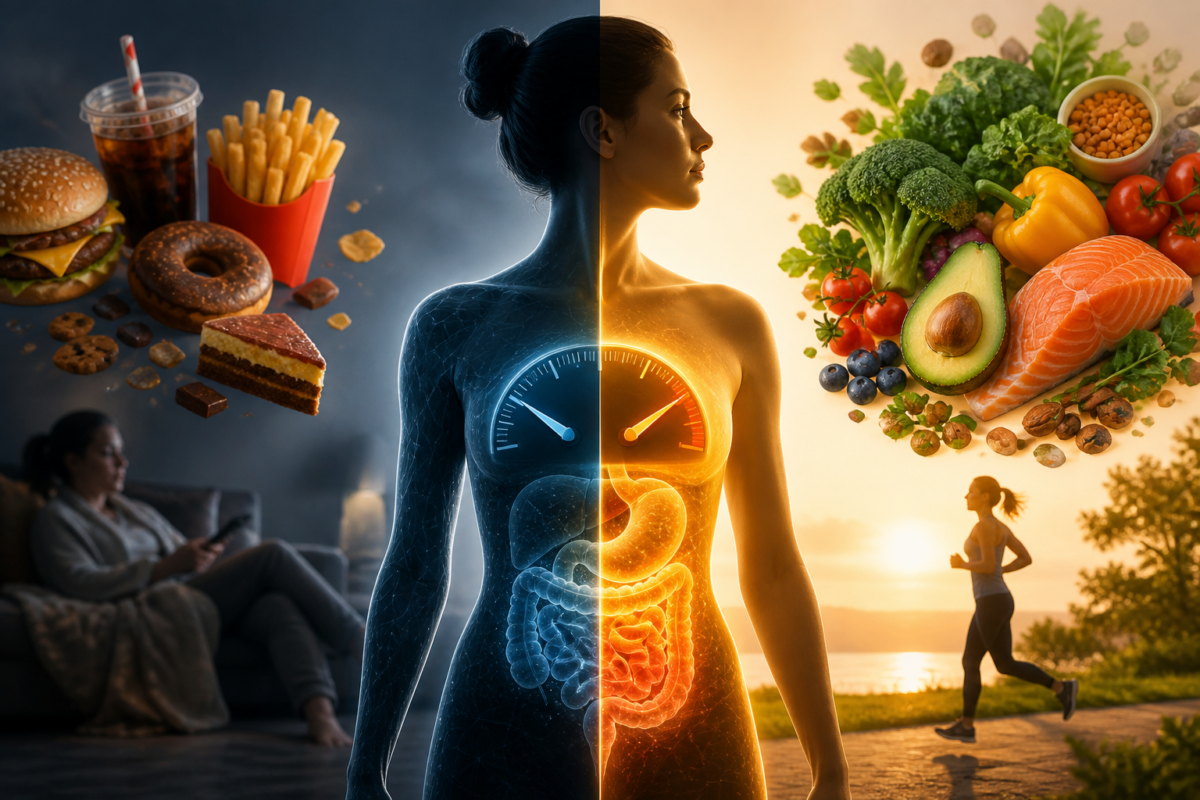
For many of us, the word “metabolism” feels like a mysterious biological lottery. We have all heard the stories: the friend who can eat everything in sight without gaining a pound, or the relative who feels they gain weight just by looking at a piece of cake. When we struggle with our weight or energy levels, it is common to conclude, “I must just have a slow metabolism.”
However, metabolism is not a single “speed dial” that is set at birth. It is a complex series of chemical processes that occur in every cell of your body, converting the food you eat into the energy required to keep your heart beating, your lungs breathing, and your brain functioning. Because it is so complex, it has become a magnet for misinformation, myths, and overly simplified health trends.
Understanding the actual science behind your metabolism is empowering. When we move past the myths, we stop blaming our genetics and start focusing on the actionable levers we can pull to support our metabolic health. This guide explores the most common misconceptions and provides the evidence-based facts you need to optimize your body’s energy systems.
What Exactly Is Metabolism? Understanding the Components
Before we can debunk the myths, we must define what metabolism actually is. In biological terms, metabolism is the sum of all chemical reactions in the body. These are divided into two categories: anabolism (the process of building molecules, like creating muscle tissue) and catabolism (the process of breaking molecules down, like breaking down glucose for energy).
When people talk about their “metabolic rate,” they are usually referring to their Total Daily Energy Expenditure (TDEE). Your TDEE is comprised of four distinct components:
- Basal Metabolic Rate (BMR): This is the energy your body requires to maintain basic physiological functions while at complete rest. It includes the energy needed for your heart to beat, your kidneys to filter blood, and your brain to operate. BMR typically accounts for 60% to 75% of your total daily calorie burn.
- Thermic Effect of Food (TEF): Digestion isn’t free. Your body uses energy to chew, swallow, digest, absorb, and process nutrients. Protein has the highest TEF, meaning your body burns more energy processing a steak than it does processing a piece of bread.
- Non-Exercise Activity Thermogenesis (NEAT): This is the energy expended for everything we do that is not sleeping, eating, or sports-like exercise. It includes walking to your car, typing, fidgeting, cleaning the house, and standing. For many people, NEAT is the most variable part of their metabolism.
- Exercise Activity Thermogenesis (EAT): This is the energy used during intentional exercise, such as weightlifting, running, or swimming. While this is the most obvious way to burn calories, it often makes up a smaller percentage of total daily expenditure than people realize.
Myth: “I Have a Slow Metabolism, and That’s Why I Can’t Lose Weight”
This is perhaps the most pervasive myth in the wellness industry. While it is true that some people have a slightly lower BMR due to genetics, age, or medical conditions (like hypothyroidism), the “slow metabolism” explanation is often used as a catch-all for a variety of other factors.
In reality, what people perceive as a “slow metabolism” is often a combination of metabolic adaptation and a decrease in NEAT. For example, when someone starts a restrictive diet, their body may subconsciously respond by reducing non-essential movements. You might stop fidgeting as much, sit more often, or feel a general sense of lethargy. This decrease in NEAT can significantly lower your total daily calorie burn, making it feel as though your metabolism has “stalled.”
Furthermore, the perception of a slow metabolism often ignores the role of lean muscle mass. Muscle is metabolically active tissue; it requires more energy to maintain than fat tissue. If a person has a low percentage of muscle mass, their BMR will naturally be lower. The good news is that unlike your height or your bone structure, your muscle mass is something you can actively influence.
Fact: Muscle Mass Is the Engine of Your Metabolism
If you want to “speed up” your metabolism, the most effective long-term strategy is to increase your lean muscle mass. This is why strength training is often more effective for long-term weight management than cardio alone.
Consider two individuals of the same weight. Individual A has a high percentage of body fat and low muscle mass. Individual B has a higher percentage of muscle and lower body fat. Even if they are both lying in bed all day, Individual B will burn more calories because muscle tissue is more “expensive” for the body to maintain. This increase in resting energy expenditure means that Individual B can consume more calories without gaining weight compared to Individual A.
Practical Example: If you only perform cardiovascular exercise while in a calorie deficit, your body may break down both fat and muscle for energy. This can lead to a lower BMR over time. However, by incorporating resistance training (weights, bands, or bodyweight exercises) and consuming adequate protein, you signal to your body to preserve muscle while burning fat, effectively keeping your metabolic engine running hot.
Myth: Eating Small Meals Frequently “Stokes the Metabolic Fire”
For years, the prevailing advice was to eat five or six small meals a day to “keep the metabolism humming” or “stoke the fire.” The theory was that by eating frequently, you trigger the Thermic Effect of Food (TEF) multiple times a day, thereby burning more calories.
Science has largely debunked this. The Thermic Effect of Food is based on the total amount of calories and the macronutrient composition of the food, not the frequency of the meals. If you eat 2,000 calories in two large meals or six small meals, the total energy required to digest those calories remains virtually the same.
What matters far more is what you are eating. Because protein has a higher TEF than fats or carbohydrates, a high-protein diet will naturally increase your daily energy expenditure more than a high-carb diet, regardless of whether you eat three meals or six. The “grazing” approach can actually be counterproductive for some, as it can lead to mindless overeating or constant insulin spikes, which may interfere with the body’s ability to access stored fat for energy.
Fact: Age Does Affect Metabolism, But Not as Much as You Think
There is a common belief that once you hit 30 or 40, your metabolism “drops off a cliff,” making weight gain inevitable. Recent long-term studies have shown that this is largely a misconception. Metabolic rate remains remarkably stable from age 20 to 60.
The perceived decline in metabolism as we age is usually caused by two main factors: Sarcopenia and Lifestyle Shift.
- Sarcopenia: This is the natural loss of muscle mass that occurs as we age. If we do not actively work to maintain muscle through resistance training and protein intake, we lose the metabolically active tissue that supports a higher BMR.
- Lifestyle Shift: As people age, they often become more sedentary. They may move from an active job to a desk job, or stop playing the sports they enjoyed in their youth. This drastic reduction in NEAT is often mistaken for a biological slowing of the metabolism.
By prioritizing strength training and staying active throughout the day, you can effectively mitigate the metabolic changes associated with aging. You are not destined to a “slow metabolism” simply because of the date on your birth certificate.
Myth: “Superfoods” and Supplements Can Significantly Boost Metabolism
The market is flooded with “metabolism boosters”—pills containing green tea extract, cayenne pepper, caffeine, or exotic herbs that promise to melt fat by increasing your metabolic rate.
While some of these substances have a mild thermogenic effect, the impact is negligible in the grand scheme of weight management. For example, caffeine can slightly increase metabolic rate and fat oxidation, but the effect is temporary and often diminishes as the body builds a tolerance. A sprinkle of cayenne pepper or a cup of green tea may burn a few extra calories, but it is not enough to overcome a poor diet or a sedentary lifestyle.
The danger of these supplements is that they often provide a false sense of security, leading people to believe they can “supplement away” the need for movement and nutrition. True metabolic health is built on the foundation of sleep, stress management, protein intake, and movement—not a pill from a bottle.
Fact: Sleep and Stress Are Critical Metabolic Regulators
Metabolism is not just about calories in versus calories out; it is a hormonal process. Two of the biggest disruptors of metabolic efficiency are chronic stress and lack of sleep.
The Role of Sleep: When you are sleep-deprived, your body undergoes a hormonal shift. Levels of ghrelin (the hunger hormone) increase, while levels of leptin (the satiety hormone) decrease. This makes you feel hungrier and less satisfied after eating. Furthermore, sleep deprivation can lead to insulin resistance, meaning your cells don’t respond as well to insulin, making it easier for your body to store fat and harder to access it for energy.
The Role of Stress: Chronic stress triggers the release of cortisol. While cortisol is essential for the “fight or flight” response, chronically high levels can lead to an increase in abdominal fat storage and a breakdown of muscle tissue. When cortisol is high, the body is signaled to conserve energy and store glucose, which can make you feel like your metabolism has slowed down despite your best efforts.
Actionable Guidance: How to Support a Healthy Metabolic Rate
Since metabolism is a dynamic system, you can support it through consistent, sustainable habits. Here is a practical framework for optimizing your metabolic health:
1. Prioritize Protein Intake
Protein is the most metabolically demanding macronutrient. By increasing your protein intake, you increase the Thermic Effect of Food. More importantly, protein provides the building blocks necessary to maintain and grow muscle mass. Aim for a source of protein at every meal—such as eggs, Greek yogurt, lean meats, legumes, or tofu.
2. Focus on NEAT (Non-Exercise Activity)
Don’t rely solely on your one-hour gym session. Increase your overall daily movement to keep your energy expenditure high. Simple changes include:
- Using a standing desk or taking “movement snacks” every hour.
- Taking the stairs instead of the elevator.
- Walking while taking phone calls.
- Parking further away from the store entrance.
3. Incorporate Resistance Training
To increase your BMR, you must challenge your muscles. Aim for at least two to three sessions of strength training per week. Focus on compound movements like squats, lunges, pushes, and pulls. You don’t need heavy gym equipment; resistance bands or your own body weight are excellent starting points.
4. Optimize Your Sleep Hygiene
View sleep as a metabolic necessity, not a luxury. Aim for 7–9 hours of quality sleep per night. Keep your bedroom cool, dark, and screen-free for at least 30 minutes before bed to ensure your hormones—specifically insulin and ghrelin—stay balanced.
5. Stay Hydrated
Water is essential for almost every chemical reaction in your body, including those that break down fat. Even mild dehydration can slow down your metabolic processes. Drink water consistently throughout the day, and consider starting your morning with a glass of water to rehydrate after sleep.
Metabolic Flexibility: The Ability to Switch Fuel Sources
While much of the conversation around metabolism focuses on the rate of energy expenditure, an equally important concept is metabolic flexibility. This refers to your body’s ability to efficiently switch between burning carbohydrates (glucose) and burning fats (fatty acids) depending on availability and demand. A metabolically flexible person can transition seamlessly from using the glucose in their bloodstream during a high-intensity sprint to tapping into stored body fat during a long walk or an overnight fast.
Many people in the modern environment suffer from metabolic inflexibility. Because we have constant access to high-carbohydrate foods and frequent snacks, our bodies become “locked” into glucose-burning mode. When glucose levels drop slightly, instead of smoothly switching to fat stores, the body triggers an intense hunger response or a “crash” in energy. This is often why people experience extreme brain fog or irritability (being “hangry”) if they miss a meal by an hour.
Practical Examples of Inflexibility: Consider the “bonk” or “hitting the wall” experienced by amateur marathon runners. This happens when the body exhausts its glycogen (stored carbohydrate) reserves and is unable to efficiently switch to burning fat for fuel. The result is a sudden, dramatic drop in performance and energy. In contrast, a metabolically flexible athlete can maintain a steady pace by oxidizing fat more effectively, preserving their limited glycogen for the final push.
To improve metabolic flexibility, you can incorporate strategies that challenge the body to use different fuel sources. Zone 2 training—exercise at a moderate intensity where you can still hold a conversation—is particularly effective, as it encourages the mitochondria to become more efficient at oxidizing fat. Additionally, strategic periods of fasting or reducing refined carbohydrates can signal the body to “upregulate” the enzymes necessary for fat metabolism, effectively training your biological engine to be a hybrid rather than a single-fuel system.
The Gut-Metabolism Axis: How Microbiome Composition Influences Caloric Harvest
We often think of metabolism as something happening in the muscles, liver, and thyroid, but the gut microbiome—the trillions of bacteria residing in your digestive tract—plays a hidden but pivotal role in how many calories you actually absorb from your food. Not every calorie listed on a nutrition label is absorbed by the body; the efficiency of this “harvesting” process is partially dictated by your microbial makeup.
Research has shown that the ratio of different bacterial phyla, specifically Firmicutes and Bacteroidetes, can influence metabolic efficiency. Some studies suggest that an overabundance of Firmicutes is associated with a higher capacity to extract energy from food, meaning two people could eat the exact same apple, but the person with a specific microbial profile might absorb more calories from it than the other. This adds a layer of complexity to the “calories in, calories out” equation, as your internal ecosystem acts as a gatekeeper for energy absorption.
Beyond simple calorie extraction, gut bacteria produce short-chain fatty acids (SCFAs), such as butyrate, propionate, and acetate, through the fermentation of prebiotic fibers. These SCFAs enter the bloodstream and interact with receptors that regulate appetite, insulin sensitivity, and inflammation. For example, butyrate provides energy for the cells lining the colon and can improve the body’s overall insulin response, which in turn prevents the “metabolic sludge” associated with chronic high insulin levels.
Edge Case: The “Lean Microbiome.” Some individuals possess a high prevalence of Akkermansia muciniphila, a bacterium that strengthens the gut lining. High levels of this specific microbe are often correlated with lower rates of obesity and better glucose metabolism. This suggests that supporting the gut through a diverse range of plant fibers, fermented foods (like kimchi or kefir), and the avoidance of unnecessary antibiotics can indirectly “boost” metabolic health by optimizing the hormonal signals sent from the gut to the brain and liver.
Blood Glucose Management and the Insulin Switch
To understand why some people struggle with weight despite a “fast” BMR, we must look at the insulin switch. Insulin is the primary anabolic hormone of the body; its main job is to move glucose out of the blood and into the cells for energy or storage. However, insulin also acts as a powerful “lock” on fat stores. When insulin levels are high, the process of lipolysis (the breakdown of stored fat) is almost entirely inhibited.
The problem arises with the “glucose roller coaster.” When we consume highly refined carbohydrates or sugars, blood glucose spikes rapidly, triggering a massive release of insulin. While this lowers blood sugar, it often overshoots the mark, leading to reactive hypoglycemia—a sudden drop in blood sugar that triggers cravings for more sugar and a feeling of lethargy. In this state, even if you have ample stored body fat, your body cannot access it because the lingering insulin signals the body to keep those stores locked away.
Practical Strategy: Food Sequencing. One of the most effective ways to manage this metabolic switch is through the order in which you eat your food. By consuming fiber (vegetables) first, followed by proteins and fats, and saving starches and sugars for the end of the meal, you create a “fiber buffer” in the stomach. This slows the absorption of glucose into the bloodstream, resulting in a smaller insulin spike. A smaller spike means insulin returns to baseline faster, allowing the body to return to fat-burning mode much sooner after the meal.
Over time, chronic spikes in insulin lead to insulin resistance, where cells stop responding to the hormone. The pancreas then pumps out even more insulin to compensate, creating a vicious cycle where insulin levels remain chronically elevated. This is the biological mechanism behind “stubborn fat,” as the high insulin levels keep the body in a constant state of storage, regardless of the total calorie count.
Environmental Thermogenesis and Brown Adipose Tissue (BAT)
Most people are familiar with “white fat,” which stores energy and can cause inflammation. However, the body also possesses Brown Adipose Tissue (BAT), or brown fat. Unlike white fat, brown fat is packed with mitochondria and contains a unique protein called UCP1 (Uncoupling Protein 1). Instead of storing energy, brown fat burns it to generate heat, a process known as non-shivering thermogenesis.
This means that your environment can directly influence your metabolic rate. When you are exposed to cold temperatures, your nervous system activates brown fat to keep your core temperature stable. This process consumes a significant amount of calories. While this isn’t a substitute for a healthy diet, it represents a metabolic lever that is often ignored. Many people live in a state of “thermal neutrality,” where their indoor environments are kept at a constant, comfortable temperature, effectively putting their brown fat to sleep.
Practical Application: Cold Exposure. Incorporating controlled cold exposure—such as cold showers, ice baths, or simply lowering the thermostat in the winter—can stimulate the activation of BAT. Even a 30-second blast of cold water at the end of a shower can trigger a thermogenic response. For those who find ice baths too extreme, walking outdoors in cool weather without excessive layers can encourage the body to utilize brown fat for heat production.
Edge Case: The “Winter Weight” Paradox. Some people find they gain weight in the winter despite eating the same amount. This is often due to a decrease in NEAT (moving less because it’s cold) and a shift in appetite. However, by intentionally seeking out cold exposure and staying active in low temperatures, you can actually flip this script and use the season to increase your daily energy expenditure through BAT activation.
Micronutrients: The Spark Plugs of Metabolic Enzymes
We often focus on macronutrients (protein, carbs, fats), but metabolism is essentially a series of chemical reactions catalyzed by enzymes. These enzymes cannot function without cofactors—specific vitamins and minerals that act like spark plugs to ignite the reaction. If you are deficient in these micronutrients, your metabolic machinery may be physically intact, but it will run inefficiently, leading to fatigue and a perceived “slow metabolism.”
The B-Vitamin Complex: B-vitamins, particularly B1 (thiamine), B2 (riboflavin), B3 (niacin), and B5 (pantothenic acid), are essential for the Krebs Cycle, the primary sequence of reactions used by the mitochondria to generate ATP (energy). Without adequate B-vitamins, the body cannot effectively convert the food you eat into usable energy, regardless of how many calories you consume.
Magnesium and ATP: Magnesium is involved in over 300 enzymatic reactions, most notably the creation of ATP. In fact, ATP must be bound to a magnesium ion to be biologically active. A deficiency in magnesium can make you feel physically exhausted and can impair your body’s ability to regulate blood glucose, further complicating metabolic health.
Iron and Oxygen Transport: Metabolism is an aerobic process; it requires oxygen. Iron is the central component of hemoglobin, which transports oxygen to your cells. If you are iron-deficient (anemic), your muscles and organs don’t receive enough oxygen to perform efficient aerobic metabolism. This often manifests as a feeling of “sluggishness” that is frequently mistaken for a slow metabolism, when it is actually an oxygen-delivery problem.
To ensure your metabolic enzymes are firing on all cylinders, focus on nutrient-dense foods. Dark leafy greens provide magnesium; eggs and lean meats provide B-vitamins; and legumes or red meat provide iron. When the micronutrient foundation is solid, the body can more effectively utilize the energy provided by macronutrients.
Hormonal Fluctuations and Gender-Specific Metabolic Shifts
Metabolism does not operate in a vacuum; it is heavily influenced by sex hormones, which fluctuate over time. While the general rules of BMR and TDEE apply to everyone, men and women experience metabolic shifts differently due to the roles of estrogen, progesterone, and testosterone.
The Menstrual Cycle and BMR: For women, the metabolic rate is not constant throughout the month. During the luteal phase (the time between ovulation and the start of the period), progesterone levels rise, which can slightly increase the basal metabolic rate (BMR) by about 5-10%. This often manifests as an increase in appetite and body temperature. However, the luteal phase also tends to decrease insulin sensitivity, making the body more prone to blood sugar swings and cravings for carbohydrates.
Menopause and Metabolic Redistribution: The transition into menopause involves a significant drop in estrogen. Estrogen helps regulate where the body stores fat and how it handles insulin. As estrogen declines, many women experience a shift in fat distribution from the hips and thighs to the abdominal area (visceral fat). Visceral fat is more metabolically active in a negative way—it secretes inflammatory cytokines that can further increase insulin resistance, making weight management more challenging despite no change in age-related BMR.
Testosterone and Lean Mass: In men, testosterone is a primary driver of muscle protein synthesis. As testosterone levels naturally decline with age (andropause), the risk of sarcopenia increases. Because muscle is the “engine” of metabolism, this hormonal drop can lead to a genuine decrease in BMR if not countered with strength training. For both genders, maintaining hormonal balance through stress management, adequate healthy fats (the precursors to hormones), and quality sleep is essential for keeping the metabolism stable.
Understanding these fluctuations allows for a more nuanced approach to health. Instead of fighting against a perceived “slowdown,” individuals can tailor their nutrition and activity to their hormonal phase—for example, increasing protein and strength training during menopause or allowing for slightly more calories during the luteal phase to support the natural increase in BMR.
Frequently Asked Questions
Q: Can I “reset” my metabolism after years of restrictive dieting?
A: While you cannot “reset” it like a computer, you can recover from metabolic adaptation. The best way to do this is through a process called “reverse dieting,” where you slowly and incrementally increase your calorie intake—specifically from protein and healthy fats—while simultaneously increasing your strength training. This teaches your body that it is no longer in a state of scarcity and allows your BMR to rise again.
Q: Does drinking cold water really burn more calories?
A: Technically, yes, because your body must spend a small amount of energy to warm the water to body temperature. However, the amount of energy burned is extremely small—nowhere near enough to be a primary strategy for weight loss. Hydration is the real benefit here, not the temperature of the water.
Q: What is the difference between BMR and TDEE?
A: BMR (Basal Metabolic Rate) is the minimum amount of energy your body needs to survive at total rest (essentially, what you would burn if you stayed in bed all day). TDEE (Total Daily Energy Expenditure) is the total amount of calories you burn in a day, which includes your BMR plus the energy used for digestion (TEF), daily activities (NEAT), and intentional exercise (EAT).
Q: Does intermittent fasting slow down the metabolism?
A: For most healthy adults, short-term intermittent fasting does not slow down the metabolism; in some cases, it may even slightly increase it due to a rise in norepinephrine. However, if fasting leads to a severe, prolonged calorie deficit or causes you to lose significant muscle mass, your BMR may decrease. The key is ensuring you still eat enough protein and nutrients during your eating window.
Q: How do thyroid issues affect metabolism?
A: The thyroid gland produces hormones (T3 and T4) that act as the “master controllers” of your metabolism. If your thyroid is underactive (hypothyroidism), your BMR drops, leading to fatigue, weight gain, and feeling cold. If it is overactive (hyperthyroidism), your metabolism speeds up excessively. These are medical conditions that require diagnosis and treatment by a healthcare provider, as they cannot be “fixed” by diet or exercise alone.
Related posts:
 The Surprising Way Your Gut Controls Your Weight
 Intermittent Fasting for Complete Beginners
 Is Intermittent Fasting Actually Harmful for Women?
 Mark Hyman’s Guide to Good Fats That Heal Your Body
 Staying Fit After 40
 High-Protein Foods That Pack a Serious Nutritional Punch
 Post-Run Nutrition Guide
 Why Carbs Aren’t the Enemy You Think They Are