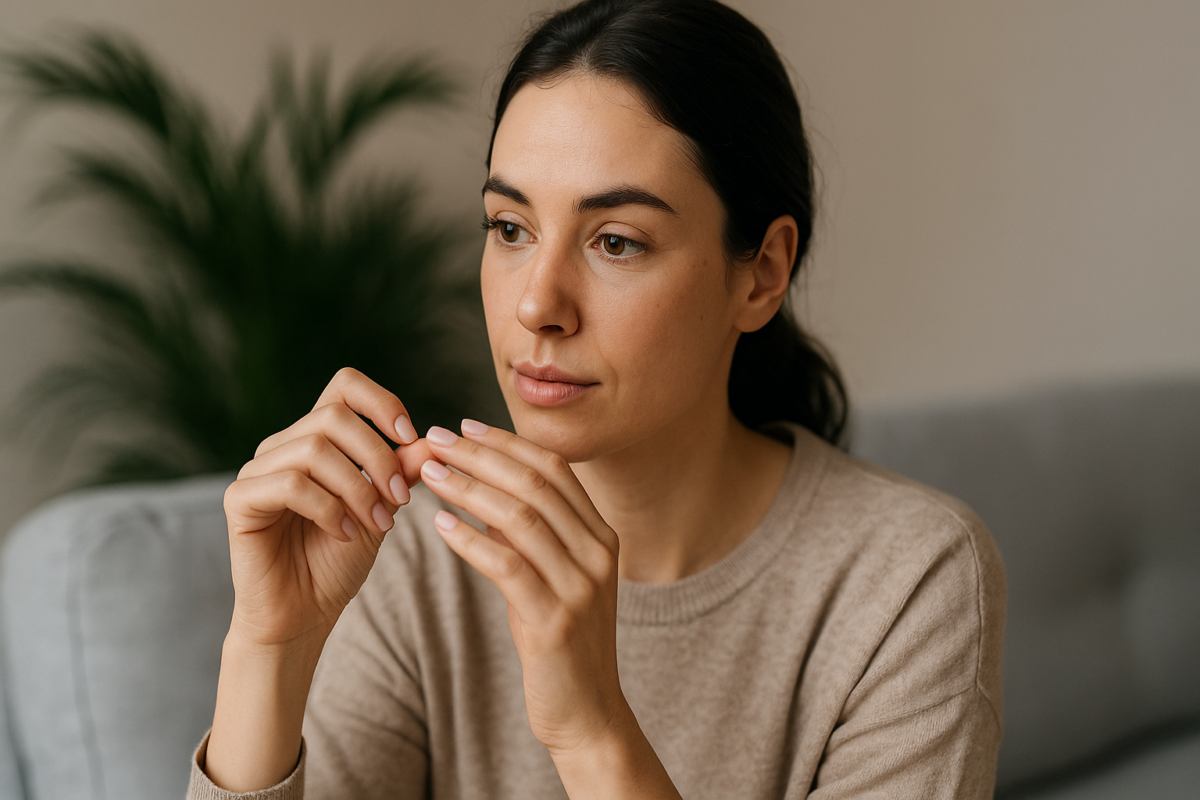
Nail biting feels like a small habit until you realize how much it affects your daily life. The ragged edges catch on fabric. The sight of your hands during meetings makes you self-conscious. You have tried stopping dozens of times, maybe hundreds, only to find your fingers back at your mouth during a stressful phone call or while watching television. The cycle feels unbreakable, but it is not. Understanding why you bite your nails and approaching the behavior with compassion rather than criticism opens the door to lasting change.
Key takeaways
- Identify specific triggers like stress or boredom by tracking when and where the urge to bite occurs.
- Use physical barriers such as bitter-tasting polish or bandages to interrupt the automatic biting habit.
- Replace biting with healthier sensory outlets like using fidget tools, chewing gum, or applying cuticle oil.
- Maintain smooth nails with a file to prevent the urge to fix rough edges by biting.
- Manage underlying anxiety or perfectionism through stress-relief techniques and self-compassion during setbacks.
Why We Bite: Understanding the Root Causes
Nail biting, known medically as onychophagia, rarely exists in a vacuum. Research suggests that approximately 20 to 30 percent of the population bites their nails, with the behavior often beginning in childhood or adolescence. While many people characterize it simply as a nervous habit, the actual drivers are more nuanced and varied from person to person.
For some, nail biting serves as a way to manage anxiety or stress. The repetitive motion provides a momentary sense of relief or distraction during tense situations. Others bite when they feel bored or understimulated, using the behavior to occupy their hands and mind. Perfectionism plays a role for many nail biters as well. The urge to smooth out a rough edge or remove a hangnail can trigger a picking or biting episode that escalates beyond the original intention.
Understanding your personal triggers requires honest self-observation. Do you reach for your nails when work deadlines loom? While watching television in the evening? When a nail chips or breaks and you want to fix it immediately? These patterns offer valuable information about what need the behavior is serving. Rather than viewing nail biting as a character flaw, recognize it as a coping mechanism that developed for a reason. This perspective shift is essential for approaching change with the patience and self-kindness necessary for success.
The Mindfulness Approach: Awareness as the Foundation
Most nail biting happens automatically. You might not even realize you are doing it until afterward, when you notice the damage or taste the familiar bitterness. Breaking this cycle requires bringing conscious awareness to an unconscious behavior. This is where mindfulness becomes invaluable.
Mindfulness simply means paying attention to the present moment without judgment. Applied to nail biting, it involves noticing the urge before you act on it, observing the sensations and emotions present, and making a conscious choice rather than following an ingrained pattern. This creates space between trigger and response, and in that space lies the possibility of change.
Begin by practicing awareness without pressure to stop. For one week, simply notice when you bite your nails. You can keep a mental note or jot down the circumstances in your phone. What time of day is it? What were you doing? How were you feeling? What happened right before you noticed the urge? This information builds a map of your habit loop, revealing the specific situations and emotional states that trigger biting.
Many people discover patterns they never recognized. Perhaps you bite primarily in the car during your commute, or while reading emails, or in the few minutes before falling asleep. Some notice that skipping meals increases the urge, suggesting a connection between low blood sugar and the behavior. Others find that certain social situations or types of stress consistently precede episodes. This detailed awareness is powerful because it allows you to anticipate triggers and prepare alternatives.
Creating Physical Barriers That Work With Your Life
While awareness develops, physical barriers can provide immediate protection for your nails. These obstacles create a moment of friction in the automatic biting process, giving you time to notice what you are doing and choose differently. The key is selecting barriers that fit your lifestyle and preferences rather than forcing yourself into a one-size-fits-all solution.
Bitter-tasting nail polishes designed to deter biting have helped many people, though they work best as part of a broader strategy rather than a standalone solution. The unpleasant taste interrupts the automatic behavior and serves as a reminder of your intention to stop. These products are widely available at drugstores and beauty supply stores, and many are formulated to be safe if accidentally ingested in small amounts. Some people find the taste genuinely helpful, while others simply grow accustomed to it. Your response will be individual.
Physical coverings offer another layer of protection. Bandages on particularly tempting fingers, cotton gloves while watching television or reading, or even keeping your hands occupied with a fidget tool can all serve as barriers. Some people find success with regular manicures, either professional or self-administered. The investment of time and money creates motivation to preserve the results, and the smooth, polished surface offers less to pick or bite.
Consider your specific biting patterns when choosing barriers. If you bite mostly during sedentary activities, gloves or keeping your hands busy with a stress ball might be most effective. If you bite at work, keeping a fidget toy at your desk or applying bitter polish before stressful meetings could help. The goal is not to rely on barriers forever but to use them as training wheels while building new habits.
Replacement Behaviors: Finding Healthier Outlets
When a behavior serves a function, simply removing it creates a void. Without an alternative way to meet the underlying need, the urge to bite returns with intensity. This is why replacement behaviors are crucial. They give your hands and mind something else to do when the urge arises, addressing the same emotional or sensory needs that nail biting fulfilled.
For stress-related biting, consider what else might provide relief in tense moments. Deep breathing exercises, a brief walk, or even a few stretches at your desk can help discharge anxious energy. Keep a stress ball, fidget cube, or worry stone within reach during times you have identified as high-risk. Some people find that snapping a rubber band on their wrist provides a similar sensory input without the damage to nails.
If boredom drives your biting, the solution involves increasing stimulation. Chewing sugar-free gum or snacking on crunchy vegetables gives your mouth something to do. Hand-based activities like knitting, drawing, or playing with putty occupy your fingers. Even a simple habit like applying cuticle oil when you feel the urge can redirect the behavior toward nail care rather than destruction.
For those triggered by rough edges or imperfections, carrying a small nail file allows you to address the irritation without biting. The moment you notice an uneven spot, file it smooth rather than using your teeth. This transforms a destructive impulse into a caring one. Over time, maintaining smooth nails becomes part of your routine, removing one of the most common triggers for biting.
Nail Care as Self-Care: Building a Positive Relationship
Years of biting often creates a fraught relationship with your nails. They become a source of shame and frustration, something to hide rather than care for. Shifting this dynamic is essential for lasting change. When you begin treating your nails as worthy of attention and care, the impulse to damage them weakens.
Start a simple nail care routine regardless of your current nail length or condition. This does not require expensive products or professional appointments. Basic care includes keeping nails clean and dry, applying cuticle oil or cream regularly, and filing rough edges promptly. The act of caring for your nails reinforces the message that they matter.
As nails grow, celebrate progress without fixating on perfection. Document your journey with photos if that feels motivating. Notice the changes in nail bed shape, cuticle health, and overall appearance. Some people find that painting their nails, even with clear polish, provides protection and increases their investment in maintaining the results.
Be prepared for setbacks without letting them derail your progress. A single biting episode does not erase weeks of growth any more than one missed workout erases fitness gains. The goal is progress over time, not flawless execution. When you do bite, respond with curiosity about what triggered the episode rather than criticism for failing. This information helps you adjust your approach and continue forward.
Addressing the Emotional Landscape
For many people, nail biting is intertwined with emotional patterns that extend beyond the habit itself. Anxiety, perfectionism, and body-focused repetitive behaviors often travel together. Addressing these underlying currents can significantly support your efforts to stop biting.
Stress management techniques benefit nail biters not because stress is the sole cause but because lower overall stress reduces the intensity and frequency of urges. Regular exercise, adequate sleep, and meaningful social connection all contribute to emotional resilience. Mindfulness practices like meditation or journaling build the awareness muscle that helps you notice urges before acting on them.
Perfectionism requires particular attention. The belief that nails should be perfectly smooth or that a single rough edge justifies biting perpetuates the cycle. Work on accepting that imperfection is inevitable and that fixing one small flaw is not worth the damage caused by biting. Some people find it helpful to set a rule: if a nail needs attention, tools only. No teeth, ever. This creates a clear boundary that eliminates the gray area where biting often begins.
If nail biting feels compulsive, causes significant distress, or occurs alongside other body-focused repetitive behaviors like hair pulling or skin picking, consider consulting a mental health professional. These behaviors sometimes respond well to specialized treatments like cognitive behavioral therapy or acceptance and commitment therapy. Seeking support is not an admission of failure but a recognition that some patterns benefit from professional guidance.
Supporting Children and Teens Who Bite
When the nail biter in question is your child, the approach requires adjustment. Pressure, shame, and punishment typically backfire, increasing the anxiety or resistance that fuels the behavior. Instead, focus on understanding and supportive intervention.
Begin with curiosity rather than criticism. Ask your child what they notice about when they bite. Are there particular times of day or situations where the urge feels stronger? Do they even realize they are doing it? This conversation, approached with genuine interest rather than accusation, provides valuable information and helps the child develop their own awareness.
Collaborate on solutions rather than imposing them. Offer bitter polish as an option they can choose to try. Suggest fidget tools for times when they need to keep their hands busy. Help them identify replacement behaviors that feel appealing rather than forced. The more ownership they have over the process, the more motivated they will be to follow through.
Model healthy coping strategies yourself. Children learn more from what they observe than what they are told. If you manage your own stress in visible ways, through exercise, creative hobbies, or relaxation techniques, you demonstrate alternatives without lecturing. Create an environment where talking about feelings is normal and asking for help is encouraged.
Finally, keep perspective. Many children who bite their nails naturally outgrow the habit, especially when it is addressed with patience rather than pressure. Your role is to offer support and tools while avoiding the power struggles that make the behavior more entrenched. If biting persists into adolescence and causes distress, a conversation with a pediatrician or therapist can provide additional guidance.
The Science of Habit Loops and Neuroplasticity
Understanding what happens in your brain during nail biting transforms the behavior from a personal failing into a neurological pattern you can work with. Every habit operates through a three-part loop: a cue that triggers the behavior, the behavior itself, and a reward that reinforces it. For nail biters, the cue might be noticing a rough edge, feeling anxious, or simply sitting down to watch television. The behavior is the biting. The reward is trickier to identify but often involves a brief sense of satisfaction, relief from tension, or simply the sensory stimulation itself.
This loop becomes physically encoded in your brain through neural pathways that strengthen with repetition. The basal ganglia, a region deep in the brain involved in habit formation, essentially creates a shortcut. When the cue appears, the behavior triggers automatically without requiring conscious decision-making. This is why you can find yourself biting your nails without remembering when you started. Your brain has made the process efficient by bypassing the deliberative parts of your prefrontal cortex.
The encouraging news is that this same neuroplasticity that created the habit can dismantle it. Every time you notice an urge and choose not to act on it, you weaken the old pathway and begin building a new one. This process is not about erasing the old pattern but rather creating a stronger alternative. Think of it like a path through a field. The old route is well-worn and easy to follow, but if you consistently walk a new path, eventually it becomes the clear route while the old one grows over.
Practical application of this science involves identifying each component of your specific habit loop. The cue requires particular attention because it is the entry point. Some cues are external, like a specific location or activity. Others are internal, like an emotion or physical sensation. Getting granular about your cues allows you to intervene at the earliest possible moment. Instead of trying to stop mid-bite, you learn to recognize the conditions that precede the urge and prepare your response in advance.
Environmental Design: Reshaping Your Surroundings
Willpower is an exhaustible resource, and relying on it exclusively sets up an uneven battle against a well-established habit. Environmental design offers a more sustainable approach by altering your surroundings to reduce triggers and support new behaviors. The goal is to make biting inconvenient and alternatives easily accessible.
Begin with a trigger audit of your most common spaces. Look at where you spend time and identify the cues that prompt biting. If television watching is a high-risk activity, consider what changes could disrupt the pattern. Some people keep their hands occupied with knitting or a stress ball. Others place bitter nail polish on the bathroom counter as a visual reminder to apply it before settling in. The remote control itself can be a trigger if you bite while scrolling through channels; moving it further away forces you to get up, creating a break in the automatic pattern.
Your car might be an unexpected hotspot. Commuting often involves long periods of inactivity with underlying stress about traffic or your destination. Keep a small container of cuticle oil in your cupholder. When you notice your hand drifting toward your mouth, apply oil instead. The sensory experience of massaging oil into your cuticles can satisfy the urge for tactile stimulation while reinforcing nail care. If you bite at stoplights specifically, consider keeping gum in the car to occupy your mouth.
Work environments present unique challenges, particularly if your triggers involve stress or boredom during meetings. A desk drawer stocked with fidget tools, healthy snacks, and a nail file gives you options when urges arise. Position your computer monitor or arrange your workspace so your hands are visible during video calls; the awareness that others might see your hands can provide additional motivation. If certain types of tasks reliably trigger biting, build in brief breaks before your stress peaks.
The spaces where you relax deserve attention too. Nighttime biting often catches people off guard because they have let their guard down after a long day. Create a bedtime ritual that incorporates nail care. Apply a nourishing overnight treatment and cover your hands with cotton gloves. The gloves serve as both a physical barrier and a signal that the day is ending, shifting your nervous system toward rest rather than the stimulation of biting.
Identifying Your Personal Biting Profile
Nail biting is not a uniform behavior. Understanding your specific pattern helps you target interventions more precisely. Most biters fall into one or more categories, and recognizing which apply to you informs your strategy.
Automatic biters often discover they have been biting only after the fact. Their hands find their way to their mouth without conscious awareness, usually during activities that occupy the mind but leave the hands free. Television, reading, and driving are common settings. For this profile, physical barriers and environmental changes work best because they interrupt the unconscious process. Bitter polish provides a jarring taste that brings awareness back. Gloves or bandages create a physical obstacle that cannot be bypassed automatically.
Instrumental biters use nail biting to accomplish something specific, usually addressing a perceived imperfection. A rough edge, a hangnail, or uneven length triggers the urge to fix the problem. The biting feels purposeful, even necessary. For this group, carrying proper tools everywhere is essential. A nail file, cuticle nipper, and small scissors allow you to address the actual issue without using your teeth. The rule becomes simple: if a nail needs attention, use tools, never teeth.
Emotional biters turn to their nails during specific feeling states. Anxiety, frustration, boredom, and even excitement can trigger episodes. The biting serves an emotional regulation function, providing sensory input that helps manage the internal state. This profile benefits most from developing alternative regulation strategies. Deep breathing, progressive muscle relaxation, or sensory tools like stress balls can meet the same need without the damage. Some emotional biters find that addressing the underlying emotional patterns through therapy or stress management reduces the urge significantly.
Compulsive biters experience the behavior as driven by an urge they cannot control despite wanting to stop. The impulse feels intrusive and may be accompanied by tension that builds until they bite, followed by temporary relief. This pattern often indicates a body-focused repetitive behavior that may benefit from professional treatment. Cognitive behavioral therapy specifically adapted for these behaviors, called the Comprehensive Behavioral Model, helps many compulsive biters understand and work with their urges rather than simply trying to suppress them.
Tracking Progress and Measuring Success
What gets measured gets managed. Tracking your nail biting journey provides concrete data that counters the emotional sense that you are making no progress. It also reveals patterns you might otherwise miss and helps you celebrate wins that feel small in the moment but compound over time.
Consider keeping a simple log that captures key information without becoming burdensome. Note the date, any biting episodes, and if applicable, the circumstances surrounding them. Some people prefer a paper journal; others use a note app on their phone. The format matters less than the consistency. Over time, this record shows whether your frequency is decreasing, even if individual weeks feel discouraging.
Nail length provides an objective measure that does not rely on memory or self-report. Take photos of your hands from the same angle under similar lighting each week. The visual record of growth can be powerful on days when you feel stuck. Measure the white tip of your longest nail if you want numerical data. Even a millimeter of growth represents real progress.
Quality matters as much as quantity. Track the health of your cuticles, the strength of your nails, and the absence of pain or infection. These improvements often precede visible length and demonstrate that your care routine is working. Note when you successfully navigate a triggering situation without biting. These wins build confidence and provide evidence that change is possible.
Define success broadly. A week without biting is success, but so is catching yourself mid-episode and stopping. So is filing a rough edge instead of biting it. So is recognizing a trigger before it activates the full urge. Each of these represents a strengthening of the new neural pathway you are building. When you inevitably have setbacks, the data reminds you of the overall trajectory rather than fixating on individual moments.
Nutrition and Nail Health: Supporting Growth From Within
While no food will stop you from biting your nails, proper nutrition supports the regrowth process and can strengthen nails that have been weakened by years of trauma. Understanding the connection between diet and nail health gives you additional tools for recovery.
Protein provides the foundation for keratin, the structural protein that makes up your nails. Inadequate protein intake can result in weak, slow-growing nails that are more prone to the splitting and peeling that trigger biting episodes. Ensure you are consuming sufficient protein through animal sources, legumes, nuts, or combined plant proteins. For most adults, aiming for 0.8 grams of protein per kilogram of body weight is a reasonable baseline, though individual needs vary based on activity level and health status.
Biotin, a B vitamin found in eggs, nuts, and certain other foods, has gained attention for its potential to strengthen brittle nails. Research results are mixed, but some studies suggest that biotin supplementation may improve nail thickness and reduce splitting in people with specifically brittle nails. If you choose to supplement, be aware that biotin can interfere with certain lab tests, particularly thyroid panels. Inform your healthcare provider if you are taking biotin so they can interpret your results appropriately.
Iron deficiency often manifests in the nails before other symptoms become apparent. Spoon-shaped nails, where the center dips downward, can indicate insufficient iron. If you notice this pattern or experience fatigue alongside nail weakness, consult a healthcare provider about testing your iron levels. Treating an underlying deficiency can transform nail health in ways that no external product can match.
Hydration affects every system in your body, including your nails. Dehydrated nails become brittle and prone to the cracking that triggers biting. While the evidence for drinking water specifically improving nail health is limited, adequate hydration supports overall skin and nail integrity. More directly, applying moisturizer to your hands and cuticles after washing prevents water loss that contributes to dryness and splitting.
Zinc supports tissue growth and repair, making it relevant for nail regeneration. Oysters contain more zinc per serving than any other food, but beef, pumpkin seeds, and chickpeas also provide meaningful amounts. Severe zinc deficiency can cause white spots on nails, though these marks have other causes as well. Most people obtain adequate zinc through diet, but those with restricted diets or certain health conditions may benefit from evaluation.
The Role of Professional Treatment
Most nail biters can make significant progress using self-help strategies, but some situations warrant professional support. Recognizing when to seek help is not an admission of failure but a strategic decision to access specialized expertise.
Body-focused repetitive behaviors, including nail biting, hair pulling, and skin picking, fall along a spectrum from mild habits to clinically significant conditions. When biting causes substantial distress, interferes with daily functioning, or results in physical damage like infections or dental problems, consultation with a mental health professional makes sense. Look for providers who specifically mention experience with body-focused repetitive behaviors or who practice cognitive behavioral therapy.
The Comprehensive Behavioral Model, known as ComB, offers a structured approach specifically designed for body-focused repetitive behaviors. This treatment helps you map your unique pattern of triggers and develop targeted interventions for each component. Unlike general approaches that focus only on stopping the behavior, ComB addresses the sensory, cognitive, and emotional needs that biting serves, building a comprehensive strategy for lasting change.
Acceptance and commitment therapy takes a different approach, focusing on your relationship with urges rather than trying to eliminate them directly. This method teaches you to observe urges without acting on them, accepting the discomfort while pursuing valued goals. For some people, this reduces the struggle itself and makes the urge less overwhelming.
Dermatologists can address the physical consequences of long-term biting. Infections around the nail bed require proper treatment to prevent spread. Chronic damage to the nail matrix sometimes causes permanent changes that benefit from medical evaluation. A dermatologist can also recommend products and care routines tailored to your specific nail condition.
Dentists have a role as well. Long-term nail biting can wear down teeth, contribute to jaw problems, and in extreme cases, cause tooth misalignment. If you have been biting for years, a dental evaluation can identify any damage and prevent further harm. Night guards sometimes help people who bite primarily while sleeping or who have developed bruxism alongside their nail habit.
FAQ: Common Questions About Stopping Nail Biting
How long does it typically take to break the nail biting habit?
Research on habit formation suggests that new behaviors take anywhere from 18 to 254 days to become automatic, with an average of around 66 days. For nail biting specifically, many people report that the first two weeks are the most challenging, with urges gradually decreasing over the following months. However, the timeline varies significantly based on how long you have bitten your nails, the strength of your triggers, and the consistency of your replacement behaviors. Rather than focusing on an endpoint, concentrate on daily progress and the cumulative effect of small choices.
Will my nails ever look normal after years of biting?
In most cases, yes. Nails have remarkable regenerative capacity. As you stop biting, the nail bed has an opportunity to heal, and new nail growth emerges without the damage. The transition period can feel discouraging because existing damaged nail must grow out completely, which takes several months for fingernails. During this time, focus on nail health through gentle care, adequate hydration, and nutrition. Some former biters find that their nails become stronger than they ever were once they stop, as the repeated trauma that weakened them is no longer present.
Are there health risks associated with chronic nail biting?
Beyond the cosmetic concerns, nail biting can introduce bacteria and viruses from your hands to your mouth and vice versa. This increases the risk of infections, particularly around the nail bed. Chronic biting can damage the nail matrix, potentially causing permanent nail deformity in severe cases. Dental issues, including tooth wear and misalignment, have also been associated with long-term nail biting. These risks provide additional motivation to stop, but they are not cause for panic. Addressing the habit protects against future problems, and any existing concerns should be evaluated by appropriate healthcare providers.
What if I have tried everything and still cannot stop?
First, acknowledge that difficulty stopping does not mean you are failing or that change is impossible. Nail biting can be deeply ingrained, and some people benefit from additional support. Consider whether you have truly addressed the underlying emotional drivers or simply tried to suppress the behavior through willpower. Working with a therapist who specializes in body-focused repetitive behaviors can provide new strategies tailored to your specific patterns. In some cases, underlying anxiety or other conditions may be contributing, and addressing those directly can reduce the urge to bite. Persistence matters more than perfect execution.
Can supplements or dietary changes help strengthen nails after stopping?
While no supplement can cure nail biting, certain nutrients do support nail health during regrowth. Biotin, a B vitamin, has shown promise in strengthening brittle nails in some studies. Adequate protein intake provides the building blocks for keratin, the protein that makes up nails. Zinc and iron deficiencies can contribute to nail weakness, so ensuring sufficient intake through diet or supplements if a deficiency exists may help. However, supplements are not magic, and a balanced diet generally provides what your nails need. Focus on overall nutrition rather than searching for a miracle cure, and be patient as your body does its work of repair.
Related posts:
 Stronger Nails Self-Care Tips
 Clean Manicure Essentials
 Ten Out of Ten: The Clean Nail Polish Brand That’s Worth the Splurge
 The Avocado Oil Nail File That’s Changing Everything
 How to Apply Color Street Nails Like a Pro
 Spring Fling Fingers: The Nail Colors That Scream New Season Energy
 Deborah Lippmann’s Cure: Jennifer Garner’s Secret
 How to Fix an Ingrown Toenail Like a Pro