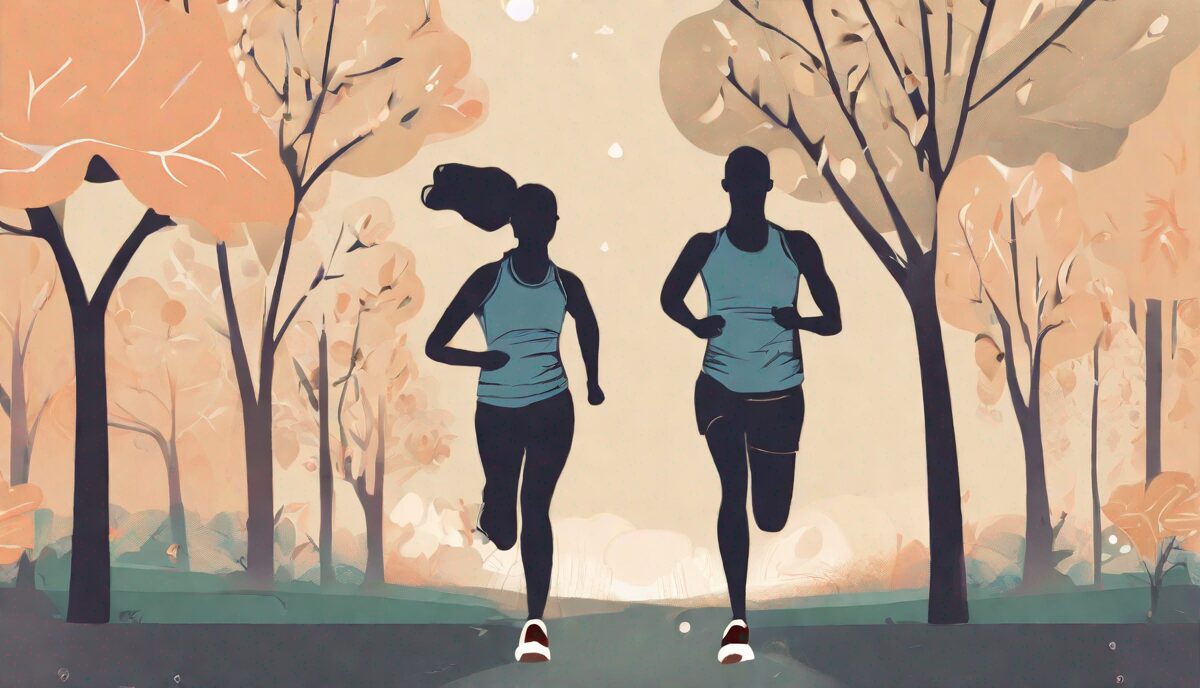
Embracing mindfulness during exercise can transform routine running or walking into a profound experience, benefiting both the mind and body. In this article, we explore how mindful running and walking can lead to improved mental clarity, reduced stress, and a deeper connection with the environment around you.
Understanding Mindfulness in Motion
Mindfulness is the practice of being present and fully engaged with whatever you’re doing at the moment — free from distraction or judgment. Applying this to running or walking means tuning into your body’s sensations, your breath, and the world around you. It’s about experiencing each step and breath with intention and awareness.
Benefits of Mindful Running and Walking
- Stress Reduction: Mindful exercise can serve as a moving meditation, helping to decrease anxiety and stress.
- Improved Focus: Regular practice enhances attention span and concentration in everyday life.
- Increased Enjoyment: By being present, one can appreciate the beauty of their surroundings and the joy of movement.
- Better Performance: Runners and walkers may find they have better endurance and are less prone to injury when they are mindful of their body’s signals.
How to Practice Mindful Running and Walking
Starting your mindful practice is simple. Begin by focusing on your breath, taking deep, rhythmic inhalations and exhalations. Notice the sensation of your feet touching the ground, the rhythm of your stride, and the feeling of the air on your skin. When your mind wanders, gently bring your attention back to your breath and movement.
Incorporating Mindfulness into Your Routine
Making mindfulness a regular part of your running or walking routine doesn’t require a drastic change. Start with a few minutes of mindful practice during your usual route, and gradually increase the time as it becomes more natural.
The Anatomy of Proprioceptive Awareness
To deepen your mindful practice, you must move beyond general awareness and into the realm of proprioception—the body’s ability to sense its position and movement in space. When running or walking, try to isolate specific segments of your kinetic chain. Start at your toes: feel how they splay upon impact with the pavement or trail. Move your focus to your ankles, noting the subtle stability adjustments they make on uneven terrain. As you progress, observe your knees, hips, and the rotation of your torso. This granular focus does more than ground you; it functions as a diagnostic tool. You may notice that your right hip drops slightly or that your shoulders hunch during higher-intensity segments. By identifying these patterns without judgment, you can make micro-adjustments—like relaxing your jaw or lengthening your spine—that translate into more efficient, pain-free movement over time.
Sensory Layering: A Technique for Deep Presence
When the mind naturally drifts to work emails or social obligations, use a technique called sensory layering to recalibrate. Start by identifying three sounds in your environment: the crunch of gravel, the rustle of leaves, or the distant hum of traffic. Once you have anchored your focus on sound, layer in physical sensations: the weight of your watch on your wrist, the friction of your socks against your heels, or the temperature differential between your skin and the breeze. Finally, layer in a visual focal point, such as the rhythmic movement of a tree branch or the changing colors of the path ahead. By stacking these sensory inputs, you create a complex, immersive environment that is difficult for the wandering mind to escape. This is not about sensory overload; it is about saturating your conscious experience so thoroughly that there is no ‘room’ left for ruminative thought.
The Role of Cadence as a Metronome for Mindfulness
Your stride rate, or cadence, can serve as a rhythmic anchor for your meditation. Instead of viewing cadence purely as a performance metric, treat it as a mantra. Experiment with matching your breath to your steps: a common, grounding pattern is a 3:3 ratio (three steps on an inhalation, three on an exhalation). If you are walking at a brisk pace, you might prefer a 2:2 ratio. This synchronization forces a rhythmic consistency that naturally calms the nervous system. When you feel your heart rate spiking or your mind racing, consciously slow your steps and deepen your breath to match that slower rhythm. By using your physical cadence as a metronome, you create a feedback loop between your physiological state and your mental state, allowing you to regulate your internal environment through movement.
Navigating External Distractions and Urban Environments
Practicing mindfulness in an urban setting presents unique challenges, such as intersections, traffic noise, and crowded sidewalks. Rather than fighting these intrusions, incorporate them into your practice using the principle of ‘acceptance.’ When a loud car passes, acknowledge the sound as a temporary feature of your environment rather than an interruption. Use the unpredictability of city walking—the need to dodge obstacles or wait for lights—as an opportunity to practice patience. Instead of feeling frustrated by a red light, use that thirty-second pause to perform a body scan or reset your posture. By reframing obstacles as neutral elements of your ‘moving meditation,’ you transform a stressful commute or run into a training ground for emotional regulation, teaching yourself to remain centered regardless of external chaos.
The Intersection of Breathwork and Biomechanics
Most runners and walkers breathe shallowly, utilizing only the upper chest. Mindful movement encourages diaphragmatic, or ‘belly,’ breathing, which activates the parasympathetic nervous system. As you move, consciously direct your breath toward your lower abdomen. Feel your diaphragm expand against your waistband on the inhale and contract on the exhale. This style of breathing is not only more efficient for oxygen exchange but also provides a physical tether to the present moment. If you find your breath becoming jagged or shallow, it is a clear physiological signal that you are pushing too hard or that your mind has drifted into ‘doing mode.’ Use the quality of your breath as a compass; if it is smooth and deep, you are in a state of flow. If it is erratic, slow your pace until your breath returns to a state of ease.
Cultivating Gratitude Through Locomotion
Mindfulness is most potent when paired with the intentional practice of gratitude. While you move, scan your body not just for tension, but for capability. Acknowledge the strength of your legs that propel you forward, the capacity of your lungs to provide oxygen, and the resilience of your joints. If you are outdoors, extend this gratitude to the environment: the ground that supports you, the sky above, or the changing seasons. This practice shifts the internal monologue from one of ‘working out’ (which can carry connotations of labor and expectation) to one of ‘celebrating movement.’ By actively noting what your body is doing for you rather than what it ‘should’ be doing, you foster a healthier relationship with your physical self, which is the cornerstone of long-term sustainable activity.
FAQ: Mindful Running & Walking
Can mindful running or walking improve mental health?
Yes, both activities promote mental health by reducing stress, anxiety, and symptoms of depression while also enhancing overall mood.
Do I need to practice mindfulness for the entire duration of my run or walk?
No, you can start with short intervals and gradually build up as you become more comfortable with the practice.
Is it better to run or walk outdoors for mindfulness?
While both indoor and outdoor settings work, many find that being in nature enhances the mindful experience.
How can I stay focused while practicing mindful running or walking?
Concentrate on your breath, the sensation of movement, or the sounds and sights around you to stay focused. It’s normal for the mind to wander—simply acknowledge it and return to your focus.
Can mindfulness make me a better athlete?
Mindfulness can improve your athletic performance by increasing your awareness of your body, which can help prevent injury and improve technique.