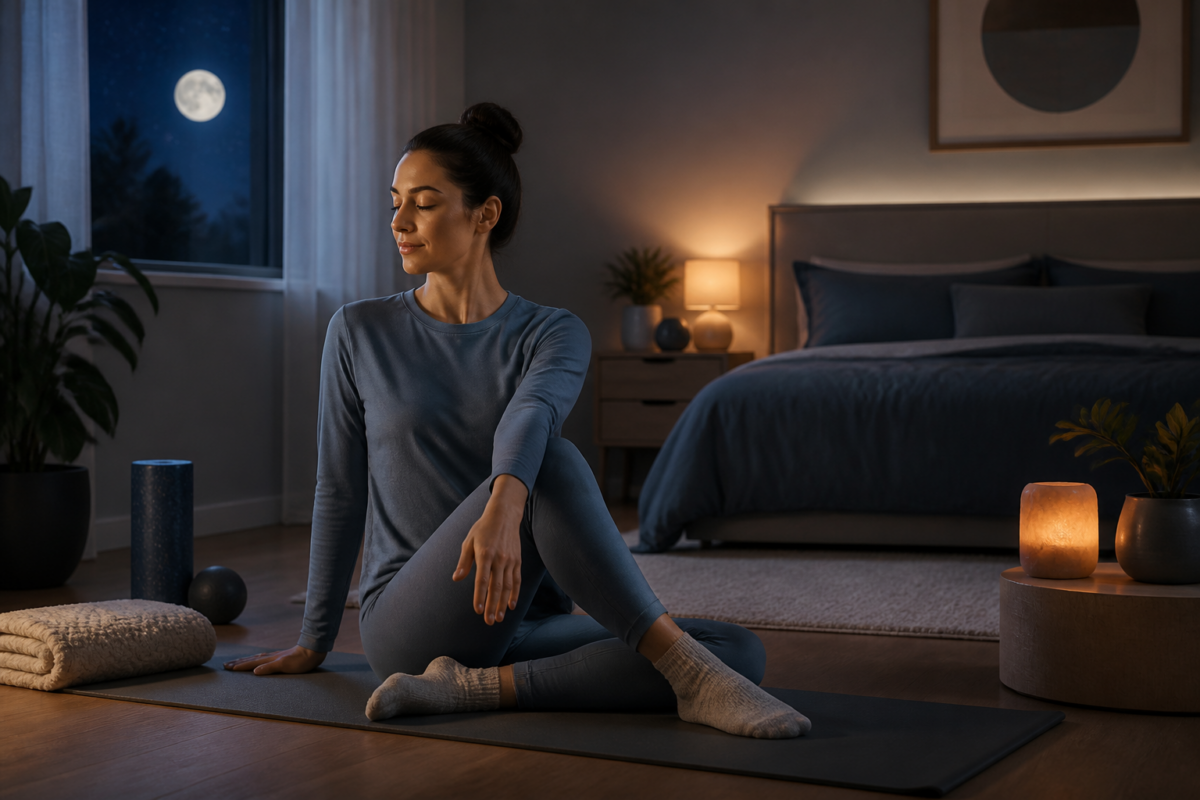
Quality sleep is often framed as a matter of mattress firmness, room temperature, or blue light exposure. However, one of the most overlooked factors in achieving restorative rest is the physical state of your body when you climb into bed. If you carry the day’s tension in your shoulders, hips, and lower back, your nervous system remains in a state of high alert. Integrating specific mobility moves into your evening routine can act as a physiological “off switch,” signaling to your brain that it is time to transition from the demands of the day to the recovery of the night.
Understanding the Connection Between Mobility and Sleep
Mobility is more than just flexibility; it is the ability to move a joint through its full range of motion with control. Throughout the day, sedentary habits—like hunching over a computer or sitting in a car—shorten muscles and restrict blood flow. When you attempt to lie down, these tight tissues pull on your skeletal structure, causing discomfort that prevents deep relaxation. By engaging in gentle mobility work, you improve circulation, release muscular adhesions, and stimulate the parasympathetic nervous system, which is responsible for the body’s “rest and digest” functions.
The Pelvic Tilt: Releasing Lower Back Tension
The lower back is a common repository for physical stress. The pelvic tilt is a foundational movement that helps realign the spine and relax the muscles surrounding the lumbar region. To perform this, lie on your back with your knees bent and feet flat on the floor. Slowly exhale as you press your lower back into the mat, rotating your pelvis slightly upward. Inhale as you return to a neutral spine, feeling a gentle arch form. Perform this ten times slowly to soothe the lower back muscles before sleep.
Cat-Cow Variations for Spinal Decompression
The cat-cow sequence is a staple for spinal health, but when done at night, it should be practiced with a focus on slow, rhythmic breathing. Start on your hands and knees in a tabletop position. As you inhale, drop your belly toward the floor and lift your chest and gaze. As you exhale, round your spine toward the ceiling, tucking your chin toward your chest. This movement gently stretches the entire length of the back and can help you let go of the physical “weight” of the day.
Child’s Pose: The Ultimate Restorative Stretch
Child’s Pose is perhaps the most effective mobility move for calming the mind. From your tabletop position, spread your knees slightly wider than your hips and bring your big toes together. Sink your hips back onto your heels and extend your arms forward on the floor, resting your forehead gently on the mat. This position stretches the hips, thighs, and ankles while providing a sense of grounding and security that is conducive to winding down.
Hip Openers for Emotional and Physical Release
Many people hold significant tension in their hip flexors and glutes, areas that tighten during long periods of sitting. A simple figure-four stretch is an excellent remedy. Lie on your back, cross your right ankle over your left knee, and gently pull your left thigh toward your chest. This targets the deep rotators of the hip. Holding this for 60 seconds on each side can significantly reduce the restlessness that often keeps people tossing and turning.
Chest Openers to Combat Tech-Neck
Modern life is dominated by forward-folding postures, which compress the chest and restrict deep breathing. To counteract this, use a “doorway stretch.” Place your forearms on either side of a door frame with your elbows at shoulder height. Step one foot forward and lean gently into the opening until you feel a comfortable stretch across your pectorals. This opens the rib cage, allowing for deeper, more diaphragmatic breathing, which is essential for signaling safety to the nervous system.
Gentle Neck and Shoulder Rotations
Tension in the upper trapezius and neck muscles is a primary cause of tension headaches that can ruin a good night’s sleep. Sit cross-legged or in a comfortable chair. Slowly drop your right ear toward your right shoulder, holding for a few breaths, then switch sides. Follow this with gentle, slow neck circles. Ensure you are not forcing the movement; the goal is to lubricate the joints and encourage the muscles to release their constant contraction.
The Importance of Consistency and Breath
Mobility work is not a one-time fix; it is a practice. The efficacy of these moves lies in the consistency of the routine. When you perform these movements at the same time each night, you create a conditioned response. Your brain begins to associate the physical sensation of stretching with the upcoming period of sleep. Pair every movement with deep, slow nasal breathing. Focusing on the breath prevents the mind from wandering back to work emails or tomorrow’s to-do list, effectively anchoring you in the present moment.
Myofascial Release with Targeted Prop Usage
While dynamic movement is essential, sometimes the fascia—the connective tissue surrounding your muscles—requires sustained pressure to release chronic “knots” that keep the body in a state of hyper-vigilance. Using a tennis ball or a dedicated foam roller can be a game-changer for those who spend over eight hours a day at a desk. Place a tennis ball between your shoulder blades while lying on the floor, moving your arms in slow, wide arcs like snow angels. This targets the rhomboids and mid-trapezius, which often tighten during hours of keyboard work. By providing this pinpointed sensory input, you help the nervous system map out areas of tension and consciously choose to let them go. Keep the pressure gentle; the objective is to stimulate the parasympathetic response, not to create a painful trigger point release that causes the body to recoil.
The Role of Thoracic Spine Mobility in Respiratory Efficiency
Your ability to breathe deeply is physically limited by the rigidity of your thoracic spine. When this area is stiff, your rib cage cannot fully expand, forcing you to take shallow, chest-based breaths that are associated with the “fight or flight” response. To improve this, try the “thoracic rotation” move: lie on your side with your knees bent at a 90-degree angle. Extend your arms out in front of you, palms touching. Slowly lift your top arm and rotate your torso, aiming to touch the back of your hand to the floor behind you while keeping your knees pinned to the ground. This rotation acts as a reset for the spine, allowing the lungs to inflate fully once you eventually lie down in bed, facilitating the slow, rhythmic breathing required for deep sleep cycles.
Ankle and Calf Mobilization for Circulatory Flow
Many people suffer from “restless legs” or a feeling of heaviness in the lower extremities that prevents them from settling down. This is often the result of poor lymphatic drainage and blood pooling in the lower legs after a day of standing or sitting. Before bed, perform seated ankle circles—15 rotations in each direction—followed by a gentle calf stretch against a wall. By mobilizing the ankle joint and lengthening the gastrocnemius, you improve the pump mechanism that returns blood to the heart. A lighter, more “fluid” feeling in the legs removes a primary physical distraction, allowing you to settle into your mattress without the constant urge to shift, kick, or reposition your legs.
The Psoas Release: Unlocking the Body’s Stress Vault
The psoas muscle is unique because it connects the lumbar spine to the femur, acting as the primary bridge between your upper and lower body. It is also known as the “muscle of the soul” in some somatic traditions because it is the first muscle to contract when we experience stress or fear. When the psoas is chronically tight, it keeps the body in a subtle, perpetual crouch. To release it, utilize the “low lunge with a gentle reach.” Kneel on one knee, keeping the other foot forward, and tuck your tailbone under until you feel a stretch in the front of your hip. Reach the arm on the same side as the kneeling leg up toward the ceiling and lean slightly to the opposite side. This deep, diagonal stretch signals to the brain that you are no longer under threat, effectively lowering your internal alarm system before you hit the pillow.
Integrating Somatic Shaking for Nervous System Discharge
In the animal kingdom, mammals often “shake off” adrenaline after a stressful encounter to return to a state of calm. Humans, however, tend to internalize that energy. Before performing your static stretches, engage in two minutes of “somatic shaking.” Stand with your feet hip-width apart and gently bounce on your heels, allowing your arms, hands, and shoulders to shake loosely and rhythmically. This is not a workout; it is a way to discharge residual sympathetic energy from the day. By shaking out the limbs, you help dissipate the “fidgety” energy that often manifests as late-night anxiety. Once the shaking stops, your muscles will feel a natural, heavy relaxation, making the subsequent mobility moves much more effective.
Addressing the Jaw and Cranial Tension
Often, the tension we hold in our hips and back is mirrored in the jaw, creating a cycle of clenching that can lead to bruxism (teeth grinding) during sleep. To break this, incorporate a brief jaw-release routine. Place your fingertips on the masseter muscles—the large muscles on the side of your jaw—and perform slow, circular massages while gently opening and closing your mouth. Follow this by pressing your tongue firmly against the roof of your mouth, then dropping it completely as you exhale. Releasing the jaw is a reflexive signal to the brain that the body is safe and does not need to brace for impact. When the jaw is soft, the rest of the body follows suit, making it significantly easier to achieve the deep, jaw-relaxed state required for restorative sleep.
The Diaphragmatic Reset for Vagal Tone
The vagus nerve is the primary controller of the parasympathetic nervous system, and it is highly responsive to the physical position of the diaphragm. When we are stressed, our breathing often shifts into the upper chest, which keeps the vagus nerve under-stimulated. To reset this before bed, lie supine with a small, soft pillow under your head. Place one hand on your chest and the other on your abdomen. Focus entirely on moving only the hand on your abdomen during inhalation. As you exhale, imagine you are slowly deflating a balloon, feeling the rib cage soften and sink toward the floor. This deliberate engagement of the diaphragm massages the vagus nerve, which physically lowers your heart rate and prepares your internal organs for the downtime of sleep. By prioritizing this movement, you shift the body from a state of performance to a state of reception.
Lateral Spinal Flexion for Rib Cage Compliance
Most mobility work focuses on the sagittal plane (forward and backward movement), yet the spine is designed to move laterally. Stiffness in the intercostal muscles—the small muscles between your ribs—can restrict your lung capacity, leading to shallow sleep breathing. To address this, practice a seated side-bend: sit comfortably, reach your right arm overhead, and gently lean toward the left, keeping your right sit-bone firmly planted. Focus your breath into the right side of your rib cage, feeling the space between your ribs widen. This lateral expansion helps untangle the tight fascia that accumulates from side-sleeping or carrying heavy bags on one shoulder throughout the day. By creating space in the thoracic cavity, you facilitate the effortless, rhythmic breathing that acts as a natural sedative for the brain.
The “Legs-Up-The-Wall” Inversion Sequence
While dynamic movement is beneficial, static inversion is the ultimate tool for venous return and lymphatic clearing. Scoot your hips as close to a wall as possible and extend your legs straight up, resting them against the vertical surface. This simple move uses gravity to assist the heart in circulating blood that has pooled in the lower extremities during the day. As you hold this position, the reduction in cardiovascular load allows your heart rate to drop significantly. Stay here for three to five minutes while maintaining a soft gaze. The sensation of blood flowing back toward the torso is profoundly grounding, effectively “draining” the day’s fatigue from your legs and signaling to your nervous system that the time for movement has officially concluded.
Wrist and Forearm Decompression for Digital Fatigue
For those who spend significant time typing or using touchscreens, the flexor muscles of the forearm become chronically shortened, which can lead to subtle, low-level neural tension that radiates up into the shoulders and neck. To release this, extend your arm straight in front of you with the palm facing up. Use your opposite hand to gently pull your fingers back toward your forearm until you feel a comfortable stretch through the wrist and inner elbow. Hold for 30 seconds, then rotate your palm downward and pull the back of your hand toward you. This sequence helps release the tension that accumulates from repetitive digital tasks, preventing the “twitchy” feeling that often accompanies a tired brain at the end of a long workday.
The “Supine Butterfly” for Inner Thigh Release
The adductor muscles, located on the inner thighs, are frequently overlooked in sleep routines, yet they play a major role in pelvic stability. When these muscles are tight, they can cause the pelvis to tilt forward, creating a strain on the lower back that becomes noticeable only when you try to relax in bed. To release them, lie on your back and bring the soles of your feet together, allowing your knees to fall outward toward the floor. If the stretch feels too intense, place small pillows or folded blankets under your knees for support. This position, known as the supine butterfly, encourages the release of the pelvic floor muscles. Because the pelvic floor is intrinsically linked to our stress response, relaxing this area is a powerful way to signal to the body that it is safe to enter a state of deep, unconscious rest.
Frequently Asked Questions
Q: How long should I spend on mobility moves before bed?
A: A 10 to 15-minute routine is usually sufficient to signal the body to wind down. The goal is not to exhaust yourself, but to release residual tension.
Q: Can I do these moves if I have chronic pain?
A: If you have chronic pain or a history of injury, consult with a physical therapist before starting a new routine. Modify moves to suit your comfort level and never push into sharp pain.
Q: Should I perform these moves in bed or on the floor?
A: The floor is generally better because it provides a firm, stable surface that supports proper alignment. A yoga mat or a soft rug is ideal.
Q: Will stretching right before bed wake me up?
A: Vigorous exercise can raise your heart rate and body temperature, making it harder to sleep. However, slow, mindful mobility moves that focus on relaxation will have the opposite effect.
Q: Do I need special equipment for these mobility moves?
A: No equipment is required. These moves rely on your body weight and simple movements that can be performed anywhere, making them an accessible part of any sleep hygiene routine.
Related posts:
 PHA Bodyweight Workout: Efficient Fitness Anywhere, Anytime
 Stretch Your Way to a Pain-Free Upper Back: A Step-by-Step Guide
 Turkey Day Slumber: Bedroom Inspiration for the Ultimate Food Coma
 Nick Jonas’ Morning Stretch Routine Is Surprisingly Doable
 Desk Yoga for Back Pain Relief
 Effective Workouts You Can Do While Lying Down
 Pelvic Floor Expert’s Advice
 Tension Headaches and Pelvic Floor