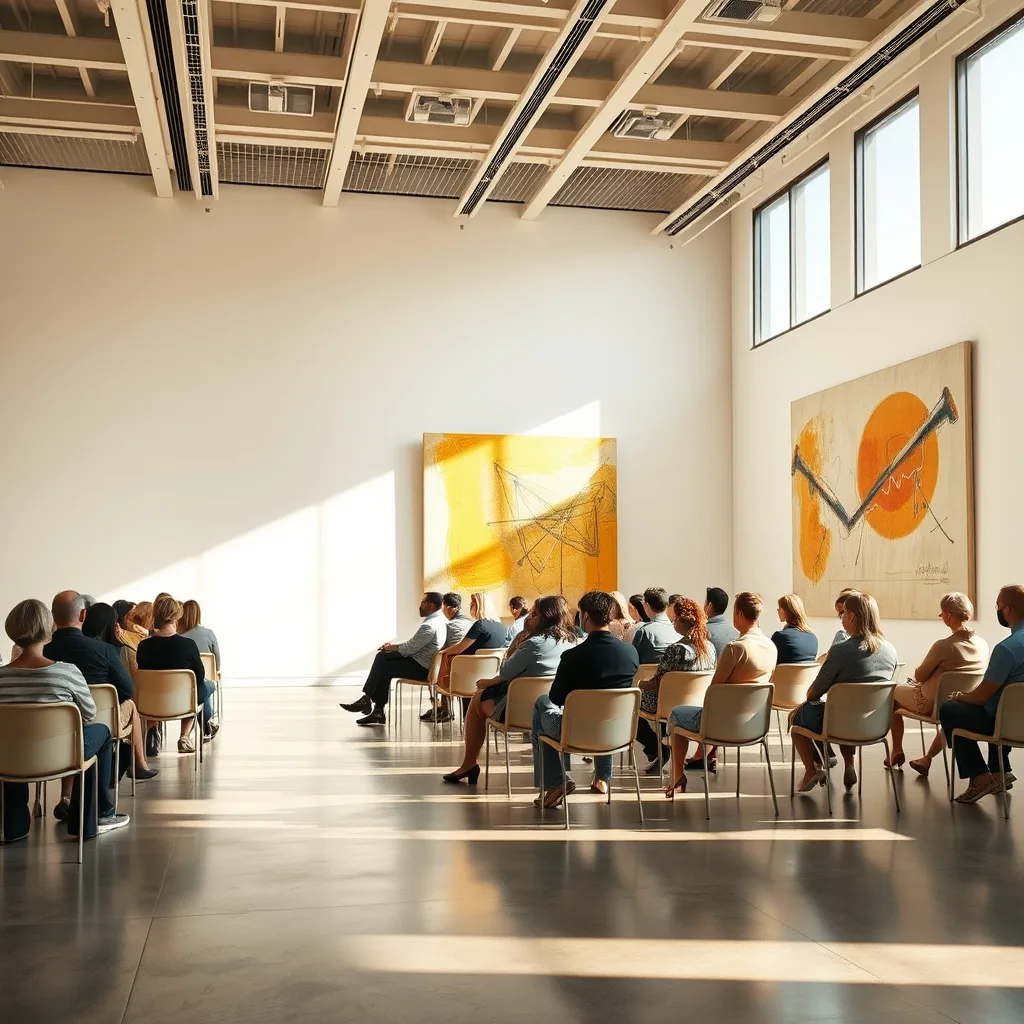
There is a particular kind of calm that arrives before a city fully wakes. The sidewalks are less crowded, the light feels softer, and the mind has not yet gathered all of its usual demands. The phrase MoMA’s quiet morning meditation sessions can sound like a small secret kept by early risers. Whether you find a formal offering on the museum calendar or create your own contemplative visit, the idea points to something valuable: using art, space, and slow attention to soften the noise of urban life. This guide treats the experience as both an invitation and a practice. It offers ways to approach a museum morning with more presence, less pressure, and a practical structure you can adapt to your own schedule.
Key takeaways
- Practice slow looking by focusing on details like color, line, or texture rather than trying to analyze every piece.
- Set a simple intention before arriving, such as choosing one word to guide your visit, to prevent feeling overwhelmed.
- Use a 20-minute structured approach: spend two minutes settling in, five minutes on one artwork, and three minutes reflecting.
- Adapt the practice to your environment by visiting local libraries or parks if a major museum is not accessible.
- Prioritize comfort by wearing supportive shoes and preparing for sensory input with tools like earplugs or a small journal.
Why a Museum Morning Can Feel Like Meditation
Meditation is often described as the practice of returning attention to the present moment. A quiet museum morning offers a natural setting for that return. Instead of focusing on the breath alone, you can focus on a color, a line, a texture, or the space between objects. This is sometimes called slow looking, and it can be a gentle alternative for people who find seated meditation restless. The goal is not to empty the mind or to have a perfect experience. The goal is to notice when attention has wandered and to come back without criticism.
In a museum, the environment does part of the work. Art asks to be observed. A painting may hold your gaze longer than a screen because it does not refresh or notify. A sculpture changes as you move around it. A quiet gallery can make the body feel less hurried. For urban dwellers, this can be especially meaningful. The city often rewards speed, productivity, and constant response. A slow museum visit offers a different rhythm: pause, look, breathe, and choose what deserves your attention.
What Makes MoMA a Natural Setting for Urban Zen
MoMA is known for modern and contemporary art, design, film, and media. Its collections can be intellectually stimulating, but the museum can also support a quieter kind of engagement. You do not need to understand every work to benefit from being present with it. In fact, a beginner-friendly approach is to let curiosity replace expertise. If a piece draws you in, stay with it. If it does not, move on without guilt.
The museum’s Midtown Manhattan location adds another layer. Being in the middle of a busy city can make the contrast more noticeable. Stepping into a calm interior, even briefly, can create a sense of separation from traffic, notifications, and errands. If outdoor space is available and open, a short pause in a sculpture garden or courtyard can extend the practice. Always check current hours, entry requirements, and gallery access before you go, because museum schedules and exhibitions can change. The practical point is not to memorize MoMA’s details, but to use the setting intentionally: arrive early, move slowly, and treat the visit as a pause rather than a checklist.
How to Approach a Quiet Morning Session with Intention
Before you leave home, decide what kind of morning you want to have. A simple intention can prevent the visit from becoming another task. You might choose one word, such as soften, notice, or return. You might set a gentle boundary, such as looking at only three works or spending twenty minutes without checking your phone. The aim is not to create a rigid rule. It is to give the mind a direction so it has less room to spin into planning or worry.
On the way to the museum, try a brief transition practice. At a crosswalk, feel your feet on the ground. In the elevator, take three slow breaths. Before entering, pause at the door and ask yourself what you are leaving behind for the next hour. This small ritual marks a shift from city mode to contemplative mode. When you enter, silence your phone or place it in your bag. If you use a meditation app, set it before you arrive so you are not opening screens inside. The fewer decisions you make in the moment, the more space you have for attention.
A Simple 20-Minute Practice for the Gallery
You do not need a long session to create a meaningful experience. A twenty-minute structure can be enough. Begin with two minutes of arrival. Stand still, soften your shoulders, and take a few natural breaths. Notice the temperature of the room, the sound of footsteps, and the feeling of your feet inside your shoes. Let the museum become real through your senses rather than through your expectations.
Next, choose one artwork and spend five minutes with it. Start by looking at the whole piece. Then notice one detail: a patch of color, a repeated shape, a rough edge, or a patch of empty space. If your mind comments, let the comment pass like a cloud. Return to what you can see. After five minutes, move slowly to another work or another part of the same work. Spend another five minutes noticing how your body responds. Does your breathing change? Do you lean forward or step back? This is not about judging the art. It is about observing your own attention.
Use the final minutes for closing. Find a place to stand or sit if seating is available. Take three breaths. Ask yourself what you want to carry into the rest of the day. It might be a single image, a feeling of spaciousness, or simply the reminder that you can pause. If you have a small notebook, write one sentence. If not, let the last image be your note.
Turning Your Visit into a Ritual
Ritual is repetition with attention. To make a museum morning feel sustainable, attach it to something you already do. You might visit on the same weekday each month, pair the outing with a quiet breakfast, or end with a short walk. The ritual does not need to be elaborate. It needs to be repeatable enough that your mind begins to recognize it as a pause.
For example, you could create a three-part routine: arrive, look, and record. Arrive by taking the same route and noticing one thing that has changed. Look by choosing one artwork without reading the label first. Record by writing a single line afterward. Over time, this structure can become a reliable anchor. If you cannot visit MoMA regularly, you can adapt the ritual to a local gallery, a library, a garden, or even a quiet corner at home. The essential elements are a transition, a focal point, and a gentle return to ordinary life.
What to Wear, Bring, and Leave Behind
Comfort matters more than style for a contemplative museum visit. Wear shoes that let you stand and walk without distraction. Bring a light layer if you tend to feel cool in galleries. A small notebook and pen can be useful, but keep them simple so they do not become another screen. If you plan to sit, check whether seating is available and whether the gallery allows it. Follow museum guidance about bags, food, drink, and photography, since rules can vary by exhibition and location.
Leave behind the urge to document everything. A quiet morning is not a content shoot. If you take a photo, do so briefly and then return to looking with your own eyes. Also leave behind the pressure to have a profound reaction. Some days art will move you; other days it will simply be present. Both are valid. The practice is not about manufacturing awe. It is about giving your attention a softer place to land.
If You Cannot Get to MoMA: Building Your Own Urban Zen
Not everyone can visit MoMA easily, and that does not limit the value of the idea. Urban zen can be built from small, repeatable moments. At home, choose one object and look at it for two minutes without multitasking. A cup, a plant, a book spine, or the light on a wall can become a focal point. If you commute, use a quiet segment of the trip to notice sounds, colors, or the sensation of movement. If you have a nearby park or plaza, spend five minutes sitting without scrolling.
A simple home version might take eight minutes. Sit near a window, place one object in front of you, and set a timer. For the first minute, notice the room. For the next five, look at the object without naming it too quickly. For the last two, write one sentence about what you noticed. This structure can make a small apartment or office corner feel like a retreat without requiring travel or special equipment.
You can also create a museum-like experience by visiting a local gallery, library, or community space during a slower hour. The key is to choose a place with fewer demands and more visual interest. Set a time limit so the practice feels contained. Bring a small intention. When you leave, take one image with you. This approach can be especially helpful on busy days, because it proves that calm does not require a perfect setting. It requires a deliberate pause.
Reading the Museum’s Daily Weather Before You Commit
A contemplative visit begins with logistics, but not the kind that turns the morning into a project. Museums have their own daily weather: the opening hour may be calm, while a school-group wave arrives mid-morning; a rainy Tuesday can push casual visitors indoors; a free-admission evening can feel like a different building entirely. Before choosing a time, check the museum calendar for timed-entry rules, member hours, film screenings, exhibition openings, and gallery closures. Then pick a window that matches your tolerance for people, not just your calendar. For some visitors, the first thirty minutes after opening are ideal because the building is still waking up. For others, a late-afternoon slot works better because the lunch rush has passed and the light has softened. If you are traveling, avoid treating a museum morning as a fixed appointment that must survive every delay. Build in a buffer for bag check, elevators, and the walk from transit.
Once inside, read the floor plan like a trail map. Blockbuster exhibitions often pull crowds toward a single corridor, while upper floors, study centers, design galleries, and dead-end rooms can stay quieter. Ask staff which galleries are low-traffic at that hour; they often know where the school groups have just been. Choose two anchor rooms rather than a full sweep. A good route might include one room with seating, one room with larger objects that invite walking around, and a short pause near a window or courtyard if access is available. Edge cases matter: a sold-out day, a late opening, an escalator outage, or a sudden gallery closure can undo a carefully planned route. If that happens, do not force the original plan. Find a single work near your entry point, give it five minutes, and let the visit become smaller rather than canceled. The point is not to outsmart the museum. It is to cooperate with the building as it actually is that morning.
A Sensory-Friendly Setup for Meditation in a Public Building
Museum calm is not silent, and it is rarely neutral. Galleries hum with ventilation, echo with footsteps, and flicker with video screens. For visitors with sensory sensitivities, the difference between a restorative morning and an exhausting one can come down to preparation. Bring noise-reducing earplugs or headphones even if you do not expect to need them. Pack sunglasses if bright walls or reflective surfaces bother you. Choose a bag that stays close to the body so you are not adjusting straps in crowded rooms. If you use a stim tool, fidget, or grounding object, keep it accessible rather than buried. A small stone, a folded piece of fabric, or a smooth keychain can give your hands a quiet place to land while your eyes rest on a work.
Before you enter, make a sensory map in your mind. Where are the benches? Is there a quieter lobby corner, a coat room, or a seating area near the elevators? Where are the restrooms? What is your exit route if a room becomes too loud? Knowing these details reduces the mental load of staying present. If you use a timer, set it before you arrive and put the phone in airplane mode. If you need to check the time, use a watch rather than a screen. Headphones can be useful for a guided meditation, but they can also block the ambient cues that help you navigate. Try one ear uncovered in busy areas, or pause the audio when you move between rooms.
Accessibility is part of the practice, not an afterthought. Check the museum’s current policies for mobility devices, companion tickets, quiet hours, and seating. Some visitors need to sit frequently; others need to keep moving. Both are valid. If you feel overwhelmed, leave the gallery without apology. Step into a hallway, face a wall, and take five slow breaths. You do not have to wait until the feeling becomes a crisis. A useful rule is to leave at the first sign of tightening shoulders or shallow breathing, not at the point of panic. Fire alarms, construction noise, special events, and crowded film queues are all legitimate reasons to adapt. Sensory-friendly meditation is not about enduring the environment. It is about arranging a small pocket of attention inside it.
Six Artworks, Six Attention Modes: A Longer Slow-Looking Sequence
When you have more than twenty minutes, a longer visit can benefit from variety rather than more of the same. Instead of trying to see many works in one style, choose six different attention modes. This sequence can take fifty to seventy minutes and works in almost any modern or contemporary collection. Begin with an abstract painting or a work without a clear subject. Stand at a comfortable distance and let the whole surface register. Then move closer and choose one area of color or texture. Ask: where does my eye rest, and where does it slide? Spend five to seven minutes without reading the label. The goal is to let visual information arrive before explanation.
Next, find a portrait or a work with a face. Notice the direction of the gaze, the distance between the figure and the edge of the frame, and the parts of the face that are detailed versus blurred. Try not to invent a biography. Instead, observe what the work gives you: a posture, a shadow, a repeated color. Spend five minutes. Then move to a sculpture or a three-dimensional object. Walk a slow half-circle around it if the room allows. Notice how the silhouette changes, where the light catches an edge, and how your body wants to stand. If the object is in a case, use the glass as a boundary rather than a barrier. Look at the reflection for a moment, then return to the object.
For a design object, such as a chair, a lamp, or a household tool, shift into functional attention. Ask what problem the object solves, where a hand would grip it, and what it would feel like to use. This is not a history lesson; it is a way to connect sight with imagined touch. For a photograph, look at the frame’s edges before the subject. What is included, and what is cut off? Where does the light come from? What is the smallest detail that changes the scene? For a time-based work or a film clip, give yourself permission to watch for only three to five minutes. Notice duration, repetition, and sound. If the audio is too loud or the room too dark, watch from the doorway or skip it. The sequence is a scaffold, not a test. If one mode feels flat, move on. If one work holds you longer, stay. The value comes from switching modes, not from completing all six.
Sketching, Writing, and Noticing Without Turning It Into a Project
Writing and sketching can deepen attention, but they can also become a performance. Keep the tools small and the rules light. A single pencil and a pocket notebook are enough. Before you draw, check whether the gallery allows sketching and whether you must use pencil rather than ink. Some museums restrict sketching near fragile works or in special exhibitions. Follow the rules without negotiating. If sketching is not allowed, write instead. If writing feels too abstract, try a blind contour drawing: choose one object, keep your eyes on it, and let your pencil move without looking at the page. The result does not matter. The exercise forces you to slow the hand and the eye together.
For a writing practice, avoid the urge to summarize the artwork or explain its meaning. Use one of three prompts. First: list five things you can see without naming the subject. Second: describe one edge, one shadow, and one color. Third: write a single sentence about what your body did while you looked. Did you lean in? Hold your breath? Step back? These notes are not reviews. They are evidence of attention. Keep them short enough that you can finish before your mind starts composing an essay. A page of fragments is more useful than a polished paragraph that pulls you away from the work.
There are practical edge cases. Do not block walkways with a sketchbook or sit on the floor unless the museum permits it. Keep pencils away from artworks and walls. If a guard asks you to move or stop, comply immediately and without debate. If you are in a crowded room, write standing up or wait for a quieter moment. Avoid photographing labels and then writing from the image later; that turns the visit into research. If you feel self-conscious, remember that most visitors are focused on the art, not on you. And if the notebook becomes a reason to stop looking, close it. The page is a companion, not the destination.
Sharing the Practice: Partners, Friends, and Family
A quiet museum morning can be shared, but it needs a light agreement before entry. With a partner or friend, decide how you will begin: together for one work, then split for twenty minutes, then meet at a fixed spot. Agree on a signal for needing space, such as a hand on the shoulder or a simple phrase like I am going to wander. Avoid debating the art in the first ten minutes. Let each person have an unspoken experience before you compare notes. If one person wants to read every label and the other wants to look without text, set a meeting time rather than negotiating every wall. The goal is not to synchronize your attention. It is to protect both rhythms.
With children, the practice has to be shorter and more physical. Try a one-work rule: each person chooses one object, and the group spends three minutes with each choice. Use a quiet game such as finding three shapes, two colors, and one sound. Let children move when they need to move, but practice returning to the work once. If a child is bored, do not treat boredom as failure. Boredom is information. Move on, take a break, or end the visit early. A ten-minute museum pause that ends well is better than a forty-minute session that becomes a power struggle. For teenagers, offer autonomy: let them choose a gallery and set a meeting point. Do not require a profound reaction.
Group visits and guided tours create another edge case. If you arrive with a tour, you may not be able to control the pace. Use the tour as a moving meditation: notice when your attention drifts, then return to the guide’s voice or the object being discussed. If the group is too loud, step to the back and look at one detail. If you meet a friend who wants to talk, suggest a short silent interval and a later coffee. Social pressure is real, so name your intention ahead of time. You can say, I am trying a quiet visit today, and I would love to catch up afterward. Most people understand. If they do not, you can still protect a few minutes for yourself. Shared silence is not rejection; it is a different way of being together.
Fitting Urban Zen Into a Workday or a Tight Trip
Not every museum morning is a free morning. A workday visit can be a fifteen-minute pause between meetings, a lunchtime reset, or a deliberate detour on a business trip. The key is to choose a container small enough to survive real life. If you have twenty minutes total, plan for five minutes of travel inside the building, ten minutes with one work, and five minutes to leave. Pick the nearest gallery to your entry point rather than the most famous one. On a tight trip, do not save the museum for the last afternoon when luggage and departure times crowd your mind. Schedule a short slot early in the day, even if it means seeing less. A single room visited slowly can be more memorable than a hurried circuit of highlights.
Use transitions to protect the practice. Before a meeting, take three breaths at the museum exit and name one image you want to carry. After a workday visit, write one sentence on your phone or in a notebook before you return to email. If you are traveling, check whether your hotel is near a small gallery, a library, or a public collection with free entry. The practice does not require a major institution. A university museum, a corporate lobby with rotating art, or a historic house can offer the same shift in attention if you enter with a clear intention. Check hours, security rules, and bag policies, especially in office buildings and small venues.
Edge cases are common. A delayed train may shrink your visit to five minutes. A closed gallery may leave you in a lobby. A work call may interrupt your quiet. In those moments, lower the scale rather than abandoning the practice. Look at one poster, one architectural detail, or one object in a display case. Set a timer for three minutes. If you are too rushed to settle, do a walking practice instead: walk one slow loop around the block, then enter your destination. The point is to create a threshold between modes. Urban zen is not a destination; it is a repeated decision to pause inside an ordinary day.
When the Art Stirs Something: Emotional Edge Cases and Aftercare
Art can be beautiful, but it can also be unsettling. A work may trigger grief, anger, shame, memory, or a sudden wave of loneliness. A loud video may overstimulate you; a photograph may remind you of a person you miss; a political work may make you feel exposed. These reactions are not interruptions to the practice. They are part of what attention can uncover. Still, you do not have to stay with a work that feels harmful. Give yourself permission to leave the gallery, sit on a bench, and look at something neutral. Ground yourself with the physical room: feel your feet, name three objects, listen for the ventilation, and take a sip of water. If you are with someone, tell them you need a minute rather than explaining everything.
After a strong reaction, build a short aftercare routine. Leave the museum by a different door if possible. Walk for five minutes without headphones. Drink water and eat something small. Write one sentence about what happened, not what it meant. If the feeling lingers, call a friend or take a quiet break before your next obligation. Do not use the gallery as a substitute for professional support, and do not force yourself to process trauma in public. If a work depicts violence, nudity, or politically charged material, check exhibition descriptions and content warnings when available. If you are visiting with a child or a sensitive companion, preview the galleries online or ask staff for guidance. Respect other visitors who may be having their own reactions; keep conversations low and give people space. A contemplative visit is not a test of toughness. It is a practice of noticing, choosing, and returning to the world with care.
Common Missteps and How to Avoid Them
One common misstep is treating the visit like a race. Trying to see too much can turn a contemplative morning into a crowded mental list. A better approach is to choose less and stay longer. Another misstep is judging yourself for being distracted. Distraction is part of attention. The practice is not to avoid it but to notice it and return. A third misstep is forcing silence. You do not need to feel peaceful to benefit. You can feel restless, bored, or emotional and still practice awareness.
Phone use is another common interruption. Even a quick check can pull the mind back into urgency. Put the phone away, or use airplane mode if you need a timer. If you visit with a friend, agree on a quiet approach before you arrive. You can share the experience without talking through it. Finally, avoid making the practice a performance. There is no need to prove that you are good at meditating. The most useful measure is simple: did you give yourself a few minutes of undivided attention? If yes, the session has value.
If you miss a day, begin again without commentary. Consistency matters more than intensity. A short practice repeated often can be more useful than a long
Related posts:
 Three Scientific Reasons to Become a Morning Person
 What to Do When Something Gets Stuck in Your Eye, According to Optometrists
 Silent Walking Meditation
 Wake Up Zen: The Gentle Yoga Alarm That’s Replacing Jarring Morning Buzzers
 The Fascinating Psychology Behind Why We Name Our Possessions
 Art of Wall Hangings: Maryanne Moodie’s Instagram Guide
 ADAY Founders Share Morning Routines
 Dental Visit Frequency by State