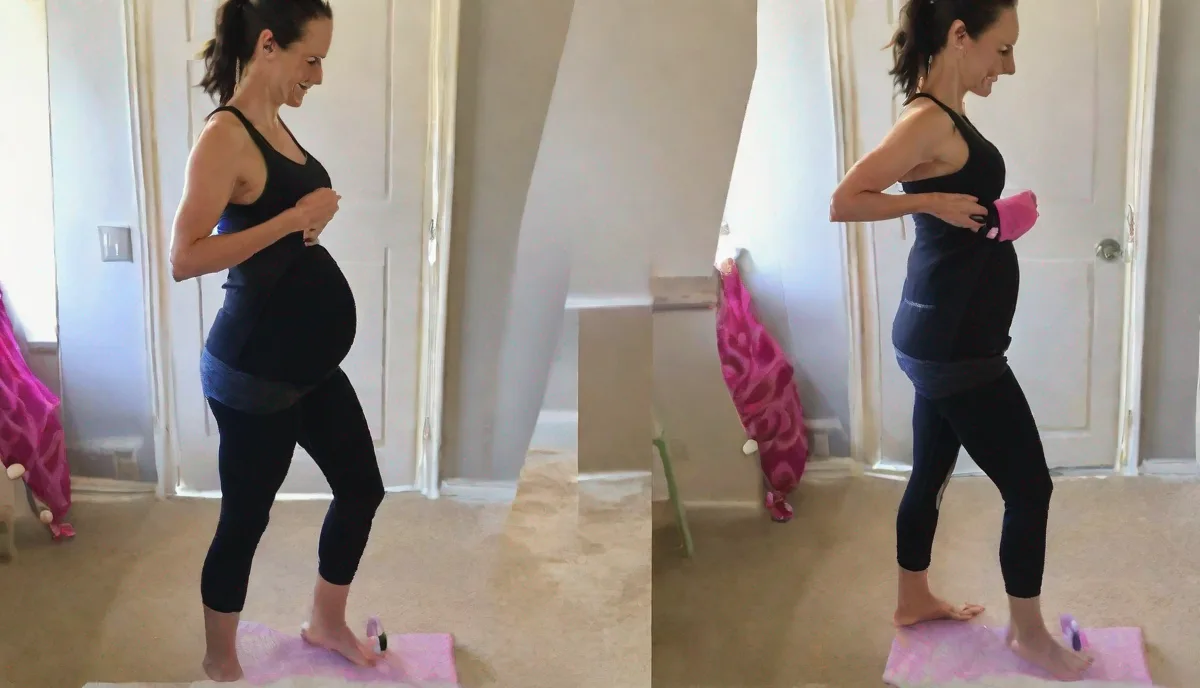
Embarking on a fitness journey during a twin pregnancy can be both exciting and daunting. The first trimester is a crucial time for your body and your growing babies, making it important to adjust your workout routine to ensure safety and wellbeing. This article will explore essential modifications to help you stay active and healthy during the first trimester of your twin pregnancy.
Key takeaways
- Exercise during your nausea window when energy peaks and eat a small snack beforehand to stabilize blood sugar.
- Focus on active range of motion instead of deep stretching to protect joints affected by the hormone relaxin.
- Maintain a moderate intensity between 4 and 6 on the RPE scale, ensuring you can pass the talk test.
- Avoid hot environments and stay near fans to prevent overheating, as twins significantly increase your metabolic rate.
- Use seated or supported positions for strength training and exhale during exertion to manage intra-abdominal pressure.
Understand Your Changing Body
As your body begins to change, understanding these changes is vital. Increased hormone levels and blood volume, along with the growth of your babies, can impact your energy levels and physical capabilities. Listen to your body, and don’t hesitate to modify the intensity and duration of your workouts.
Low-Impact Cardio Exercises
High-impact workouts can be risky during pregnancy, especially with twins. Switch to low-impact cardio exercises like walking, swimming, or stationary cycling. These activities maintain your cardiovascular health without putting undue stress on your joints and pelvic floor.
Strength Training with Caution
Strength training can be beneficial, but it’s important to avoid heavy weights and exercises that put pressure on your abdomen. Opt for lighter weights and focus on maintaining muscle tone rather than building mass. Always ensure proper form to reduce the risk of injury.
Core and Pelvic Floor Workouts
A strong core and pelvic floor are essential for a healthy twin pregnancy. Engage in safe exercises like pelvic tilts and kegel exercises. However, avoid traditional crunches or any movements that involve lying flat on your back, as this can restrict blood flow to your babies.
Stay Hydrated and Rested
Hydration and rest are key components of a safe workout routine. Drink plenty of water before, during, and after exercise, and rest whenever you feel fatigued. Remember, your body is working overtime, so extra rest is not just acceptable; it’s necessary.
Navigating the Nausea Window and Energy Fluctuations
While the existing advice highlights the importance of rest, it is crucial to understand the unique physiological demands that a twin pregnancy places on your energy reserves during the first trimester. With two embryos developing, your levels of human chorionic gonadotropin (hCG) and progesterone are significantly higher than in a singleton pregnancy. This often results in more pronounced morning sickness and a level of exhaustion that can feel overwhelming. To maintain a workout routine, you must learn to identify and utilize your “nausea window.” This is the specific time of day—often late morning or early afternoon for many—when your stomach feels most settled and your energy peaks slightly.
Instead of adhering to a rigid pre-pregnancy schedule, such as a 6:00 AM gym session, flexibility is your greatest asset. If you wake up feeling nauseous, forcing a workout can lead to a spike in cortisol and further dehydration. Instead, pivot to a shorter, 10-minute movement snack once your breakfast has settled. For those experiencing severe nausea, keep exercise extremely light—think gentle stretching or a slow walk around the house—to avoid triggering a gag reflex. It is also helpful to keep small, bland snacks like saltine crackers or a banana in your gym bag. Consuming a few carbohydrates 20 minutes before movement can stabilize blood sugar levels, which often plummet in the first trimester of a twin pregnancy, leading to dizziness or faintness during exercise.
Edge cases include mothers dealing with Hyperemesis Gravidarum (HG). If you are struggling to keep fluids down, exercise should be suspended entirely until you have clearance from your obstetrician. For everyone else, the goal is to move for circulation and mood rather than performance. If you find that your heart rate spikes just from standing up, honor that signal. Your body is currently building two placentas and increasing its blood volume by nearly 50 to 100 percent; this is a marathon in itself, even when you are sitting still.
The Impact of Relaxin on Joint Integrity and Flexibility
Even in the first trimester, your body begins producing relaxin, a hormone designed to loosen the ligaments in the pelvic girdle to prepare for birth. However, relaxin is not site-specific; it affects every joint in your body, from your ankles to your shoulders. In a twin pregnancy, the rapid expansion of the uterus can put early pressure on the pubic symphysis and sacroiliac (SI) joints. This means that exercises you once found easy, like deep lunges or wide-stance squats, can suddenly become sources of instability or pain.
To modify your routine, focus on “active range of motion” rather than passive stretching. Avoid long-hold yoga poses that pull on the connective tissue. Instead, prioritize functional movements that keep the joints within a safe, stable range. For example, if you are performing a squat, reduce the depth to a level where you feel complete control and no pulling sensation in the groin. If you enjoy yoga, skip the deep “pigeon pose” or extreme “warrior” stances that overstretch the pelvic floor and hip ligaments. Overstretching while relaxin is high can lead to long-term joint instability or a condition called Symphysis Pubis Dysfunction (SPD), which is more common and often more severe in twin pregnancies due to the extra weight.
Consider incorporating more closed-chain exercises—movements where your hands or feet are in a fixed position against a solid surface. Using a wall for push-ups or a chair for seated leg extensions provides the external stability your ligaments might currently lack. If you feel a “clicking” or “popping” sensation in your hips or pelvis during any movement, it is a sign to narrow your stance or reduce the weight. The goal during these first thirteen weeks is to maintain the muscle you have while protecting the integrity of your connective tissues, which are becoming increasingly pliable.
Thermoregulation and the Twin Pregnancy Metabolic Load
One of the most critical but often overlooked modifications in a twin pregnancy is temperature management. Your basal body temperature is naturally higher when pregnant, and with twins, your metabolic rate increases even more significantly to support two developing fetuses. During the first trimester, the babies’ organ systems are forming, and they are highly sensitive to maternal core temperature. Overheating (hyperthermia) can pose risks to fetal development, making it essential to modify how and where you exercise.
Avoid “hot” workout environments entirely, such as hot yoga, heated Pilates, or outdoor running in high humidity. If you are working out in a gym, position yourself near a fan or directly under an air conditioning vent. Your internal cooling system is already working overtime; you will likely find that you sweat much sooner and more profusely than you did before pregnancy. This is your body’s way of trying to keep the “incubator” at a safe temperature. To assist this process, wear moisture-wicking, breathable fabrics and avoid tight-fitting compression gear that traps heat against the skin.
Monitor your intensity by checking your skin color and sweat levels. If your face becomes bright red or you feel a throbbing sensation in your temples, you have likely crossed the threshold of safe thermoregulation. Stop immediately, sip cool (not ice-cold) water, and use a damp cloth on your neck to lower your temperature. Remember that your babies cannot regulate their own temperature; they rely entirely on your body to dissipate heat. By keeping your workouts to a moderate intensity and staying in climate-controlled environments, you ensure a safe developmental space for both twins.
Calibrating Intensity Using the Rating of Perceived Exertion (RPE)
In the past, pregnant women were often told to keep their heart rate below 140 beats per minute. However, modern sports medicine suggests that this is not a one-size-fits-all rule, especially for those carrying twins. A more effective way to monitor your intensity during the first trimester is the Rating of Perceived Exertion (RPE) scale or the “Talk Test.” Because your blood volume is expanding and your heart is literally working for three, your heart rate will naturally be higher than usual, even at rest. Using a heart rate monitor might cause unnecessary anxiety if you see numbers that look high compared to your pre-pregnancy baseline.
On an RPE scale of 1 to 10 (where 1 is sitting on a couch and 10 is an all-out sprint), aim to stay between a 4 and a 6. You should feel like you are working, but you should never be breathless. The “Talk Test” is the gold standard here: if you cannot carry on a full sentence without gasping for air, you are pushing too hard. In a twin pregnancy, oxygen is a hot commodity. Your body will prioritize your muscles during a workout, potentially shunting oxygen-rich blood away from the uterus if the intensity is too high for too long.
This modification is particularly important for high-intensity interval training (HIIT) enthusiasts. If you previously enjoyed HIIT, transition to “Morningside Intervals”—lower intensity bursts followed by much longer recovery periods. For example, instead of a 30-second sprint and a 30-second rest, try a 30-second brisk walk followed by a 90-second slow stroll. This allows your heart rate to recover fully and ensures that the twins are receiving a steady supply of oxygen throughout your session. Listen for signs of “oxygen debt,” such as feeling lightheaded or seeing spots, and take these as immediate cues to scale back.
Structural Modifications for Resistance Training Stability
While the existing article mentions avoiding heavy weights, the *way* you lift is just as important as the *amount* you lift. As your uterus grows—which happens much faster with twins—your center of gravity begins to shift earlier than in a singleton pregnancy. This change can affect your balance and put unexpected strain on your lower back. To compensate, move away from free-standing exercises that require significant stabilization and toward exercises that offer external support.
For instance, replace the standing overhead press with a seated dumbbell press. The back of the chair provides a tactile cue to keep your spine neutral and prevents you from arching your back, which can exacerbate the natural increase in lumbar curve (lordosis). Similarly, if you are doing squats, consider the “sit-to-stand” modification using a bench or sturdy chair. This ensures that if you lose your balance or feel a sudden wave of dizziness—common in the first trimester due to blood pressure fluctuations—you have a safe place to land.
Another key modification involves your grip and stance. Widening your stance slightly in all standing exercises provides a broader base of support, which helps manage the early shifts in your pelvic alignment. Additionally, avoid the “Valsalva maneuver,” which is the practice of holding your breath during a heavy lift to create internal pressure. In a twin pregnancy, this can put excessive downward pressure on your pelvic floor and temporarily spike your blood pressure. Instead, practice “exhale on exertion.” If you are lifting a weight, breathe out during the hardest part of the movement. This technique protects your pelvic floor and ensures a steady flow of oxygen to the fetuses.
Breath Control and Managing Intra-Abdominal Pressure
In the first trimester of a twin pregnancy, the pressure within your abdominal cavity is already beginning to increase. While you may not have a prominent “bump” yet, the internal organs are being displaced to make room for the rapidly expanding uterus. This makes breath control a vital part of your workout modification strategy. Many women instinctively hold their breath when performing challenging movements, but this increases intra-abdominal pressure, which can contribute to the early development of diastasis recti (separation of the abdominal muscles) or pelvic floor dysfunction.
To modify your breathing, focus on diaphragmatic breaths—often called “belly breathing.” As you inhale, imagine your ribcage expanding 360 degrees, and as you exhale, gently lift the pelvic floor and draw the lower abdominals in toward the spine. This “core breath” should be the foundation of every exercise you do. If you are walking, time your breath to your steps. If you are swimming, focus on long, rhythmic exhales into the water. This not only manages internal pressure but also helps calm the nervous system, which can be heightened during the first trimester due to hormonal shifts.
Be particularly mindful of exercises that cause “doming” or “coning” along the midline of your stomach. This usually happens during movements like planks or certain yoga poses. If you see a ridge forming down the center of your abdomen, it means the pressure is too high for your connective tissue to handle. Modify the move by dropping to your knees or using an incline (like placing your hands on a bench instead of the floor). By managing this pressure early on, you set a strong foundation for the second and third trimesters when the physical load of twins becomes much more significant.
Red Flags and Symptom-Based Exercise Cessation
Understanding when to stop is perhaps the most important modification of all. In a twin pregnancy, the stakes are higher, and the body’s warning signs should never be ignored or “pushed through.” While some discomfort is normal as your body stretches and changes, certain symptoms require you to end your workout immediately and contact your healthcare provider. These are often referred to as “red flags” in prenatal fitness.
Immediate reasons to stop include any vaginal bleeding or leaking of fluid, which could indicate issues with the cervix or the amniotic sacs. Dizziness that doesn’t resolve with rest, or feeling faint while standing, can be a sign of pregnancy-induced hypotension or anemia, both of which are more common in twin pregnancies. You should also watch for calf pain or swelling in one leg more than the other; because pregnancy increases the risk of blood clots (DVT), and twins increase that risk further, localized leg pain should always be taken seriously.
Other signs to watch for include sharp, stabbing pains in the pelvis or abdomen that don’t subside when you change positions. While “round ligament pain” is common and usually feels like a quick jolt, persistent cramping or rhythmic contractions are signals that your body needs rest, not movement. Finally, pay attention to your recovery. If you feel completely depleted for hours or even days after a workout, you are overtraining for your current state. A successful first-trimester twin workout should leave you feeling energized and mobile, not exhausted and sore. Learning to distinguish between the healthy “burn” of a muscle and the “warning” of a pregnancy-related symptom is the ultimate skill in prenatal fitness.
FAQs About Twin Pregnancy Workouts
Is it safe to exercise during the first trimester of a twin pregnancy?
Yes, it’s generally safe to exercise during the first trimester of a twin pregnancy, but it’s crucial to consult with your healthcare provider and make appropriate modifications to your routine.
What are some safe cardio exercises for twin pregnancies?
Safe cardio exercises include walking, swimming, and stationary cycling, as they are low-impact and minimize stress on the body.
Can I continue strength training during my twin pregnancy?
Strength training can continue with caution. Use lighter weights, avoid exercises that strain the abdomen, and focus on maintaining muscle tone.
Why should I avoid lying flat on my back?
Lying flat on your back can compress major blood vessels and restrict circulation to your heart and your babies, especially as your pregnancy progresses.
How much should I hydrate during pregnancy workouts?
Hydration needs increase during pregnancy. Aim to drink water before, during, and after your workouts, and always listen to your body’s thirst signals.
Related posts:
 Kate Hudson’s Safe Pilates Moves for Pregnancy
 My Third Trimester Twin Pregnancy Workout Modifications
 Tension Headaches and Pelvic Floor
 My Second Trimester Twin Pregnancy Workout Modifications
 Common Kegel Exercise Mistakes: Perfecting Your Pelvic Floor Workouts
 Pelvic Floor Expert’s Advice
 13 Things Only Moms Pregnant with Twins Will Understand
 What It’s Like to Find Out You’re Having Twins