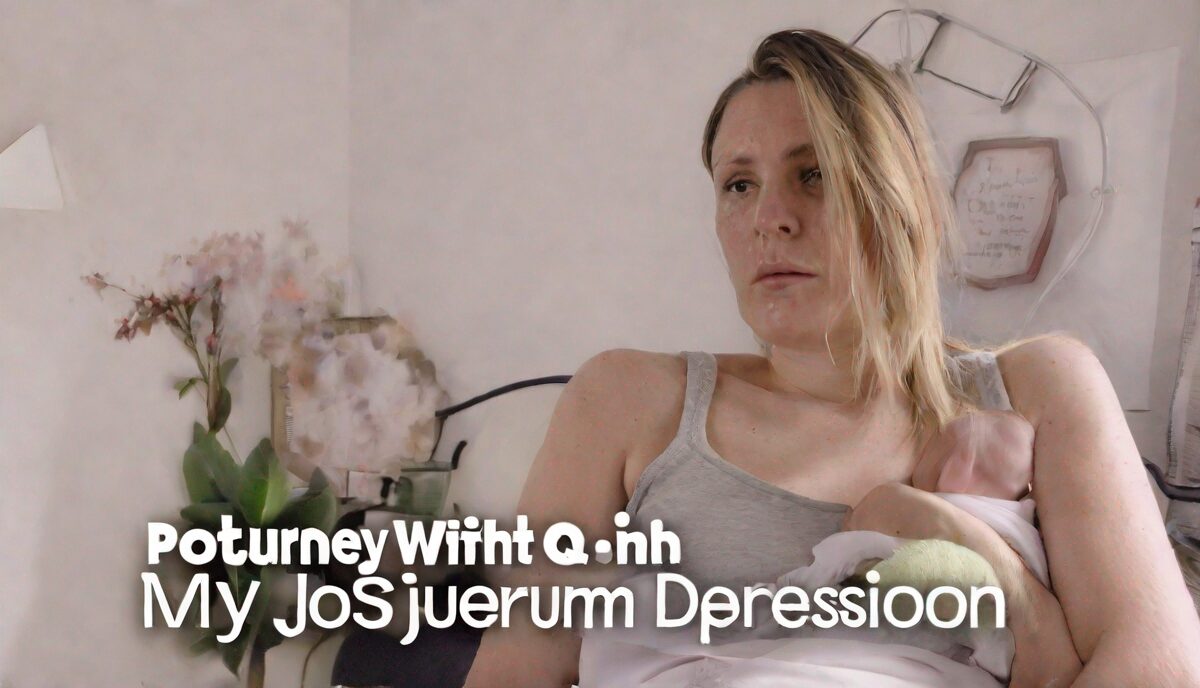
The Difficult First Few Months
Becoming a new mom is supposed to be one of the happiest times in life. However, for many women like myself, the first few months with a new baby can be unexpectedly difficult and overwhelming, both emotionally and physically. I suffered from postpartum depression after my daughter was born.
Feeling Like a Failure
The feelings crept up slowly – a lack of energy, difficulty bonding with my baby, sadness and crying spells for no reason. I started feeling like I was failing at being a mom. The guilt and shame made me withdraw further into myself.
Reaching Out for Help
Thankfully, my husband noticed my struggles and encouraged me to open up about what I was going through. I felt scared to admit I was depressed as a new mom. But once I started talking about it, I realized how common postpartum depression is. My doctor compassionately validated my feelings, assuring me I was not alone.
Finding the Right Treatment
I began meeting regularly with a therapist specializing in postpartum mental health. She helped me process my emotions and start establishing self-care routines like getting outdoors, exercising, and spending time doing things I enjoyed pre-baby. I also started an antidepressant which helped regulate my mood.
FAQ
What were your first signs of postpartum depression?
I felt extremely fatigued no matter how much I rested, had intense mood swings, and struggled to feel bonded with my baby despite desperately wanting to.
How long did your PPD last?
My moderate PPD lasted about 5 months before I began feeling more like myself. But many women can struggle with symptoms for up to a year or more after giving birth.
What helped you recover?
A combination of professional help through counseling and medication, as well as support from my husband, friends and family was crucial. Learning coping strategies and allowing myself grace was so important.
Do you have any advice for new moms?
Know that it’s absolutely okay to struggle and reach out for help. There are many resources available, and you don’t have to tough it out alone. Be compassionate with yourself.
Could PPD occur after a second pregnancy?
Yes, you can be at risk for PPD with each pregnancy and delivery. Make sure to monitor your emotional health and have a support system in place.
Understanding the Nuances: Beyond the ‘Sadness’ of PPD
While my initial diagnosis was labeled as postpartum depression, I soon learned that the umbrella of Perinatal Mood and Anxiety Disorders (PMADs) is much broader than I realized. For many of us, the experience isn’t just a heavy blanket of sadness; it can manifest as postpartum anxiety (PPA) or even postpartum obsessive-compulsive disorder (OCD). In my case, the sadness was frequently interrupted by a buzzing, electric sense of dread. I would lie in bed, exhausted to my core, yet my brain would play a loop of ‘what-if’ scenarios. What if the baby stops breathing? What if I trip while carrying her down the stairs? These intrusive thoughts are a terrifying edge case of the postpartum experience that many women are too ashamed to discuss, fearing they will be judged as unfit mothers.
Understanding that these thoughts are a symptom of a chemical imbalance—not a reflection of my character or my desires—was a turning point. Postpartum anxiety often looks like hyper-vigilance. I found myself checking the baby’s chest for movement dozens of times an hour, or obsessively cleaning bottles because I was convinced a single germ would lead to a catastrophe. If you find yourself feeling ‘wired but tired,’ or if your mind is racing with disturbing images you can’t turn off, it is vital to know that this is a recognized facet of the postpartum struggle. It requires specific therapeutic approaches, such as Cognitive Behavioral Therapy (CBT), to help rewire those anxious loops and provide the brain with the safety it no longer feels on its own.
The Invisible Strain: Navigating Partnership and Resentment
While I mentioned that my husband was my greatest advocate, the reality of our daily life during my recovery was far from a fairytale. Postpartum depression acts like a wedge, slowly prying a couple apart if you aren’t careful. I felt a simmering resentment toward him every time he left for work, every time he slept through a midnight feeding, and even when he tried to be helpful. My ‘mom brain’ was convinced that no one could care for the baby as well as I could, yet I was simultaneously drowning in the responsibility of doing it all. This is the ‘double bind’ of PPD: you want help, but your illness tells you that accepting help is a sign of failure.
We had to learn a new language of communication to survive this period. Instead of saying ‘You never help me,’ which triggered defensiveness, we moved toward ‘I am at my breaking point and I need you to take the baby for two hours so I can leave the house.’ We also had to address the ‘support person burnout.’ It is a heavy burden to be the primary emotional pillar for someone with depression. I had to encourage my husband to seek his own support, whether through friends or his own therapist, so that our marriage didn’t become a one-way street of caretaking. We implemented a ‘no-fault’ zone at 3:00 AM, where anything said in exhaustion was forgiven by sunrise. Rebuilding intimacy after PPD isn’t just about romance; it’s about regaining the trust that you are still a team, even when one player is temporarily sidelined by illness.
Practical Survival: The ‘Minimum Viable Day’ Strategy
When you are in the thick of PPD, the standard advice to ‘sleep when the baby sleeps’ feels like a cruel joke. On my darkest days, even taking a shower felt like climbing Mount Everest. To cope, I developed what I call the ‘Minimum Viable Day’ (MVD). This was a list of the absolute bare essentials required to keep myself and the baby safe and fed. If I accomplished these, the day was a success, regardless of the laundry pile or the unwashed dishes. My MVD looked like this: the baby is fed and changed, I have consumed at least two bottles of water, I have taken my medication, and I have stepped outside for at least five minutes of fresh air.
Lowering the bar was not an act of laziness; it was an act of survival. I switched to paper plates for three weeks to eliminate the stress of the dishwasher. I stopped answering non-essential texts and let the house become a ‘no-visitor zone’ unless the visitor was coming to actually scrub a floor or hold the baby while I napped. For mothers currently in the trenches, I recommend identifying your own MVD. What are the three things that must happen for you to feel human? Focus only on those. The ‘extra’ things—the sensory play activities, the homemade organic purees, the perfectly curated nursery—can wait. Your brain needs the white space of a simplified life to begin the slow process of healing its neural pathways.
The Social Media Trap and the Myth of the ‘Natural’ Mother
One of the most significant external triggers for my depression was the constant barrage of ‘perfect’ motherhood on social media. I would scroll through Instagram and see women who had given birth at the same time as me, yet they were already back in their pre-pregnancy jeans, hosting elaborate birthday parties, and posting about the ‘bliss’ of every waking moment. This created a profound sense of cognitive dissonance. I felt like I was living in a dark, grey basement while the rest of the world was at a sun-drenched garden party. I had to realize that social media is a highlight reel, and for someone with PPD, it is a toxic comparison trap.
I eventually had to do a ‘digital detox.’ I unfollowed accounts that made me feel ‘less than’ and replaced them with accounts that focused on the raw, honest reality of postpartum life. I sought out communities where women talked about the leaking breasts, the hair loss, the rage, and the boredom. It turns out that ‘natural’ motherhood is a myth. For most of human history, mothers were surrounded by a ‘village’ of sisters, aunts, and grandmothers. Modern society has isolated us in suburban homes and expects us to do the work of ten people. Acknowledging that my struggle was partly a result of this broken societal structure—rather than a personal failing—helped me shed the weight of shame. I wasn’t a ‘bad mom’; I was a human being trying to do an impossible job in an isolated environment.
The Return to Work: Managing PPD in a Professional Setting
Returning to my job while still recovering from PPD was one of the most daunting challenges I faced. I was terrified that my ‘brain fog’ would be permanent and that I would lose the professional identity I had worked so hard to build. The transition back to the office requires a strategic approach. I learned the hard way that you cannot simply flip a switch from ‘depressed new mom’ to ‘high-functioning executive.’ I had to advocate for a phased return, starting with three days a week before moving back to full-time. This allowed my nervous system to adjust to the sensory overload of an office environment.
If you are heading back to work, consider being selective about what you disclose. You are not legally required to share your diagnosis, but having a trusted advocate in HR or a supportive manager can make a world of difference when you need a mental health day or a flexible schedule for therapy appointments. I also found that work actually became a strange kind of ‘respite.’ For eight hours a day, I wasn’t just a mother; I was an expert in my field. This helped rebuild my shattered self-esteem. However, the ‘second shift’—the hours between getting home and bedtime—remained a high-risk time for my symptoms. I had to learn to transition slowly, perhaps sitting in my car for ten minutes in silence before entering the house, to prevent the overwhelm from triggering a crying spell the moment I walked through the door.
The Biological Underpinnings: Hormones, Nutrition, and the Body
While therapy and medication were vital, I eventually realized that my PPD was also a physical health crisis. The sheer biological toll of pregnancy and childbirth is often underestimated. After delivery, estrogen and progesterone levels drop more precipitously than at any other time in a woman’s life. This hormonal ‘crash’ can wreak havoc on the neurotransmitters in the brain. I worked with my doctor to check my thyroid levels and my Vitamin D and B12 status, discovering that I was severely depleted in several key nutrients that regulate mood. Addressing these physical deficiencies was like putting fuel back into an empty tank.
Nutrition during PPD isn’t about ‘dieting’ to lose baby weight; it’s about brain health. I focused on anti-inflammatory foods, high-quality fats (like omega-3s), and consistent protein to stabilize my blood sugar. I also had to confront the role of sleep deprivation as a biological stressor. Sleep deprivation is used as a form of torture for a reason—it breaks the mind. I had to stop ‘toughing it out’ and prioritize sleep as if it were a life-saving medication. This meant letting my husband take the first five hours of the night so I could get one solid stretch of REM sleep. If you are struggling, please look at your recovery through a biological lens. Your brain is an organ, and like any other organ, it needs the right chemical environment to heal. It’s not just ‘all in your head’; it’s in your blood, your hormones, and your very cells.
Long-Term Recovery and the Fear of Relapse
Recovery from postpartum depression is rarely a straight line. I experienced many ‘two steps forward, one step back’ weeks. Even when I started feeling ‘normal’ again, I lived in fear of a relapse. Would the darkness return when I stopped breastfeeding? Would it return when my period started? Would it return with the next child? This fear is a common ‘late-stage’ symptom of the PPD journey. I had to develop a ‘relapse prevention plan’ with my therapist. This included identifying my ‘canary in the coal mine’ symptoms—the small signs that my mental health was slipping, such as losing interest in my hobbies or becoming irritable over minor inconveniences.
Related posts:
 Minimalist Baby Registry
 Managing Postpartum Depression
 Chrissy Teigen’s Honest Take on Stretch Marks Is Everything We Needed
 New Mom, New Science: How Your Gut Health Could Be the Key to Beating Postpartum Blues
 Do You Really Need Less Sleep as You Age?
 Postpartum Party: Molly Sims
 Why Feeling Sadness is Actually Good for You
 The Postpartum Mental Health Crisis No One Talks About