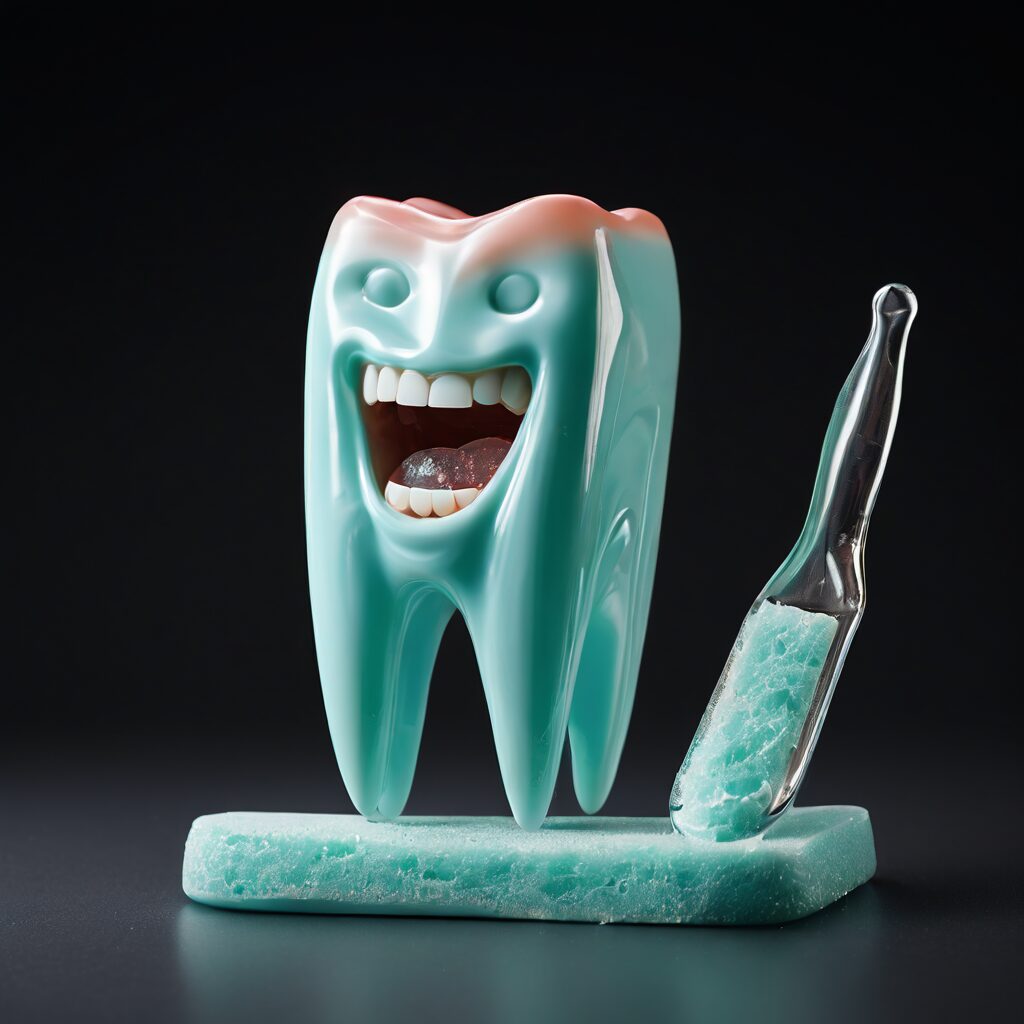
Introduction to Nano-Hydroxyapatite
In the ever-evolving realm of dental care, nano-hydroxyapatite toothpaste has emerged as a groundbreaking innovation. Originally developed by NASA to help astronauts combat bone loss in space, nano-hydroxyapatite (n-HAp) is now making waves in oral health. This article delves into what makes n-HAp toothpaste a revolutionary product and why it might be the future of dental care.
What is Nano-Hydroxyapatite?
Nano-hydroxyapatite is a biocompatible material that closely resembles the natural mineral component of human teeth and bones. Its nano-sized particles are capable of repairing and remineralizing tooth enamel, filling microscopic gaps and cracks. This unique property makes it highly effective in preventing tooth decay and reducing sensitivity.
Benefits of Nano-Hydroxyapatite Toothpaste
Nano-hydroxyapatite toothpaste offers numerous benefits:
- Remineralization: It helps restore lost minerals in the enamel, thereby strengthening teeth.
- Reduced Sensitivity: By filling in tiny fissures, it can significantly decrease tooth sensitivity.
- Non-Toxic: Unlike some fluoride-based products, n-HAp is non-toxic and safe to swallow.
- Whitening Effect: Regular use can result in whiter teeth by smoothing the enamel surface.
How Does Nano-Hydroxyapatite Work?
Nano-hydroxyapatite works by mimicking the natural processes of the body. When applied to the teeth, the nano-sized particles penetrate the enamel and integrate with the existing tooth structure. This not only repairs damage but also creates a protective layer that guards against future decay and erosion. Over time, this can lead to stronger, healthier teeth.
Comparing Nano-Hydroxyapatite with Fluoride
While fluoride has been the gold standard in dental care for decades, nano-hydroxyapatite presents a compelling alternative. Here are some key differences:
- Safety: n-HAp is non-toxic, whereas excessive fluoride can lead to dental fluorosis and other health issues.
- Effectiveness: Both are effective at remineralizing enamel, but n-HAp may offer superior results in reducing sensitivity.
- Biocompatibility: Nano-hydroxyapatite is more biocompatible with the human body, making it a safer option for long-term use.
How to Choose the Right Nano-Hydroxyapatite Toothpaste
When selecting a nano-hydroxyapatite toothpaste, consider the following factors:
- Concentration: Look for a product with a high concentration of n-HAp for maximum benefits.
- Additional Ingredients: Ensure it contains other beneficial ingredients like xylitol or natural extracts for added oral health benefits.
- Brand Reputation: Choose a reputable brand known for quality and efficacy.
The Microscopic Architecture: Particle Morphology and Crystallographic Bonding
To understand the profound efficacy of nano-hydroxyapatite (n-HAp), one must look beyond its basic chemical composition and examine the physical morphology of the nanoparticles themselves. Unlike traditional abrasive agents that physically scrub the tooth surface, n-HAp functions through a process known as epitaxial growth. The particles are typically engineered in specific shapes—most commonly needle-like (acicular) or spherical—ranging from 20 to 50 nanometers in size. This specific scale is critical because it matches the dimensions of the enamel’s own structural units, the hydroxyapatite crystallites.
When you brush with n-HAp, these nanoparticles do not merely sit on the surface; they exhibit high surface energy, which allows them to chemically bond with the tooth’s natural lattice. This is an ionic interaction where the calcium and phosphate ions in the toothpaste integrate into the demineralized areas of the enamel. For individuals with microscopic defects or porous enamel, this results in the formation of a new, synthetic-natural hybrid layer of apatite. This layer is often more resistant to acid challenges than the original enamel because the controlled synthesis of n-HAp can be optimized for purity, whereas natural enamel often contains impurities like carbonate which make it more soluble in acidic environments.
Furthermore, the morphology of the particles influences how they interact with the salivary pellicle—the thin film of proteins that forms on teeth. Nano-hydroxyapatite has a unique affinity for these proteins, allowing it to act as a scaffold for further mineral deposition from saliva. This creates a continuous cycle of repair that persists long after the actual brushing session has ended. In clinical settings, high-resolution electron microscopy has shown that n-HAp can actually penetrate deep into the dentinal tubules, the microscopic channels leading to the tooth’s nerve, effectively plugging them with a mineral density that mimics natural dentin.
Clinical Efficacy in Managing White Spot Lesions and Orthodontic Decalcification
Orthodontic treatment, while essential for alignment, often leaves patients with a frustrating side effect: white spot lesions (WSLs). These are areas of localized demineralization that appear as chalky white patches around where the brackets were bonded. They occur because the hardware makes it difficult to remove plaque, leading to prolonged acid exposure. While fluoride has traditionally been used to treat these, n-HAp offers a distinct advantage in both aesthetic restoration and structural integrity.
Because n-HAp is chemically identical to the tooth’s own mineral, it doesn’t just harden the surface of a WSL; it can actually infiltrate the lesion. Fluoride tends to cause “surface zone remineralization,” which can trap the porous, demineralized area underneath a hard outer shell, sometimes preventing deeper healing. In contrast, the smaller size of n-HAp particles allows for more uniform penetration throughout the depth of the lesion. This results in a more natural optical appearance, as the refractive index of the repaired area begins to match the surrounding healthy enamel, making the white spots significantly less visible.
For patients currently wearing braces, switching to an n-HAp formula can serve as a proactive defense. The material creates a “sacrificial layer” of mineral that the bacteria must eat through before they can reach the actual tooth structure. This is particularly useful in the “gingival third” of the tooth—the area near the gum line where plaque accumulation is highest. Clinical trials have demonstrated that patients using n-HAp during orthodontic treatment show a significantly lower incidence of new cavitation compared to those using standard silica-based toothpastes.
Nano-Hydroxyapatite for Specialized Populations: From Pregnancy to Geriatric Care
The biological compatibility of n-HAp makes it an ideal solution for populations with specific physiological needs that make traditional oral care challenging. During pregnancy, for instance, many women experience “pregnancy gingivitis” and a shift in oral pH due to hormonal changes and morning sickness. Frequent exposure to gastric acid can rapidly erode enamel. Because n-HAp is completely non-toxic and biocompatible, it provides a safe way for expectant mothers to remineralize their teeth without any concerns regarding the systemic absorption of synthetic chemicals. It also helps buffer the acidity in the mouth, providing a protective coating that mitigates the erosive effects of acid reflux.
At the other end of the age spectrum, geriatric patients often face the challenge of root caries. As gums recede with age, the tooth’s root surface (cementum) becomes exposed. Cementum is much softer and more susceptible to decay than enamel, and it is also more sensitive. Traditional high-fluoride toothpastes are often prescribed for this, but they do not always address the underlying sensitivity effectively. n-HAp is uniquely suited for geriatric care because it provides a high-density mineral fill for the exposed cementum, which is naturally more porous. This not only prevents decay but also significantly improves the quality of life by reducing the sharp pain associated with hot or cold foods.
Additionally, patients undergoing chemotherapy or radiation often suffer from extreme oral sensitivity and mucosal sloughing. The gentle, non-irritating nature of n-HAp, which lacks the harsh foaming agents (like Sodium Lauryl Sulfate) found in many commercial pastes, allows these patients to maintain oral hygiene without exacerbating their discomfort. The mineral-rich formula supports the mouth’s natural defenses when salivary flow is compromised.
Synergistic Interactions: Optimizing the Oral Microbiome with n-HAp and Bioactive Additives
Modern dental science is shifting away from the “scorched earth” approach of killing all oral bacteria and moving toward microbiome management. Nano-hydroxyapatite plays a pivotal role in this shift. Unlike antibacterial agents like triclosan or chlorhexidine, which can disrupt the balance of healthy bacteria, n-HAp exhibits a property called “selective adhesion.” Research indicates that n-HAp particles can bind to certain pathogenic bacteria, such as Streptococcus mutans, preventing them from adhering to the tooth surface. These bacteria are then simply rinsed away during expectoration, rather than being killed and left to contribute to the biofilm mass.
When combined with other bioactive ingredients, the effectiveness of n-HAp is amplified. For example, the inclusion of Xylitol, a sugar alcohol, works synergistically with n-HAp. Xylitol reduces the ability of bacteria to produce acid, which creates a more alkaline environment that is conducive to mineral deposition. In this stabilized environment, n-HAp can bond to the enamel more efficiently. Another emerging synergy involves the use of theobromine (a cacao derivative). Theobromine helps to increase the size of the hydroxyapatite crystals being formed, potentially making the newly remineralized enamel even tougher and more resistant to future acid attacks.
Furthermore, some advanced formulations now include oral probiotics or lactoferrin alongside n-HAp. While the probiotics help seed the mouth with beneficial species, the n-HAp provides the structural repair needed to ensure that those bacteria are colonizing a healthy, smooth surface. This holistic approach ensures that the tooth is protected not just by a mineral barrier, but by a healthy biological ecosystem that naturally resists decay-causing pathogens.
Addressing the Abrasivity Myth and Understanding Relative Dentin Abrasivity (RDA)
A common misconception regarding “nano” materials is that their small size might make them more abrasive or capable of “sanding down” the enamel. In reality, the opposite is true for nano-hydroxyapatite. To evaluate the safety of any toothpaste, dentists look at the Relative Dentin Abrasivity (RDA) scale. Standard whitening toothpastes often have RDA values ranging from 100 to 200, using large particles of silica or calcium carbonate to mechanically scrub away stains. Most n-HAp toothpastes, however, fall into the “low abrasivity” category, often with RDA values below 70.
The reason for this low abrasivity lies in the hardness of the material. Hydroxyapatite has a Mohs hardness of approximately 5, which is identical to the tooth’s own enamel. Because the toothpaste and the tooth share the same hardness, the particles are more likely to fill in scratches than to create new ones. This makes n-HAp an excellent choice for individuals with thinning enamel or those who use electric toothbrushes, which can sometimes exacerbate the effects of highly abrasive pastes.
This low-abrasivity profile is also crucial for patients with aesthetic restorations like veneers, bonding, or crowns. Highly abrasive toothpastes can dull the polish of porcelain and composite resin over time, leading to a loss of luster and increased stain pick-up. n-HAp provides a way to clean and remineralize the surrounding natural tooth structure without compromising the integrity or appearance of expensive dental work. It essentially acts as a polishing agent at the molecular level, filling in the microscopic pits where stains would otherwise lodge.
The Role of n-HAp in Combating Acid Erosion and Xerostomia-Induced Decay
In our modern diet, frequent consumption of acidic beverages like coffee, soda, and sparkling water poses a constant threat to enamel. This process, known as dental erosion, occurs when the pH of the mouth drops below the “critical pH” of 5.5. At this point, the hydroxyapatite in our teeth begins to dissolve into the saliva. Nano-hydroxyapatite toothpaste acts as a powerful countermeasure by providing an immediate source of free calcium and phosphate ions, effectively raising the local saturation levels and preventing the dissolution of the natural enamel.
This is particularly vital for individuals suffering from Xerostomia, or chronic dry mouth. Saliva is the body’s natural primary defense against decay; it contains the minerals necessary for remineralization and acts as a buffer against acid. When salivary flow is reduced—whether due to medication, aging, or autoimmune conditions like Sjögren’s syndrome—the teeth lose their natural repair mechanism. For these patients, n-HAp toothpaste serves as a “liquid saliva” substitute. By delivering the exact minerals the saliva is failing to provide, it helps maintain the mineral balance of the teeth in an environment that would otherwise be highly cariogenic (decay-promoting).
Edge cases, such as patients with Bulimia Nervosa or severe GERD, also benefit immensely from n-HAp. In these scenarios, the teeth are frequently bathed in extremely strong gastric acids (pH 1.0 to 2.0). Clinical observations suggest that using n-HAp toothpaste immediately after an acid event (after rinsing with water to neutralize) can help stabilize the softened enamel surface and prevent the rapid “melting away” of the tooth structure that is often seen in these conditions.
Protocol Optimization: Maximizing Bioavailability Through Application Techniques
To get the most out of nano-hydroxyapatite, the method of application is just as important as the concentration of the ingredient. Unlike fluoride, which can be effective in relatively short bursts, n-HAp benefits significantly from increased contact time. Because it works via physical bonding and crystal growth, the more time the particles have to interact with the enamel, the better the results. Dental professionals often recommend a “spit, don’t rinse” protocol. After brushing for the recommended two minutes, you should spit out the excess foam but refrain from rinsing with water. This allows a thin film of n-HAp to remain on the teeth, where it can continue to integrate into the enamel lattice throughout the next hour.
Another advanced technique for those with severe sensitivity or high decay risk is the “slurry” method. This involves taking a small amount of n-HAp toothpaste on the tongue after brushing, spreading it across the teeth, and leaving it there before bed. This provides an overnight mineral treatment that takes advantage of the body’s natural reduction in salivary flow during sleep, allowing for undisturbed remineralization.
It is also worth noting the interaction between n-HAp and water temperature. While not often discussed, the solubility of calcium phosphates can be temperature-dependent. Using lukewarm water rather than ice-cold water during brushing can help maintain the stability of the nano-suspension within the paste, ensuring that the particles are evenly distributed and ready to bond. For those using n-HAp in a professional setting, such as during a dental cleaning, it can be applied via a custom-fit tray, similar to a whitening tray, to force the particles into the interproximal spaces (between the teeth) where traditional brushing often fails to reach. This targeted delivery is especially effective for treating “incipient caries,” the very beginning stages of a cavity that hasn’t yet required a filling.
FAQ
1. Is nano-hydroxyapatite safe for children?
Yes, nano-hydroxyapatite toothpaste is safe for children. Its non-toxic nature makes it a suitable choice for young users who may accidentally swallow toothpaste.
2. Can nano-hydroxyapatite toothpaste replace fluoride toothpaste?
Yes, nano-hydroxyapatite toothpaste can replace fluoride toothpaste for many users, especially those concerned about the potential toxicity of fluoride.
3. How often should I use nano-hydroxyapatite toothpaste?
For best results, use nano-hydroxyapatite toothpaste twice daily, just as you would with regular toothpaste.
4. Are there any side effects of using nano-hydroxyapatite toothpaste?
Nano-hydroxyapatite toothpaste is generally safe and well-tolerated. However, as with any product, some individuals may experience mild irritation or allergic reactions.
5. Where can I buy nano-hydroxyapatite toothpaste?
Nano-hydroxyapatite toothpaste is available online and in some specialty health stores. Ensure you purchase from a reputable brand to guarantee product quality.
Conclusion
Nano-hydroxyapatite toothpaste represents a significant advancement in dental care, offering numerous benefits over traditional fluoride-based products. Whether you’re looking to strengthen your enamel, reduce sensitivity, or simply find a safer alternative to fluoride, nano-hydroxyapatite toothpaste is worth considering. As more research supports its efficacy, its popularity is likely to continue growing, making it an essential component of modern dental hygiene.
Related posts:
 Ditch Commercial Mouthwash for This DIY Essential Oil Version
 Your Guide to Emergency Dental Care Solutions
 Consequences of Skipping Dental Checkups
 Should You Rinse Your Mouth After Brushing Your Teeth?
 Cheese’s Impact on Dental Health
 What Causes the Need for a Root Canal?
 Dental Visit Frequency by State
 Tarte Teeth Whitening Pen: Brighten Your Smile on the Go