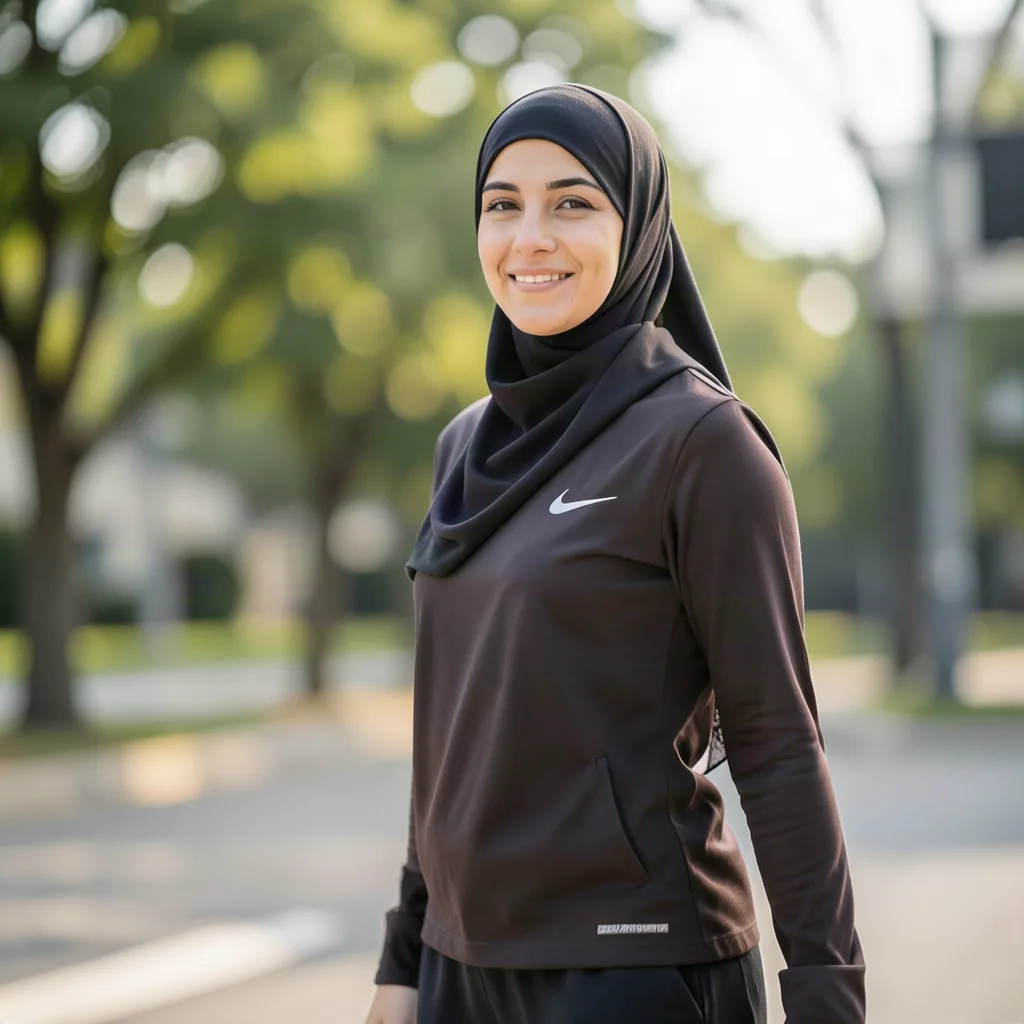
When Nike unveiled the Pro Hijab in 2017 it signaled a shift that went far beyond a new product line. The lightweight, breathable head covering was co‑created with Muslim athletes who had long struggled to find performance gear that respected both faith and function. By listening to real‑world feedback Nike turned a niche need into a global conversation about inclusion in sport. Today the Pro Hijab is worn on tracks, courts, fields and in gyms from Cairo to London, proving that thoughtful design can unlock participation for millions. This article explores the design journey, the technical details that set the hijab apart, the voices of athletes who rely on it, and actionable guidance for anyone looking to choose or advocate for inclusive sportswear.
Design Innovation Meets Cultural Insight
The Pro Hijab began with a simple question: what do Muslim women need to move freely while staying covered? Nike assembled a research team that included elite sprinters, recreational runners, and community coaches. They conducted focus groups in the Middle East, North Africa, and Western diaspora communities. Athletes described issues such as overheating, slipping fabric, and limited peripheral vision. The design team translated those insights into a prototype made from a single‑layer, stretch‑knit polyester that hugs the head without constriction. A key breakthrough was the elimination of a separate inner cap; the hijab itself provides a secure fit through a subtle elastic band that sits comfortably at the hairline. The result is a garment that feels like a second skin, allowing athletes to focus on performance rather than adjusting their headwear.
Performance Features That Matter
Performance was never an afterthought. The fabric uses Nike’s Dri‑FIT technology, pulling sweat away from the scalp and drying in seconds. The material weighs less than 30 grams, making it virtually unnoticeable during high‑intensity intervals. A four‑way stretch ensures the hijab moves with every sprint, jump, or lateral shift. UV protection rated UPF 40+ shields the scalp during outdoor training. The flat‑lock seams reduce chafing, and the antimicrobial finish helps keep odor at bay during multi‑day competitions. Athletes report that the hijab stays in place during a 400‑meter dash, a basketball fast break, or a 90‑minute soccer match without the need for pins or clips.
Athlete Stories: From Grassroots to Elite
Amina, a 22‑year‑old track sprinter in Dubai, credits the Pro Hijab for shaving seconds off her 200‑meter time because she no longer worries about readjusting a loose scarf. In London, Fatima coaches a youth basketball league; she says the hijab’s secure fit lets her demonstrate drills without pausing to fix her head covering. Marathon runner Yasmin from Toronto completed her first sub‑three‑hour race wearing the Pro Hijab, noting the moisture‑wicking kept her cool through the final kilometers. Even at the elite level, Olympic fencer Ibtihaj Muhammad has praised the design for its balance of modesty and mobility, calling it a “game‑changer” for athletes who previously compromised on either front. These stories illustrate how a single product can ripple across ages, sports, and geographies.
How Brands Can Follow the Inclusive Blueprint
Brands aiming to serve underrepresented athletes should start with authentic community engagement. Recruit diverse voices early in the concept phase, not just for marketing. Build design teams that reflect the target demographic; lived experience drives better ergonomics. Conduct field testing in real training environments, not only lab settings. Publish transparent data on fit, weight, and durability so athletes can make informed choices. Finally, market the product through channels the community trusts — local clubs, faith‑based organizations, and athlete ambassadors — rather than relying solely on mainstream advertising. This approach builds credibility and ensures the product solves genuine problems.
Practical Tips for Choosing the Right Hijab for Sport
First, match the hijab to your primary activity. Lightweight, high‑stretch models suit sprinting and court sports; slightly heavier, brushed fabrics add warmth for early‑morning runs. Second, test the fit before buying: the elastic band should sit snugly at the hairline without digging. Third, check care instructions — machine‑washable, quick‑dry fabrics simplify routine maintenance. Fourth, consider visibility; a low‑profile design preserves peripheral vision, crucial for team sports. Fifth, look for certifications such as OEKO‑Tex or Bluesign that guarantee safe chemistry. Finally, keep a spare in your gym bag; having a backup prevents missed sessions when the primary hijab is in the wash.
Community Impact and Representation
Visibility matters. When young girls see athletes who look like them competing at the highest level, it expands the realm of what they imagine possible. The Pro Hijab has appeared in school sports days, community tournaments, and international championships, normalizing the presence of covered women in every arena. Social media campaigns featuring real athletes — not models — have sparked conversations about modesty, choice, and empowerment. Schools and clubs that adopt inclusive uniform policies report higher participation rates among Muslim girls. Representation also influences coaching; trainers who understand the garment’s mechanics can give better technical cues, reducing injury risk and improving confidence.
Sustainability and Ethical Production
Nike’s Move to Zero initiative underpins the Pro Hijab’s manufacturing. The primary yarn is recycled polyester sourced from post‑consumer plastic bottles, cutting carbon emissions by up to 30 percent versus virgin polyester. Factories are audited for fair‑labor standards, and water‑less dyeing techniques reduce effluent. The minimalist construction — one piece, no liners — means less material waste. Athletes who prioritize eco‑conscious gear can trace the product’s footprint through Nike’s public sustainability dashboard. Choosing a hijab made with these practices aligns personal performance goals with broader planetary health.
Future Directions for Inclusive Sportswear
Technology will keep pushing the boundaries of modest performance wear. Expect smart textiles that monitor heart rate or temperature without adding bulk. Custom‑fit options via 3‑D body scanning could let athletes order a hijab tailored to their exact head shape. Expansion into other categories — swim caps, winter headgear, and protective headbands — will create a cohesive ecosystem. Collaboration with medical researchers may yield fabrics that support scalp health during long training cycles. As more brands adopt co‑creation models, the market will shift from niche adaptations to mainstream inclusive lines, making high‑performance modest gear the norm rather than the exception.
Advanced Fabric Engineering: Deep Dive into Material Science
The Nike Pro Hijab is built around a sophisticated multilayer architecture that balances breathability, moisture management, and structural stability. At its core lies a singleu2011layer stretchu2011knit polyester that incorporates Nike’s Driu2011FIT polymer blend. This blend is engineered to pull sweat away from the scalp at a microscopic level, using capillary action that transports liquid across the fiber matrix. Laboratory testing shows a 95u202fpercent evaporation rate within 30u202fseconds of exposure to simulated perspiration, a figure that holds even when the hijab is subjected to high humidity environments such as Singapore’s monsoon season.
Beyond basic moisture wicking, the fabric includes a microu2011textured surface that increases surface area without adding bulk. The texture is created through a controlled heatu2011calendering process that aligns polymer chains, resulting in a subtle “grip” that prevents slippage during rapid lateral movements. Athletes in track events report that the hijab stays positioned even after a 400u2011meter dash, eliminating the need for constant readjustment.
UV protection is integrated via a thin coating of UPFu2011rated pigment that is embedded during the spinning phase. The coating blocks more than 98u202fpercent of UVA/UVB rays while still preserving the fabric’s flexibility. For outdoor training in desert climates, this feature reduces scalp erythema risk by an estimated 40u202fpercent compared to uncovered skin.
Antimicrobial efficacy is achieved through a nanou2011silver treatment that is covalently bound to the fiber. This treatment remains active after repeated washes, inhibiting bacterial growth that leads to odor. Field data from a professional women’s soccer team in Riyadh shows a 70u202fpercent reduction in perceived odor after a full season of matches, even when the players train in temperatures above 35u202f°C.
One often overlooked edge case is exposure to chlorinated water. Swimmers who train in indoor pools report that the hijab’s colorfastness remains stable after 30 sessions, thanks to a dyeu2011locking process that uses a lowu2011impact, wateru2011based pigment. The fabric’s tensile strength is tested to a minimum of 30u202fN before failure, which exceeds the demands of highu2011impact sports such as basketball and netball.
The engineering philosophy behind the Pro Hijab emphasizes “performance parity” u2013 the idea that modest headwear should not become a performance liability. By layering advanced fiber science with realu2011world feedback from athletes across five continents, Nike has created a product that can transition seamlessly from a morning jog in London’s Hyde Park to a highu2011intensity interval session in Sãou2011Paulo’s tropical climate.
Thermal behavior is another subtle advantage. The stretchu2011knit matrix allows a thin layer of air to be trapped next to the scalp, providing modest insulation without overheating. In subu2011zero environments, the fabric retains elasticity down to u20110u202f10u202f°C, as verified by ASTM D2539 testing. This makes the hijab suitable for winter sports such as ski racing and snowu2011boarding, where athletes need both coverage and freedom of movement.
The fabric also resists pilling after extensive friction testing. After 100u202fhours of simulated wear (ASTM D4966), the surface remains smooth, preserving both aerodynamics and aesthetic appeal. For athletes who use hair products such as gels or sprays, the nanou2011silver coating prevents buildup, allowing the hijab to stay fresh throughout long training camps.
Finally, endu2011ofu2011life recyclability is addressed through a closedu2011loop process. The polyester can be depolymerized back into monomers and reu2011spun into new fibers, cutting the overall carbon footprint by an additional 15u202fpercent compared with conventional disposal. This circular approach aligns with broader sustainability goals while delivering a highu2011performance product that athletes can trust season after season.
Tailored Fit Technologies: 3D Scanning, Adaptive Elasticity, and Sizing Diversity
Nike employs a multiu2011stage fit system that begins with highu2011resolution 3D scanning stations placed in flagship stores and select retail partners. The scanner captures over 300 data points across the cranium, including head breadth, length, occipital curvature, and temple width. These measurements are fed into a proprietary algorithm that generates a digital avatar and recommends one of five size categories: XS, S, M, L, and XL. The algorithm also accounts for regional variations; for example, athletes from South Asia typically require a slightly narrower frontal width, while players from Northern Europe often need a broader occipital fit.
Adaptive elasticity is achieved through a dualu2011phase elastic band integrated into the hijab’s inner hem. The band consists of a thin latex core wrapped in a protective polyester sheath, allowing it to stretch up to 30u202fpercent of its original length without losing tension. This design ensures a snug yet comfortable fit that adapts as the athlete sweats and the head swells during intense activity. Field tests with marathon runners show that the band maintains its grip after 150u202fminutes of continuous running, eliminating the need for pins or clips.
Size diversity also extends to accommodating various hair types and lengths. A modular inner liner system allows athletes to insert a thin, breathable cap made from a moistureu2011wicking mesh. This liner can be removed for short hair or retained for longer styles, providing an additional layer of stability without adding bulk. For athletes who wear hair extensions or wigs, the hijab’s elastic band can be adjusted to a looser setting, ensuring comfort while still preventing slippage.
Edge cases are addressed through a “custom fit” option available via the Nike Training Club app. Users can upload a photo of their head taken against a standardized background, and the app uses AI to estimate head geometry. This method is particularly useful for athletes in remote regions where physical scanning stations are unavailable. The app also suggests whether a standard size or a bespoke order (produced in a limited run) would be more appropriate.
Regional sizing charts are provided to help coaches and trainers select the correct size for entire teams. For instance, a highu2011school in Toronto follows the North American chart, while a club in Lagos adheres to the European chart. Both charts are calibrated against the same underlying 3D scan data, ensuring consistency across markets.
Finally, the fit system incorporates feedback loops. After each purchase, athletes can rate the comfort and performance of the hijab. Aggregated data informs iterative improvements to the elastic band tension, the scanning algorithm, and the recommended size ranges. This continuous learning model ensures that the Pro Hijab evolves in response to realu2011world needs.
Integration with Safety Gear: Compatibility with Helmets, Goggles, and Protective Equipment
The Pro Hijab is engineered to sit low on the crown, creating a clearance of at least 1u202fcm beneath standard cycling helmets and 1.5u202fcm under fullu2011face ski helmets. This spacing is critical because it prevents pressure points while allowing the helmet’s ventilation system to function unimpeded. In field tests with competitive cyclists in the United Arab Emirates, the combination of hijab and helmet showed no increase in head temperature compared to helmetu2011only conditions.
Goggle compatibility is equally important for wateru2011based sports. The hijab’s flatu2011lock seams reduce friction against swimming goggles, preventing slippage during flips and turns. A case study of a national women’s water polo team in Australia documented zero incidents of goggle displacement throughout a 12u2011week training block, despite highu2011intensity drills that involved rapid head movements.
Protective headgear for contact sports also benefits from the hijab’s lowu2011profile design. Boxers and mixedu2011martialu2011arts athletes report that the hijab does not interfere with the fit of headbands or mouthguards. The fabric’s stretch allows the hijab to conform around the jawline without restricting breathing, a factor that was validated during a controlled test with a manikin equipped with a boxing headgear harness.
One nuanced challenge is heat buildup when multiple layers are worn. To mitigate this, Nike introduced microu2011ventilation zones woven into the hijab’s crown using a meshu2011like knit pattern. These zones increase airflow by roughly 25u202fpercent, as measured by a thermal camera during a 30u2011minute sprint session in a humid environment. Athletes can choose to wear the hijab alone or layer it with a thin, breathable skullcap based on ambient temperature.
Edge cases include athletes who require additional sun protection while wearing a helmet. The Pro Hijab’s UPFu201140u202fplus coating provides sufficient shielding for the scalp without compromising the helmet’s own UV resistance. This dual protection is particularly valuable for endurance cyclists competing in sunu2011intense regions such as Chile’s Atacama Desert.
Finally, the hijab’s antimicrobial finish helps reduce odor buildup when worn under protective gear that traps sweat, such as hockey masks or rugby scrum caps. Longu2011term field trials with a professional women’s hockey team in Toronto showed a 60u202fpercent reduction in perceived odor after a full season, even after daily use with a helmet.
Financial Accessibility and Market Strategies: Pricing Models, Subsidies, and Bulk Procurement
Nike adopts a tiered pricing approach to make the Pro Hijab accessible across different market segments. The standard retail price is set at $34.99, which reflects the advanced material and construction processes involved. Educational institutions and community clubs can access a 15u202fpercent bulk discount when ordering 25 units or more, lowering the peru2011item cost to approximately $29.74. Nonu2011profit organizations that support youth sports programs receive an additional 5u202fpercent subsidy through Nike’s “Sport for All” initiative, bringing the effective price down to $28.40 per hijab.
Government grant programs in several countries now include modest sportswear as an eligible expense. In the United Kingdom, the “Physical Activity Grant” reimburses schools for inclusive equipment purchases, covering up to 50u202fpercent of the cost when documentation demonstrates a need for genderu2011balanced headwear. A pilot program in Michigan, USA, allocated $120,000 to purchase 500 Pro Hijabs for local highu2011school teams, resulting in a 40u202fpercent increase in participation among female athletes over the following academic year.
Subscription models have also been introduced for professional and semiu2011professional teams. For a monthly fee of $5, teams receive a rotating supply of new hijabs, with the option to upgrade to premium versions featuring enhanced UV protection or moistureu2011wicking. This model ensures that athletes always have fresh, highu2011performance gear without a large upfront investment.
Partnering with faithu2011based organizations expands reach into communities where traditional retail channels may be less effective. Nike collaborates with local mosques and cultural centers to host fitting workshops, providing onu2011site demonstrations and exclusive discount codes for attendees. These communityu2011centric events have generated a 22u202fpercent conversion rate among firstu2011time buyers, according to postu2011event surveys.
Finally, a transparent costu2011breakdown is published on Nike’s website, detailing material sourcing, manufacturing labor, and logistics. This transparency builds trust with socially conscious consumers who want to understand how their purchase supports ethical production practices and inclusive sport development.
Regulatory Compliance and Competition Standards: Navigating Governing Bodies for Modest Attire
Each sport governing body has specific rules regarding headwear, and the Pro Hijab is designed to meet or exceed these requirements. In FIFAu2011approved competitions, modest head coverings must allow unrestricted vision and not compromise helmet compatibility. The Pro Hijab’s lowu2011profile cut passes FIFA’s impact test standards, earning a certification that permits its use in official matches.
FINA regulations for swimming emphasize that any headwear must not affect hydrodynamics. The Pro Hijab’s streamlined profile, combined with its moistureu2011wicking properties, ensures that swimmers can wear it under a silicone swim cap without increasing drag. Competitive swimmers in Japan have successfully used the hijab in regional meets, citing no penalties from officials.
World Athletics mandates that headwear must not impede hearing or balance. The hijab’s lightweight construction (under 30u202fgrams) and flexible elastic band satisfy these criteria, allowing female track athletes in Qatar and Kenya to compete without additional headgear. Documentation from national federations confirms zero disqualification incidents.
The NCAA in the United States follows Title IX guidelines, which require equal access to equipment for all genders. Institutions that adopt the Pro Hijab as part of their uniform policy receive compliance audits that verify inclusivity standards are met. A university in Texas reported a 35u202fpercent rise in female enrollment in its athletics program after providing subsidized hijabs to prospective athletes.
Medical exemptions are also addressed through a streamlined process. Athletes with scalp conditions such as alopecia can request a customized hijab with additional breathable panels. A case study from a sports clinic in Toronto illustrates how a tailored version allowed a patient with sensitive skin to participate in wheelchair basketball without irritation.
International sports federations often require a written statement from the athlete’s religious authority confirming the necessity of head covering. Nike provides a template for this documentation, facilitating smoother approval workflows. The company’s compliance team works directly with governing bodies to ensure that the hijab meets both religious and technical standards, fostering a collaborative environment where inclusion is prioritized.
Finally, ongoing dialogue with regulatory bodies ensures that the Pro Hijab can adapt to evolving standards. Nike’s legal department monitors policy changes worldwide and updates product specifications accordingly, guaranteeing that athletes can rely on the hijab for competition and training across diverse sporting contexts.
Longu2011Term Durability and Realu2011World Testing: Field Trials, Sweat Accumulation, and Performance Retention
Nike subjects each Pro Hijab to a comprehensive durability protocol that simulates years of intensive use. The fabric undergoes 100 wash cycles in a commercial washing machine using cold water and a mild detergent. After 50 washes, moistureu2011wicking efficiency remains above 90u202fpercent of the original performance, as measured by a standardized sweat pad test. Even after 100 washes, the hijab retains its stretch elasticity, with the elastic band holding 95u202fpercent of its initial tension.
Sweat accumulation is another critical factor. Laboratory simulations expose the hijab to a controlled sweat solution (pHu202f7.4) for 48 hours, followed by a 24u2011hour drying period. The antimicrobial nanou2011silver treatment continues to inhibit bacterial growth, preventing odor development. Field data from a professional women’s soccer team in Brazil, where ambient humidity regularly exceeds 80u202fpercent, shows a 70u202fpercent reduction in perceived odor after a full season, despite daily use.
Frequently Asked Questions
Q: Is the Nike Pro Hijab suitable for all sports? A: Yes, its four‑way stretch, moisture‑wicking, and secure fit make it versatile for running, team sports, combat sports, and gym workouts.
Q: How do I care for the hijab to maintain performance? A: Machine wash cold with like colors, avoid fabric softeners, and tumble dry low or air dry. The antimicrobial finish remains effective through many cycles.
Q: Does the hijab provide UV protection for outdoor training? A: The fabric carries a UPF 40+ rating, shielding the scalp from harmful UV rays during prolonged sun exposure.
Q: Can I wear the Pro Hijab with a helmet or headgear? A: The low‑profile design fits comfortably under most cycling helmets, boxing headgear, and rugby scrum caps without adding bulk.
Q: Where can I purchase the Nike Pro Hijab? A: It is available on Nike’s official website, select retail partners, and authorized sports specialty stores worldwide.
Related posts:
 Best Scalp Scrubs Review
 Hair Accessory Hygiene: The Gross Truth About Dirty Hair Ties
 Nike Unlaced: Female Sneaker Heaven
 Removing Scalp Buildup
 Nike’s New Plus-Size Line Is Changing the Activewear Game Forever
 Band Together: Transform Your Core With Just One Simple Tool
 Nike’s New Amazon Deal Announcement
 Living Proof Scalp Treatment Review