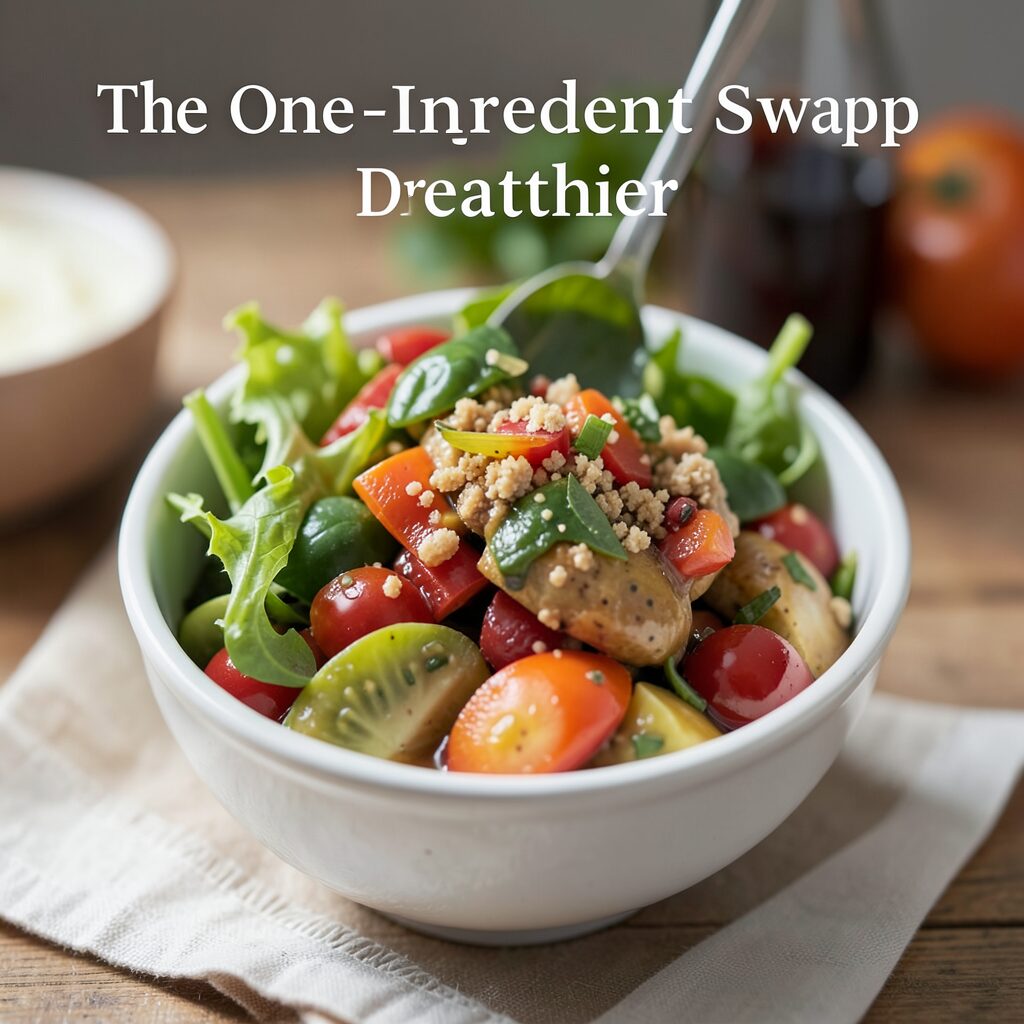
The quest for a healthier salad dressing often leads to a long list of specialty oils, obscure vinegars, and pricey superfood powders. Yet the most impactful change can be as simple as swapping the primary fat for a protein‑rich, creamy alternative that you already keep in the fridge. This article explores the one‑ingredient swap that works with virtually any dressing formula, explains why it improves the nutrition profile, and gives you practical recipes and tips to start using it today. We will look at the science behind the swap, flavor considerations, dietary adaptations, storage guidelines, and common pitfalls so you can confidently upgrade every bowl of greens.
Why the Base Oil Matters
Most classic vinaigrettes rely on a ratio of three parts oil to one part acid. The oil contributes the bulk of calories, typically 120 calories per tablespoon, and supplies mostly saturated or monounsaturated fat depending on the source. While olive oil and avocado oil bring beneficial polyphenols, they still add a dense calorie load that can quickly turn a light salad into a heavy meal. Replacing a portion of that oil with a lower‑calorie, higher‑protein base reduces total energy density while preserving the mouthfeel that makes dressings cling to leaves. The swap also introduces micronutrients such as calcium, potassium, and B‑vitamins that are absent in pure oil. Understanding the role of the base fat helps you see why a single ingredient can shift the entire nutritional balance without sacrificing texture.
When you remove oil entirely, the emulsion can break, leaving a watery liquid that slides off the salad. A thick, fermented dairy product solves this by providing natural emulsifiers like phospholipids and proteins that stabilize the mixture. The result is a creamy coating that distributes flavor evenly across each bite. This functional property is why the swap works across vinaigrette, ranch, Caesar, and even Asian‑style sesame dressings.
The One‑Ingredient Swap: Greek Yogurt
Plain, non‑fat Greek yogurt is the star of this transformation. Its thick consistency comes from straining away whey, leaving a concentrated protein matrix that mimics the body of oil‑based dressings. A typical 100‑gram serving delivers about 10 grams of protein, 3 grams of carbohydrate, and less than 0.5 gram of fat, while contributing roughly 60 calories. Compared with the same weight of olive oil (about 884 calories and 100 grams of fat), the calorie reduction is dramatic. The tangy flavor of yogurt also brightens the dressing, often reducing the need for extra lemon juice or vinegar.
Choosing the right yogurt matters. Look for a product labeled “plain” and “non‑fat” or “0%” to keep added sugars and saturated fat low. Full‑fat versions work if you prefer richer mouthfeel, but they re‑introduce the very calories you aim to cut. Avoid flavored or sweetened varieties, as they add hidden sugars that defeat the health goal. If you are lactose‑intolerant, lactose‑free Greek yogurt or a high‑protein plant‑based alternative such as soy‑based yogurt can serve the same structural role.
How Greek Yogurt Changes the Nutrition Profile
Swapping oil for Greek yogurt reduces total fat by up to 90 percent in a typical dressing recipe. The protein boost supports satiety, helping you feel full longer after a salad‑based meal. Calcium and phosphorus from the dairy support bone health, while the live cultures contribute to gut microbiome diversity. Because the yogurt adds water, the overall sodium concentration can drop if you keep the same amount of added salt, making the dressing friendlier for blood‑pressure management.
One tablespoon of a classic oil‑based vinaigrette contains roughly 80 calories and 9 grams of fat. The same volume of a yogurt‑based version can drop to 25 calories and 0.5 gram of fat while delivering 2 grams of protein. Over a week of daily salads, that translates to a savings of several hundred calories and a meaningful increase in protein intake. The trade‑off is a modest rise in carbohydrate (mostly lactose), but the net effect remains favorable for most dietary patterns.
Flavor Pairings That Work
Greek yogurt’s mild tang pairs beautifully with herbs, garlic, mustard, and citrus. For a Mediterranean vibe, whisk in chopped dill, lemon zest, minced garlic, and a splash of extra‑virgin olive oil just for aroma. A ranch‑style dressing comes alive with dried parsley, chives, onion powder, and a dash of Worcestershire sauce. Asian‑inspired dressings benefit from grated ginger, soy sauce, rice vinegar, and a touch of sesame oil for fragrance. The key is to balance the yogurt’s acidity with a complementary acid — lemon, lime, apple cider vinegar, or balsamic — and a pinch of salt to round the edges.
Sweet elements like honey or maple syrup can soften the tang if you prefer a milder profile, but use them sparingly to keep added sugars low. Spices such as smoked paprika, cumin, or curry powder add depth without calories. Fresh herbs should be folded in at the end to preserve color and aroma. Taste as you go; the yogurt base is forgiving and allows incremental adjustments.
Simple DIY Dressing Recipes
Classic Yogurt Vinaigrette — Combine ½ cup plain non‑fat Greek yogurt, 2 tablespoons lemon juice, 1 teaspoon Dijon mustard, 1 minced garlic clove, ¼ teaspoon sea salt, and freshly ground black pepper. Whisk until smooth. Thin with 1‑2 tablespoons water if a drizzle consistency is desired.
Herb Ranch — Mix ½ cup Greek yogurt, 1 tablespoon apple cider vinegar, 1 teaspoon dried dill, 1 teaspoon dried parsley, ½ teaspoon onion powder, ½ teaspoon garlic powder, and a pinch of salt. Chill 15 minutes for flavors to meld.
Sesame Ginger — Blend ½ cup Greek yogurt, 1 tablespoon low‑sodium soy sauce, 1 tablespoon rice vinegar, 1 teaspoon grated fresh ginger, 1 teaspoon honey, and ½ teaspoon toasted sesame oil. Drizzle over shredded cabbage or mixed greens.
Each recipe yields about ¾ cup dressing, enough for four generous salads. Store leftovers in an airtight container in the refrigerator for up to five days.
Adapting the Swap for Dietary Needs
Vegan eaters can replace Greek yogurt with unsweetened soy yogurt or a thick cashew‑based cream. Both provide comparable protein and emulsifying ability. For a nut‑free option, silken tofu blended until smooth works well; add a teaspoon of lemon juice to mimic tang. Low‑FODMAP followers should choose lactose‑free Greek yogurt and limit garlic and onion powders, substituting chives or the green tops of scallions. Keto dieters may prefer full‑fat Greek yogurt to keep carbohydrates minimal while still cutting the oil load.
If you need a completely oil‑free dressing, the yogurt base alone supplies enough body. For a richer mouthfeel without oil, blend in a quarter of an avocado; the healthy monounsaturated fat adds creaminess and a subtle flavor that complements most herb combinations. Always adjust seasoning after any substitution, as the base ingredient can shift perceived saltiness and acidity.
Storage, Shelf Life, and Food Safety
Because Greek yogurt is a fermented dairy product, it carries live cultures that can continue to acidify the dressing over time. Keep the finished dressing in a clean glass jar with a tight‑fitting lid. Refrigerate at 4 °C (40 °F) or colder. The dressing stays safe for five to seven days; after that, the texture may become overly thin and the flavor overly sour. Discard any dressing that develops an off smell, mold, or separation that does not recombine with a quick shake.
When preparing dressings for meal prep, portion into single‑serve containers to limit repeated exposure to air and utensils. Avoid leaving dressing at room temperature for more than two hours, especially in warm weather. If you plan to transport a salad, pack the dressing separately and toss just before eating to preserve leaf crispness.
Common Mistakes and How to Avoid Them
One frequent error is using flavored or sweetened yogurt, which adds hidden sugars and artificial flavors that clash with savory herbs. Always start with plain, unsweetened yogurt. Another mistake is over‑thinning with water; a little goes a long way, and excess liquid weakens the emulsion, causing the dressing to slide off the salad. Add water one teaspoon at a time until you reach the desired drizzle consistency.
Skipping the acid component leads to a flat, one‑dimensional taste. Even a teaspoon of lemon juice or vinegar brightens the yogurt and balances the richness. Over‑salting is also common because the yogurt’s tang can mask saltiness; season gradually and taste after each addition. Finally, neglecting to chill the dressing for at least 15 minutes before serving prevents the flavors from melding, resulting in a less cohesive profile.
Scaling Up: Batch Production and Commercial Kitchen Tips
When moving from a home‑scale jar to a restaurant‑size batch, treat the yogurt base like any other emulsion. Start by whisking the full amount of yogurt with the acid component (lemon juice, vinegar, or a blend) until completely smooth; this prevents pocketed lumps that become impossible to disperse later. Use a commercial immersion blender on low speed for 30 seconds to guarantee a uniform matrix, then stream in any oil‑based aromatics such as toasted sesame or infused olive oil in a thin, steady ribbon. For a 10‑liter batch, a 1:3 yogurt‑to‑acid ratio keeps the pH in the 4.2‑4.5 range, which maximizes microbial stability while preserving the tangy brightness. Portion the finished dressing into food‑grade polycarbonate containers with snap‑tight lids; label each with production date, pH reading, and allergen statement. Rotate stock on a first‑in‑first‑out basis and conduct a daily sensory check — smell, texture, and a quick pH strip test — to catch any drift before service.
Temperature control is the single most critical factor during scaling. Keep the bulk mixture at 2‑4°C (35‑39°F) from the moment the yogurt hits the bowl until it reaches the portioning station. If the kitchen line runs hot, place the mixing vessel in an ice‑water bath and stir gently every five minutes. Avoid pumping the dressing through heated lines; instead, use a chilled dispenser or a gravity‑feed spout that draws from a refrigerated reservoir. When the dressing must travel to a satellite salad bar, pack it in insulated cambro containers with gel packs that maintain sub‑5°C temperature for up to four hours. Document the time‑temperature log for HACCP compliance.
Ingredient sourcing at scale introduces cost and consistency variables. Contract a single dairy supplier for non‑fat Greek yogurt with a guaranteed protein minimum of 10 g per 100 g and a standard deviation of less than 0.3 g. Request a certificate of analysis for each lot, focusing on titratable acidity and live‑culture count. For acids, buy food‑grade lemon juice concentrate (Brix 30) and dilute on‑site; this reduces shipping weight and eliminates variability from fresh fruit. Herbs and spices should be purchased as freeze‑dried powders with known moisture content; re‑hydrate them in a small portion of the acid before folding into the main batch to avoid clumping.
Automation can further tighten consistency. A programmable planetary mixer with a timed acid‑addition sequence reproduces the exact shear profile each run. Integrate an inline pH probe that triggers a stop‑mix alarm if the reading drifts outside 4.2‑4.5. For portioning, a volumetric piston filler calibrated to 30 mL per serving eliminates human error and speeds line throughput. Finally, schedule a quarterly sensory panel with front‑of‑house staff to validate that the scaled product still matches the benchmark flavor profile established in the test kitchen.
Texture Engineering: Emulsion Stability Across Temperature and pH
The yogurt‑based dressing is a protein‑stabilized oil‑in‑water emulsion. Casein micelles and whey proteins adsorb at the oil‑water interface, forming a viscoelastic film that resists coalescence. However, this film is sensitive to both temperature shifts and pH excursions. At temperatures above 15°C (59°F) the protein network relaxes, increasing droplet mobility and accelerating creaming. Conversely, chilling below 2°C (35°F) can cause partial gelation of the yogurt matrix, leading to a grainy mouthfeel when the dressing is later brought to serving temperature. The sweet spot for storage and service is a narrow 3‑5°C window.
pH plays an equally decisive role. The isoelectric point of casein sits near 4.6; when the dressing pH approaches this value, protein charge neutralizes, the interfacial film weakens, and flocculation spikes. The acid component (lemon, vinegar, or a blend) should be calibrated to keep the final pH between 4.0 and 4.4. A practical method: after the initial whisk, measure pH with a calibrated probe; if reading is above 4.4, add 0.5 % w/w additional acid and re‑measure. If below 4.0, incorporate a pinch of baking soda (sodium bicarbonate) dissolved in a teaspoon of water — this raises pH without adding perceptible flavor.
Shear history during mixing also dictates droplet size distribution. High‑shear rotor‑stator homogenizers produce sub‑micron droplets that remain stable for weeks, but they also incorporate air, which can cause foaming on the salad surface. A two‑stage approach works well: low‑shear paddle mixing for 2 minutes to wet the proteins, followed by a 30‑second high‑shear burst at 10,000 rpm. This yields a mean droplet diameter of 0.8 µm with minimal entrapped air. For operations without a homogenizer, a high‑speed immersion blender run in a tall, narrow vessel achieves comparable results if the blade stays fully submerged.
Add‑ins such as mustard, honey, or tahini introduce additional emulsifiers (lecithin, polysaccharides) that can either reinforce or compete with the yogurt proteins. Mustard’s mucilage synergizes well; add 1 % w/w after the primary emulsion forms. Honey’s high sugar content raises water activity and can promote microbial growth if the dressing sits beyond five days — limit to 0.5 % and pair with a modest potassium sorbate (0.1 %) if extended shelf life is required. Tahini’s sesame proteins are stable at the target pH but increase viscosity; thin with a splash of cold water (1‑2 % of total volume) to retain pourability.
Real‑world stress testing validates the formulation. Subject a 500 mL sample to a freeze‑thaw cycle (‑18°C for 24 h, then 4°C for 24 h) and evaluate separation visually and by centrifuge (3000 g, 10 min). Acceptable products show less than 5 % serum separation. Run a 48‑hour accelerated shelf‑life at 25°C; monitor pH drift, viscosity (using a rotational viscometer at 50 s⁻¹), and microbial count (APC, yeast, mold). Adjust acid or stabilizer levels based on data before committing to full‑scale production.
Beyond Greens: Yogurt Dressings for Grain, Legume, and Protein Salads
Hearty grain salads — farro, barley, quinoa, or wild rice — absorb dressing more aggressively than leafy greens. To prevent the dish from turning soggy, increase the yogurt‑to‑acid ratio to 2:1 and fold in a tablespoon of extra‑virgin olive oil per cup of dressing; the oil coats grain surfaces and slows moisture migration. Add a pinch of smoked paprika and toasted cumin seeds for depth that stands up to nutty grains. Toss the grains while still warm (about 40°C) so the dressing emulsifies into the starch matrix, then cool rapidly on a sheet pan before adding fresh herbs.
Legume‑centric salads (chickpeas, black beans, lentils) benefit from a slightly higher acid level to brighten the earthy beans. Use a 1:1 yogurt‑to‑acid blend with a splash of apple cider vinegar and a teaspoon of Dijon per cup of dressing. The mustard’s emulsifying power helps the dressing cling to the bean skins. For a Mediterranean twist, stir in finely diced sun‑dried tomatoes, Kalamata olives, and a handful of chopped parsley. The yogurt’s tang balances the saltiness of olives without needing extra sodium.
Protein‑rich salads — grilled chicken, seared tofu, hard‑boiled eggs, or flaked salmon — often sit on the plate for a few minutes before eating. A thinner dressing (add 15‑20 % water) ensures even coating without overwhelming the protein’s own flavor. Incorporate a micro‑grated garlic clove and a dash of white pepper for a subtle heat that penetrates the protein surface. For a Asian‑style chicken salad, blend yogurt with low‑sodium soy sauce, rice vinegar, grated ginger, and a drop of toasted sesame oil; finish with sliced scallions and toasted sesame seeds.
Pasta salads demand a dressing that resists dilution from residual cooking water. After draining pasta, shock it in ice water, drain thoroughly, then toss with a thick yogurt dressing (no added water) that contains 2 % finely grated Parmesan for umami and a splash of lemon zest. The cheese’s calcium ions further stabilize the emulsion. Add roasted red pepper strips, arugula, and pine nuts just before service to preserve texture.
Coleslaw and shredded vegetable mixes (carrot, cabbage, kohlrabi) release water over time. Pre‑salt the shredded veg for 10 minutes, rinse, and spin dry; this reduces later weeping. Use a yogurt dressing fortified with 1 % xanthan gum (dispersed in the acid phase) to create a shear‑thinning gel that clings to each strand yet yields a pleasant mouthfeel. A touch of honey (0.3 %) balances the cabbage’s natural bitterness.
Potato and egg salads traditionally rely on mayonnaise. Replace half the mayo with non‑fat Greek yogurt and add a teaspoon of Dijon per cup of mixture. The yogurt lightens the calorie load while the mustard maintains the characteristic tang. Fold in diced celery, red onion, and fresh dill; chill for at least 30 minutes to allow flavors to meld. The result is a familiar comfort dish with a protein boost and roughly 40 % less fat.
Nutrient Timing and Sports Nutrition: Dressing as a Protein Delivery Vehicle
Athletes often struggle to distribute protein evenly across meals. A yogurt‑based dressing delivers 2‑3 g of high‑quality dairy protein per 30 mL serving, making it an effortless way to add 10‑15 g of protein to a post‑workout salad without a separate shake. Pair the dressing with a carbohydrate‑rich base — quinoa, sweet potato, or fruit — to achieve a 3:1 carb‑to‑protein ratio that optimizes glycogen resynthesis and muscle repair. The naturally occurring leucine in Greek yogurt (≈0.9 g per 100 g) further stimulates mTOR signaling.
Timing matters. Consume the dressed salad within 30 minutes of training to capitalize on the anabolic window. The liquid acid component (lemon juice or vinegar) accelerates gastric emptying, allowing amino acids to appear in the bloodstream faster than a solid protein bar. For endurance athletes who prefer a lighter stomach, thin the dressing with 10 % coconut water; the electrolytes (potassium, magnesium) complement the yogurt’s calcium and support rehydration.
Micronutrient synergy enhances recovery. Add a pinch of turmeric (curcumin 0.2 %) and black pepper (piperine 0.05 %) to the dressing; the fat‑soluble curcumin dissolves in any residual oil droplets, while piperine boosts bioavailability by 2000 %. Fortify with a splash of vitamin D‑enriched milk (if dairy tolerated) or a vegan D3 spray for plant‑based versions; the dressing’s emulsion protects the vitamin from oxidation.
For strength‑focused athletes, increase protein density by blending in 5 % whey protein isolate (unflavored) into the yogurt before adding acid. The isolate dissolves cleanly, raising protein per serving to 5 g without altering viscosity. Keep total added powder under 10 g per cup to avoid gritty texture. Flavor with cocoa nibs and a dash of stevia for a chocolate‑mint recovery dressing that feels like a treat.
Hydration strategy can incorporate the dressing as a vehicle for sodium. A controlled 150 mg sodium per serving (≈0.4 g salt) replaces losses from sweat without overshooting daily limits. Use sea salt crystals dissolved in the acid phase for even distribution. Monitor total daily sodium from all sources; the dressing should complement, not dominate, the athlete’s electrolyte plan.
Practical meal‑prep tip: portion the dressing into 30 mL silicone cups, freeze them individually, and thaw one per salad. Freezing does not significantly degrade the protein quality if the dressing is consumed within two weeks; the emulsion may thin slightly, so give a quick shake before tossing. This method guarantees consistent dosing and eliminates the temptation to over‑pour.
Cost, Sustainability, and Sourcing Considerations
Non‑fat Greek yogurt typically costs 30‑40 % less per gram of protein than extra‑virgin olive oil, making the swap economically attractive for both home cooks and food‑service operators. A 1 kg tub of 0 % yogurt yields roughly 10 L of dressing at a 1:3 yogurt‑to‑acid ratio, translating to a per‑serving cost of $0.12 versus $0.35 for an oil‑based vinaigrette of comparable volume. Bulk purchasing through a dairy cooperative can shave another 10‑15 % off the unit price.
Environmental impact favors yogurt when the dairy source employs regenerative grazing and methane‑capture technology. Life‑cycle analyses show a 45 % lower carbon footprint per kilogram of protein for strained yogurt versus olive oil, primarily due to reduced land use and lower processing energy. Choose brands that publish third‑party sustainability certifications (e.g., Certified Humane, Carbon Trust) and that source milk from farms within a 200‑mile radius to cut transportation emissions.
Packaging waste can be minimized by buying yogurt in 5‑kg food‑grade pails with reusable lids, then transferring to a stainless‑steel mixing tank. For single‑serve retail, opt for compostable PLA cups with a peel‑off foil seal; the foil can be recycled separately. Encourage customers to return empty cups for a deposit refund, creating a closed‑loop system that reduces landfill contribution by an estimated 60 % over a year.
Supply‑chain resilience is another factor. Olive oil markets are vulnerable to climate‑driven yield fluctuations in the Mediterranean; yogurt production is more geographically diversified, with major facilities in the Upper Midwest, Pacific Northwest, and New Zealand. Maintaining a dual‑source strategy — one domestic, one international — buffers against price spikes and ensures continuous availability for large‑scale operations.
When formulating for a price‑sensitive menu, consider a hybrid approach: 70 % yogurt, 30 % high‑oleic sunflower oil. The oil contributes mouthfeel and a neutral flavor at a fraction of olive oil’s cost, while the yogurt still delivers the protein and calorie advantage. Run a cost‑per‑plate analysis quarterly; adjust the ratio based on commodity indexes (USDA dairy price, Chicago Board of Trade oil futures) to keep the dressing margin above 30 %.
Label transparency builds consumer trust. Declare the exact yogurt percentage, protein grams per serving, and any added stabilizers on the menu or packaging. Highlight the sustainability story with a QR code linking to the dairy farm’s carbon‑footprint report. This narrative not only justifies a modest price premium but also aligns with growing demand for climate‑conscious dining.
Advanced Flavor Architecture: Building Complex Profiles with Fermented Add‑ins
Fermented ingredients bring layered umami, acidity, and probiotic diversity that plain herbs cannot. A teaspoon of white miso per cup of dressing adds a savory depth and a subtle sweetness; its enzymes further tenderize raw vegetables when the salad rests. Choose a low‑sodium shiro miso (≈5 % salt) to keep overall sodium in check. Blend the miso into the acid phase before whisking with yogurt to avoid clumping.
Kimchi juice (the brine from fermented napa cabbage) contributes lactic acid, garlic, ginger, and chili notes in a single splash. Use 1 % v/v for a gentle heat that lifts the dressing without overwhelming delicate greens. The live cultures in the brine can extend the dressing’s own probiotic count, but monitor pH — kimchi brine typically sits at 3.8, so adjust the final dressing pH back into the 4.0‑4.4 window with a pinch of baking soda if needed.
Fermented black bean paste (douchi) offers a salty, slightly funky backbone ideal for Asian‑style grain bowls. Incorporate 0.5 % w/w, balanced with a touch of mirin (sweet rice wine) to round the edges. The paste’s high protein content further stabilizes the emulsion. Pair with toasted sesame oil, sliced scallions, and a sprinkle of furikake for texture contrast.
Kombucha vinegar, made by extending kombucha fermentation until acetic acid dominates, provides a bright, fruity acidity with residual polyphenols. Replace half the lemon juice with kombucha vinegar; the resulting dressing has a complex tartness and a faint effervescence that dissipates quickly. Because kombucha vinegar can vary in strength (4‑6 % acetic), titrate by taste and confirm pH.
For a Mediterranean twist, stir in a spoonful of labneh (strained yogurt cheese) that has been aged 48 hours with za’atar. The aged labneh contributes a concentrated tang and herbal aroma, while its higher fat content (≈5 %) adds silkiness. Blend the labneh into the base yogurt before adding acid; the mixture remains stable because both components share the same protein matrix.
Experimentation protocol: start with a 200 mL control dressing, then create four variants each with a single fermented add‑in at the suggested level. Conduct a blind triangle test with a panel of five tasters; record preference, perceived saltiness, acidity, and aftertaste. Use the data to fine‑tune percentages before scaling. Document each batch’s pH, viscosity, and microbial count (lactobacilli CFU/mL) to ensure safety and consistency.
Troubleshooting Edge Cases: High‑Acid, High‑Salt, and High‑Fiber Salads
Salads dressed with pickled vegetables (e.g., pickled onions, capers, giardiniera) introduce extra acetic acid that can push the overall pH below 3.8, risking protein coagulation. Counteract by reducing the dressing’s own acid by 30 % and adding a pinch of calcium chloride (0.05 %) which raises the ionic strength and shields casein micelles. Test the final salad pH after 15 minutes; it should settle between 4.0‑4.3.
High‑salt components — feta, olives, cured meats — elevate the dressing’s sodium and can cause syneresis (water weeping) as salt draws moisture from the yogurt matrix. Pre‑mix the dressing with 1 % xanthan gum dispersed in the acid phase; the gum forms a weak gel network that resists salt‑induced dehydration. Additionally, rinse briny ingredients briefly under cold water and pat dry before tossing.
High‑fiber salads (raw kale, shredded Brussels sprouts, grated carrots) physically shear the emulsion when tossed vigorously, breaking droplets and thinning the coating. Use a folding motion rather than a vigorous toss: place salad in a large bowl, drizzle dressing over the top, then lift and turn with tongs in a gentle figure‑eight pattern. The reduced shear preserves droplet integrity and keeps the dressing clinging to each fiber strand.
When the salad includes both high‑acid and high‑salt elements (e.g., a Greek salad with pickled peppers and feta), combine the two mitigations: lower dressing acid, add calcium chloride, and incorporate xanthan gum. Run a small pilot batch (250 mL) and evaluate after 30 minutes at service temperature. Adjust gum level in 0.1 % increments until the dressing coats a kale leaf without sliding off.
Temperature spikes during outdoor events can accelerate emulsion breakdown. Pack the dressing in a double‑walled stainless steel insulated bottle with a frozen gel core; this maintains sub‑5°C for up to three hours. If the dressing must sit at ambient temperature for a brief service window, add 0.2 % sodium alginate to the acid phase; the alginate forms a reversible calcium‑crosslinked network (provided calcium chloride is present) that temporarily stiffens the emulsion without affecting flavor.
Finally, document every deviation in a troubleshooting log: salad type, ingredient list, pH before and after toss, visual separation rating (1‑5), and corrective action taken. Over time this log becomes a reference library that lets any kitchen staff diagnose and fix a new edge case within minutes, preserving both food safety and the intended eating experience.
Frequently Asked Questions
Can I use regular yogurt instead of Greek yogurt? Regular yogurt is thinner and contains less protein, so the dressing may be runny and less stable. You can strain regular yogurt through cheesecloth for a few hours to achieve a Greek‑style thickness.
Does the swap work for hot dressings like warm bacon vinaigrette? Heat can cause yogurt to curdle. For warm applications, temper the yogurt by whisking a small amount of the hot liquid into it before combining, or add the yogurt off‑heat at the very end.
Is the protein in Greek yogurt complete? Yes, dairy protein provides all essential amino acids, making it a complete protein source that supports muscle repair and satiety.
How can I make the dressing dairy‑free but still high in protein? Use unsweetened soy yogurt or blend silken tofu with a splash of lemon juice; both deliver 7‑10 grams of protein per half cup.
Will the dressing freeze well? Freezing yogurt‑based dressings is not recommended; thawing separates the emulsion and creates a grainy texture. Prepare fresh batches weekly instead.
Related posts:
 7 Traditional Greek Foods That Are Naturally Healthy
 Trader Joe’s Green Goddess Dressing Is Taking Over Social Media
 Wellness Influencers Share Their Most Instagram-Worthy Salad Creations
 3 Simple Salad Dressings That Add Serious Wow Factor
 Guilt-Free Cinnamon Roll Recipe
 Vinegar Laundry Hacks
 Homemade Apple Cider Vinegar
 4 Easy Ginger Dressing Recipes That Make Salads Sing