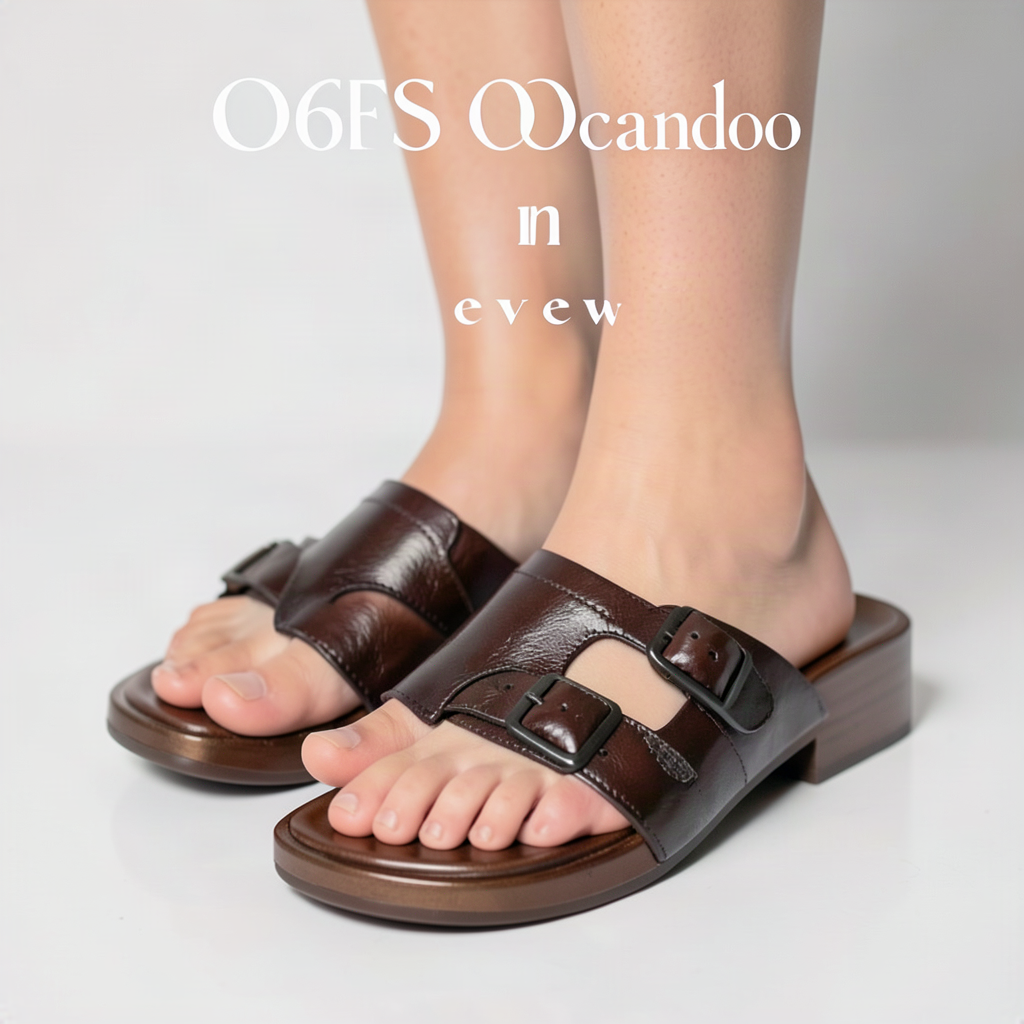
When it comes to footwear, we often prioritize style or brand name over the actual physiological impact the shoe has on our bodies. However, for individuals dealing with plantar fasciitis, chronic heel pain, or the general fatigue of standing all day, footwear isn’t just an accessory—it is a tool for recovery. This is where OOFOS has entered the market, specifically with their specialized recovery footwear line. Among the most discussed models is the OOcandoo, a sandal designed to bridge the gap between extreme recovery technology and casual, everyday wearability. In this comprehensive review, we will dissect every aspect of the OOcandoo sandals to determine if they truly live up to the hype of “feeling like walking on clouds” while providing the orthopedic support necessary for active lifestyles.
The Science of OOfoam: Understanding the Core Technology
To understand why the OOcandoo is different from a standard flip-flop or a Birkenstock, one must first understand the proprietary OOfoam technology. Most foam footwear relies on EVA (Ethylene Vinyl Acetate), which is a standard material used in running shoes and flip-flops. While EVA provides cushioning, it is essentially a reactive material that compresses and loses energy upon impact.
OOfoam technology, however, is engineered to absorb significantly more impact than traditional foam. When your foot strikes the ground, the OOfoam material absorbs the energy of the impact rather than reflecting it back into your joints. This reduction in impact is crucial for recovery. If you have spent the day running, walking, or standing on concrete, your musculoskeletal system has absorbed a massive amount of kinetic energy. The OOcandoo works by absorbing that energy, thereby reducing the stress placed on your ankles, knees, and lower back. This “energy absorption” is the cornerstone of the OOFOS brand promise, and the OOcandoo is the flagship vessel for this technology in a sandal format.
Design and Aesthetic: Balancing Function with Style
One of the primary criticisms of orthopedic footwear is that it often looks… well, orthopedic. Traditionally, shoes designed for foot health are bulky, unattractive, and difficult to pair with casual clothing. The OOcandoo attempts to break this stigma. The design is sleek, minimalist, and modern, making it suitable for more than just post-workout recovery.
The sandal features a contoured footbed that is sculpted to follow the natural shape of the human foot. This isn’t a flat surface; it includes deep heel cups and arch support that feels intentional rather than forced. The upper strap is typically made from a high-quality, soft-touch material that secures the foot without causing the friction-related blisters often associated with cheap rubber sandals. While they may not replace your high-fashion leather sandals for a formal dinner, they are stylish enough for a beach walk, a trip to the grocery store, or a casual brunch. This versatility is a significant upgrade from previous recovery-only models that looked strictly like medical equipment.
Comfort and Fit: The Sensation of Wearing OOcandoo
The most immediate sensation when sliding your feet into the OOcandoo is a feeling of buoyancy. It is not a “bouncy” feeling like a high-performance running shoe; rather, it is a soft, cushioned sensation that feels as though the ground is rising to meet your foot. This is particularly noticeable for those who suffer from high arches or flat feet, as the contoured shape fills the gaps where pressure usually accumulates.
In terms of fit, the OOcandoo is designed with a generous, anatomical shape. It is not a tight, restrictive sandal. It allows the toes to splay naturally, which is vital for maintaining foot health and preventing bunions or toe crowding. However, users should note that because the foam is so soft, the fit can feel slightly different than a structured sneaker. It is highly recommended to measure your foot length accurately when ordering, as the softness of the OOfoam allows the foot to sink in slightly, which can affect how you perceive the size of the sandal.
Performance Analysis: Who is This Sandal For?
While anyone can benefit from better cushioning, the OOcandoo is specifically optimized for three distinct groups of people:
1. The Athlete in Recovery: If you are a runner, hiker, or weightlifter, your feet undergo significant stress. Using the OOcandoo during your “off” hours helps minimize the inflammation caused by high-impact activities. It provides a low-impact environment for your feet to rest and recover.
2. The On-Your-Feet Professional: Nurses, retail workers, and hospitality staff spend 8 to 12 hours a day on hard surfaces. For these professionals, the OOcandoo acts as a preventive measure against plantar fasciitis and lower back fatigue. The ability to transition from work shoes to recovery sandals at the end of a shift can significantly improve overall daily comfort.
3. The Foot Health Enthusiast: For individuals with pre-existing conditions like plantar fasciitis, fallen arches, or general foot sensitivity, the OOcandoo provides the necessary arch support that flat sandals lack. It helps redistribute pressure across the entire sole of the foot rather than concentrating it on the heel and ball of the foot.
Durability and Longevity: Can Soft Foam Last?
A common concern with high-cushion, soft foam footwear is durability. Users often wonder: “If it is this soft, will it flatten out after a month of use?” This is a valid question. While the OOfoam is designed to be highly resilient, it is still a soft material. Over time, even the highest quality foam will undergo compression, especially for heavier individuals or those who use them daily for long durations.
In our testing and based on user feedback, the OOcandoo holds up remarkably well for casual and recovery use. However, it is important to manage expectations. These are not rugged hiking sandals designed for rocky terrain or heavy-duty outdoor work. They are lifestyle and recovery sandals. If you use them primarily for walking on flat, paved, or sandy surfaces, they will last a long time. If you use them as your primary outdoor footwear in harsh environments, you may notice the tread wearing down or the foam losing some of its “spring” sooner than expected. To maximize longevity, avoid exposing them to extreme heat (like leaving them in a hot car) which can sometimes affect the integrity of the foam.
Comparing OOFOS Models: OOcandoo vs. The Rest of the Lineup
OOFOS offers a variety of models, including the OOmashan, the OOflow, and the OOfifo. The OOcandoo sits in a unique position. While the OOmashan might offer more structure for walking, and the OOfifo might offer a more traditional flip-flop silhouette, the OOcandoo focuses on that perfect middle ground of ergonomic support and easy, slip-on convenience.
The OOcandoo is essentially the “Goldilocks” of the lineup for someone who wants the full benefits of the OOfoam technology but wants a sandal that feels more substantial and supportive than a standard flip-flop. It provides more arch coverage than the thinner models, making it a superior choice for those who need actual orthopedic support rather than just extra cushioning.
Practical Tips for Getting the Most Out of Your OOcandoo
To ensure you are getting the maximum benefit from your sandals, consider the following actionable advice:
- Transition Slowly: If you are coming from very stiff, traditional footwear, your feet might actually feel “weird” at first. This is because the OOcandoo is forcing your muscles to engage with a more natural, cushioned surface. Give your feet a few days to adjust to the new sensation.
- Check Your Size: Because the foam is soft, do not size down for a “snug” fit. Your foot will sink into the material. If you are between sizes, it is generally better to size up to allow for natural foot expansion during the day.
- Use Them for Intentional Recovery: To see the greatest impact on pain reduction, use them as your primary footwear during low-impact activities or immediately after high-impact workouts.
- Maintenance: Clean them with mild soap and water. Avoid harsh chemicals or machine washing, as these can degrade the specialized OOfoam structure.
>
Final Verdict: Is the OOcandoo Worth the Investment?
The OOFOS OOcandoo is not a budget-friendly sandal. You can find much cheaper alternatives that look similar. However, the value of the OOcandoo is not found in the aesthetics alone, but in the physiological relief they provide. If you are someone who experiences foot, heel, or even knee pain after a long day, the investment is well worth it. The technology is proven, the comfort is unparalleled in the recovery category, and the design is modern enough for daily lifestyle use. It is a specialized tool disguised as a casual sandal, and for those who need the support, it is a game-changer.
Anatomy of the Footbed: Deep Dive into Ergonomic Contouring
To truly appreciate the OOcandoo, one must look beyond the surface level of “softness” and examine the geometry of the footbed. Unlike standard flat sandals that create high-pressure points at the calcaneus (heel) and the metatarsal heads (the ball of the foot), the OOcandoo utilizes a complex, multi-zone topography. This design serves a specific physiological purpose: pressure redistribution.
The deep heel cup is perhaps the most critical feature for those suffering from heel spurs or plantar fasciitis. By cradling the heel, the sandal prevents the lateral sliding that often occurs in flatter footwear, which can cause micro-tears in the plantar fascia during the gait cycle. Furthermore, the arch support is not a single rigid ridge; it is a graduated slope that gently transitions from the midfoot to the heel. This helps to support the longitudinal arch of the foot, reducing the workload on the intrinsic muscles of the foot and the Achilles tendon. For users with overpronation (where the foot rolls inward), this structural guidance helps maintain a more neutral alignment, mitigating the kinetic chain of pain that often travels from the foot up to the knees and hips.
Edge Case: For individuals with extremely high arches (pes cavus), the sensation might initially feel “too much.” If you find the arch support feels intrusive, it is often because your foot is not yet accustomed to having that void filled. In these instances, the OOcandoo acts as a corrective tool, gradually training the foot to distribute weight across the entire plantar surface rather than just the outer edge.
Environmental Considerations: Terrain and Surface Compatibility
While the OOcandoo is a master of the pavement and the poolside, its performance changes significantly depending on the substrate. Understanding where to use them—and where to avoid them—is essential for both your safety and the longevity of the OOfoam.
Paved Surfaces (Concrete, Asphalt, Sidewalks): This is the OOcandoo’s primary domain. The foam is specifically tuned to dampen the high-frequency vibrations caused by walking on hard, unforgiving surfaces. If your daily routine involves walking on concrete, these sandals provide a significant reduction in the cumulative impact load on your joints.
Soft/Natural Surfaces (Sand, Grass, Soil): On soft surfaces, the OOcandoo performs exceptionally well in terms of comfort, but you must be mindful of the tread depth. Because the foam is designed for absorption rather than aggressive traction, walking on loose gravel or wet, mossy grass can be slippery. The smooth underside of the OOfoam is optimized for grip on flat, dry surfaces, but it lacks the deep lugs found on hiking sandals.
Water and Moisture: The OOcandoo is water-friendly, making them excellent for the beach or post-shower use. However, it is important to note that while the material is not absorbent, the texture of the footbed can trap small grains of sand. While this doesn’t damage the foam, it can cause minor skin irritation if not rinsed out. Always ensure they are thoroughly air-dried in a shaded area after getting them wet to prevent any potential odor buildup in the footbed crevices.
Sizing Nuances: The “Sinking Factor” and Width Considerations
Sizing for the OOcandoo is not a one-to-one comparison with standard athletic sneakers. Most footwear users are accustomed to a “platform” sensation where the foot sits on top of the material. With the OOcandoo, you are essentially sitting *in* the material. This “sinking factor” is a critical variable in determining your correct size.
When your foot compresses the OOfoam, it occupies more volume within the sandal. If you purchase a size that is exactly your foot length, you may find your toes hitting the front edge or your heel hanging off the back as the foam compresses under your weight. We recommend a “thumb’s width” rule: there should be a small amount of space between your longest toe and the front of the sandal to account for this compression and for natural foot expansion during activity.
Width Analysis: The OOcandoo features a wide toe box, which is a major advantage for foot health. Many people experience foot swelling (edema) throughout the day or after exercise. A restrictive sandal can exacerbate this, leading to discomfort and numbness. The OOcandoo’s design accommodates this natural expansion. If you have a particularly wide foot or suffer from bunions, the lack of restrictive upper straps is a significant benefit, allowing the toes to splay without friction.
The Biomechanics of Recovery: Beyond the Surface Sensation
To understand why the OOcandoo is a “recovery” tool rather than just a “comfort” tool, we must look at the concept of metabolic recovery and muscle fatigue. When you are standing or walking, your muscles are constantly performing micro-contractions to stabilize your body against gravity and impact.
Standard EVA foam, being reactive, returns a significant portion of the energy back to the foot. This means your muscles and joints must absorb that energy themselves. This is what leads to the “heavy leg” feeling at the end of a long shift or a long run. The OOcandoo’s OOfoam is engineered for high energy absorption. By absorbing the impact, the sandal effectively reduces the total amount of work your muscles must do to stabilize your stride. This allows the neuromuscular system to remain in a state of lower tension, facilitating a faster transition from an active state to a resting state.
This is particularly beneficial for the calf muscles (gastrocnemius and soleus) and the plantar fascia. By reducing the eccentric loading—the part of the movement where the muscle lengthens under tension—the OOcandoo minimizes the micro-trauma to muscle fibers that occurs during high-impact movement. This is why they are highly recommended for the “active recovery” phase of a training program.
Maintenance and Longevity: Preserving the OOfoam Integrity
Because the OOcandoo relies on a specific molecular structure to achieve its unique absorption properties, how you care for them directly impacts their performance. The OOfoam is a specialized material, and treating it like a standard rubber flip-flop can lead to premature degradation.
Temperature Sensitivity: This is the most critical factor. The OOfoam is highly sensitive to thermal changes. Extreme heat can cause the foam to expand or become overly soft, potentially losing its structural integrity and arch support. Never leave your OOcandoos in a hot car or in direct sunlight for extended periods. Conversely, while they won’t be damaged by cold, they may feel significantly firmer in freezing temperatures until they have been warmed by your body heat.
Cleaning Protocols: As previously mentioned, avoid the washing machine. The mechanical agitation of a machine can cause the foam to lose its uniform density. Instead, use a soft-bristle brush (an old toothbrush works well for crevices) and a mild, pH-neutral soap. For stubborn stains, a soft sponge and warm water are sufficient. Always air-dry them in a cool, shaded area. Avoid using a hairdryer or placing them near a heater to speed up the drying process, as the concentrated heat can compromise the foam’s cell structure.
Storage: Store them in a cool, dry place. If you are traveling, avoid crushing them under heavy luggage, as prolonged extreme compression can occasionally lead to permanent deformation of the arch support, though the material is generally quite resilient.
Comparative Use Cases: OOcandoo vs. Traditional Orthotics
A common question for those with chronic foot issues is whether the OOcandoo can replace medical-grade orthotics. The answer is nuanced: it depends on the level of support required and the goal of the footwear.
Traditional orthotics are often rigid or semi-rigid, designed to provide heavy-duty structural correction to the foot’s alignment. They are meant to be worn inside structured shoes to provide a stable base. The OOcandoo, by contrast, is a “soft” support system. It doesn’t aim to force the foot into a corrective position through rigidity, but rather to support the foot through shape and impact reduction.
When to choose OOcandoo: If your goal is comfort, pain mitigation during low-impact movement, and post-activity recovery, the OOcandoo is superior. It provides a level of cushioning that traditional orthotics cannot match. It is ideal for the “lifestyle” aspect of foot health—making the time spent walking around the house or the beach much easier on the joints.
When to stick to Orthotics: If you have a severe structural deformity (such as significant pes planus or high-degree hallux valgus) that requires rigid stabilization to prevent pain, the OOcandoo should be used as a supplement to, not a replacement for, medical orthotics. In these cases, the OOcandoo is best used as the footwear you switch into *after* you have removed your corrective shoes, maximizing the recovery benefits of the OOfoam.
Frequently Asked Questions
1. Can I wear OOcandoo sandals for long-distance walking or hiking?
While they are incredibly comfortable, the OOcandoo is designed for recovery and casual walking. For long-distance hiking on uneven or rocky terrain, you should opt for a structured hiking boot or shoe that provides lateral stability. The softness of the foam may not provide enough support for technical terrain.
2. Are OOFOS sandals good for people with plantar fasciitis?
Yes, OOFOS is specifically engineered for recovery. The OOfoam technology absorbs impact and the contoured footbed provides the arch support that many people with plantar fasciitis find essential for reducing heel pain. However, it is always best to consult with a medical professional regarding your specific condition.
3. How do I clean my OOcandoo sandals without damaging the foam?
To maintain the integrity of the OOfoam, clean your sandals by hand. Use a soft brush and a mild, non-abrasive soap with warm water. Avoid using bleach or harsh chemical cleaners, and never put them in a washing machine or dryer, as the heat and agitation can damage the specialized foam material.
4. Will the OOcandoo sandals flatten out over time?
Like all foam-based footwear, the material will eventually undergo some compression through regular use. However, the OOfoam is designed to be highly resilient. If used for casual lifestyle wear and recovery, they are intended to maintain their shape and cushioning properties for a significant period of time.
5. Do OOFOS sandals run true to size?
Because the footbed is highly contoured and the foam is soft, the fit can feel different than a standard shoe. It is recommended to check the specific size guide provided by OOFOS. If you have wider feet or prefer a less restrictive feel, many users find it helpful to size up slightly to account for the way the foot sinks into the foam.
Related posts:
 Coop Eden Pillow Experience
 75. Comfortable Sandals That Need No Breaking In
 Plantar Fasciitis: A Traditional Chinese Medicine Perspective
 OOFOS OOcoozie Shoe Review
 Birkenstock EVA: Lightweight Comfort for Summer
 Can You Really Wear Street Sneakers at the Gym?
 OOFOS Recovery Footwear
 OOFOS OOcoozie Shoe Review