In our modern, sedentary world, the hips often become the silent victims of our daily habits. Whether you spend eight hours a day sitting at a desk, commuting in a car, or even overtraining in the gym, the hip complex—a sophisticated network of muscles, tendons, and ligaments—frequently bears the brunt of physical stagnation. Tight hips are more than just a localized annoyance; they can lead to lower back pain, restricted mobility, and a cascade of compensatory issues that affect how you walk, stand, and move. Unlocking this tension requires a shift in perspective, moving away from aggressive force and toward a gentle, intentional practice.
Key takeaways
- Practice gentle, sustained stretches for 60-90 seconds rather than using aggressive force to avoid triggering the body's protective muscle-tightening reflex.
- Incorporate daily ten-minute movement sessions or hourly desk-side stretches to prevent tension buildup rather than relying on one intense weekly workout.
- Use diaphragmatic breathing to signal the nervous system to relax, allowing fascia and muscles to lengthen more effectively during static holds.
- Support your body with props like yoga blocks or pillows to maintain proper alignment and prioritize comfort over achieving extreme aesthetic positions.
- Pair flexibility exercises with eccentric strengthening movements like the Cossack squat to build stability and long-term joint health.
Understanding the Anatomy of Hip Tension
To address tightness, we must first understand what is actually happening in the body. The hip joint is a ball-and-socket structure designed for a wide range of motion. However, the muscles surrounding this joint—most notably the psoas, iliacus, and the gluteal group—are prone to shortening when we remain in a seated position for extended periods. When the psoas muscle, which connects your spine to your legs, remains in a flexed state for hours, it begins to lose its elasticity. This creates a “tug-of-war” effect where the pelvis is pulled forward, causing the lower back to arch and leading to chronic discomfort. Recognizing that hip tightness is often a systemic issue rather than just a “stiff joint” is the first step toward lasting relief.
The Philosophy of Gentle Stretching
Aggressive stretching can often backfire. When we force our bodies into deep splits or extreme angles, the nervous system often triggers a protective mechanism known as the stretch reflex, causing the muscles to contract even tighter to prevent injury. A gentle approach, rooted in mindfulness and slow, sustained release, signals to the brain that it is safe to let go. By using deep, diaphragmatic breathing alongside static holds, you can bypass this reflex and encourage the fascia—the connective tissue surrounding your muscles—to lengthen naturally. This is not about how far you can go, but about how much tension you can release in the current position.
The Foundational Pose: The Low Lunge
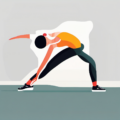
The Low Lunge, or Anjaneyasana, is perhaps the most effective gentle stretch for targeting the hip flexors. To perform this correctly, step one foot forward into a wide stance and lower your back knee to the floor. Ensure your front knee is stacked directly over your ankle to protect the joint. Instead of pushing your hips forward with force, focus on tucking your tailbone slightly under and engaging your core. This subtle shift creates a deep, satisfying opening in the front of the hip that is far more effective than simply sagging into the joint. Hold this for at least ninety seconds on each side, focusing on slow exhales to deepen the release.
Releasing the Outer Hips with Pigeon Pose Variations
The gluteus medius and piriformis muscles are often the culprits behind deep, dull hip aches. The Pigeon Pose is a classic, but it can be intimidating or painful for those with limited mobility. A gentler, more accessible version is the “Figure-Four” stretch performed while lying on your back. Lie flat, bend your knees, and cross your right ankle over your left knee. Gently pull your left thigh toward your chest. This variation removes the pressure of gravity and allows you to control the intensity of the stretch with precision, making it an ideal practice for individuals dealing with sciatica or lower back sensitivity.
The Role of Diaphragmatic Breathing
You cannot effectively stretch tight muscles while holding your breath. When we are in pain or under stress, we tend to take shallow, chest-based breaths, which keeps the body in a “fight or flight” state. To unlock the hips, you must switch your nervous system into “rest and digest” mode. During your stretching routine, practice breathing into your belly. As you inhale, imagine the breath filling the space around your hip joints. As you exhale, visualize the muscles softening like wax. This physiological feedback loop is the secret ingredient that turns a simple stretch into a transformative healing practice.
Consistency Over Intensity
Many people fall into the trap of doing a heavy, hour-long stretching session once a week, only to return to their sedentary habits for the remaining six days. The body responds far better to consistency. Ten minutes of gentle hip opening performed daily will yield significantly better results than a single, intense session. Incorporate these movements into your morning routine, or take “movement snacks” throughout the day. If you work at a desk, setting a timer to stand up and perform a standing hip opener every hour can prevent the accumulation of tension before it becomes chronic.
Integrating Movement into Daily Life
Beyond structured stretching, consider how you move throughout the day. Can you vary your sitting positions? Can you take a walk during your lunch break? Incorporating movement variety is essential for hip health. Simple changes, such as sitting on a floor cushion, using a standing desk, or taking the stairs, keep the hip joints lubricated and the muscles engaged. When you view hip health as a lifestyle choice rather than a chore, the tightness begins to dissipate as a natural byproduct of a more dynamic and mindful way of moving through the world.
Listening to Your Body’s Boundaries
It is vital to distinguish between the sensation of a “good stretch” and the sharp, stinging pain of an injury. A good stretch should feel like a dull, manageable tension that dissipates as you breathe. If you feel pinching in the front of the hip or sharp pain in the knee, back off immediately. Your body has its own unique anatomy; what works for one person may not work for another. Use props like yoga blocks, bolsters, or blankets to support your body. Supporting your frame allows the muscles to fully relax, which is the ultimate goal of any restorative practice. Always prioritize comfort over aesthetics.
Addressing the Adductors: The Often-Overlooked Inner Thigh
While much focus is placed on the front and back of the hips, the inner thighs—the adductor group—are frequently neglected. When these muscles become hypertonic, they pull the pelvis into a tilted position and restrict the lateral movement of the hip joint, which is vital for everyday activities like stepping sideways or balancing. To target these, the Butterfly Stretch (Baddha Konasana) is a foundational tool, but it must be performed with structural integrity. Sit on the floor with your feet pressed together, but instead of forcing your knees toward the ground, focus on lengthening your spine upward. If your knees remain high, place yoga blocks or pillows under each thigh to support them. This support removes the “threat” of overstretching, allowing the adductors to release gradually. By leaning forward slightly from the hips—not the waist—you deepen the sensation without compromising the lower back, ensuring that the stretch remains in the belly of the muscle rather than the joint capsule.
Eccentric Loading: Strengthening Through Length
Stretching is only one half of the equation; for long-term relief, we must pair flexibility with eccentric strength. Muscles that are tight are often weak, and the brain will keep a muscle tense if it doesn’t feel strong enough to support the joint. The “Cossack Squat” is an excellent movement for this. Start with your feet wider than shoulder-width apart. Shift your weight into your right leg, bending your right knee while keeping your left leg straight, toes pointing toward the ceiling. As you sink, you are lengthening the adductors of the straight leg while strengthening the glutes and quadriceps of the bent leg. By controlling the descent, you are teaching your nervous system to stay calm and stable while the muscles are in a lengthened state. This creates a lasting change in your range of motion, as your brain begins to recognize these new positions as safe and functional.
Managing the Hip-Spine Connection
The hips do not operate in a vacuum; they are anchored to the lumbar spine. When the hip flexors are chronically tight, they effectively act as a “tether” that pulls the lumbar vertebrae into an exaggerated curve, known as anterior pelvic tilt. To address this, we must mobilize the thoracic spine (mid-back) in tandem with the hips. The “Open Book” stretch is a perfect companion to hip work. Lie on your side with your knees stacked at a ninety-degree angle. Extend both arms in front of you, palms together. Slowly open your top arm like the cover of a book, rotating your torso until your shoulder approaches the floor. This rotation releases the tension that accumulates in the lats and obliques, which often inhibit the natural movement of the pelvis. By freeing the spine, you reduce the compensatory workload placed on the hips, allowing them to return to their natural, neutral alignment.
The Role of Myofascial Release Techniques
Sometimes, muscle tension is compounded by “knots” or trigger points within the fascia. These adhesions can make standard stretching feel ineffective. Using a soft foam roller or a tennis ball allows you to manually break up these adhesions. Focus specifically on the tensor fasciae latae (TFL), a small muscle on the outer hip that often becomes overactive in runners and desk workers. Place a tennis ball between the outer hip and the wall, and gently lean into it, moving in small, circular motions. When you find a tender spot, hold and breathe until the sensation subsides. This is not about “rolling out” pain, but rather providing enough pressure to signal the nervous system to decrease the muscle’s resting tone. Following this with a static stretch is significantly more effective than stretching alone, as the fascia has already been primed and softened.
Navigating Hip Impingement and Structural Limitations
It is critical to recognize that not all hip restriction is purely muscular. Femoroacetabular impingement (FAI), where the bone structure of the hip joint limits movement, is a common reality for many. If you feel a sharp, pinching sensation—often described as a “bone-on-bone” feeling—during a stretch, you must modify your approach. Pushing through this sensation will not increase flexibility; it will likely cause inflammation to the labrum, the cartilage that cushions the joint. Instead of forcing deep internal or external rotation, focus on “distraction” movements. For example, using a heavy resistance band looped around the top of your thigh while you are in a lunge position can help create space in the joint capsule. By pulling the thigh bone slightly away from the socket, you can perform your stretches without the mechanical blockage, allowing for a safer and more productive range of motion.
The Impact of Footwear and Ground Contact
We rarely consider that our hip alignment begins at the feet. Wearing high-heeled shoes or footwear with excessive “drop” (where the heel is significantly higher than the toe) keeps the calf muscles in a shortened state. This creates a chain reaction that alters the way the pelvis sits, forcing the hips to compensate for the change in the body’s center of gravity. Furthermore, walking exclusively on flat, uniform surfaces like concrete prevents the small muscles of the feet and ankles from stabilizing the body properly. To support your hip health, try walking barefoot on varied terrain, such as grass or sand, when possible. This forces the entire kinetic chain—from the arches of your feet up to your pelvic floor—to engage differently. By restoring natural foot function, you allow the hips to return to their intended role as the primary stabilizers, reducing the chronic “locking” that occurs when the body feels unstable.
Frequently Asked Questions
Q: How long should I hold each stretch to see results? A: For static stretches, aim for 60 to 90 seconds. This duration allows the muscle fibers and the surrounding fascia enough time to respond to the tension and begin the process of lengthening. Rushing through stretches usually results in muscle guarding.
Q: Can tight hips cause knee pain? A: Yes, absolutely. The hips, knees, and ankles work as a kinetic chain. If the hips are tight and cannot move through their full range of motion, the knees often have to compensate by rotating or twisting in ways they were not designed to, which can lead to inflammation and pain.
Q: Is it better to stretch before or after a workout? A: It is generally safer to perform dynamic stretches (movement-based) before a workout to warm up the muscles. Save deep, static stretching for after your workout or as a standalone session when your muscles are warm, as the tissues are more pliable then.
Q: What if I feel no improvement after weeks of stretching? A: If you have been consistent for several weeks with no change, it may be time to consult a physical therapist. Chronic tightness can sometimes be a sign of underlying structural issues, such as hip impingement or labral tears, which require specific, guided rehabilitation rather than general stretching.
Q: Are there specific activities that exacerbate hip tightness? A: Activities that involve repetitive, limited-range movement, such as excessive cycling or long-distance running without proper recovery, can cause the hip flexors to become chronically short. Balancing these activities with strength training and dedicated mobility work is essential for long-term health.