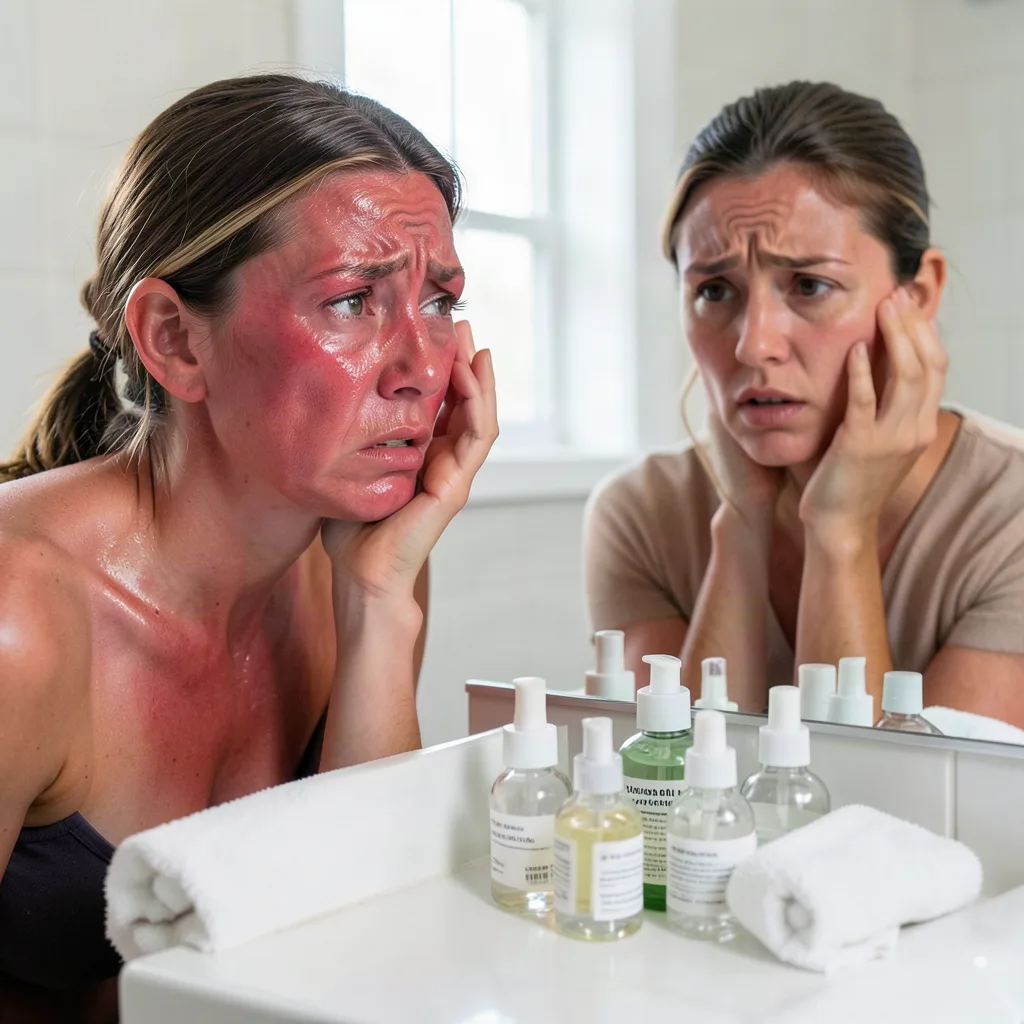
In our modern quest for the elusive “glass skin”—that luminous, poreless, and reflective complexion celebrated across social media—we have collectively embraced a more-is-better philosophy toward skincare. We have moved away from the simple soap-and-water routines of previous generations into a sophisticated era of multi-step regimens involving potent acids, physical polishes, and concentrated serums. However, there is a fine line between a healthy glow and a compromised barrier. When we cross that line, we fall into the over-exfoliation trap, a state where our skin’s natural defenses are stripped away, leaving us with irritation, sensitivity, and a host of secondary issues. Understanding how to navigate this balance is not just about aesthetics; it is about the fundamental health of our body’s largest organ.
Key takeaways
- Look for a plastic-like shine, tightness, or increased sensitivity to products that previously caused no irritation.
- Stop all active ingredients for two to four weeks to allow the skin’s natural renewal cycle to complete.
- Use barrier-supporting ingredients like ceramides, panthenol, and squalane to replenish the skin’s lipid matrix and lock in moisture.
- Reintroduce exfoliation slowly, starting once weekly with gentle polyhydroxy acids before moving to stronger chemical options.
- Check daily cleansers and serums for stealth exfoliants like salicylic acid or fruit enzymes that contribute to cumulative damage.
The Biological Architecture of the Skin Barrier
To understand why over-exfoliation is so damaging, we must first look at the anatomy of the skin. The outermost layer of the epidermis is known as the stratum corneum. Often described using the “brick and mortar” analogy, this layer consists of dead skin cells (corneocytes) acting as the bricks, held together by a rich matrix of lipids (ceramides, cholesterol, and fatty acids) acting as the mortar. This structure serves two vital purposes: it keeps moisture in and keeps irritants, pathogens, and pollutants out.
Naturally, our skin undergoes a process called desquamation, where old cells are shed to make room for new ones. This cycle typically takes about 28 to 40 days, depending on age and health. Exfoliation is the practice of intervening in this process to speed up the removal of those surface-level “bricks.” While this can reveal fresher skin and prevent clogged pores, doing it too aggressively or too frequently disrupts the mortar. When the lipid matrix is compromised, we experience Transepidermal Water Loss (TEWL). This is the biological equivalent of leaving a window open during a storm; the internal environment becomes unstable, and external stressors flood in.
Furthermore, the skin maintains a slightly acidic pH, usually between 4.5 and 5.5, known as the acid mantle. Many exfoliants, particularly chemical ones, have a very low pH to remain effective. Constantly bombarding the skin with low-pH products without allowing it time to recover can permanently alter the microbiome—the community of beneficial bacteria that live on our skin—leading to chronic inflammation and a weakened immune response at the cutaneous level.
Recognizing the Red Flags of Over-Exfoliation
The signs of over-exfoliation can be subtle at first, often masquerading as other skin concerns. One of the most deceptive symptoms is a “plastic-like” shine. This is not the healthy, dew-drenched glow of hydrated skin; rather, it is a tight, unnaturally smooth surface that reflects light because the skin’s texture has been completely leveled. If your skin looks shiny but feels uncomfortably tight or dry, you have likely over-exfoliated.
Another hallmark sign is increased sensitivity to products that previously caused no issues. If your favorite gentle moisturizer suddenly stings or causes redness upon application, your barrier is likely compromised. This happens because the protective layer is so thin that ingredients are penetrating deeper and faster than they were ever intended to. Other common symptoms include:
- Persistent Redness: A constant pink or red hue, especially on the cheeks and around the nose, that doesn’t subside after your morning routine.
- Dehydration Lines: Fine, crepey lines that appear when you move your face, indicating a lack of water in the upper layers of the epidermis.
- Breakouts: This is the “paradoxical acne” effect. When the barrier is dry and cracked, bacteria enter more easily, and the skin may produce excess oil to compensate for the dryness, leading to more clogs.
- Texture Changes: Skin that feels rough, sandpapery, or flaky despite the use of exfoliants. This is the skin’s desperate attempt to build back its protective layer as quickly as possible.
The Chemical vs. Physical Divide
The over-exfoliation trap is fueled by the sheer variety of products available. Exfoliants generally fall into two categories: physical and chemical. Physical exfoliants use friction to remove dead skin. This includes sugar scrubs, walnut powders, muslin cloths, and oscillating cleansing brushes. The danger here is “micro-tearing.” Rough particles can create jagged, microscopic cuts in the skin, which become breeding grounds for bacteria and lead to localized inflammation.
Chemical exfoliants, on the other hand, use acids or enzymes to dissolve the bonds between skin cells. Alpha Hydroxy Acids (AHAs), like glycolic and lactic acid, are water-soluble and work on the surface. Beta Hydroxy Acids (BHAs), specifically salicylic acid, are oil-soluble and can penetrate deep into the pores. Polyhydroxy Acids (PHAs) are newer, larger molecules that exfoliate gently without penetrating deeply. While chemical exfoliants are often more “controlled” than physical ones, their potency is their pitfall. High-percentage peels intended for professional use are now available over the counter, and many consumers use them multiple times a week, unaware that they are essentially causing a low-grade chemical burn.
The trap is often sprung when a user combines both methods—for example, using a glycolic toner every night and a physical scrub twice a week. This cumulative trauma prevents the skin from ever reaching a state of equilibrium, leading to a chronic cycle of damage and attempted repair.
Why We Fall Into the Trap: The Psychology of Skincare
Skincare has become a form of self-care and a hobby for many, but it is also an industry driven by the promise of immediate results. Exfoliation provides that instant gratification; after one use, the skin often feels softer and looks brighter. This creates a psychological feedback loop: if a little bit of acid makes my skin look good today, surely more acid will make it look even better tomorrow. We begin to associate the “tingle” of a product with its efficacy, mistakenly believing that if it doesn’t hurt, it isn’t working.
Social media trends like “skin cycling” have attempted to bring structure to this, but even these can be misinterpreted. The pressure to have a 10-step routine leads many to layer active ingredients that should never be used together. For instance, using a retinoid (which speeds up cell turnover) alongside a strong AHA (which removes surface cells) can be a recipe for disaster for anyone without a very resilient skin type. We have also been conditioned to fear our skin’s natural oils, leading us to over-cleanse and over-exfoliate in an attempt to achieve a “squeaky clean” feeling that is actually the sound of a barrier in distress.
The Emergency Protocol: Immediate Steps to Heal
If you have identified that your skin is over-exfoliated, the first step is the hardest: you must stop all active ingredients immediately. This means no acids, no retinoids, no vitamin C, and no scrubs. Your skin is in a state of trauma and needs a “skincare fast” to recover. This period of abstinence should last at least two to four weeks, which is the time it takes for a full cycle of new skin cells to reach the surface.
During this recovery phase, your routine should be incredibly simple and focused entirely on hydration and barrier repair. Switch to a non-foaming, pH-balanced creamy cleanser that won’t strip the remaining lipids. Follow this with a soothing hydrating serum (look for ingredients like glycerin or hyaluronic acid) and a thick, occlusive moisturizer. Occlusives act as a temporary artificial barrier, sealing in moisture while your natural barrier heals. In the evening, you might even consider “slugging”—applying a thin layer of a petroleum-based ointment over your moisturizer to prevent water loss overnight. Most importantly, do not skip sunscreen. Over-exfoliated skin is incredibly vulnerable to UV damage, which will only worsen the inflammation and potentially lead to long-term hyperpigmentation.
Ingredients to Look For During Recovery
While you are avoiding “actives,” there are specific restorative ingredients that can help accelerate the healing process. These ingredients don’t force the skin to change; they provide the building blocks it needs to repair itself. Look for products containing:
- Ceramides: These are the lipids that make up 50% of your skin barrier. Applying them topically helps replenish the “mortar” between your skin cells.
- Panthenol (Pro-Vitamin B5): A humectant that attracts moisture and has significant anti-inflammatory properties, helping to soothe stinging and redness.
- Centella Asiatica (Cica): A botanical extract known for its wound-healing capabilities. It is a staple in sensitive skin care for its ability to calm irritated tissue.
- Squalane: A stable oil that mimics the skin’s natural sebum, providing emolliency without clogging pores.
- Colloidal Oatmeal: Excellent for soothing itching and forming a protective film over the skin.
- Allantoin: Derived from the comfrey plant, it helps to soften the skin and promote cell regeneration without the irritation associated with acids.
When selecting these products, ensure they are free from synthetic fragrances and drying alcohols (like alcohol denat), as these can further irritate a compromised barrier.
How to Reintroduce Exfoliation Safely
Once your skin no longer stings, the redness has faded, and the “plastic” shine is gone, you can begin to think about reintroducing exfoliation—but you must do so with extreme caution. Think of this as physical therapy for your skin; you wouldn’t run a marathon immediately after a leg injury. Start with the gentlest possible option. A PHA (Polyhydroxy Acid) is an excellent starting point because its large molecular size prevents it from penetrating too deeply, offering a very mild surface exfoliation.
Begin by exfoliating only once a week. Observe your skin for 48 hours afterward. Is there any tightness? Any redness? If not, you can continue once a week for a month. Only after your skin has proven it can handle this frequency should you consider moving to twice a week or switching to a slightly stronger acid like lactic acid. Never reintroduce multiple actives at once. If you want to use both a retinoid and an exfoliant, they should be used on different nights, and you should always include “rest nights” where you only use hydrating and barrier-supporting products. This “low and slow” approach ensures that you get the benefits of exfoliation without ever reaching the tipping point of damage again.
Building a Sustainable, Long-Term Routine
The ultimate goal of skincare is not to achieve a temporary glow, but to maintain a resilient, healthy organ that can protect you. A sustainable routine is one that is intuitive and adaptable. Your skin’s needs change based on the season, your stress levels, your diet, and your age. In the winter, when the air is dry, you may need to stop exfoliating entirely and focus on rich creams. In the humid summer months, your skin might tolerate a BHA a few times a week to manage oil.
Listen to your skin. If it feels tight, it’s thirsty. If it’s red, it’s angry. If it’s breaking out in unusual places, it might be overwhelmed. We must move away from the idea that skincare is a battle to be won and instead view it as a supportive partnership. By respecting the biological limits of the skin barrier and avoiding the over-exfoliation trap, you can achieve a genuine, lasting radiance that comes from health, not from trauma. Remember, the most effective skincare routine is the one that keeps your barrier intact and your skin comfortable.
The Hidden Exfoliants in Your Everyday Routine
One of the most common ways people fall into the over-exfoliation trap is by using products they do not even realize are exfoliating. While a bottle labeled “10% Glycolic Acid” is an obvious culprit, many “brightening,” “glow-inducing,” or “anti-blemish” products contain stealth exfoliants that contribute to the cumulative load on your skin barrier. For instance, many daily foaming cleansers marketed for oily skin contain salicylic acid or fruit enzymes like papain (from papaya) and bromelain (from pineapple). While these ingredients are effective at dissolving surface debris, using them twice a day alongside a dedicated chemical exfoliant creates a state of constant, low-level trauma.
Vitamin C, specifically in its most potent form as L-Ascorbic Acid, is another frequent offender. To remain stable and penetrate the skin, L-Ascorbic Acid requires a very low pH, often around 2.5 to 3.5. This acidity means that your morning antioxidant serum is also acting as a mild chemical exfoliant. If you follow that with an AHA toner in the evening, your skin never leaves an acidic state. Furthermore, many “soothing” toners now include Urea. In low concentrations, Urea is a fantastic humectant, but in slightly higher concentrations, it acts as a keratolytic, softening and shedding skin cells. When these products are layered, the result is a “death by a thousand cuts” scenario where no single product is the villain, but the combination is catastrophic for the stratum corneum.
Environmental Synergies: When the Weather Becomes an Exfoliant
The resilience of your skin barrier is not a fixed metric; it fluctuates based on your environment. A routine that works perfectly in the humid height of July may become an irritant in the dead of January. Low humidity levels in winter—both outdoors and due to indoor heating—accelerate Transepidermal Water Loss (TEWL). When the air is dry, it literally pulls moisture out of your skin. If you continue to exfoliate at the same frequency during these months, you are removing the very lipids that prevent this evaporation, leading to the “sandpaper” texture often mistaken for a need for more scrubbing.
Hard water is another environmental factor that compounds the damage of over-exfoliation. Hard water contains high concentrations of minerals like calcium and magnesium, which can react with the fatty acids in your cleansers to form a “scum” or film on the skin. This film is difficult to rinse off and can disrupt the skin’s pH, making it more alkaline. Since the skin’s natural exfoliating enzymes (proteases) require an acidic environment to function correctly, this shift can lead to irregular desquamation. Many people respond to this rough, uneven texture by reaching for a physical scrub, unaware that the underlying issue is a mineral-induced barrier disruption. In these cases, the solution is not more exfoliation, but a chelating cleanser or a shower filter to mitigate the impact of the water itself.
The Dangerous Allure of Professional-Strength At-Home Peels
The democratization of skincare has led to a surge in high-concentration chemical peels being sold for home use. Products containing 30% Alpha Hydroxy Acids mixed with 2% Beta Hydroxy Acids are now cult favorites, but they carry significant risks when used without professional training. In a clinical setting, a dermatologist or aesthetician monitors the skin for “frosting”—a white appearance that indicates the acid has penetrated deep into the protein layers—and can apply a neutralizing agent immediately. At home, a user might leave the product on for “just one more minute” to get better results, inadvertently causing a second-degree chemical burn.
The danger is compounded by the “free acid value.” Two products might both claim to have 10% Glycolic Acid, but if one is formulated at a pH of 3 and the other at a pH of 4.5, the former is significantly more potent and irritating. Most consumers are not equipped to calculate the bio-availability of the acids they are using. Furthermore, the lack of a proper post-peel protocol at home often leads to further damage. Using a high-percentage peel and then failing to use an occlusive barrier cream, or worse, using a retinoid the following night, creates deep structural damage that can take months to resolve. These “at-home” professional treatments should be treated with the same respect as a prescription medication, yet they are often used as casually as a face wash.
Hormonal Fluctuations and the Shifting Sensitivity Threshold
For many individuals, the skin’s tolerance for active ingredients changes throughout the month due to hormonal shifts. During the follicular phase of the menstrual cycle, estrogen levels rise, which generally improves skin hydration and barrier function. This is often when the skin looks its best and can handle more aggressive treatments. However, during the luteal phase (the week before menstruation), progesterone increases, which can lead to increased sebum production and higher skin sensitivity. This is the time when many people experience “hormonal breakouts” and react by doubling down on salicylic acid or benzoyl peroxide.
This is a tactical error. During this pre-menstrual window, the skin is often more prone to inflammation and reactive redness. Over-exfoliating in response to a hormonal breakout often results in “angry” acne—pimples that are red, swollen, and take longer to heal because the surrounding skin is compromised. Menopause also presents a unique challenge; as estrogen levels drop, the skin becomes thinner and produces fewer natural oils. A routine that was sustainable for decades can suddenly become too harsh, leading to chronic dryness and a “crepey” appearance. Recognizing that your skin is a dynamic system that responds to internal chemistry is vital for avoiding the over-exfoliation trap.
Navigating the Intersection of Acne and Over-Exfoliation
The most heartbreaking version of the over-exfoliation trap is when it is driven by a genuine desire to clear acne. There is a pervasive myth that acne is a result of “dirty” skin that needs to be scrubbed or dissolved away. This leads to the “Dry-Acne Cycle.” When the barrier is stripped by over-exfoliation, the skin’s acid mantle is disrupted, making it a more hospitable environment for *C. acnes* bacteria. Additionally, the microscopic cracks in a damaged barrier allow bacteria to penetrate deeper into the follicle, causing more systemic inflammation.
Furthermore, when the skin is severely dehydrated from over-use of acids, it may produce a surge of “rebound oil.” This oil becomes trapped under a layer of dry, dead skin cells that haven’t shed properly due to the inflammation, leading to closed comedones (whiteheads) and congestion. The user sees more bumps and applies more acid, worsening the cycle. To break this, one must realize that acne is often an inflammatory condition, not just a clogging issue. Sometimes, the most effective way to clear a breakout is to stop all exfoliants and focus on anti-inflammatory ingredients like Niacinamide and Zinc, which support the barrier while gently regulating oil, rather than obliterating the skin’s surface.
Long-Term Consequences: Inflammaging and PIE
While the immediate signs of over-exfoliation like stinging and peeling are distressing, the long-term consequences can be even more significant. Chronic over-exfoliation keeps the skin in a state of low-grade inflammation. This constant inflammatory response triggers the release of matrix metalloproteinases (MMPs), enzymes that break down collagen and elastin. This process, often called “inflammaging,” can lead to premature sagging and fine lines. Essentially, by over-exfoliating in the pursuit of youth, you may be accelerating the very aging process you are trying to prevent.
Another long-term issue is Post-Inflammatory Erythema (PIE). These are the stubborn red or pink marks left behind after a blemish or an injury. When the skin barrier is compromised, the blood vessels near the surface become dilated and more visible. Over-exfoliating keeps these vessels in a state of dilation, meaning that even after a pimple has healed, the red mark remains for months. Similarly, for those with deeper skin tones, a compromised barrier can trigger melanocytes to overproduce pigment as a protective measure, leading to Post-Inflammatory Hyperpigmentation (PIH). Maintaining a healthy barrier is the most effective way to ensure that the skin can heal from insults without leaving a permanent mark.
Advanced Barrier Support: The 3:1:1 Lipid Ratio
When recovering from over-exfoliation, simply applying any moisturizer may not be enough. Research has shown that for optimal barrier repair, the skin needs a specific ratio of lipids: ceramides, cholesterol, and essential fatty acids. Specifically, a 3:1:1 ratio (where ceramides are the dominant component) has been found to accelerate the recovery of the lamellar structures in the stratum corneum. Many basic moisturizers contain only one of these components, which can actually delay barrier repair by creating an imbalance in the skin’s natural lipid composition.
In addition to lipids, the role of the microbiome in barrier health cannot be overstated. Over-exfoliation doesn’t just remove skin cells; it wipes out the beneficial bacteria that produce natural antimicrobial peptides. During recovery, using products with prebiotics (which feed good bacteria), probiotics (live or inactivated beneficial bacteria), or postbiotics (the helpful byproducts of bacteria) can help restore this ecosystem. Ingredients like fermented yeast filtrate or Lactobacillus ferment can help signal the skin to produce more of its own ceramides and reduce the inflammatory markers that cause redness. By treating the skin as a living ecosystem rather than a surface to be polished, you create a foundation for true, resilient health.
Frequently Asked Questions
Is it possible to over-exfoliate with “natural” products?
Absolutely. Many people assume that “natural” means “gentle,” but nature is full of potent chemicals. Fruit enzymes (like papaya or pineapple), high concentrations of Vitamin C, and physical scrubs made from nut shells can be just as aggressive as synthetic acids. The mechanism of damage is the same: the removal of too many skin cells and the disruption of the lipid barrier. Regardless of the source of the ingredient, the frequency and concentration are what determine the risk of over-exfoliation.
How can I tell the difference between “purging” and over-exfoliation?
Purging typically occurs when you start a product that increases cell turnover (like a BHA or retinoid). It manifests as small breakouts in areas where you normally get pimples, and it usually resolves within 4-6 weeks. Over-exfoliation, however, causes irritation, stinging, and breakouts in new, unusual areas. If your skin feels sensitive, itchy, or looks shiny and red, it is not a purge; it is a compromised barrier, and you should stop the product immediately.
Can I still use a washcloth if I have over-exfoliated skin?
When your barrier is compromised, even the mild friction of a standard terrycloth washcloth can be too much. It is best to use only your hands and lukewarm water to cleanse. If you must use a cloth, choose a very soft microfiber or muslin cloth and use it with zero pressure. Once your skin has fully healed, you can return to using a washcloth, but remember that this counts as physical exfoliation, so adjust your use of chemical acids accordingly.
Does oily skin need more exfoliation than dry skin?
While oily skin is often more resilient and prone to congestion, it still has a barrier that can be broken. In fact, over-exfoliating oily skin often leads to “rebound oiliness.” When you strip away all the surface oils, the skin perceives a state of emergency and produces even more sebum to protect itself. Oily skin types may benefit from more frequent use of BHAs (salicylic acid) because they are oil-soluble, but they still require hydration and rest periods to remain healthy.
How long does it take for the skin barrier to fully repair?
A minor case of over-exfoliation might feel better in a week, but a severely compromised barrier can take anywhere from 28 days to three months to fully return to its baseline. This is because the skin must undergo several full cycles of renewal to replace the damaged layers and rebuild the lipid matrix. Patience is essential; reintroducing actives too early is the most common reason people get stuck in a chronic cycle of irritation.
Related posts:
 Foundation’s Impact on Skin
 Why SCOBY Might Be the Secret Ingredient Your Skincare Routine Needs
 Proper Use of Exfoliating Mitts
 Too Clean for Comfort: Why Being Squeaky Clean Might Be Bad for Your Skin
 The Best Natural Tools for Silky Smooth Skin
 The Best Toners for Acne-Prone Skin That Won’t Strip Your Face
 How Hard Should You Really Scrub Your Face?
 Proper Order of Skincare Application