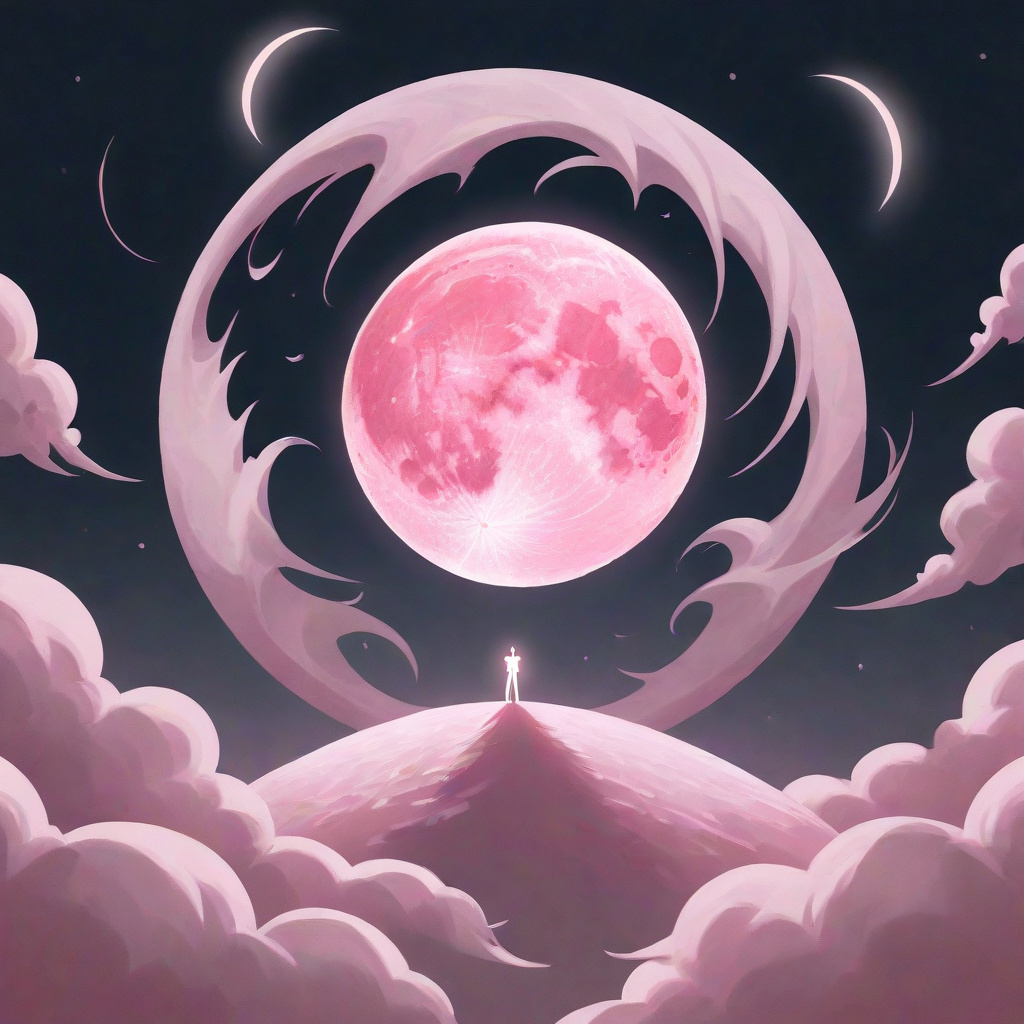
As the wheel of the year turns and the grip of winter finally loosens, we enter a season of profound awakening. Among the most anticipated celestial events of the spring is the Full Pink Moon. While the name might suggest a vivid hue in the night sky, the Pink Moon is less about color and more about the essence of rebirth, renewal, and the blossoming of the spirit. For many, this particular lunar phase acts as a cosmic catalyst, urging us to shed the heavy layers of the previous months and step into a more vibrant, energized version of ourselves.
Understanding the energy of the Pink Moon allows us to move from a state of passive existence to one of intentional growth. It is a time when the natural world is erupting in color and life, and our internal landscapes are invited to do the same. Whether you are a seasoned practitioner of lunar rituals or someone simply curious about how the cycles of the moon affect your mood and productivity, the Pink Moon offers a unique window for transformation. By aligning our personal intentions with the rhythmic pulse of the earth, we can harness this energy to clear emotional blockages and plant the seeds for a fulfilling year ahead.
Understanding the Pink Moon: Myth vs. Reality
To truly embrace the energy of the Pink Moon, it is helpful to first understand what it actually is. The “Pink Moon” is the traditional name given to the full moon that occurs in April. Contrary to popular belief, the moon does not actually turn pink. Instead, the name is derived from the wild ground phlox, a pale pink flower that blooms across North America during this time of year. The name is a poetic reminder of the earth’s awakening and the arrival of spring.
From an astronomical perspective, a full moon occurs when the Earth is positioned directly between the sun and the moon, allowing the sun’s light to fully illuminate the lunar face. However, from a lifestyle and wellness perspective, the full moon represents the peak of a cycle. If the new moon is the time for planting seeds and setting intentions, the full moon is the time of harvest and revelation. It is the moment when things come to light, secrets are revealed, and the energy we have been cultivating since the start of the lunar month reaches its zenith.
In the context of the Pink Moon, this culmination is specifically tied to the themes of spring. It represents the transition from the introspection and dormancy of winter to the outward expansion of spring. This is why the energy of the Pink Moon often feels more electric and urgent than the full moons of December or January; it is the energy of life insisting on its own existence.
The Energetic Shift of Spring
The transition from winter to spring is not just a meteorological event; it is a biological and energetic shift. During winter, our systems naturally slow down. We seek warmth, we sleep more, and we tend to turn inward. This is a necessary period of conservation. However, as we approach the Pink Moon, the increasing daylight hours trigger a shift in our circadian rhythms and our hormonal balance. We begin to feel a surge of “Yang” energy—the active, masculine, and expansive force.
This shift can manifest in various ways. Some people feel a sudden burst of motivation to reorganize their homes, start new fitness regimes, or launch creative projects. Others may feel a sense of restlessness or irritability, as the internal pressure to grow clashes with old habits of stagnation. This is the “transformative energy” often associated with the Pink Moon. It is the friction between who we were in the winter and who we are becoming in the spring.
To navigate this shift compassionately, it is important to recognize that growth can be uncomfortable. Just as a seed must crack open its shell to grow, we often have to break through our own perceived limitations to evolve. The Pink Moon provides the energetic support needed to make these breakthroughs, provided we are willing to lean into the process rather than resist it.
Emotional Release and the Full Moon Cycle
Full moons are widely regarded as periods of heightened emotion. Because the energy is at its peak, feelings that we have suppressed or ignored during the waxing phase of the moon often bubble to the surface. The Pink Moon, in particular, tends to highlight themes of self-worth, desire, and the courage to be seen.
When we experience this emotional surge, the natural instinct is often to push it down or judge it. However, the true power of the Pink Moon lies in emotional release. Instead of fighting the tide, we are encouraged to observe our emotions with curiosity. If you find yourself feeling unexpectedly overwhelmed, angry, or deeply sentimental during this time, understand that this is the moon “cleaning house.” It is bringing these emotions to the surface so that they can be acknowledged, processed, and finally released.
Practical emotional release during the Pink Moon can take many forms. For some, it is a good cry; for others, it is a rigorous workout or a long walk in nature. The goal is to move the energy through the body rather than letting it stagnate. When we release the emotional debris of the past, we create the necessary space for the new growth that spring promises.
Practical Rituals for the Pink Moon
Rituals are not merely symbolic; they are psychological tools that signal to our subconscious mind that a transition is occurring. By performing a dedicated ritual during the Pink Moon, you anchor your intentions into your physical reality. Here are several practical, accessible rituals to help you transform your energy:
- The Lunar Salt Bath: Water is a powerful conductor of energy. To cleanse your aura, prepare a bath with Epsom salts, a few drops of rose or geranium essential oil (to align with the “pink” theme of love and heart-opening), and a handful of fresh flower petals. As you soak, visualize the lunar light washing away old anxieties and stagnant energy. Imagine the water absorbing everything that no longer serves you, leaving you refreshed and renewed.
- The Intention Burning Ceremony: Write a list of habits, beliefs, or grudges that you wish to leave behind in the winter. Be specific. Instead of writing “I want to be happy,” write “I release the habit of self-criticism when I make a mistake.” Once the list is complete, safely burn the paper in a fire-safe bowl. As the smoke rises, visualize these burdens leaving your life and returning to the universe to be recycled into something positive.
- Moon Water Charging: Place a glass jar of filtered water on a windowsill or outside where it can be exposed to the light of the full moon. Leave it overnight. The next morning, use this “charged” water to water your houseplants, add it to your morning tea, or use it as a facial mist. This act connects you physically to the lunar cycle and brings the calming essence of the moon into your daily routine.
- Nature Immersion: Since the Pink Moon is named after spring flowers, the most potent ritual is simply to be among them. Spend at least thirty minutes in a park, garden, or forest. Practice “forest bathing” by engaging all five senses: the smell of damp earth, the sound of birds returning, the sight of budding leaves, the feel of the breeze, and the taste of the fresh spring air.
Journaling Prompts for Emotional Transformation
Journaling is one of the most effective ways to translate the abstract energy of the moon into actionable personal growth. During the Pink Moon, focus your writing on the themes of awakening and shedding. Set aside a quiet space, light a candle, and reflect on the following prompts:
1. What is the “winter version” of myself that I am now ready to outgrow? Consider the beliefs, fears, or routines that kept you safe during a hard time but are now hindering your progress.
2. Where in my life am I feeling a “pressure to bloom”? Identify the areas where you feel an internal nudge to expand—perhaps in your career, a relationship, or a creative hobby.
3. If my heart were a garden, what weeds need to be pulled to make room for new growth? Think about resentment, jealousy, or self-doubt that may be choking your potential.
4. What does “renewal” look like for me in a practical, daily sense? Instead of vague goals, describe specific changes, such as “waking up 20 minutes earlier to meditate” or “setting boundaries with my phone after 8 PM.”
5. What are three things I am deeply grateful for that have survived the winter of my life? Acknowledging resilience helps you move forward with confidence.
Aligning Your Physical Health with Lunar Cycles
Our bodies are biological systems influenced by the environment, including the lunar cycle. Many people report changes in sleep patterns and energy levels during a full moon. To maintain balance during the Pink Moon, it is helpful to adjust your wellness routine to accommodate these shifts.
Prioritize Sleep Hygiene: Full moons are often associated with insomnia or vivid dreams. To combat this, implement a strict wind-down routine. Avoid screens an hour before bed, use a weighted blanket for grounding, and try a calming herbal tea like chamomile or lemon balm. If you wake up in the middle of the night, instead of scrolling through your phone, try a gentle stretching sequence or a breathing exercise to soothe the nervous system.
Hydration and Nutrition: Spring is a time of detoxification. Support your liver and kidneys by increasing your water intake and incorporating seasonal, hydrating foods. Focus on leafy greens, sprouts, and citrus fruits, which mirror the renewing energy of the season. Avoid overly processed sugars that can lead to energy crashes and mood swings, which are often amplified during the full moon.
Gentle Movement: While the Pink Moon brings a surge of energy, avoid overextending yourself. Instead of high-intensity workouts that might leave you depleted, opt for movement that flows. Yoga, Tai Chi, or brisk walking are ideal. Focus on “heart-opening” poses in yoga, such as the Cobra or Bridge pose, to physically open the chest and align with the heart-centered energy of the Pink Moon.
Navigating the “Full Moon Tension”
It is common to feel a sense of tension or irritability during the full moon. This is often referred to as the “Lunar Effect.” While the scientific community debates the extent of this influence, the psychological experience is very real for many. This tension usually arises because the full moon brings hidden conflicts to the surface, forcing us to deal with things we would rather ignore.
The key to navigating this tension is grounding. When you feel the energy becoming too erratic, use the 5-4-3-2-1 grounding technique: identify five things you can see, four things you can touch, three things you can hear, two things you can smell, and one thing you can taste. This pulls your awareness out of the emotional storm and back into the present moment.
Additionally, practice radical patience with yourself and others. Recognize that those around you may also be feeling the effects of the lunar shift. If a conflict arises, ask yourself, “Is this a permanent problem, or is this just full moon tension?” Often, waiting 24 to 48 hours before reacting to an emotional trigger allows the lunar peak to pass and provides a clearer perspective on the situation.
Cultivating New Beginnings in Your Daily Routine
The transformation offered by the Pink Moon is most effective when it is integrated into your daily habits. Energy without structure is merely chaos. To ensure that the inspiration you feel during the full moon lasts beyond the lunar cycle, create a “Spring Blueprint” for your life.
Start by auditing your current routine. Identify one “energy leak”—a habit or commitment that drains you without providing value—and remove it. This could be a toxic social media account, a draining commitment, or a cluttered workspace. By removing the negative, you create a vacuum that the positive energy of the Pink Moon can fill.
Next, introduce one “growth habit.” This should be something that reflects the renewal you seek. If you want more creativity, commit to five minutes of sketching a day. If you want more peace, commit to three minutes of mindful breathing before every meal. The secret is to keep the habit small enough that it is impossible to fail. As the weeks progress and the energy of spring settles, these small habits will have grown into the foundation of your new identity.
Integrating the Energy into Your Long-Term Goals
The Pink Moon is a bridge between the planning phase of the new year and the active execution of the summer. To make the most of this transformation, connect your immediate feelings of renewal to your long-term vision. Ask yourself: “How does the person I am becoming during this Pink Moon serve the person I want to be by the end of the year?”
Use this time to refine your goals. In January, we often set resolutions based on a sense of “should.” By April, we have a better understanding of what we actually need. The Pink Moon allows you to pivot. If a goal you set in January no longer resonates with your current energy, give yourself permission to let it go. Transformation is not just about adding new things; it is about the courage to prune what is no longer growing.
As the moon wanes following the full peak, the energy will shift from expansion back to integration. Use the following two weeks to solidify the changes you’ve made. The transformation of the Pink Moon is not a one-night event, but a process of alignment. By staying conscious of your energy and remaining committed to your growth, you turn a celestial event into a lifelong evolution.
Applying Pink Moon Energy to Professional Growth
While the Pink Moon is often discussed in terms of emotional and spiritual wellness, its expansive energy is equally potent when applied to your professional life. The transition from winter to spring mirrors the shift from the planning and strategy phase of the first quarter to the execution and growth phase of the second. This is an ideal window to move your career goals from the conceptual stage into tangible action.
To harness this, perform a “Career Bloom Audit.” Instead of looking at your to-do list, look at your growth trajectory. Identify one project or skill that has been dormant—perhaps a certification you started but never finished, or a bold idea you were too hesitant to pitch during the introspective winter months. The “Yang” energy of the Pink Moon provides the necessary confidence to push these initiatives forward. For example, if you have been seeking a promotion or a pivot in your role, the period surrounding the full moon is an auspicious time to schedule that meeting or send that outreach email, as your natural presence is often more magnetic and assertive.
An important edge case to consider is the risk of “over-blooming.” The surge of energy can sometimes lead to over-committing or taking on too many new projects at once, leading to early spring burnout. To avoid this, pair your expansion with a strict boundary system. For every new professional commitment you accept during this lunar peak, identify one legacy task that can be delegated or automated. This ensures that your growth is sustainable rather than exhaustive.
Breaking Creative Blocks Through Lunar Activation
For artists, writers, and innovators, the Pink Moon acts as a cosmic jumpstart for the imagination. Creative blocks are often the result of “wintering” for too long—staying in a state of introspection until it becomes stagnation. The electric energy of the April full moon is designed to break this inertia by forcing a confrontation between your inner vision and the outer world.
To activate your creativity, try a technique called “Rapid Ideation Mapping” during the 48 hours surrounding the full moon. Set a timer for twenty minutes and write down every possible direction a current project could take, without censoring yourself. The goal is not quality, but volume. This mimics the eruptive nature of spring flowers, where the earth produces a multitude of blooms to ensure survival. By allowing yourself to produce “messy” work, you clear the psychic pipes and allow the truly transformative ideas to surface.
If you find yourself paralyzed by perfectionism—a common shadow trait during the full moon’s revealing light—shift your focus from the outcome to the process. Engage in a tactile, low-stakes creative activity, such as charcoal sketching or clay modeling, where the medium encourages imperfection. This physical release lowers the stakes and allows the Pink Moon’s energy to flow through you without the interference of the inner critic.
Heart-Centered Communication and Relationship Renewal
The “pink” essence of this moon is deeply tied to the heart chakra, making it a powerful time for repairing fractured relationships or deepening existing bonds. While the full moon can bring tension, it also provides the clarity needed to address the root cause of conflicts that have been simmering since the start of the year.
Practice “Renewal Conversations” by approaching your partner, friend, or family member with a spirit of curiosity rather than accusation. Instead of focusing on the grievance, focus on the desire for growth. Use scripts that emphasize the transition of seasons, such as, “I feel like we’ve been in a bit of a winter phase lately, and I’d love to find a way for us to move back into a more vibrant connection.” This framing removes blame and invites the other person to participate in a shared evolution.
For those navigating the complexities of a relationship that may no longer be serving them, the Pink Moon offers the courage to establish “Sacred Boundaries.” Just as a gardener prunes a plant to ensure its health, you may find the strength to prune certain dynamics from your social circle. This isn’t necessarily about ending relationships, but about redefining the terms of engagement to protect your own energetic bloom. The key is to communicate these boundaries with the same softness and firmness that a budding flower possesses: an insistence on growth without aggression.
The Art of Strategic Pruning: Sacred Subtraction
True transformation is not just about adding new habits; it is about the strategic removal of what is obsolete. In nature, pruning is essential for a plant to direct its energy toward the most promising buds. In your life, this is the practice of “Sacred Subtraction.” The Pink Moon reveals exactly which areas of your life are consuming energy without providing a return on investment.
Identify your “energy leaks” by tracking your emotional state for three days. Note every time you feel a dip in vitality—this could be a specific social media app, a recurring negative thought pattern, or a commitment you keep out of guilt. Once identified, apply the pruning method: ask yourself, “If I were starting my life fresh today, would I choose this?” If the answer is no, the Pink Moon provides the energetic support to let it go.
A common challenge during this process is the “guilt of the gap.” When we remove something from our lives, we are often left with a void that feels uncomfortable. The instinct is to fill that void immediately with something else. However, the magic of the Pink Moon lies in the gap itself. Allow the space to exist for a few days. This vacuum is what draws in the higher-frequency opportunities and connections that align with the version of yourself that is currently blooming.
Integrating the Waning Phase: From Peak to Habit
The most critical part of the lunar cycle is often the most ignored: the waning phase. After the peak of the Pink Moon, the energy shifts from outward expansion to inward integration. Many people experience a “lunar crash” a few days after the full moon, feeling a sudden drop in motivation or a sense of emotional exhaustion. This is not a failure of transformation, but a natural biological recalibration.
To navigate the waning phase successfully, shift your focus from “doing” to “solidifying.” If the full moon was about the burst of inspiration, the waning moon is about the architecture of habit. Take the revelations you had during the peak and translate them into a sustainable system. For example, if the Pink Moon inspired you to be more mindful, don’t try to meditate for an hour every day. Instead, use the waning energy to set up a dedicated meditation corner in your home or download an app that sends a gentle reminder. You are moving the energy from the ethereal (the moon) to the material (the earth).
During this period, prioritize grounding activities to stabilize the high-frequency energy of the full moon. Spend time with your feet on the actual earth, engage in slow-cooking nourishing meals, or organize your physical space. By grounding the “electric” energy of the Pink Moon, you ensure that the transformation becomes a permanent part of your identity rather than a fleeting emotional high.
Somatic Gardening: Using the Earth as a Mirror
Because the Pink Moon is intrinsically linked to the flora of the earth, engaging in actual gardening—even on a small scale—acts as a powerful somatic ritual. The physical act of touching soil and planting seeds creates a neurological anchor, linking your internal growth to a tangible, external process.
If you have access to a garden, plant something that requires patience and care, such as a perennial flower or a vegetable seedling. As you place the seed in the earth, speak your intention aloud. This act of “seeding” tells your subconscious that you are committed to the long-term process of growth, not just the immediate gratification of the full moon’s peak. Observe the seed’s journey; as it breaks the surface in the coming weeks, it serves as a living mirror of your own progress.
Frequently Asked Questions
Q: Do I have to be spiritual or believe in astrology to feel the effects of the Pink Moon?
A: Not at all. While the terminology is spiritual, the experience is largely based on the natural human response to seasonal changes and the psychological impact of cycles. Whether you call it “lunar energy” or “seasonal affective shift,” the transition from winter to spring affects everyone’s mood, energy levels, and biological rhythms. You can benefit from the rituals simply by treating them as a form of mindfulness and intentional self-care.
Q: What should I do if I feel completely drained instead of energized during the Pink Moon?
A: Energy transformation doesn’t always feel like a surge; sometimes it feels like a collapse before a rebirth. If you feel exhausted, your body may be telling you that you have too much “emotional clutter” to process. Instead of forcing productivity, lean into the restorative side of the moon. Prioritize sleep, gentle hydration, and silence. Allow yourself to be in the “cocoon” phase before you attempt to bloom.
Q: Can the Pink Moon affect my relationships?
A: Yes, because full moons often bring hidden truths to the surface. You may find that conversations you’ve been avoiding suddenly happen, or that you feel a sudden need for more space or more intimacy. The best approach is to communicate with compassion and avoid making impulsive decisions based on temporary emotional heights. Use the energy to clear the air and establish healthier boundaries.
Q: Is there a specific time of day that is best for Pink Moon rituals?
A: The most potent time is usually the night of the full moon, but the energy is typically palpable for 48 hours before and after the peak. If you cannot access the moon at night, performing your rituals during the sunrise of the following day is an excellent alternative, as it symbolizes the dawn of a new beginning and aligns with the solar energy of spring.
Q: What is the difference between the Pink Moon and other full moons?
A: While all full moons represent culmination, the Pink Moon is uniquely tied to the vernal equinox and the biological awakening of the earth. While a Harvest Moon (autumn) is about gratitude and gathering, and a Cold Moon (winter) is about introspection and survival, the Pink Moon is specifically about the courage to grow, the joy of renewal, and the activation of the heart.
Related posts:
 Your Weekly Horoscope for New Moon Energy
 Moon-Inspired Spa Treatments
 The Full Snow Moon Guide
 Spring New Moon Reset Ritual: Connecting with Earth’s Energy
 Full Moon Realizations Horoscope
 Understanding Lunar Returns
 The Moon Tarot Card: Intuition and Emotional Depth
 Lunar Love: How Moon Phases Can Guide Your Dating Life