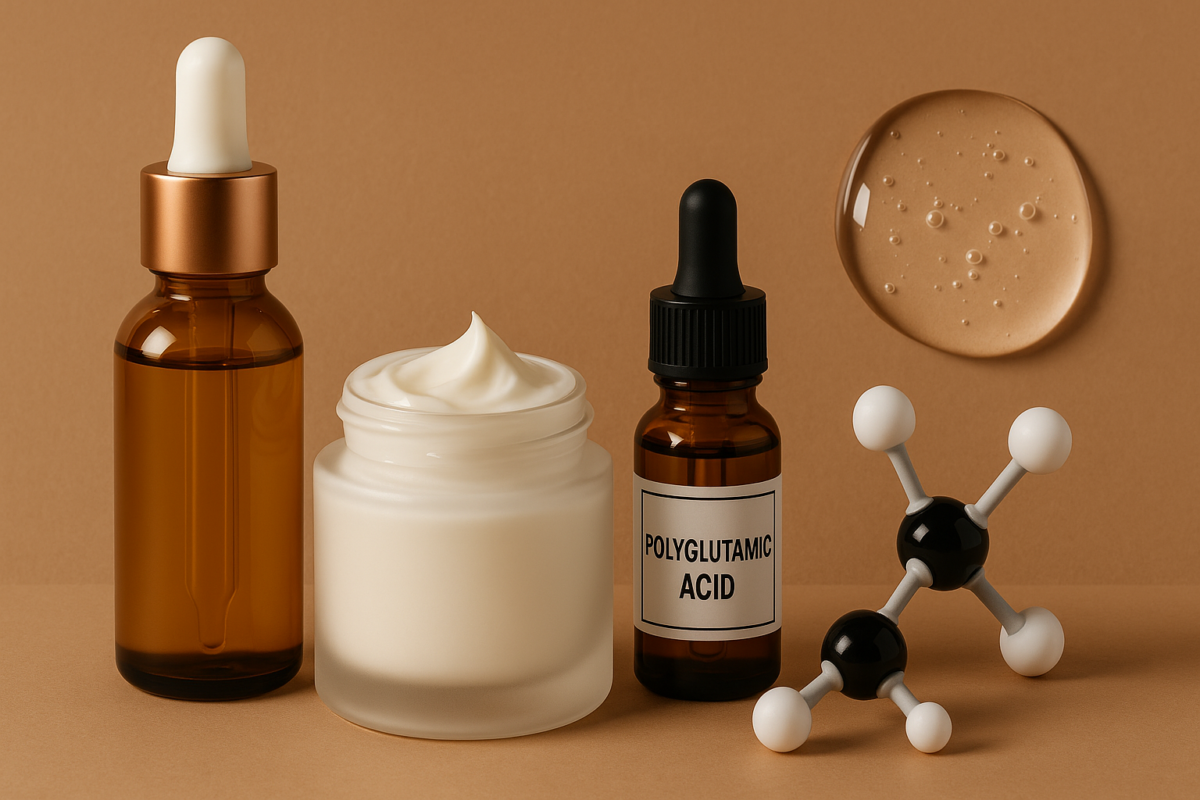
Polyglutamic acid (PGA) is a naturally occurring biopolymer that has gained attention in the beauty world for its exceptional water‑binding capacity. Derived from fermented soybeans, this peptide chain can hold up to five thousand times its weight in water, making it a powerful humectant for modern skincare formulations. In this guide we explore the science behind PGA, how it compares with other popular hydrators, and practical ways to add it to a daily routine.
What Is Polyglutamic Acid?
Polyglutamic acid is a high‑molecular‑weight polymer composed of repeating units of the amino acid glutamic acid. In nature it is produced by certain Bacillus bacteria during the fermentation of soybeans, a process that has been used for centuries in traditional Japanese food such as natto. The resulting polymer is biodegradable, non‑toxic, and forms a lightweight film on the skin surface that traps moisture without feeling heavy.
Because the molecule is larger than hyaluronic acid, it sits primarily in the upper layers of the epidermis where it creates a hydrating barrier. This surface‑level action complements deeper‑penetrating ingredients and helps reduce transepidermal water loss throughout the day.
Research shows that PGA can improve skin elasticity after four weeks of twice‑daily use, likely due to its ability to maintain a moist environment that supports natural repair processes. The polymer also exhibits antioxidant activity in vitro, which may contribute to a calmer complexion over time.
How It Differs from Hyaluronic Acid
Both polyglutamic acid and hyaluronic acid are humectants, yet they operate at different depths. Hyaluronic acid exists in multiple molecular weights; low‑weight forms penetrate the dermis while high‑weight forms stay on the surface. Polyglutamic acid, by contrast, consistently forms a film on the stratum corneum and can hold more water per gram than even the highest‑weight hyaluronic acid.
- Water‑binding capacity: PGA up to 5,000× its weight vs. HA up to 1,000×.
- Texture: PGA yields a silky, non‑sticky finish; HA can feel tacky at high concentrations.
- Compatibility: PGA works well with vitamin C, retinoids, and niacinamide without pH conflict.
Many formulators now combine the two to achieve multi‑layer hydration. A serum that lists both ingredients near the top of the ingredient deck typically delivers immediate surface plumping from PGA and deeper moisture retention from low‑weight HA.
Key Benefits for Skin
Clinical and consumer‑use data highlight several advantages of incorporating polyglutamic acid into a skincare regimen.
- Intense surface hydration that plumps fine lines temporarily.
- Improved skin elasticity and barrier function after consistent use.
- Enhanced absorption of subsequent actives because the hydrated surface reduces friction.
- Soothing effect on irritated or post‑procedure skin thanks to its film‑forming nature.
- Compatibility with sensitive and acne‑prone skin; it is non‑comedogenic and fragrance‑free in most commercial grades.
In a split‑face study, participants who applied a 0.3 % PGA serum twice daily reported a 28 % reduction in perceived dryness after two weeks compared with the untreated side. The same study noted a measurable decrease in transepidermal water loss, confirming the barrier‑supporting role of the polymer.
Ideal Skin Types and Concerns
Polyglutamic acid is versatile enough for most skin types, but certain conditions benefit most.
- Dry or dehydrated skin: the high water‑binding ability restores suppleness.
- Mature skin: temporary plumping reduces the appearance of fine lines.
- Sensitive or rosacea‑prone skin: the gentle film calms redness without stinging.
- Oily or combination skin: lightweight texture adds moisture without adding oil.
- Post‑procedure recovery: after microneedling or chemical peels, PGA supports barrier repair.
If you have a known soy allergy, proceed with caution because the polymer originates from fermented soy. A patch test on the inner forearm for 24 hours can reveal any sensitivity before full‑face application.
How to Incorporate Into Your Routine
Adding polyglutamic acid is straightforward because it fits into the hydration step of any regimen.
- Cleanse with a gentle, pH‑balanced cleanser.
- Apply a PGA‑based serum or essence while the skin is still damp to maximize uptake.
- Follow with a moisturizer to lock in the hydrating film.
- Finish with sunscreen in the morning; PGA does not replace UV protection.
For evening routines, the same sequence works, and you may layer a retinoid after the moisturizer if tolerated. Because PGA does not alter skin pH, it can be used before or after acidic treatments such as AHAs without causing irritation.
If you prefer a minimal routine, a single PGA‑enriched moisturizer can replace a separate serum step, delivering both humectant and occlusive benefits in one product.
Product Types and Formulation Tips
Polyglutamic acid appears in several product categories.
- Serums: typically 0.1‑0.5 % PGA for a concentrated boost.
- Essences and toners: lower concentrations (0.05‑0.1 %) for daily layering.
- Moisturizers: blended with ceramides and glycerin for barrier reinforcement.
- Sheet masks: single‑use delivery for an intensive hydration session.
When evaluating a formula, check that PGA is listed near the top of the ingredient deck, indicating a meaningful amount. Avoid products that pair PGA with high concentrations of alcohol denat, which can counteract its hydrating effect. Look for complementary ingredients such as panthenol, beta‑glucan, or ceramides to amplify barrier repair.
Potential Side Effects and Precautions
Polyglutamic acid is generally well tolerated. Rarely, individuals with a known soy allergy may experience mild irritation because the polymer originates from fermented soy. Perform a patch test on the inner forearm before full‑face application. If redness, itching, or swelling occurs, discontinue use and consult a dermatologist.
Because PGA forms a film, excessive layering of multiple film‑forming products (for example, a heavy silicone primer over a PGA serum) may create a sensation of occlusion. If this occurs, reduce the number of occlusive steps or switch to a lighter moisturizer.
Frequently Asked Questions
- Can polyglutamic acid replace hyaluronic acid entirely?
- While PGA offers superior surface hydration, it does not penetrate as deeply as low‑weight hyaluronic acid. Using both together provides multi‑layer moisture.
- Is polyglutamic acid safe during pregnancy?
- Topical PGA is considered safe for use during pregnancy, but always discuss new ingredients with your healthcare provider.
- How long does it take to see results?
- Immediate plumping can be noticed after the first application. Longer‑term barrier improvement typically appears after two to four weeks of consistent use.
- Can I layer polyglutamic acid with vitamin C?
- Yes. PGA is pH‑neutral and does not interfere with the stability of L‑ascorbic acid or its derivatives.
- Does polyglutamic acid cause breakouts?
- It is non‑comedogenic and unlikely to clog pores. Breakouts are more often linked to other ingredients in the same formula.
Related posts:
 Proper Order of Skincare Application
 Spring Awakening: The Hydrating Serums Your Winter Skin Is Craving
 PHA Bodyweight Workout: Efficient Fitness Anywhere, Anytime
 Rael and Good Chemistry Advanced Antioxidant Serum Review
 Foundation’s Impact on Skin
 The Best Toners for Acne-Prone Skin That Won’t Strip Your Face
 The Key Differences Between Serums, Oils, Moisturizers, and Balms
 The Slow Beauty Movement’s Secret Hydration Recipes