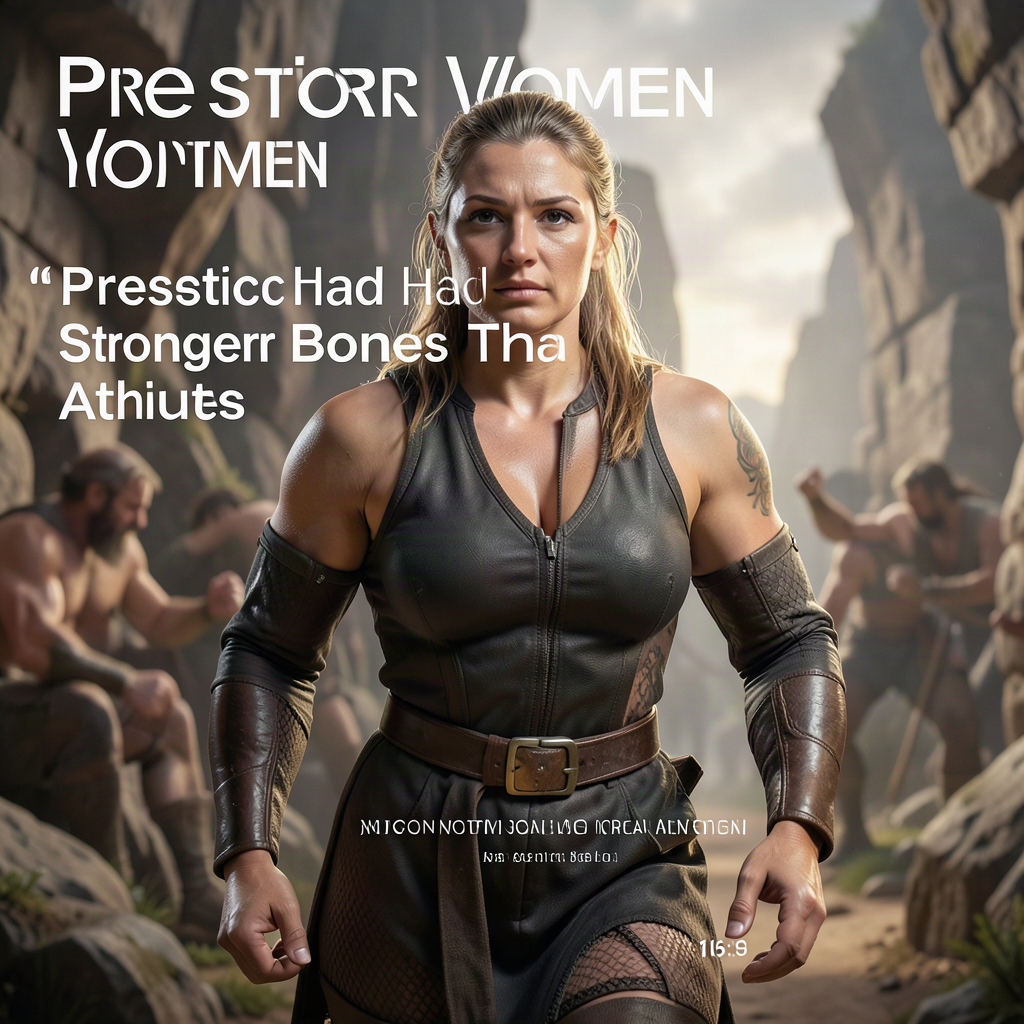
When we picture the lives of our prehistoric ancestors, we often envision a world of scarcity and hardship. However, recent bioarchaeological research has revealed a striking physiological reality: prehistoric women were not merely surviving; they were physical powerhouses. Analysis of skeletal remains from the Neolithic period suggests that these women possessed bone strength and upper-body power that surpasses even that of modern-day elite athletes. This revelation challenges our understanding of human evolution and the gendered division of labor in early societies.
The Methodology of Bioarchaeology
Researchers at the University of Cambridge utilized advanced 3D imaging technology to analyze the humerus and tibia bones of Neolithic women. By scanning these ancient remains, scientists can measure the cross-sectional geometry, cortical bone thickness, and overall structural integrity. These metrics provide a clear proxy for the mechanical loading bones endured during a lifetime. When compared to the skeletons of modern female rowers—who are recognized for their intense upper-body exertion—the Neolithic women showed significantly higher bone loading, suggesting a lifestyle defined by constant, rigorous physical activity.
The Daily Grind: Agricultural Labor in the Neolithic
The primary driver behind this remarkable skeletal density was the labor-intensive nature of early agricultural life. Before the invention of mechanized tools, every calorie was earned through manual effort. Women were instrumental in the processing of grain, a task that involved hours of kneeling and pushing heavy stone grinding tools called querns. This repetitive, high-force movement effectively functioned as a full-body resistance workout. By pushing a stone tool back and forth across a base for several hours each day, these women engaged their shoulders, arms, and core in a manner that created immense structural adaptation in their bones.
Beyond Grinding: The Burden of Subsistence
Grain processing was only one facet of a physically demanding existence. Neolithic life required the constant transport of heavy materials. Women were responsible for gathering firewood, hauling water from distant sources, and carrying agricultural yields across uneven, wild terrain. Unlike modern athletes who train in controlled environments with ergonomic equipment, prehistoric women navigated rugged landscapes while bearing significant loads. This “functional strength” was not optional; it was a prerequisite for community survival. The skeletal evidence shows that this load-bearing activity was a lifelong commitment, starting in early adolescence and continuing well into old age.
Comparing Modern Sedentary Lifestyles
The stark contrast between prehistoric women and modern individuals highlights the “mismatch” between our evolutionary biology and our current lifestyle. We have evolved to be highly active, load-bearing organisms, yet the modern world is designed for comfort and energy conservation. Sedentary behavior, prolonged sitting, and the lack of weight-bearing exercise have led to a decline in average bone mineral density. While modern medicine has extended our lifespan, it has not necessarily improved the structural integrity of our skeletons. The prehistoric data serves as a stark reminder of the physiological cost of modern convenience.
The Role of Load-Bearing Exercise in Bone Density
Bone is a living, dynamic tissue that responds to mechanical stress through a process known as Wolff’s Law. When bones are subjected to stress, they remodel themselves to become stronger and denser to handle that load. Prehistoric women provided their skeletons with the consistent, high-impact stimuli necessary to reach peak density. For modern readers, this underscores the importance of strength training. Incorporating resistance exercises—such as squats, deadlifts, and overhead presses—into a weekly routine can mimic the beneficial mechanical loading that our ancestors experienced naturally, helping to prevent osteoporosis and maintain skeletal health.
Rethinking Gender Roles in Prehistory
For decades, the “Man the Hunter” narrative dominated anthropological thought, suggesting that men performed all the strenuous physical labor while women remained sedentary near the hearth. The skeletal evidence of Neolithic women effectively dismantles this bias. It is now clear that women were not only active participants in the economy of their communities but were also responsible for some of the most physically demanding tasks. This suggests a more egalitarian division of labor where physical capability was determined by necessity and group survival rather than gender-based limitations.
The Legacy of Functional Movement
The physical prowess of prehistoric women was not the result of a “gym workout” in the modern sense; it was the byproduct of a life integrated with movement. This concept of functional movement—where exercise is woven into the fabric of daily chores and survival—is something we can learn from today. While we cannot replicate the arduous conditions of the Neolithic era, we can integrate more “natural” movement into our lives. Walking with a backpack, gardening, carrying groceries, or engaging in manual hobbies can help bridge the gap between our sedentary reality and our biological potential for strength.
Practical Guidance for Improving Bone Health Today
To honor the legacy of our ancestors, focus on progressive resistance training. Start by incorporating bodyweight exercises such as push-ups or lunges, and gradually add weight as your capacity increases. Ensure you are getting adequate calcium, Vitamin D, and protein, as these are the building blocks of the density that our ancestors possessed. Most importantly, aim for consistency. Prehistoric women didn’t have “rest days” in the modern sense; they moved every day. Small, daily bouts of movement are far more effective for long-term skeletal health than infrequent, high-intensity sessions.
The Biomechanics of Quern-Stone Labor
To fully grasp the physiological toll of Neolithic grain processing, one must analyze the specific kinetic chain involved in the use of a saddle quern. Unlike a mortar and pestle, which utilizes a vertical downward force, the saddle quern required the user to kneel and propel a handstone—the mano—back and forth across a concave stone base. This activity necessitated a “locked-in” posture where the lower body was stabilized through intense isometric contraction of the glutes and quads, while the upper body initiated a repeated, forceful extension and flexion of the shoulder girdle. Biomechanical models suggest that a woman processing grain for two to four hours daily would exert force equivalent to high-intensity rowing, but with the added complexity of asymmetrical loading. This constant, repetitive torque likely fostered a unique bone morphology, characterized by reinforced cortical walls in the humerus that allowed for high torsional resistance, preventing stress fractures despite the immense mechanical load. This level of adaptation is rarely seen in modern sports, as modern training is usually periodized to allow for recovery, whereas Neolithic life provided no such reprieve.
The Impact of Early Life Mechanical Loading
The development of skeletal strength in prehistoric populations was not merely an adult phenomenon; it was a developmental process that began in early childhood. Childhood and adolescence represent critical windows for bone modeling, during which the deposition of calcium and the structural arrangement of trabecular bone are most susceptible to environmental stimuli. Because children were integrated into the communal labor force from a young age, their skeletons were “primed” by physical work long before they reached skeletal maturity. By the time a woman reached her twenties, her bones had already undergone years of adaptation to heavy lifting and repetitive motion. This early-life loading created a robust structural foundation that provided a lifelong buffer against bone density loss. Modern lifestyles, by contrast, are characterized by prolonged periods of physical inactivity during these critical developmental windows, which may lead to a lower peak bone mass that is nearly impossible to rectify later in life, regardless of how intense one’s exercise regime becomes in adulthood.
Nutritional Synergy and Mineral Bioavailability
While mechanical loading provided the stimulus for bone growth, the raw materials for this growth were dictated by the Neolithic diet. Bioarchaeological analysis of stable isotopes in teeth and bones provides insight into the nutrient density of the diets available to these women. A reliance on wild-foraged greens, small game, and early cereal crops provided a spectrum of bioavailable minerals, including calcium, magnesium, and phosphorus, which are essential for the hydroxyapatite matrix of the bone. Unlike modern processed diets, which may contain anti-nutrients that inhibit mineral absorption, the Neolithic diet was deeply integrated into the local ecosystem. The consumption of bone broths—a common practice in early societies—would have provided collagen and minerals in a highly assimilable form, further supporting the structural integrity of the skeletal system. This synergy between high-energy expenditure and nutrient-dense, whole-food consumption created a “virtuous cycle” of metabolic health that is difficult to replicate with supplements alone.
The Hidden Cost: Entheseal Changes and Chronic Wear
It is important to acknowledge that the extreme density of prehistoric bones came at a significant physiological cost. Skeletal remains often exhibit pronounced entheseal changes—bony projections at the sites where tendons and ligaments attach to the bone. These changes are direct evidence of long-term, high-intensity muscular pull. While these projections indicate strength, they also signify chronic inflammation and mechanical stress. The joints, particularly the knees and lower lumbar spine, often show evidence of severe osteoarthritis, a condition likely accelerated by the combination of heavy, repetitive labor and suboptimal recovery conditions. This reality complicates the narrative of “natural strength”; while these women were physically superior in many ways, they were also living with the consequences of a life that demanded more than the human body was evolved to sustain indefinitely. This nuance serves as a reminder that skeletal health is a balance between adaptive stress and structural degradation.
Adapting Ancestral Principles to Modern Ergonomics
How can we bridge the gap between the Neolithic reality and our sedentary present? The answer lies not in repeating the specific labors of the past, but in adopting the principles of “load-bearing variety.” Modern exercise often focuses on isolated muscle groups or linear movements, whereas prehistoric labor was multi-planar and irregular. To simulate these benefits, modern individuals should prioritize compound movements that require stabilization under load. Exercises like the farmer’s carry, which involves walking while holding heavy weights, mimic the transport of resources across terrain and engage the core, shoulders, and legs simultaneously. Similarly, incorporating “odd-object” lifting—such as training with sandbags or heavy stones—introduces the element of instability that was inherent in moving natural materials. By diversifying the types of mechanical stress placed on the skeleton, we can encourage broader structural adaptation than is possible through fixed-path gym machines.
The Role of Environmental Complexity
A frequently overlooked factor in the bone strength of prehistoric women is the terrain they traversed. Walking, carrying, and working on uneven, natural surfaces requires constant micro-adjustments from the stabilizing muscles and bones of the lower extremities. This proprioceptive demand forces the skeletal system to reinforce itself against unpredictable forces, leading to stronger ankles, knees, and hips. In the modern world, we live in a landscape of “perfect surfaces”—pavement, flat gym floors, and ergonomic office chairs—which removes the need for this constant, low-level skeletal stabilization. To reclaim some of this ancestral advantage, individuals can incorporate “barefoot-style” training or hiking on uneven trails into their routine. Engaging the small muscles and bones of the feet and lower legs through natural, variable terrain is one of the most effective ways to signal the body to maintain density in these critical, and often neglected, areas of the skeleton.
Frequently Asked Questions
Q: Does this mean prehistoric women were stronger than modern men?
A: Not necessarily. The research indicates that Neolithic women had bone density and strength that exceeded modern female athletes. It is a comparison of activity-induced adaptation, not a direct measurement of total muscular force between genders. Both sexes in the Neolithic period were likely far more physically capable than the average modern human.
Q: Can modern women achieve this level of bone density?
A: It is difficult to match the specific loading patterns of the Neolithic era because our daily lives are so different. However, through dedicated, long-term resistance training and heavy lifting, modern women can significantly increase their bone mineral density and strength, potentially reaching levels of fitness that are exceptional by today’s standards.
Q: Is there evidence that this intense labor caused premature injury?
A: Yes, bioarchaeological studies often show signs of osteoarthritis and spinal wear in prehistoric skeletons. While their bones were incredibly dense and strong, they were also subjected to extreme wear and tear. The trade-off for such physical power was a body that experienced chronic physical stress throughout its lifespan.
Q: How does diet play a role in this skeletal strength?
A: Diet was a crucial component. Prehistoric women consumed a diet high in whole foods, likely rich in minerals and protein. Proper nutrition is essential for bone mineralization. Without the underlying nutritional support, the physical labor would have likely caused bone degradation rather than strengthening.
Q: What is the most important takeaway for someone interested in bone health?
A: The most important takeaway is that your bones are highly adaptable. They are not static structures; they respond to the demands you place upon them. By engaging in weight-bearing exercise throughout your life, you are sending a biological signal to your body to maintain density and strength, which is the best defense against age-related frailty.
Related posts:
 Is Intermittent Fasting Actually Harmful for Women?
 ACL Injury Surgery: What You Need to Know
 Kickboxing Benefits for Women
 No Bones Day Essentials: Embracing the Slow and Cozy
 This Full-Body Resistance Band Workout Will Transform Your Home Gym
 The States Where Women Truly Thrive: 2018 Rankings Revealed
 5 Tips for Better Bone Health, According to an Orthopedic Surgeon
 Modern Wedding Outfit Ideas