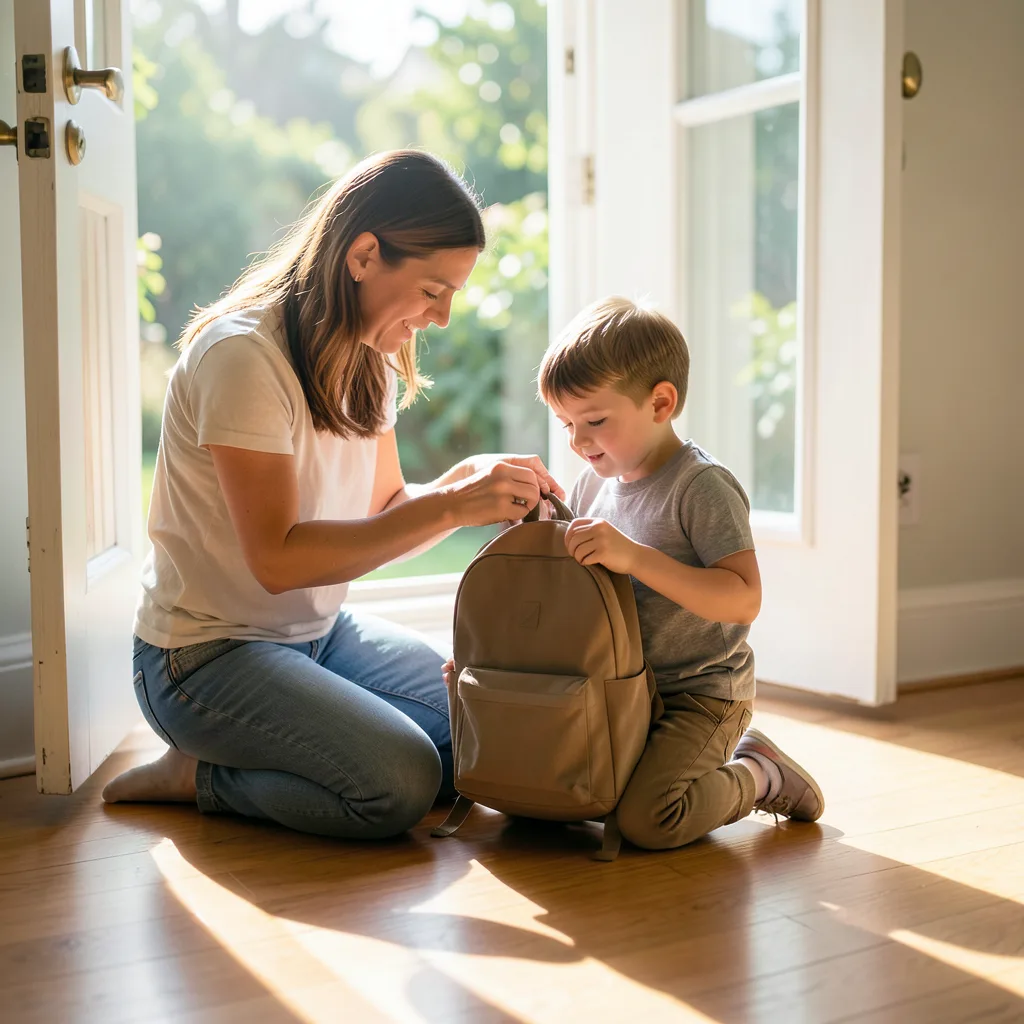
The first day of school is a milestone that marks a significant transition in both a child’s life and the family dynamic. Whether your child is entering preschool, kindergarten, or transitioning to a new primary school, the shift from home-based routines to a structured educational environment requires careful preparation. By focusing on emotional readiness, practical skills, and consistent routines, you can transform potential back-to-school jitters into a sense of excitement and confidence.
Key takeaways
- Adjust bedtimes and wake-up times by fifteen minutes every few days starting two weeks before school begins.
- Practice opening lunch containers and managing outerwear at home to build your child's confidence and self-sufficiency.
- Create a brief, consistent goodbye ritual to minimize separation anxiety and help your child transition to the teacher's care.
- Provide a high-protein snack and quiet downtime after pickup to help children recover from after-school emotional exhaustion.
- Use role-play to teach simple social scripts, like asking to join a game, to help children navigate new friendships.
Understanding the Emotional Landscape
Children process new experiences through the lens of their current developmental stage. For many, the prospect of being away from their primary caregivers for extended periods can trigger separation anxiety. It is essential to validate these feelings rather than dismissing them. Use open-ended questions to allow your child to express their worries. Phrases like “Tell me what you are thinking about your new classroom” help them articulate fears, which allows you to address them directly. Remember that children often mirror their parents’ energy; if you project calm confidence about the school experience, they are more likely to adopt a similar outlook.
Establishing Pre-School Routines Early
The sudden shift from a relaxed summer schedule to a rigid school timetable can be jarring. Two weeks before the first day, begin adjusting bedtimes and wake-up times gradually. Shift these by fifteen minutes every few days until you reach the necessary school-day schedule. This helps regulate their circadian rhythms, ensuring they are alert and ready to learn when the bell rings. Consistency is the key to reducing morning friction, so establish a predictable sequence for breakfast, hygiene, and packing bags well before the start date.
Building Practical Independence
School environments demand a level of self-sufficiency that children may not exercise at home. You can foster independence by practicing basic tasks during the weeks leading up to the first day. Teach your child how to manage their outerwear—zipping jackets, putting on shoes, and hanging up a backpack. If they will be bringing a packed lunch, practice opening containers, juice boxes, or snack bags together. When children feel capable of managing their own belongings, they experience a surge in self-esteem that helps them navigate the classroom with greater autonomy.
Familiarizing Them with the School Environment
Fear of the unknown is a primary contributor to school anxiety. Whenever possible, visit the school grounds before the first day. Most schools offer orientations or “meet the teacher” events that allow children to see their classroom, locate their cubby, and identify the restrooms. If a formal visit isn’t possible, walk or drive by the school to talk about the route. Discussing the logistics, such as how they will get to school and who will pick them up, provides a sense of security and predictability that grounds children during times of change.
Curating a Positive Narrative
The stories we tell about school shape our children’s expectations. Focus your conversations on the social and exploratory aspects of the experience. Talk about the fun of making new friends, playing during recess, and learning interesting facts about the world. You might consider reading books about the first day of school together, which can provide a relatable narrative for them to process their own feelings. By highlighting the “firsts”—like the first time they use the playground equipment or the first craft they bring home—you frame the experience as an adventure rather than a chore.
Organizing the Morning Launchpad
The morning of the first day should be as stress-free as possible. Designate a “launchpad”—a specific area near the door where their backpack, shoes, and any necessary items are kept. Prepare their outfit the night before to avoid decision fatigue and morning arguments. Ensure that any paperwork, lunch money, or emergency contact forms are completed and placed in their folder in advance. When the morning is organized, you have more time to focus on emotional support rather than scrambling for misplaced items.
The Art of the Goodbye
The actual drop-off can be the most difficult moment for both parent and child. Develop a “goodbye ritual” that is brief, consistent, and positive. Whether it is a special secret handshake, a high-five, or a quick “I love you, I will see you at three o’clock,” keep it short to avoid prolonging the separation anxiety. Lingering at the classroom door often makes it harder for children to transition into their school day. Trust the teachers, who are experienced in helping children settle in, and maintain a confident demeanor as you leave.
Reflecting and Reconnecting After School
When the first day ends, your child may be exhausted or overstimulated. Avoid the temptation to immediately grill them with questions like “What did you learn?” or “Did you make friends?” Instead, offer a warm welcome and a healthy snack. Let them lead the conversation at their own pace. If they are tired or quiet, respect their need for downtime. Often, children will share details about their day when they are relaxed in their home environment, perhaps during dinner or while playing, rather than under the pressure of a formal inquiry.
Navigating the Sensory Overload of the Classroom
For many children, the transition to school is not just a cognitive challenge but a sensory one. A typical classroom is a cacophony of bright posters, buzzing fluorescent lights, overlapping voices, and the constant movement of peers. If your child is sensitive to sensory input, the first day can feel overwhelming. To mitigate this, introduce them to the concept of the “sensory break.” Teach them that it is perfectly acceptable to ask the teacher for a moment of quiet if they feel overstimulated. You can practice this at home by creating a small, cozy corner with soft pillows and noise-canceling headphones, showing them how to retreat to a calm space when things get too loud. Discussing these boundaries empowers them to advocate for their own comfort within the classroom structure, preventing the ‘meltdown’ that often occurs when a child reaches their sensory threshold.
Mastering the Logistics of School Nutrition
Packing a lunchbox is more than just providing sustenance; it is a tactical exercise in independence. Children often struggle with the mechanics of lunchroom packaging, which can lead to unnecessary stress or a refusal to eat. In the weeks leading up to school, conduct “lunch rehearsals.” Use the specific containers, thermos, and water bottles they will use at school. Observe if they can operate the lids, peel the snack packaging, or open the fruit cups without assistance. If they struggle with a specific container, swap it for a more user-friendly version—like a snack bag with a slide-zipper instead of a tight seal. Furthermore, consider the social aspect of lunch. If your child is anxious about the cafeteria, talk through the steps: where to sit, how to throw away trash, and what to do if they spill something. Knowing the technical ‘how-to’ of lunch removes a major source of anxiety, allowing them to focus on the social enjoyment of the meal.
Developing Social Scripts for Peer Interaction
Entering a new social ecosystem can be intimidating. While you cannot dictate who your child plays with, you can provide them with a repertoire of social scripts to help them initiate and maintain interactions. Role-play scenarios where your child approaches a peer to join a game or asks to share supplies. Simple, low-stakes phrases like “Can I play, too?” or “I like your drawing, what is it?” are invaluable tools. Discuss the ‘wait and watch’ strategy: sometimes it is better to observe a group playing for a few minutes before asking to join, which helps them gauge the nature of the activity. By practicing these interactions with you or a sibling, your child gains the confidence to navigate the playground, turning ‘strangers’ into potential playmates through simple, repeatable social maneuvers.
Managing the Transition of After-School Fatigue
The phenomenon known as “after-school restraint collapse” is a reality for most children during the first few weeks. After a full day of practicing self-regulation, following directions, and managing social pressures, children often return home with no emotional reserves left, resulting in outbursts or uncharacteristic behavior. Anticipate this by building a ‘transition buffer’ into your afternoon. Avoid scheduling extracurricular activities, playdates, or complex errands in the immediate hours following pickup. Instead, create an environment of low demand: provide a high-protein snack, facilitate a quiet activity like coloring or listening to an audiobook, and allow them to decompress in their own space. By treating after-school hours as a recovery period rather than a time for enrichment, you help your child regulate their nervous system, making evenings significantly more peaceful for the whole family.
Strategic Communication with School Staff
Building a partnership with your child’s teacher is a cornerstone of a successful school year. However, effective communication requires intentionality. Rather than flooding the teacher with daily emails, focus on establishing a clear, concise channel for essential information. If your child has a specific anxiety or a unique need, send a brief, polite note or email before the first day that highlights two or three actionable points. For example: “My child is very enthusiastic but sometimes struggles to ask for help when they are confused; a gentle prompt to ‘try one more time’ is very helpful for them.” This provides the teacher with a tool to support your child without making the child feel singled out. Respecting the teacher’s time and classroom management style will ensure that when you do need to communicate a concern, your voice is heard and valued.
Preparing for the ‘First Day’ Tech and Paperwork
In the digital age, the ‘paperwork’ of school often extends to apps, portals, and online forms. Avoid a last-minute scramble by setting up all digital accounts, downloading required apps, and syncing your calendar with the school’s master schedule at least one week before the start date. Create a physical binder or a digital folder for school-related documents, such as lunch menus, teacher contact lists, and permission slips. This organizational layer creates a ‘safety net’ for your household. When you are not hunting for a password or a signed form, you are free to focus entirely on your child’s emotional state. Modeling this level of organization also teaches your child that school is a professional environment that warrants respect and preparation, setting a standard for their own future organizational habits.
Frequently Asked Questions
How can I help my child if they are experiencing severe separation anxiety?
Acknowledge their feelings without reinforcing the fear. Keep the goodbye short and upbeat, and reassure them that you will return at a specific time. You might also provide a small, comforting item from home, like a family photo or a small trinket, that they can keep in their backpack as a reminder of home.
Should I stay at the school if my child is crying?
Generally, it is best to follow the school’s guidance. Teachers are accustomed to this transition and have strategies to help children settle. Staying longer often prolongs the separation process. If you are concerned, check in with the teacher via email or a quick phone call later in the day to see how your child adjusted after you left.
What if my child doesn’t make friends immediately?
It is important to manage expectations; social dynamics take time to develop. Emphasize that making friends is a process and encourage them to be kind and open to everyone. Remind them that school is a place for learning, and social connections will grow naturally as they participate in activities.
How much detail should I share with the teacher about my child?
Share essential information that impacts their learning or well-being, such as allergies, specific learning needs, or significant changes at home. Keep it brief and focused on what the teacher needs to know to support your child effectively in the classroom.
Is it normal for my child to regress in behavior after starting school?
Yes, it is very common. The effort required to “hold it together” at school can lead to emotional exhaustion at home. You might notice increased irritability, clinginess, or minor behavioral regressions. Provide extra patience, consistent routines, and plenty of downtime to help them recharge.
Related posts:
 The Chef Revolution Transforming School Lunch One Healthy Meal at a Time
 4 parenting tips to get me through the big milestones, from potty training to first days of school
 PHA Bodyweight Workout: Efficient Fitness Anywhere, Anytime
 How to Help Children Grieve and Deal with Loss
 15+ Classroom Examples of Operant Conditioning
 How to Introduce a New Pet to Your Children
 Yoga in Education and 6 Ways Of Applying It In The Classroom
 How to Help Your Child Develop Healthy Study Habits