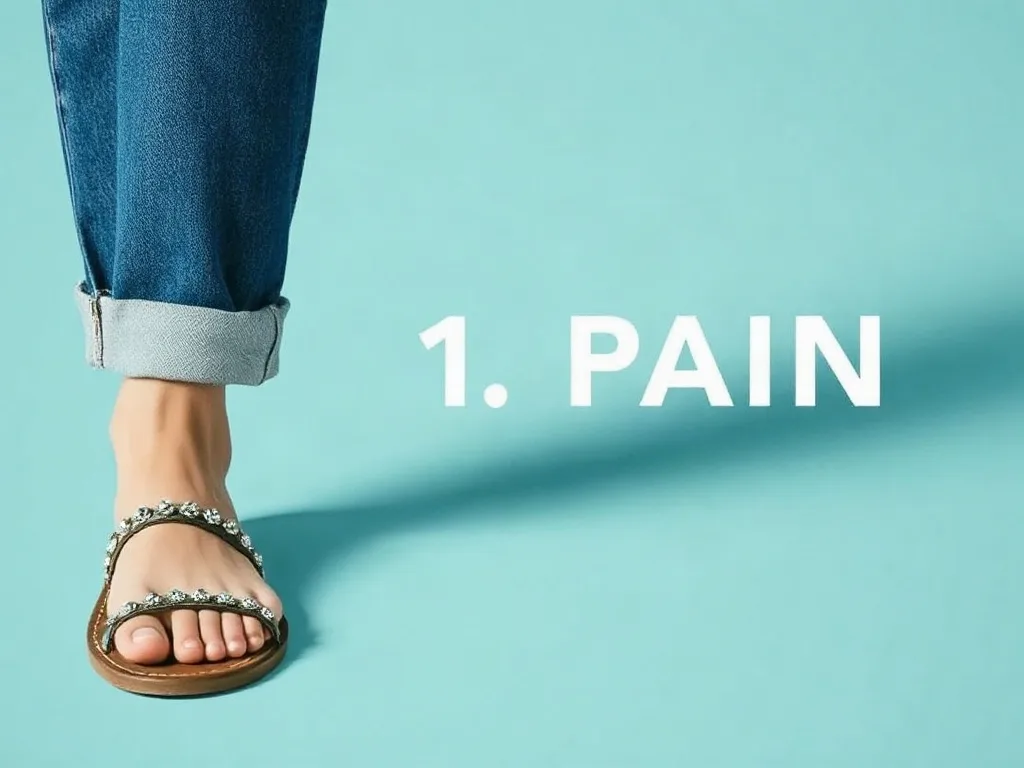
When the temperature rises, our footwear choices often shift toward open-toed sandals and flip-flops. While these breathable options are perfect for summer, they are frequently the primary culprits behind chronic foot pain. From plantar fasciitis to tendonitis, the lack of support in standard flat sandals can wreak havoc on your kinetic chain. Understanding how to choose supportive summer footwear is essential for maintaining mobility and comfort throughout the season.
The Biomechanics of Flat Sandals
Most inexpensive sandals feature a completely flat footbed with no arch support or heel cushioning. When you walk in these, your foot undergoes excessive pronation—the inward rolling of the foot—as it attempts to stabilize itself. Without a contoured midsole, the arch collapses with every step, putting significant strain on the plantar fascia, the thick band of tissue that runs across the bottom of your foot. Over time, this repetitive stress leads to micro-tears in the tissue, resulting in sharp, stabbing pain near the heel, particularly during your first steps in the morning.
Selecting Sandals with Arch Support
Not all sandals are created equal. When shopping for summer footwear, look for models that mimic the shape of your foot. A good sandal should feature a contoured footbed that supports the medial arch. This prevents the foot from flattening out and helps distribute pressure more evenly across the entire sole. Look for brands that offer orthotic-friendly designs, which often include deep heel cups to stabilize the rearfoot and moderate arch elevation to keep the foot in a neutral alignment. Even if a sandal is open-toed, it should provide the same structural integrity as a high-quality athletic shoe.
The Danger of Toe-Grip Designs
Flip-flops and sandals that rely on a “toe post” to stay on the foot often cause secondary issues. To keep the footwear from sliding off, your toes must constantly curl and grip the material. This action, known as “clawing,” leads to overworked muscles in the feet and shins. Persistent toe-gripping can result in hammertoes, metatarsalgia (pain in the ball of the foot), and even calf tightness. If you must wear a sandal with a toe post, ensure the strap is made of soft, flexible material and that the sandal has a deep enough heel cup to keep your foot locked in place without requiring constant muscular effort.
The Role of Material and Cushioning
The material of your sandal’s sole determines how much shock absorption you receive. Hard, plastic, or thin rubber soles provide zero impact protection, sending shockwaves through your ankles, knees, and hips. Opt for sandals with midsoles made of EVA (ethylene-vinyl acetate) foam or cork, both of which provide natural cushioning and rebound. These materials compress slightly under your weight, absorbing the impact of walking on hard surfaces like concrete or pavement. Additionally, ensure the straps are adjustable; feet often swell in the heat, and non-adjustable straps can cause friction, blisters, and nerve compression along the top of the foot.
Transitioning Gradually to Summer Footwear
If you have spent the winter months in supportive boots or sneakers, suddenly switching to flat sandals can shock your musculoskeletal system. Start by wearing your sandals for short periods, such as an hour at a time, and gradually increase the duration as your feet adapt. Incorporate foot-strengthening exercises into your daily routine to prepare your muscles. Simple movements like using your toes to pick up a marble or towel, or performing calf raises, can significantly improve your foot’s natural stability, making you less reliant on the structural support of your footwear.
Identifying Signs of Foot Fatigue
Learning to listen to your body is crucial in preventing long-term injury. If you notice a dull ache in your arch, tingling in your toes, or redness and swelling at the end of the day, these are early warning signs of footwear-induced strain. Do not ignore these symptoms. If a specific pair of sandals consistently causes pain, it is likely that the design is incompatible with your foot mechanics. Consider using over-the-counter orthotic inserts designed specifically for sandals if you find a pair you love but they lack the necessary arch support.
Maintaining Proper Foot Hygiene and Care
Foot pain in sandals isn’t always structural; sometimes, it is the result of friction and skin irritation. Open-toed shoes leave the skin vulnerable to dry, cracked heels and blisters. Implement a nightly routine that includes moisturizing your feet with a urea-based cream to prevent fissures, which can become painful entry points for bacteria. If you notice blisters forming, address them immediately with hydrocolloid bandages to provide a protective barrier. Keeping your feet healthy and free of skin issues allows you to maintain a natural gait, preventing the compensatory movements that lead to structural foot pain.
When to See a Professional
If you experience persistent pain that does not subside after a few days of wearing more supportive shoes, it is time to consult a podiatrist. Chronic pain could indicate an underlying condition such as a stress fracture, nerve entrapment, or severe plantar fasciitis that requires clinical intervention. A professional can perform a gait analysis and determine if you require custom-molded orthotics. Remember, preventative care is always more effective than reactive treatment, so address minor discomfort before it evolves into a chronic, debilitating issue.
Navigating Surface Sensitivity and Impact Attenuation
The environment in which you wear your sandals is just as critical as the footwear itself. Walking on natural, forgiving surfaces like grass or dry sand allows the foot to engage its natural proprioceptive mechanisms; however, urban environments present a different challenge. Concrete and asphalt are unforgiving, non-compliant surfaces that demand high levels of energy return from your footwear. When wearing sandals on these surfaces, the lack of a closed-toe box means your foot is exposed to constant micro-vibrations and high-impact forces. To mitigate this, seek out sandals with a “rocker bottom” sole geometry. A slight upward curve at the toe and heel facilitates a smoother transition through the gait cycle, reducing the work required by the ankle joint and minimizing the duration of impact on the heel strike. This design effectively “rolls” the foot forward, protecting the sensitive structures of the midfoot from the jarring force of a flat-footed landing.
The Critical Role of Midfoot Lockdown
Beyond arch support, the security of the upper strap system is a frequent oversight. Many fashion-forward sandals rely on a single, loose strap across the forefoot, which forces the foot to slide forward and backward with every stride. This constant micro-shifting creates shearing forces against the skin and instability for the subtalar joint. For optimal health, prioritize sandals that feature a multi-strap design or a secure “T-strap” configuration that anchors the foot at the instep. When the instep is held firmly against the contoured footbed, the arch is naturally encouraged to maintain its height. If you find your feet sliding, look for models with adjustable hook-and-loop closures. The ability to tighten the sandal as your feet expand during the mid-day heat is a game-changer for preventing the compensatory gait patterns that often lead to peroneal tendonitis.
Addressing Structural Anomalies: Bunions and Hammertoes
If you suffer from pre-existing structural deformities such as bunions (hallux valgus) or hammertoes, standard sandals can exacerbate these issues through localized pressure. A sandal with a narrow toe box can force the big toe into further misalignment or cause the tops of the toes to rub against the underside of the straps, leading to painful corns or bursitis. Look for “open-toe” sandals with a wide, rounded toe box that allows for natural toe splay. Avoid designs with rigid, horizontal bands directly over the bunion joint; instead, select styles that utilize diagonal straps or soft, stretchable materials like neoprene or elasticized fabric that accommodate the protrusion without restricting blood flow or creating friction-induced inflammation.
The Impact of Heel Height and “Negative Heel” Designs
While flat sandals are often criticized, extreme high-heeled sandals are equally detrimental, shifting the center of pressure entirely to the metatarsal heads and causing metatarsalgia. However, there is a middle ground: a subtle heel-to-toe drop. A sandal with a slight, built-in elevation—roughly 0.5 to 1 inch—can alleviate tension on the Achilles tendon, which is often shortened by chronic wear of completely flat footwear. Conversely, be wary of “negative heel” sandals that place the heel lower than the forefoot; while these are sometimes marketed for posture, they can be disastrous for individuals with tight calf muscles or existing plantar fasciitis, as they place extreme, sustained tension on the posterior chain throughout the entire gait cycle.
Strategic Rotation and Footwear Periodization
Just as marathon runners rotate their shoes to prevent uneven wear and allow midsole materials to recover, you should implement a rotation strategy for your sandals. Wearing the same pair of sandals for consecutive days allows the foot to become stuck in a singular pattern of stress. By alternating between different styles—perhaps a supportive cork-soled sandal one day and a more structured, athletic-style sandal the next—you distribute the load across different muscle groups and anatomical structures. This variation prevents the “overuse syndrome” that occurs when the foot is subjected to the same repetitive mechanical stress for 12 to 14 hours a day. Furthermore, allow your sandals a 24-hour “rest” period if they have foam midsoles, as this allows the cellular structure of the EVA to rebound to its original density, ensuring consistent support for your next wear.
Dynamic Stretching to Counteract Sandal-Induced Stiffness
Even the most supportive sandal cannot fully replace the natural function of a shoe that encapsulates the foot. To counter the stiffness that arises from wearing open footwear, perform targeted dynamic stretches each evening. Focus on the intrinsic muscles of the foot by performing “towel scrunches” or using a golf ball to massage the plantar fascia. Additionally, perform eccentric calf raises on a step: lower your heel slowly below the level of the step to stretch the gastrocnemius and soleus muscles. This eccentric loading strengthens the tendons while simultaneously increasing their range of motion, which is vital for maintaining the flexibility needed to handle the transition between various types of summer footwear. Regular mobilization of the ankle joint, through circular rotations or using a resistance band, further ensures that the kinetic chain remains fluid and responsive.
The Importance of Torsional Rigidity in Sandals
Beyond the vertical support of the arch, the torsional rigidity of a sandal—its ability to resist twisting—is a frequently overlooked factor in foot health. When you hold a sandal by the toe and the heel and attempt to twist it, it should offer significant resistance. Sandals that twist easily like a dishrag provide zero stability for the subtalar joint. This lack of torsional control forces your intrinsic foot muscles to engage in a constant, exhausting battle to stabilize your gait on uneven terrain, such as cracked sidewalks or grass. By selecting sandals with a stiffer midfoot shank, you effectively bypass this need for constant micro-adjustments, reducing the risk of midfoot sprains and chronic overuse fatigue in the smaller muscles of the foot.
Managing Pronation Through Medial Posting
For individuals with flat feet or those who experience severe overpronation, a simple contoured footbed might not be enough. In these cases, look for sandals that incorporate a “medial post.” This is a firmer, higher-density section of foam or material located on the inner side of the midsole, directly under the arch. The medial post acts as a physical barrier to the inward collapse of the ankle during the midstance phase of walking. When shopping, press your thumb into the inner arch area of the sandal; if it feels notably denser than the outer edge of the sole, you have found a design that provides active motion control. This feature is particularly valuable for those who spend long hours standing, as it prevents the structural fatigue that leads to fallen arches.
The Hidden Dangers of Excessively Soft Footbeds
While “squishy” or memory-foam style sandals may feel heavenly for the first ten minutes in a store, they are often detrimental for all-day wear. A footbed that is too soft fails to provide the solid foundation required for the foot to push off effectively. When the foot sinks too deeply into the material, the arch loses its leverage, and the toes are forced to compensate by pushing harder against the ground. This leads to “bottoming out,” where your foot eventually hits the hard underlying structure of the sandal, nullifying the cushioning effect entirely. Instead of plush, unsupportive foam, seek out materials with a high “rebound” index, such as high-density EVA or polyurethane. These materials provide a firm platform that supports the foot’s natural mechanics while still offering enough give to reduce joint impact.
Sizing and the “Gait Cycle” Clearance
A common mistake in sandal shopping is ignoring the space required for the foot to expand during the gait cycle. Your foot naturally lengthens and widens as you move from heel strike to toe-off. If your sandal is sized so that your toes are right at the edge of the front of the sole, your foot will inevitably overhang as it pushes off. This not only increases the risk of stubbing your toes but also forces you to alter your stride to keep your feet within the confines of the sandal. Always ensure there is at least a quarter-inch of space in front of your longest toe. Furthermore, test your sandals in the late afternoon when your feet are naturally at their most swollen; buying footwear in the morning often leads to a fit that becomes restrictive and painful by the end of the day.
Environmental Adaptation: The “Transition” Strategy
If you are accustomed to wearing structured running shoes, the transition to summer footwear should be treated like a training program. Your tendons and ligaments have adapted to the specific heel-to-toe drop and support profile of your daily sneakers. A sudden shift to a zero-drop, unsupportive sandal can trigger acute inflammation in the plantar fascia or Achilles tendon. Use a “10% rule”: limit the time spent in new, less-supportive sandals to no more than 10% of your total waking hours during the first week, gradually increasing that duration as your foot musculature strengthens. This periodization allows the collagen fibers in your tendons to adjust to the new mechanical stresses, preventing the sudden onset of summer-related injuries.
The Role of Material Breathability and Friction Management
While we often focus on the sole, the contact points between the straps and the skin are primary sources of irritation. Synthetic materials like cheap PVC or certain nylons can trap heat and moisture against the skin, softening it and making it highly susceptible to blisters. Look for sandals with lining materials like soft microfiber, suede, or moisture-wicking textiles. These materials reduce the coefficient of friction between the strap and your skin. If you are prone to blisters, consider using a specialized anti-chafe balm on the tops of your toes and the sides of your feet before putting on your sandals. This creates a thin, protective layer that allows the skin to slide against the strap rather than catching and tearing, which is essential for maintaining a pain-free gait throughout the day.
Frequently Asked Questions
Q: Can I wear orthotic inserts in my sandals? A: Yes, many companies produce slim-profile orthotics designed specifically for open-toed footwear. These often feature adhesive backing to keep them in place. Ensure the sandal has a deep enough footbed to accommodate the insert without causing your foot to slide out.
Q: Are cork-soled sandals better than foam ones? A: Both have benefits. Cork molds to the shape of your foot over time, providing a custom fit, while foam offers immediate shock absorption. Both are superior to hard plastic, provided they offer adequate arch contouring.
Q: Why do my calves hurt after wearing flat sandals? A: Flat sandals shift your center of gravity and force your calf muscles to work harder to stabilize your stride. This increased workload leads to tightness and soreness, which can radiate upward to your knees.
Q: How do I know if my sandals fit correctly? A: Your heel should sit securely in the heel cup, and your toes should not hang over the front edge. If you find yourself gripping with your toes to keep the sandal on, the fit is likely incorrect or the design is not supportive enough for your foot shape.
Q: Can wearing sandals cause back pain? A: Absolutely. Because sandals change your gait and impact absorption, they can cause a chain reaction of misalignment starting at the feet and moving up through the ankles, knees, hips, and finally the lower back. Proper footwear is essential for total-body alignment.
Related posts:
 Meghan Markle’s High Heel Hack
 Fall Boots That Don’t Sacrifice Comfort for Style
 The Foundation Fix: How Proper Foot Positioning Transforms Every Workout
 Smart Shoe Shopping Tips Everyone Should Know
 Step Into Compassion: The Best Vegan Shoe Brands Making Waves
 OOFOS OOcandoo Sandals Review
 Stretches to Relieve Foot Pain
 Wedding-Ready Sandals