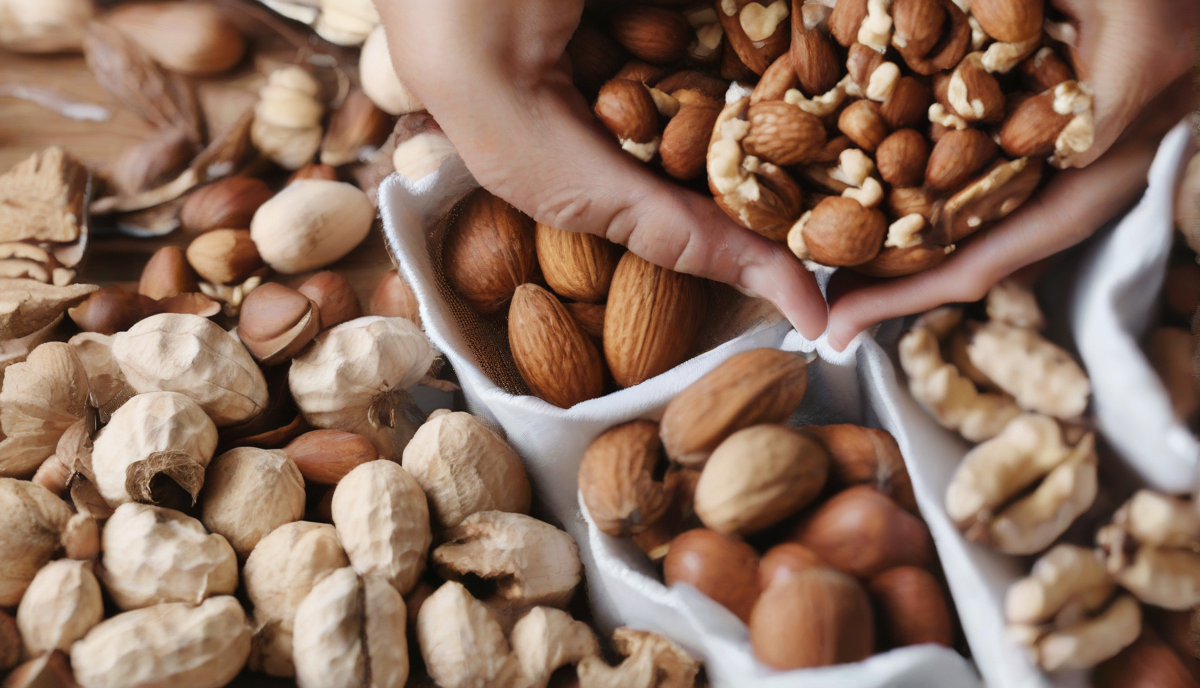
Why Proper Nut Storage is Important
Nuts are a delicious and nutritious addition to any diet, but improper storage can lead to spoilage and loss of flavor. Ensuring that nuts are stored correctly can help maintain their freshness, taste, and nutritional value for an extended period.
Understanding the Shelf Life of Nuts
Different types of nuts have varying shelf lives. For instance, almonds can last up to a year if stored in a cool, dry place, while walnuts and pecans have a shorter shelf life due to their higher oil content. Understanding the shelf life of each type of nut is crucial for proper storage.
Best Practices for Storing Nuts
To keep nuts fresh, follow these best practices:
- Keep them cool: Store nuts in a cool, dry place away from direct sunlight. The ideal temperature is below 70°F (21°C).
- Use airtight containers: Store nuts in airtight containers to prevent exposure to air, which can cause them to become stale.
- Refrigerate or freeze: For longer storage, nuts can be refrigerated or frozen. This is especially important for nuts with higher oil content like walnuts and pecans.
Avoiding Common Storage Mistakes
There are several common mistakes people make when storing nuts:
- Leaving them in original packaging: The original packaging is often not airtight, which can lead to quicker spoilage.
- Exposing them to heat and light: Heat and light can accelerate the oxidation of oils in nuts, leading to rancidity.
- Storing near strong odors: Nuts can absorb odors from other foods, so it’s important to store them away from strong-smelling items.
Signs Your Nuts Have Gone Bad
It’s important to know how to tell if your nuts have gone bad. Look out for the following signs:
- Off smell: Nuts should have a mild, nutty smell. A sour or rancid odor is a sign of spoilage.
- Change in texture: Fresh nuts should be firm and crisp. A rubbery or soft texture indicates they are no longer fresh.
- Off taste: If nuts taste bitter or sour, they have likely gone bad.
The Chemistry of Oxidation and Lipid Breakdown
To truly master nut storage, one must understand the biological and chemical processes that lead to spoilage. Nuts are essentially dense storage units for plant embryos, packed with high concentrations of lipids (fats). While these fats are what make nuts nutritious and flavorful, they are also their primary vulnerability. Most nuts are rich in unsaturated fats, specifically polyunsaturated fatty acids (PUFAs) and monounsaturated fatty acids (MUFAs). These molecules contain double bonds in their chemical structure that are highly reactive.
When nuts are exposed to oxygen, a process called lipid oxidation begins. This is a free-radical chain reaction. Oxygen molecules attack the double bonds in the fat molecules, breaking them down into smaller, volatile compounds like aldehydes, ketones, and carboxylic acids. These compounds are responsible for the distinctive “cardboard,” “paint-like,” or “sour” aroma associated with rancidity. Heat acts as a catalyst in this reaction; for every 10°C (18°F) increase in temperature, the rate of oxidation roughly doubles. This is why a pantry that reaches 80°F in the summer can ruin a batch of walnuts four times faster than a cool cellar at 60°F.
Furthermore, light plays a role through photo-oxidation. Ultraviolet (UV) light provides the energy needed to initiate the formation of free radicals even in relatively cool environments. This is why clear plastic bins in a well-lit kitchen are the enemy of long-term storage. By understanding that you are fighting a chemical war against oxygen, heat, and light, you can better appreciate why specific storage methods are non-negotiable for preserving the delicate flavor profiles of expensive varieties like macadamias or pine nuts.
Material Science: Evaluating Storage Containers for Gas Permeability
While the previous advice emphasizes airtight containers, not all “airtight” materials are created equal. The effectiveness of a container is measured by its Oxygen Transmission Rate (OTR). Many common plastic storage bags and thin-walled plastic containers are actually semi-permeable to gases over long periods. Polyethylene, the plastic used in standard zip-top bags, allows microscopic amounts of oxygen to migrate through the material itself, even if the seal is perfect.
For superior protection, glass is the gold standard. Glass is completely impermeable to gases, meaning no oxygen can leach through the walls of the jar. Mason jars with two-piece metal lids are particularly effective because the plastisol liner on the lid creates a hermetic seal when tightened correctly. If you are using plastic, look for heavy-duty, BPA-free containers with silicone gaskets and locking clips. These provide a much more robust mechanical seal than simple press-fit lids.
An often-overlooked option is the use of metal canisters, specifically those made of stainless steel with airtight latches. Metal, like glass, is impermeable to oxygen and has the added benefit of being opaque, which completely eliminates the risk of photo-oxidation. For those who buy in significant bulk, vacuum sealing is the most effective intervention. By removing the air from a high-barrier vacuum bag before sealing, you eliminate the primary reactant needed for oxidation. However, be cautious with soft nuts like walnuts or pinenuts; the pressure of a vacuum sealer can crush them, releasing internal oils and potentially accelerating spoilage if the seal is ever compromised. In these cases, pulse-vacuuming or using vacuum-sealed glass jars is a safer alternative.
The Impact of Processing: Raw vs. Roasted and Chopped
The physical state of the nut at the time of storage significantly dictates its lifespan. Raw, whole nuts are at their peak of natural protection. The cellular structure of a raw nut acts as a series of tiny compartments that keep the oils sequestered and protected from the environment. When nuts are roasted, this structure is thermally damaged. The heat causes the oils to migrate toward the surface, making them immediately accessible to oxygen. Consequently, roasted nuts have a shelf life that is often 50% to 70% shorter than their raw counterparts.
Salted and seasoned nuts present even more challenges. Salt is hygroscopic, meaning it draws moisture from the air. If salted nuts are stored in a humid environment, the salt will pull moisture into the nut, leading to a loss of crunch and potentially encouraging mold growth. Furthermore, certain spices contain trace minerals that can act as pro-oxidants, further accelerating the breakdown of fats. If you prefer roasted nuts, it is highly recommended to buy them raw and roast them in small batches as needed, rather than storing large quantities of pre-roasted product.
Mechanical damage is another factor. Chopped, slivered, or ground nuts (like almond flour) have a vastly increased surface area compared to whole nuts. More surface area means more contact points for oxygen. A whole almond might stay fresh for a year, but almond meal can begin to smell “off” in as little as two to three months if left at room temperature. Always prioritize storing nuts in their most whole form possible. If you must prep nuts for baking, do so shortly before use, or ensure the processed nuts are moved immediately to the back of the freezer in a vacuum-sealed bag.
Specialized Storage for High-Maintenance and Exotic Varieties
Not all nuts can be treated with a one-size-fits-all approach. Some varieties require specialized care due to their unique chemical compositions. Pine nuts (pignoli), for example, are notorious for their rapid spoilage. They contain extremely high levels of polyunsaturated fats and are often sold already shelled. Pine nuts should almost never be stored at room temperature; they should go directly into the freezer. Exposure to air can also lead to “Pine Nut Syndrome,” a bitter, metallic taste that can last for weeks, often exacerbated by consuming nuts that have begun the early stages of oxidation.
Chestnuts are another outlier. Unlike most nuts, which are high in fat and low in moisture, chestnuts are high in starch and moisture. They are more like a potato than a walnut in terms of biology. If stored in a dry, airtight container, they will mold quickly due to their internal water content. Conversely, if left out, they will dry out and become rock-hard. Chestnuts should be stored in the refrigerator in a perforated plastic bag to allow for some respiration while maintaining high humidity, and they should be consumed within a few weeks of purchase.
Brazil nuts are prized for their selenium content, but they are also very oily. Because they are large, they can trap moisture in the crevices of their skin, which can lead to aflatoxin-producing molds if they aren’t kept perfectly dry. Macadamias, having the highest fat content of nearly any nut, are surprisingly stable if kept away from light, but they are highly susceptible to absorbing odors. Storing macadamias near onions, garlic, or even strongly scented plastics can permanently taint their delicate, buttery flavor. For these premium varieties, dedicated glass jars in the coldest part of the freezer are the only way to guarantee quality.
Advanced Preservation: Oxygen Absorbers and Desiccants
For long-term food enthusiasts or those living in volatile climates, simple airtight storage can be augmented with active preservation technology. Oxygen absorbers (small packets containing iron powder) are an effective tool for dry goods. When placed in a sealed Mason jar, the iron powder oxidizes, effectively “breathing” in the remaining oxygen in the jar until the levels drop below 0.01%. This creates an anaerobic environment where lipid oxidation is virtually halted. For a standard quart jar of nuts, a 100cc to 300cc oxygen absorber is sufficient.
However, it is vital to distinguish between oxygen absorbers and desiccants (silica gel packets). Desiccants remove moisture, not oxygen. While moisture is less of a concern for most nuts than oxygen, it can be an issue in humid coastal regions. If nuts become slightly damp, they lose their snap and can develop mold. Using a combination of a desiccant (to keep them crisp) and an oxygen absorber (to keep them fresh) is the gold standard for pantry storage.
If you use oxygen absorbers, you must ensure your container is truly gas-tight. If you use them in a standard plastic container, the absorber will quickly become exhausted as it tries to absorb the oxygen that is constantly diffusing through the plastic walls. Stick to glass jars or Mylar bags for this method. Mylar is a multi-layered metallic film that offers an extremely low OTR, making it the preferred choice for those prepping nuts for multi-year storage in an emergency food supply. When using Mylar, always heat-seal the edges rather than using a zip-lock to ensure a permanent barrier.
Inventory Management and the FIFO Method
Even with perfect storage conditions, nuts do not have an infinite shelf life. A common mistake is “layering” new purchases on top of old ones in a large bin. This ensures that the nuts at the bottom stay there until they are well past their prime. Implementing a First-In, First-Out (FIFO) system is essential for maintaining a fresh rotation. When you bring home new nuts, don’t just dump them into your existing container. Instead, finish the old batch or move the older nuts to a smaller jar labeled “use first.”
Labeling is a critical component of inventory management. Every container should be marked with the date of purchase and the “type” of nut, especially if you use flours or slivered varieties that look similar. Use a piece of painter’s tape and a permanent marker for easy removal. If you store nuts in the freezer, labeling is even more important, as the frost can make it difficult to distinguish between different types of nuts through the packaging.
Consider portioning your bulk buys. If you buy a five-pound bag of walnuts, don’t open and close that bag every time you need a handful for your morning oatmeal. Each time the bag is opened, fresh oxygen and moisture enter. Instead, divide the bulk bag into smaller, one-week portions. Vacuum seal or tightly jar four pounds for deep storage in the freezer and keep only one small jar in the pantry for daily use. This minimizes the “environmental shock” to the bulk of your investment.
Environmental Variables: Humidity, Altitude, and Microclimates
The specific environment of your home plays a larger role in nut storage than most realize. High humidity is a silent killer of texture. In regions with relative humidity above 60%, even a briefly opened jar can let in enough water vapor to make nuts lose their crunch within days. If you live in a humid climate, consider storing even your “daily use” nuts in the refrigerator, as the cooling coils in a fridge act as a natural dehumidifier, creating a much drier environment than the ambient air.
FAQs
1. How long can nuts be stored in the refrigerator?
Nuts can be stored in the refrigerator for up to six months. Ensure they are in an airtight container to prevent moisture absorption and odor transfer.
2. Can I freeze nuts to extend their shelf life?
Yes, freezing nuts is an excellent way to extend their shelf life. Nuts can be stored in the freezer for up to a year.
3. Should I store nuts with or without their shells?
It’s best to store nuts in their shells if possible, as the shells provide a natural barrier against moisture and air. However, if shelled, ensure they are in an airtight container.
4. What is the best container for storing nuts?
Airtight containers made of glass or BPA-free plastic are ideal for storing nuts. These containers help keep out air and moisture, preserving the nuts’ freshness.
5. Can I store different types of nuts together?
It’s better to store different types of nuts separately, as they have varying oil contents and shelf lives, which can affect their overall freshness when stored together.
Related posts:
 Do Grains Go Bad? Understanding Shelf Life and Storage Tips
 Thanksgiving Leftover Storage Guide
 Nicole Cogan’s Refrigerator Look Book Tour
 Make-Ahead Vegan Savory Breakfast Jars
 Creating a Plastic-Free Home
 The Truth About Honey: Does Liquid Gold Really Last Forever?
 Second Life Magic: Turn Finished Candles Into Morning Coffee Companions
 How to Clean Turmeric Stains from Blenders