
In today’s fast-paced world, finding time for a full workout can be challenging. However, maintaining upper body strength is crucial for overall fitness and health. This quick upper body strength workout is designed for those busy days when you can’t spend hours at the gym but still want to stay on track with your fitness goals.
Why Upper Body Strength Is Important
Upper body strength is essential for daily activities and overall body balance. Strengthening muscles like the biceps, triceps, shoulders, and chest can improve posture, enhance athletic performance, and prevent injuries. Moreover, a strong upper body can make everyday tasks, such as lifting and carrying objects, much easier.
Warm-Up: Essential for Injury Prevention
Before diving into the workout, it’s crucial to warm up your muscles. A proper warm-up increases blood flow to the muscles, enhances flexibility, and reduces the risk of injury. Spend 5-10 minutes doing light cardio activities like jumping jacks, arm circles, and shoulder rolls.
Quick Upper Body Workout Routine
This workout routine consists of four exercises that target the major muscle groups in your upper body. Perform each exercise for 45 seconds, followed by a 15-second rest. Repeat the circuit three times.
1. Push-Ups
Push-ups are a classic exercise that targets the chest, shoulders, and triceps. Keep your body in a straight line, lower yourself until your chest nearly touches the floor, and then push back up.
2. Dumbbell Shoulder Press
Using a pair of dumbbells, stand with your feet shoulder-width apart. Press the dumbbells overhead until your arms are fully extended, then lower them back to shoulder level.
3. Bent-Over Rows
With a slight bend in your knees, lean forward and hold a dumbbell in each hand. Pull the weights toward your torso, squeezing your shoulder blades together, then lower them back down.
4. Tricep Dips
Using a bench or sturdy chair, place your hands behind you and lower your body until your arms form a 90-degree angle. Push back up to the starting position.
Cool Down and Stretch
After completing the workout, it’s essential to cool down and stretch your muscles. Spend 5-10 minutes doing static stretches, focusing on the muscles you worked. This helps reduce muscle soreness and improves flexibility.
Tips for Staying Consistent
Staying consistent with your workout routine can be challenging, especially on busy days. Here are some tips to help you stay on track:
- Schedule Your Workouts: Set a specific time for your workouts and treat it as a non-negotiable appointment.
- Keep It Short: A quick 15-20 minute workout is better than no workout at all.
- Be Prepared: Have your workout clothes and equipment ready to go to save time.
- Stay Motivated: Set small, achievable goals and reward yourself when you reach them.
Optimizing Progressive Overload in Time-Constrained Sessions
Even when your window for training is limited to under twenty minutes, the principle of progressive overload remains the primary driver of strength gains. Without a gym full of varying weight plates, you must manipulate other variables to force adaptation. Start by logging your performance in a small notebook or a dedicated app. If you completed twelve repetitions of the dumbbell shoulder press with 15-pound weights this week, aim for thirteen repetitions next week, or shorten your rest interval from fifteen seconds to ten. This micro-progression ensures that your muscles are constantly challenged despite the brevity of the session. Another effective method is to increase your time under tension. Instead of explosive movements, perform your repetitions with a three-second eccentric (lowering) phase. This slows the tempo, increases muscular fatigue, and prevents you from relying on momentum to complete your sets.
Mastering Form and Mind-Muscle Connection
Efficiency in a quick workout is often compromised by sloppy form. When you are rushing to complete a circuit, it is easy to let your ego take over, leading to compensatory movements that increase injury risk. For the bent-over row, ensure that your spine remains in a neutral, flat position throughout the movement. If you feel your lower back rounding, reduce the weight immediately. Focus your attention on the specific muscle group being targeted; for instance, during the row, visualize pulling with your elbows rather than your hands. This shift in focus engages the lats and rhomboids more effectively, ensuring that your quick session provides the maximum benefit. If you find your focus drifting, utilize a mirror or record a video of your form on your phone to identify and correct alignment issues in real-time.
Equipment Alternatives for Home and Travel
If you find yourself without dumbbells, your environment likely holds hidden tools for strength. Resistance bands are an invaluable asset for busy individuals because they are lightweight, portable, and provide constant tension throughout the range of motion. A heavy-duty resistance band can replace almost every exercise in the routine: step on the band to perform rows, anchor it to a door for chest presses, or stand on it to perform overhead presses. If you are traveling and have zero equipment, utilize household items like gallon-sized water jugs or a sturdy backpack filled with books. These objects offer enough resistance to maintain muscle tone while ensuring you do not have to skip your workout due to a lack of traditional gym gear.
Addressing Muscle Imbalances Through Unilateral Training
Many of us have a dominant side, which can lead to strength imbalances that affect posture and athletic longevity. During a fast-paced circuit, it is tempting to perform bilateral movements exclusively, but incorporating unilateral (single-sided) work can be a game-changer. For example, instead of pressing both dumbbells overhead simultaneously, try performing the shoulder press one arm at a time. This forces your core to engage to stabilize your torso, turning a standard shoulder exercise into a functional core workout as well. If you have only one dumbbell, perform all repetitions on the right side before switching to the left. This approach not only identifies which side is weaker but also forces the weaker side to work independently without being compensated for by the stronger side.
Integrating Supersets to Increase Metabolic Demand
To maximize the impact of a short workout, you can transition from a standard circuit to a superset structure. A superset involves performing two exercises back-to-back with no rest in between. For this routine, pair the chest-dominant push-ups with the back-dominant bent-over rows. By working opposing muscle groups, you allow one area of the body to recover while the other is under load. This keeps your heart rate elevated, effectively turning a strength-based session into a metabolic conditioning workout. This approach saves time by reducing total rest periods, allowing you to complete more volume within your 15-20 minute window. Just ensure that your intensity remains high enough to warrant the increased heart rate, and do not sacrifice technique for speed.
Managing Recovery and Delayed Onset Muscle Soreness (DOMS)
When you shift your routine to higher intensity or shorter rest intervals, your muscles may experience increased soreness. This is a natural part of the adaptation process, but it should be managed to avoid burnout. If you are training upper body strength 2-3 times per week, hydration and protein intake are your best defenses against excessive soreness. Ensure you are consuming adequate protein—roughly 0.7 to 1 gram per pound of body weight—to support muscle protein synthesis. Additionally, active recovery is superior to complete inactivity. On your off days, consider light movement such as walking or gentle yoga. If you feel extreme tightness in your chest or shoulders, use a foam roller or a tennis ball to perform myofascial release. This breaks up adhesions in the fascia and improves blood flow to the recovering muscles, helping you feel fresh for your next session.
FAQ
1. How often should I do this workout?
For optimal results, aim to do this workout 2-3 times per week. Ensure you have rest days in between to allow your muscles to recover.
2. Can I do this workout without any equipment?
Yes, you can modify the exercises to use body weight only. For example, you can do push-ups, bodyweight shoulder presses, and tricep dips without any equipment.
3. How can I make the workout more challenging?
To increase the intensity, you can add more sets, use heavier weights, or reduce the rest time between exercises.
4. Is this workout suitable for beginners?
Yes, this workout can be modified for beginners by reducing the duration of each exercise and increasing the rest time between sets.
5. What should I eat before and after the workout?
Before the workout, eat a light snack that includes protein and carbohydrates, such as a banana with peanut butter. After the workout, refuel with a balanced meal that includes protein, carbohydrates, and healthy fats.
Related posts:
 15-Minute No-Equipment HIIT
 High-Protein Foods That Pack a Serious Nutritional Punch
 This Full-Body Resistance Band Workout Will Transform Your Home Gym
 Stretch Your Way to a Pain-Free Upper Back: A Step-by-Step Guide
 Desk Yoga for Back Pain Relief
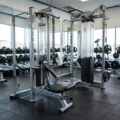 Understanding Gym Equipment
 PHA Bodyweight Workout: Efficient Fitness Anywhere, Anytime
 Arm Strength for Longevity