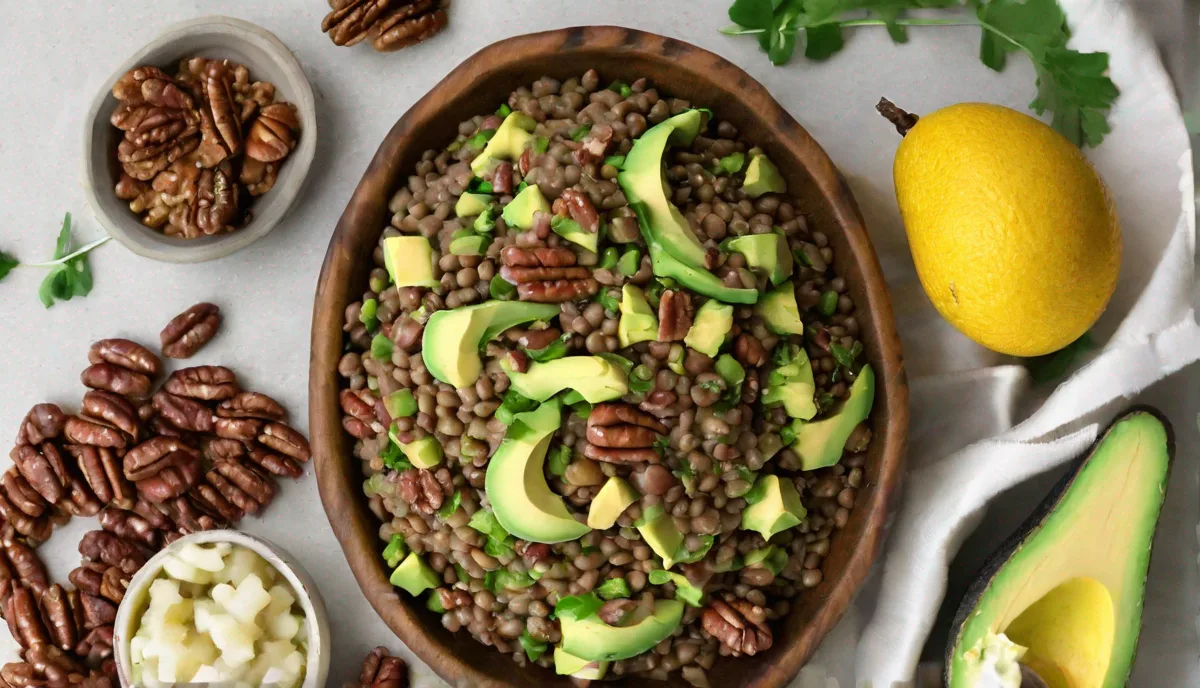
Looking for a healthy and hearty meal that’s both delicious and easy to prepare? This lentil salad with avocado and pecans is the perfect dish for a nutritious lunch or a light dinner. Packed with protein, fiber, and healthy fats, it’s not only satisfying but also beneficial for your overall health. Follow this simple recipe to create a salad that will become a staple in your meal planning.
Ingredients You’ll Need
- 1 cup of dried green lentils
- 2 cups of water
- 1 ripe avocado, diced
- 1/2 cup of pecans, toasted and chopped
- 1 small red onion, finely chopped
- 1 handful of fresh parsley, chopped
- 2 tablespoons of extra virgin olive oil
- 1 tablespoon of apple cider vinegar
- Salt and pepper to taste
Step-by-Step Cooking Instructions
- Rinse the lentils under cold water and add them to a medium saucepan with the 2 cups of water. Bring to a boil, then reduce the heat and simmer for 20-25 minutes, or until the lentils are tender. Drain any excess water and let them cool.
- While the lentils are cooking, toast the pecans in a dry skillet over medium heat until they are fragrant and lightly browned. Let them cool before chopping.
- In a large bowl, combine the cooled lentils, diced avocado, red onion, chopped pecans, and parsley.
- Whisk together the olive oil, apple cider vinegar, salt, and pepper in a small bowl. Pour this dressing over the lentil mixture and toss gently to coat everything evenly.
- Taste and adjust the seasoning if necessary. Serve the salad chilled or at room temperature. Enjoy!
Health Benefits of Lentil Salad
Lentils are a fantastic source of plant-based protein and fiber, which help in keeping you full and satisfied. Avocado adds a creamy texture and is rich in heart-healthy monounsaturated fats, while pecans provide a satisfying crunch and are loaded with antioxidants. This salad is not only a feast for your taste buds but also a powerhouse of nutrients.
Variations and Add-ins
If you want to switch things up, consider adding crumbled feta cheese, cherry tomatoes, or cucumber. For a vegan option, skip the cheese and add some roasted red peppers or sun-dried tomatoes for an extra flavor punch.
Mastering Lentil Varieties and Texture Profiles
While the standard green lentil is a reliable workhorse for this salad, understanding the nuances of different lentil varieties can elevate the dish from a simple lunch to a gourmet experience. The primary goal in a lentil salad is to maintain the structural integrity of the legume; you want a distinct “pop” when you bite into them, rather than a mushy consistency that blends into the avocado. French Green lentils, often labeled as Lentilles du Puy if they are grown in the Le Puy region of France, are widely considered the gold standard for salads. These lentils are smaller, darker, and possess a thicker skin than common green or brown lentils, allowing them to hold their shape perfectly even after being fully cooked. They also carry a sophisticated, peppery undertone that complements the buttery richness of the avocado and the woody sweetness of the pecans.
If you cannot find French Green lentils, Black Beluga lentils are an excellent alternative. Named for their resemblance to caviar, these tiny, glistening black legumes offer a soft yet firm texture and a slightly earthy, nutty flavor profile. They provide a stunning visual contrast against the bright green of the avocado and the pale interior of the pecans. On the other end of the spectrum, avoid red, yellow, or split lentils for this specific recipe. These varieties are processed to have their outer skins removed, causing them to disintegrate into a puree-like consistency when boiled—perfect for dals and soups, but disastrous for a structured salad where texture is king.
When selecting your lentils, always inspect the bag for stones or debris, even with high-quality brands. A quick spread across a light-colored baking sheet will help you spot any unwanted grit. Furthermore, check the age of the lentils if possible. While dried legumes have a long shelf life, lentils that have been sitting in the back of a pantry for several years will take significantly longer to soften and may never reach that ideal creamy interior, remaining tough and “chalky” despite extended boiling times. Freshly dried lentils will consistently yield the best results.
Infusing Flavor During the Boiling Process
One of the most common mistakes in preparing lentil salad is treating the boiling water as a neutral medium. While the original recipe calls for water, you can significantly deepen the flavor profile of the lentils by using a seasoned simmering liquid. Think of the lentils as tiny sponges; they will absorb the flavors of whatever they are cooked in. Instead of plain water, consider using a high-quality vegetable or mushroom broth. If you stick with water, ensure it is well-salted—roughly one teaspoon of salt per quart of water—to season the lentils from the inside out. Contrary to the old kitchen myth that salt toughens the skins of legumes, modern culinary science suggests that salting the cooking water actually helps the lentils cook more evenly and prevents the skins from bursting prematurely.
To add further complexity, create a bouquet garni or simply drop aromatics directly into the pot. A halved head of garlic, a few bay leaves, a sprig of fresh thyme, or even a piece of kombu (dried seaweed) can impart subtle savory notes that bridge the gap between the earthy lentils and the bright dressing. For a hint of warmth that pairs beautifully with pecans, add a small cinnamon stick or a few whole black peppercorns to the simmering liquid. These aromatics should be discarded once the lentils are drained, leaving behind a subtle fragrance that doesn’t overwhelm the fresh avocado.
The temperature management during cooking is equally vital. A violent boil will cause the lentils to bounce against each other, damaging the delicate skins and leading to a ragged appearance. Instead, once the water reaches a boil, reduce the heat to the lowest possible setting that maintains a gentle simmer—look for small bubbles just breaking the surface. This “low and slow” approach ensures the heat penetrates to the center of each lentil without destroying the exterior. Start tasting for doneness at the 15-minute mark; the perfect lentil should be tender all the way through but still offer a slight resistance to the tooth, a state often referred to as al dente in the world of pasta.
Advanced Pecan Preparation: Beyond the Basic Toast
The pecans in this salad provide more than just a crunch; they offer a fatty, savory-sweet element that balances the acidity of the apple cider vinegar. While a dry toast in a skillet is effective, you can enhance the pecans’ role by employing a few professional techniques. For a more uniform toast and a deeper flavor, try oven-roasting the pecans at 325°F (165°C) for 8 to 10 minutes. The oven provides consistent heat from all sides, which is superior to the bottom-only heat of a skillet, reducing the risk of scorched spots. You will know they are ready when the kitchen smells intensely of toasted nuts and the centers of the pecans (when snapped in half) are a pale golden brown.
To take the flavor a step further, consider a “savory-glaze” technique. Before toasting, toss the pecan halves with a tiny amount of melted coconut oil or olive oil, a pinch of smoked paprika, and a drizzle of maple syrup. As they roast, the sugars in the syrup will caramelize and the paprika will provide a smoky backdrop that pairs exceptionally well with the creaminess of the avocado. This creates a multi-dimensional topping that hits sweet, salty, and smoky notes simultaneously. If you prefer to keep it simple, a light dusting of sea salt immediately after the nuts come out of the pan or oven is essential; the heat helps the salt adhere to the natural oils on the surface of the nut.
Texture-wise, avoid chopping the pecans into a fine dust. You want substantial pieces—roughly quarters or halves—to ensure they don’t get lost among the lentils. The contrast between the soft avocado, the tender lentils, and the large, crispy pecan chunks is what makes each bite interesting. If you are preparing this salad for a gathering where it might sit out for a while, consider adding the pecans at the very last second before serving. This prevents them from absorbing moisture from the dressing and the avocado, ensuring they retain their signature snap.
The Science of the Emulsion: Crafting the Perfect Vinaigrette
While the basic combination of olive oil and apple cider vinegar is a classic, the success of the dressing lies in the emulsion and the balance of components. A well-emulsified dressing coats the lentils and avocado evenly, rather than sliding off to the bottom of the bowl. To achieve a more stable dressing, consider adding a teaspoon of Dijon mustard to your whisking bowl. The mustard acts as a natural emulsifier, helping the oil and vinegar bond together into a creamy, cohesive liquid. This is particularly helpful in this recipe because the fats in the avocado are quite heavy; a stable vinaigrette helps “lift” those fats, making the salad feel lighter on the palate.
The choice of acid can also be tailored to your specific taste. While apple cider vinegar offers a fruity, probiotic-rich tang, you might experiment with champagne vinegar for a softer, more elegant acidity, or fresh lemon juice for a bright, citrusy punch that specifically helps prevent the avocado from browning. If you find the dressing too sharp, a tiny pinch of coconut sugar or a drop of honey can balance the pH without making the salad taste sweet. This balance is crucial because lentils are naturally quite bland and require a significant acidic “hit” to wake up their earthy flavors.
Don’t be afraid to be generous with the black pepper. Lentils and black pepper have a natural affinity for one another. Using freshly cracked peppercorns rather than pre-ground pepper provides floral and spicy notes that are lost in older spice jars. When whisking the dressing, add the oil in a slow, steady stream while whisking vigorously. This mechanical action breaks the oil into tiny droplets that are then suspended in the vinegar. If you are making a large batch of this salad, you can even use a small glass jar; simply combine all dressing ingredients and shake vigorously for 30 seconds until the mixture looks opaque and slightly thickened.
Structural Additions for Maximum Crunch and Contrast
To evolve the texture of the salad beyond the lentils, avocado, and pecans, you can introduce “secondary aromatics” and crunchy vegetables that provide a refreshing counterpoint to the softer ingredients. While red onion provides a sharp bite, soaking the chopped onions in cold water for ten minutes before adding them to the salad can remove the harsh sulfuric sting, leaving behind a crisp texture and a mild onion flavor. This is a vital trick for those who find raw onions overpowering but still want the color and crunch they provide.
For additional layers of crunch, consider finely diced celery or radishes. Celery adds a watery, salty snap that lightens the density of the lentils, while thinly sliced radishes (such as watermelon radishes or breakfast radishes) add a peppery heat and a beautiful visual element. If you want to lean into the Mediterranean vibe, finely diced Persian cucumbers—which have thinner skins and fewer seeds than standard cucumbers—add a refreshing coolness that contrasts with the toasted pecans. The key is to dice these additions to a size similar to the lentils themselves; this ensures a “chopped salad” experience where you get a little bit of every ingredient in every spoonful.
Another often-overlooked addition is the use of citrus zest. While the juice provides acidity, the zest of a lemon or lime contains essential oils that offer an intense aromatic lift without changing the liquid balance of the salad. Grate the zest directly over the bowl before tossing. This provides a “top note” of freshness that hits the nose before the first bite, enhancing the overall sensory experience. If you are using parsley as your primary herb, try mixing in other soft herbs like mint or cilantro. Mint, in particular, creates a surprising and delightful pairing with both peas and lentils, offering a cooling sensation that makes the salad feel particularly appropriate for warm summer days.
Global Flavor Profiles and Cultural Adaptations
The beauty of a lentil, avocado, and pecan base is its neutrality, which allows it to be adapted into various global cuisines with just a few ingredient swaps. To take the salad in a Mexican-inspired direction, replace the apple cider vinegar with fresh lime juice and swap the parsley for a generous amount of cilantro. Add a teaspoon of ground cumin and a pinch of chipotle powder to the dressing, and consider tossing in some charred corn kernels. The pecans still work beautifully here, but you could also use toasted pumpkin seeds (pepitas) for an authentic touch. The avocado, of course, is a natural fit for this profile, acting as the creamy heart of the dish.
For a Middle Eastern twist, look toward spices like sumac and za’atar. Sumac, a bright red ground berry, adds a unique lemony tartness that is less “wet” than vinegar. You can replace the pecans with toasted pistachios and add a handful of pomegranate arils for bursts of sweet-tart juice. A drizzle of pomegranate molasses in the dressing adds a deep, syrupy complexity that pairs perfectly with the earthy green lentils. In this version, the avocado acts as a substitute for the traditional dollop of labneh or hummus, providing the necessary fat to carry the spices.
If you’re craving something with a Mediterranean flair, lean into the suggestions of feta and sun-dried tomatoes mentioned in the original article, but go deeper by adding kalamata olives and a pinch of dried oregano. Use a high-quality balsamic glaze as a final drizzle. In this context, the pecans provide a woody depth that mimics the flavor of toasted pine nuts but with a more substantial crunch. By understanding these flavor profiles, you can use the same basic lentil-and-nut template to create a completely different meal every week, preventing “recipe fatigue” while maintaining a healthy, high-protein diet.
Preservation Science and Meal Prep Optimization
One of the biggest challenges with this salad is the oxidation of the avocado. When avocado flesh is exposed to oxygen, an enzyme called polyphenol oxidase reacts to create a brown pigment. To keep your salad looking vibrant for a full 72 hours in the fridge, there are several scientific tricks you can employ. First, ensure the avocado is thoroughly coated in the acidic dressing. The low pH of the vinegar or lemon juice slows down the enzymatic browning. If you are meal-prepping this for several days, consider dicing the avocado and tossing it separately in a small amount of lemon juice before mixing it with the lentils.
Another effective strategy is the “barrier method.” If you are storing the salad in a container, press a piece of plastic wrap directly onto the surface of the salad, removing all air pockets, before sealing the lid. This physical barrier prevents oxygen from reaching the avocado. Alternatively, if you are making the salad for work lunches, keep the lentils, pecans, and dressing in one container, and bring a whole avocado to slice fresh at your desk. This ensures the best possible texture and color.
FAQ
Can I use canned lentils instead of dried?
Yes, you can use canned lentils for convenience. Just be sure to drain and rinse them well before adding them to the salad.
How long can I store the lentil salad?
This salad will keep in the refrigerator for up to 3 days. It’s a great make-ahead meal for busy weeks.
Is this recipe gluten-free?
Yes, this lentil salad is naturally gluten-free, making it suitable for those with celiac disease or a gluten intolerance.
Can I make this recipe nut-free?
Absolutely, if you’re allergic to nuts or prefer a nut-free version, you can omit the pecans or substitute them with seeds like pumpkin or sunflower seeds.
What is the best way to serve this salad?
This versatile salad can be served on its own, as a side dish, or even as a filling for wraps and sandwiches. It’s perfect for picnics and potlucks too!
Related posts:
 The Whole Foods Salad Bar Insider’s Guide to Maximum Nutrition
 Mini Avocados at Trader Joe’s
 15-Minute Dairy-Free Dinner Ideas
 The One-Ingredient Swap That Makes Any Salad Dressing Healthier
 Keep Bugs Out of Your House Using This Kitchen Staple
 Forget Bleach: This Kitchen Staple Cleans Everything
 Magic Avocado Sauce Recipe
 Why Avocado Toast Dominated Breakfast Trends in 2017