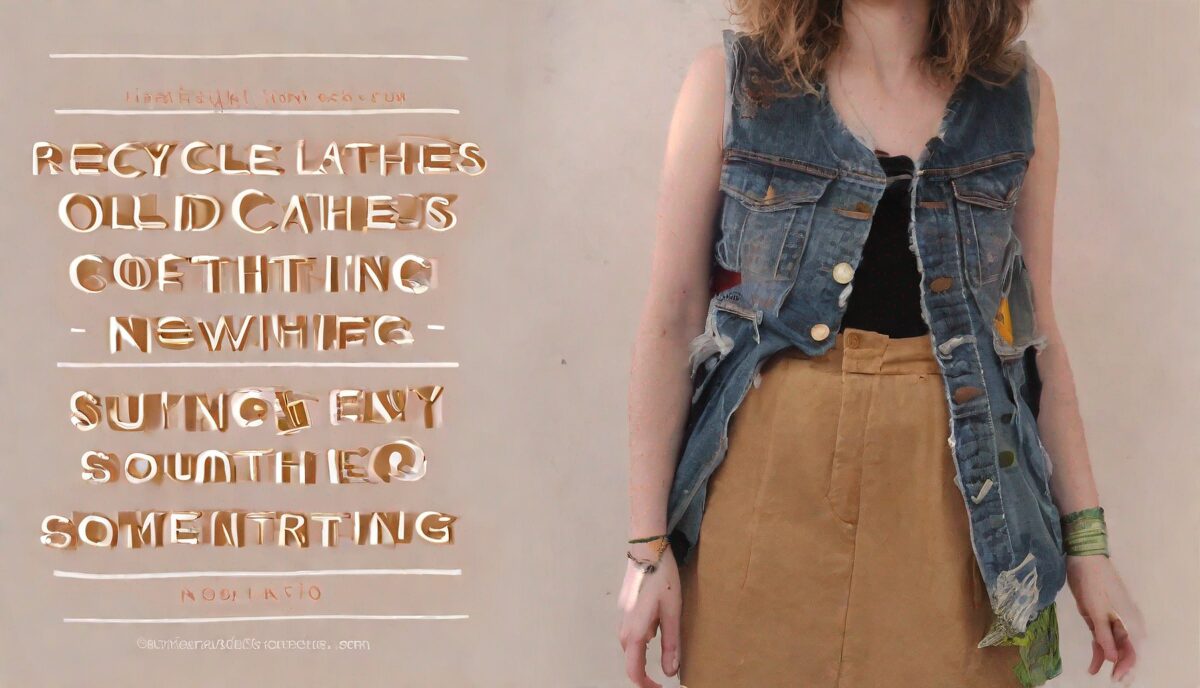
Turning Old into New
Breathing new life into old clothes can be rewarding in many ways. Not only are we keeping textiles out of landfills, we’re cultivating creativity, self-expression, and community.
Mending and Repairing
Before deciding an item is beyond repair, look at it with fresh eyes. Could simple mending extend its life? Patch holes, sew split seams, replace broken zippers or buttons. Embrace imperfections as part of the garment’s story.
Alterations and Refashioning
Consider how you might alter something to better suit your needs. Shorten or lengthen hems, take in or let out seams to improve the fit. Or completely refashion an item into something new – turn a dress into a skirt, pants into shorts, a t-shirt into a crop top.
Quilts and Blankets
When fabrics are too worn to salvage as clothing, recycling them into blankets or quilts can create warmth while honoring memories. Mix textures, patterns and colors for eclectic charm.
Rags and Cleaning Cloths
Extend usefulness of articles that are stained or threadbare by cutting into dusting rags or cleaning cloths. Get creative with shape and size based on intended purpose.
FAQ
What are some basic mending skills?
Hand sewing skills like stitching split seams, patching holes, replacing buttons, and stitching hems. Also consider visible mending techniques like sashiko stitching.
What sewing skills help for alterations?
Adjusting garment construction by taking in or letting out seams and sides, shortening or lengthening hems, tapering or widening openings.
How do I get ideas for refashioning clothing?
Browse DIY and refashioning sites and videos, get inspired by new ways to reconstruct garments. Building a creative vision takes experimentation.
What makes a good quilt or blanket?
Creatively combine fabrics keeping durability and intended use in mind. Softer, pliable fabrics are optimal for blankets while tougher fabrics work for outdoor quilts.
How do I decide what to make into rags or cleaning cloths?
Consider absorbency, thickness, and durability needs for task. Delicate linens won’t hold up for heavy cleaning while towel fabric would make good rags.
Advanced Textile Deconstruction and Pattern Drafting
To truly transform a garment, one must understand its skeletal structure. Instead of just cutting fabric, practice the art of deconstruction. Use a seam ripper to carefully remove sleeves, collars, and pockets, preserving the integrity of the fabric panels. Once disassembled, these panels become flat pieces of material that can be laid out like a puzzle. Use these flat pieces to trace patterns from existing clothes that you love, effectively cloning your favorite fits using recycled fabrics. Pay close attention to grain lines; aligning your new pattern pieces with the original grain of the garment ensures that your new creation drapes correctly and doesn’t twist after the first wash.
The Art of Natural Dyeing and Surface Design
Sometimes the fabric of an old garment is structurally sound but aesthetically dated or stained. Natural dyeing offers a second life to muted or unwanted colors. Utilize kitchen scraps like onion skins for yellow-orange hues, avocado pits for soft pinks, or black beans for deep purples. If the garment has permanent stains, consider shibori or tie-dye techniques to camouflage the imperfections with intentional pattern. For a more sophisticated finish, experiment with block printing using carved potatoes or linoleum stamps and fabric ink. This turns a plain, uninspiring piece into a custom-designed textile that feels entirely unique and high-end.
Textile Weaving and Braided Utility Items
When fabric is too fragmented for clothing or quilts, it can still be manipulated into structural forms. Cut your non-repairable garments into long, continuous strips to create “t-shirt yarn.” These strips can be braided into durable rugs, thick pot holders, or even woven into baskets. For a sturdier project, look into finger weaving or using a simple frame loom made from cardboard. Braided rugs are particularly effective for heavy-duty cotton fabrics like denim or jersey, as they provide a dense, cushioned surface that handles high-traffic areas in a home exceptionally well. This method consumes vast amounts of scrap fabric and results in functional, heirloom-quality home decor.
Upcycling Accessories and Small Goods
Small-scale upcycling is an excellent entry point for those intimidated by full garment construction. Old leather belts, discarded purses, or sturdy denim pockets can be repurposed into functional accessories. A pair of jeans, for instance, offers up to four distinct pockets that can be sewn onto a canvas tote bag to create external storage. Collars from stiff dress shirts can be reinforced with interfacing to create detachable statement collars or bow ties. By focusing on these smaller components, you minimize the risk of ruining a larger piece of fabric while developing the precision sewing skills required for professional-looking finishes, such as installing linings and hardware like snaps and rivets.
Creative Patchwork and Applique Techniques
Move beyond simple patches by incorporating artistic applique. If you have a hole in a sweater, don’t just bridge the gap; turn it into a canvas. Use scraps of felt or velvet to create shapes—flowers, geometric patterns, or abstract designs—and secure them over the damaged area using a decorative blanket stitch. This technique, often referred to as “creative visible mending,” transforms a flaw into a focal point. You can also layer different fabrics to create texture, such as sewing a piece of sheer lace over a solid-colored patch to add depth. This approach celebrates the history of the garment rather than trying to hide the repair, aligning with the philosophy of wabi-sabi, which finds beauty in the imperfect and the aged.
Fabric Preservation and Storage for Future Projects
A successful upcycling practice requires a well-managed “stash.” Designate a specific area in your home to organize your scraps by weight, color, and fiber content. Keep natural fibers like cotton, linen, and silk separate from synthetics, as they react differently to heat and dyes. Use clear bins to keep your materials visible so that you are reminded of your inventory when inspiration strikes. It is also vital to pre-wash all recycled fabrics before storing them; this removes dust, skin oils, and allergens, ensuring your materials are clean and ready to work with. Proper organization prevents the “clutter trap” and turns your collection of old clothes into a curated library of resources for your next creative endeavor.
Related posts:
 Green Fashion Face-Off: H&M’s Fall Collection vs. Truly Eco-Friendly Brands
 How to Curate a More Sustainable Home Wardrobe
 High-Waisted Underwear for Ultimate Comfort
 Crystal-Infused Fashion
 Guide to Eco-Friendly Fashion
 Zipper Disasters: Why Your Clothes Keep Snagging in the Wash and How to Stop It
 How to Repair Clothes Instead of Replacing
 The Art of Upcycling: Giving Your Clothes a Second Life