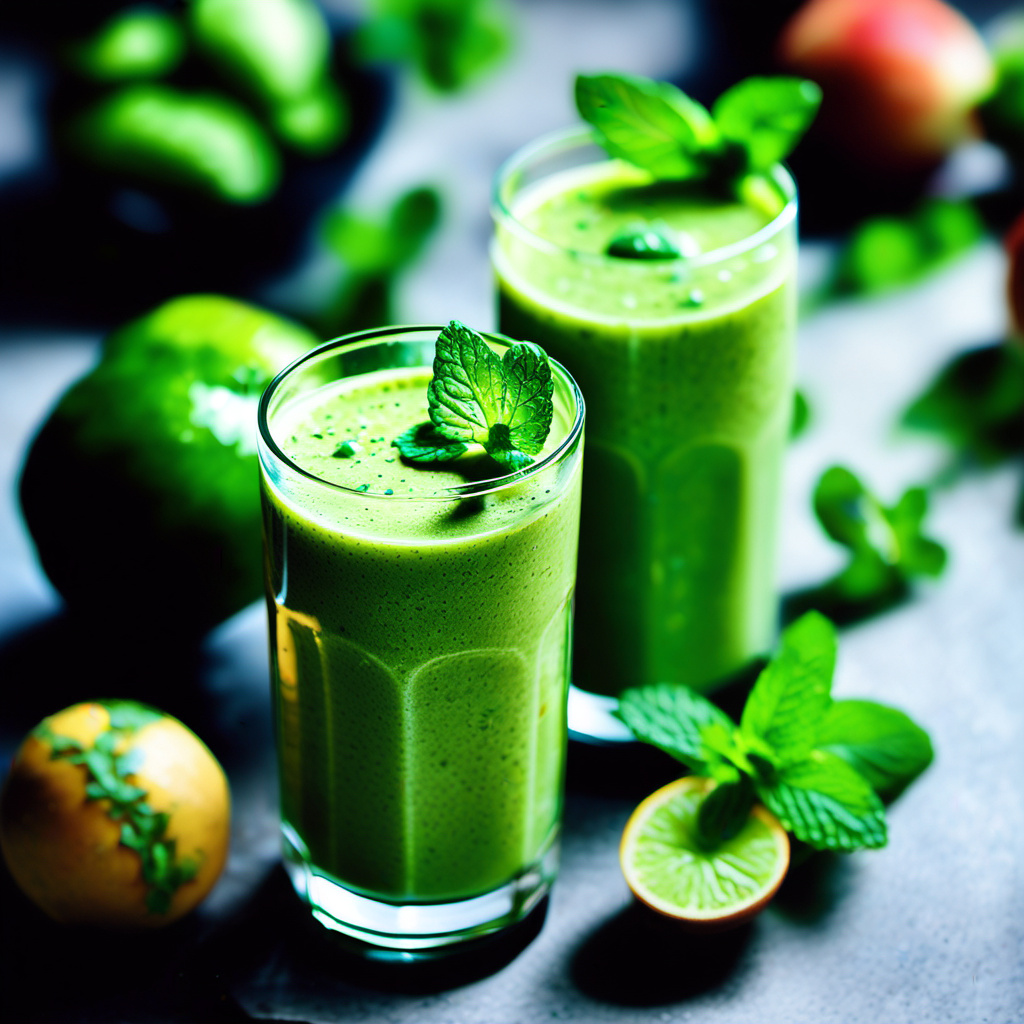
When the temperature rises or you simply need a mid-morning pick-me-up that feels like a spa day in a glass, a refreshing mint smoothie is the perfect solution. Unlike heavy, dessert-like shakes that leave you feeling sluggish, this vibrant beverage focuses on crisp, clean flavors and nutrient-dense ingredients. By combining fresh herbs with hydrating fruits and vegetables, you create a drink that is both revitalizing and genuinely satisfying.
The Benefits of Incorporating Fresh Mint into Your Routine
Mint is more than just a garnish for fancy cocktails or a flavor for chewing gum. It contains menthol, a natural aromatic compound that has been studied for its potential to soothe the digestive tract and provide a cooling sensation. When blended into a smoothie, mint offers a sharp, bright contrast to the sweetness of fruit. Beyond its flavor profile, mint is rich in antioxidants and vitamins A and C. Using fresh leaves instead of extracts ensures you receive the full spectrum of volatile oils that contribute to that signature invigorating scent, which can help clear the senses and improve mental clarity during a mid-day slump.
Selecting the Right Base for Your Smoothie
The foundation of your smoothie determines its texture and nutritional impact. For a refreshing mint smoothie, you want a base that complements rather than masks the delicate herb. Coconut water is an excellent choice for hydration, as it is naturally rich in electrolytes. If you prefer a creamier texture, unsweetened almond milk or oat milk works beautifully, providing a neutral backdrop that allows the mint to shine. Avoid overly sweet dairy or heavy nut creams, as these can make the smoothie feel dense. If you are aiming for a lower-calorie option, plain filtered water with a squeeze of fresh lime juice creates a crisp, clean profile that feels incredibly light.
The Role of Greens in Your Refreshing Blend
To achieve that signature vibrant green color and boost the nutritional value, leafy greens are essential. Spinach is the gold standard for smoothies because it has a mild flavor that disappears completely when blended. For those who want an extra nutrient punch, kale or Swiss chard can be used, though they have a more robust flavor profile. If you are new to green smoothies, start with a handful of baby spinach. It provides a massive dose of vitamin K and iron without altering the refreshing mint-forward taste of your drink. Always ensure your greens are washed thoroughly and, if possible, organic to avoid pesticide residues.
Achieving the Perfect Sweetness Naturally
The best smoothies rely on whole foods for sweetness rather than refined sugars. Pineapple and green apples are the ideal companions for mint. Pineapple contains bromelain, an enzyme that aids digestion, and its tropical sweetness pairs perfectly with the sharpness of mint. Green apples provide a tart crunch and pectin, a type of fiber that helps keep you full. If you find your smoothie needs a little more sweetness, a single pitted Medjool date or a teaspoon of raw honey can bridge the gap. Adding a small amount of cucumber can also enhance the refreshing quality, as it adds a subtle sweetness and high water content to the blend.
Pro Tips for Blending Fresh Herbs
Blending herbs can sometimes lead to a stringy texture if not handled correctly. To ensure a smooth consistency, add your mint leaves directly into the blender with your liquid base first. Pulse the liquid and the mint together for 15-20 seconds before adding your frozen fruits or greens. This technique creates a mint-infused liquid that ensures the herb is broken down into tiny, flavorful pieces rather than large, unappealing chunks. If you have a high-speed blender, you can add everything at once, but for standard blenders, the two-step process is a game-changer for texture.
Adding Texture and Healthy Fats
A smoothie should be a complete snack, not just a sugary juice. Incorporating healthy fats helps slow down the absorption of sugar and keeps you satiated for hours. A tablespoon of hemp seeds or chia seeds adds a subtle nuttiness and a dose of omega-3 fatty acids. Avocado is another secret weapon; adding just one-quarter of a small avocado creates a velvety, milkshake-like consistency without adding any dairy. Because avocado is neutral in flavor, it will not compete with the mint, making it the perfect thickener for a cleaner, greener smoothie.
Customizing Your Recipe for Different Needs
This recipe is highly adaptable. If you are looking for a post-workout recovery drink, add a scoop of plant-based vanilla protein powder. If you want a morning energy boost, add a teaspoon of matcha powder; the earthiness of the matcha pairs surprisingly well with the brightness of the mint. For those who enjoy a bit of spice, a tiny pinch of freshly grated ginger can add a warming note that balances the cooling menthol. Experimenting with these additions allows you to tailor your smoothie to your specific wellness goals, whether it is increasing protein intake or managing inflammation.
Storage and Serving Suggestions
Smoothies are best enjoyed immediately after blending, as the oxidation process begins quickly, which can alter the color and nutrient content. However, if you need to prep ahead, you can store your smoothie in an airtight glass jar filled to the brim to minimize air exposure. Keep it refrigerated for no more than 24 hours. For an elevated experience, serve your smoothie in a chilled glass and garnish with a sprig of fresh mint or a thin slice of lime. If you are hosting a brunch, these smoothies can be prepped in individual containers and shaken well before serving, providing a bright, healthy option for your guests.
Optimizing Your Herb Harvest: Varieties and Preservation
Not all mint is created equal, and the specific variety you choose will drastically shift the profile of your smoothie. While common spearmint is the standard for its mild, sweet, and cooling properties, exploring other cultivars can elevate your blending game. Peppermint, for instance, contains a higher concentration of menthol, resulting in a much sharper, more intense “bite.” If you find spearmint too subtle, a small amount of peppermint is excellent, but use it sparingly as its potency can easily overwhelm delicate fruit bases. For a more sophisticated palate, consider pineapple mint, which features variegated leaves and a naturally fruity undertone, or chocolate mint, which provides a deeper, earthy aroma that pairs exceptionally well with cacao nibs or avocado-based blends.
To ensure your mint is always ready for the blender, proper storage is paramount. Fresh mint is notoriously delicate and prone to wilting. Instead of leaving it in the plastic clamshell from the grocery store, treat your mint like a bouquet of flowers. Trim the ends of the stems and place them in a glass with an inch of water, covering the leaves loosely with a plastic bag. If you find yourself with an abundance of mint, preserve it by freezing it in ice cube trays with a little water or coconut water. When you are ready to blend, simply pop a few “mint cubes” directly into the blender. This not only preserves the herb but also acts as an instant chiller for your drink.
The Chemistry of Blending: Temperature and Blade Mechanics
The secret to a professional-grade smoothie texture lies in thermal management. Friction from high-speed blender blades generates heat, which can quickly turn a vibrant, cool drink into a lukewarm puree, dulling the brightness of the mint. To combat this, ensure your liquid base is chilled to near-freezing temperatures before starting. If you are using fresh fruit rather than frozen, consider adding a handful of ice cubes made from coconut water. This prevents the dilution that occurs with standard water ice while maintaining the refreshing temperature threshold needed to keep the menthol “pop” of the mint front and center.
Blade mechanics also play a significant role in how the mint leaves are processed. If your blender has a pulse setting, utilize it in short, sharp bursts. This creates a vortex that pulls the mint leaves down into the blades repeatedly. If the leaves are simply floating on top, they will remain whole and unblended. By layering your ingredients—liquids first, then greens and herbs, then frozen elements—you create a downward pressure that ensures the mint is pulverized at a microscopic level, releasing those aromatic oils into every sip rather than leaving behind leafy bits that can cling to the straw.
Beyond Spinach: Exploring Alternative Green Profiles
While baby spinach is the go-to for beginners, the world of leafy greens offers a spectrum of flavors that can either mute or highlight your mint. If you are looking for a more “green” and earthy flavor profile, consider adding a small amount of parsley. While often relegated to a garnish, flat-leaf parsley is incredibly refreshing and blends seamlessly with mint, providing a massive boost of chlorophyll and vitamin C. The key is to start with a ratio of three parts mint to one part parsley to ensure the mint’s cooling effect remains the dominant sensation.
For those who want to venture into more nutrient-dense territory, dandelion greens or arugula can add a sophisticated, peppery complexity to your smoothie. These greens have a bitter edge that creates a fascinating contrast against the sweetness of pineapple or green apple, effectively tempering the sugar and making the drink feel more like an adult tonic. Because these greens are more fibrous, you may need to blend them for an extra 30 seconds to ensure a silky texture. If the bitterness is too strong, add a pinch of sea salt; salt naturally inhibits bitterness receptors on the tongue, allowing the mint’s brightness to shine through without the drink tasting like medicine.
Hydration Strategies: Beyond Simple Water
The liquid base of your smoothie is the primary vehicle for flavor, and switching up your hydration source can transform the drink’s entire character. Aloe vera juice, for instance, is a fantastic addition for those seeking an extra soothing effect for the digestive system. Its slightly viscous texture and very mild, neutral taste make it an ideal partner for mint, and it acts as a hydrating powerhouse. Ensure you are using food-grade, unsweetened aloe juice to avoid unnecessary additives.
Another often-overlooked option is cold-brewed white tea. White tea is incredibly delicate and possesses a natural floral sweetness that acts as a bridge between the sharp menthol of the mint and the tartness of green fruits. By brewing the tea in advance and letting it cool completely, you introduce a layer of complexity and a subtle, clean energy boost that pairs perfectly with the refreshing nature of the smoothie. It is a sophisticated alternative to nut milks, especially for those who prefer a non-creamy, light-bodied drink that cleanses the palate.
The Art of the “Finish”: Toppings and Textural Contrast
A smoothie is often dismissed as a one-dimensional drink, but adding a “finish” can turn it into a sensory experience. Texture is key; if your smoothie is uniformly liquid, the brain often tires of the experience halfway through. By adding a crunchy, nutrient-dense topping, you force yourself to slow down and savor the drink. Toasted sunflower seeds or pumpkin seeds offer a nutty crunch that balances the coolness of the mint perfectly. A light sprinkling of hemp hearts on top doesn’t just look beautiful; it adds a subtle richness that makes the smoothie feel more substantial.
For a dessert-inspired twist, a light dusting of high-quality matcha powder or even a tiny grating of fresh lime zest over the top can enhance the aromatics before you even take the first sip. The nose plays a massive role in our perception of “refreshment,” and the oils released by grating fresh lime zest directly over the surface of the drink will hit your olfactory senses immediately, amplifying the cooling sensation of the mint. These small, deliberate touches transform a quick blended snack into a intentional, restorative ritual.
Managing Oxidation and Nutrient Preservation
If you are not consuming your smoothie immediately, you are racing against the clock. The bright green color is a sign of chlorophyll integrity, and as soon as that color begins to shift toward a dull olive, you are losing valuable nutrients and flavor vibrancy. While a squeeze of lime juice is a standard defense, the vessel you use for storage is equally important. Stainless steel or opaque, vacuum-sealed containers are superior to clear plastic or glass, as they prevent light exposure, which accelerates the degradation of vitamins.
Another pro-level trick to prevent oxidation is to add a small piece of ascorbic acid-rich fruit, such as kiwi or a slice of orange, into the blend. The higher acidity levels in these fruits act as a natural preservative, keeping the smoothie bright green for hours longer than it would stay on its own. Furthermore, if you are transporting your smoothie, fill the container as close to the top as possible before sealing it. The less “headroom” of air inside the container, the less oxygen is available to trigger the browning process. If you follow these storage protocols, you can confidently prepare your morning mint boost the night before without sacrificing quality.
Troubleshooting Common Smoothie Failures
Even with the best ingredients, sometimes a smoothie just doesn’t hit the mark. If your blend tastes “grassy” or “weedy,” you likely have an imbalance between your green ratio and your fruit-to-acid ratio. Greens like kale and dandelion carry a heavy chlorophyll punch; if this happens, increase the amount of pineapple or green apple, and add an extra half-teaspoon of fresh lime juice. The acid acts as an equalizer, cutting through the heavy vegetal notes and lifting the flavor profile back into the “refreshing” category.
If your smoothie feels too thin or watery, avoid adding more fruit, which can spike the sugar content. Instead, look toward emulsifiers. A small slice of cucumber, a tablespoon of chia seeds, or even a few soaked cashews can add body without compromising the clean, mint-forward flavor. If the smoothie tastes “flat,” it is often a lack of salt. A tiny pinch—literally a grain or two—of high-quality sea salt acts as a flavor enhancer, making the mint taste more like mint and the fruit taste more like fruit. Never underestimate the power of salt to pull a dull, blended drink back to life.
Frequently Asked Questions
Q: Can I use dried mint instead of fresh mint in this smoothie? A: It is highly recommended to use fresh mint. Dried mint has a much more concentrated, almost medicinal flavor that can be overpowering and texturally unpleasant in a liquid blend. Fresh mint provides the bright, crisp notes necessary for a refreshing smoothie.
Q: How do I prevent my smoothie from turning brown? A: Browning is caused by oxidation. To keep your smoothie vibrant green, add a squeeze of fresh lime or lemon juice. The acidity in citrus helps preserve the color of the greens and slows down the oxidation process. Drinking it immediately is the best way to maintain the color.
Q: Can I add yogurt to this recipe? A: Yes, adding a dollop of Greek yogurt or a coconut-based yogurt will add a creamy, tangy element that works well with mint. Just keep in mind that dairy can sometimes mask the delicate, bright flavor of the herbs, so start with a small amount.
Q: Is it okay to use frozen greens? A: Absolutely. Frozen spinach or kale is an excellent alternative to fresh, especially if you have a high-speed blender. They are often flash-frozen at the peak of freshness, ensuring you get high nutrient density, and they help chill the smoothie, eliminating the need for extra ice which can water down the flavor.
Q: How can I make this smoothie more filling for a breakfast replacement? A: To make it a substantial meal, increase the healthy fats and add a protein source. Add a tablespoon of almond butter, half an avocado, and a scoop of protein powder or a quarter-cup of rolled oats. This combination provides a better balance of macronutrients to keep your energy stable throughout the morning.
Related posts:
 The Celebrity-Approved Smoothie for Expecting Moms
 The Green Goddess Guide to Buying Leafy Perfection
 Refreshing Mint Smoothie Recipe
 Dry January Mocktail Guide
 The Bloat-Busting Power of Lime Ginger Tea: Your Digestive System’s New Best Friend
 The Ultimate Green Soup Recipe for Detox and Health
 Smoothie Reality Check: Are Your Healthy Drinks Actually Healthy?
 Connie Britton’s Morning Detox Elixir