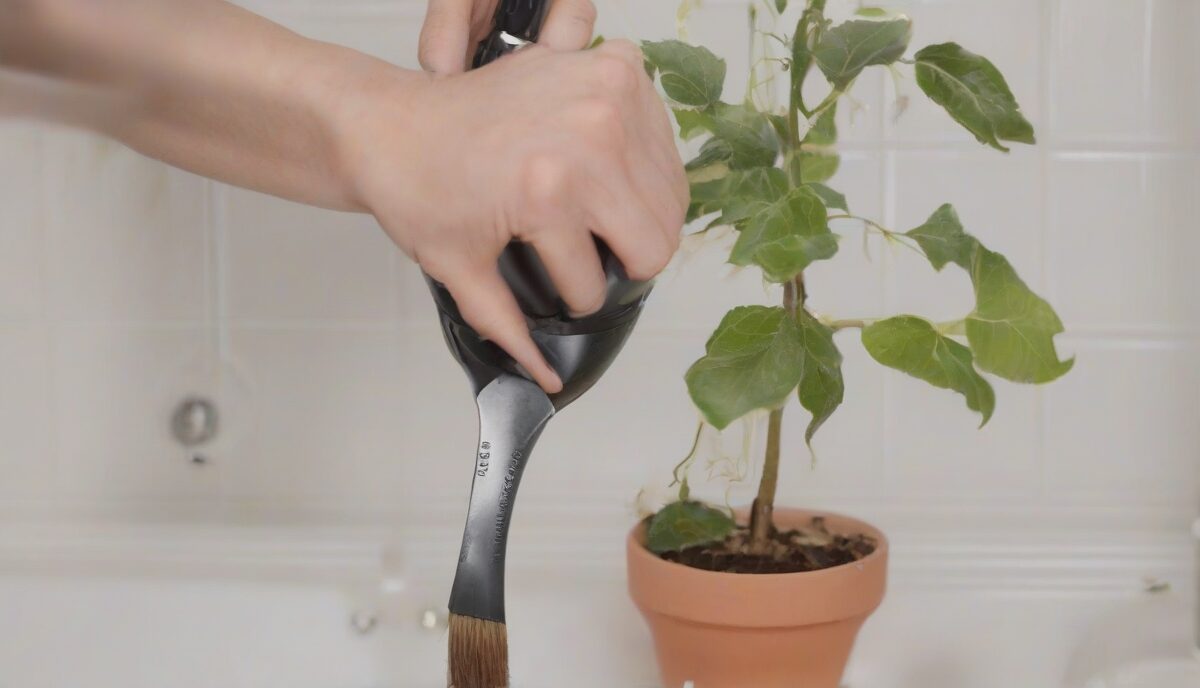
Dealing with visible roots can be a hassle, especially when you can’t make it to the salon. Fortunately, doing a root touch-up at home is easier than you might think. This comprehensive guide will walk you through the process, ensuring you achieve salon-quality results from the comfort of your home.
Why Choose a Root Touch-Up at Home?
There are several reasons why you might opt for a root touch-up at home rather than visiting a salon:
- Cost-effective: Home touch-ups are generally much cheaper than salon visits.
- Convenience: You can perform the touch-up at your own pace and schedule.
- Control: You have full control over the products used and the process itself.
Essential Tools and Products
Before you start, make sure you have all the necessary tools and products:
- Root touch-up kit: Choose a kit that matches your hair color.
- Gloves: To protect your hands from the dye.
- Applicator brush: For precise application.
- Old towel or cape: To protect your clothing.
- Comb: For sectioning your hair.
- Timer: To ensure you leave the dye on for the correct amount of time.
Step-by-Step Guide to Root Touch-Up at Home
Follow these steps to achieve a flawless root touch-up:
- Prepare your space: Lay out all your tools and cover your clothing and work area to prevent stains.
- Mix the dye: Follow the instructions on your root touch-up kit to mix the dye.
- Section your hair: Use a comb to divide your hair into manageable sections. Clip them in place if necessary.
- Apply the dye: Start applying the dye to the most visible roots first, usually around your hairline and part. Use the applicator brush for precision.
- Set a timer: Leave the dye on for the recommended time as per the kit instructions.
- Rinse and condition: Rinse your hair thoroughly with lukewarm water until the water runs clear. Apply the conditioner included in your kit and rinse again.
- Dry and style: Dry your hair and style it as usual to admire your refreshed look.
Common Mistakes to Avoid
To ensure the best results, avoid these common mistakes:
- Skipping the patch test: Always do a patch test to check for allergic reactions before applying the dye.
- Leaving the dye on too long: Follow the recommended time to avoid damaging your hair.
- Not sectioning hair: Proper sectioning ensures even application and coverage.
- Using too much dye: Apply the dye sparingly to avoid a patchy look.
Aftercare Tips
Taking care of your hair post-touch-up is crucial for maintaining vibrant color and healthy hair:
- Use color-safe shampoo and conditioner: These products help preserve your hair color.
- Avoid excessive heat: Minimize the use of heat styling tools to prevent color fading.
- Regular touch-ups: Schedule regular touch-ups every 4-6 weeks to keep your roots in check.
Decoding the Numbering System and Undertones for Precise Matching
Choosing the right shade involves more than just looking at the photo on the box. Professional hair color is categorized by a universal numbering system ranging from 1 (black) to 10 (lightest blonde). When selecting a root touch-up product, you must first identify your “level.” If your hair is a medium brown, you are likely a Level 5. If you select a Level 3, your roots will appear significantly darker and create a harsh line of demarcation. Conversely, a Level 7 will fail to cover darker roots effectively, leading to a translucent, “glowing” effect. Always aim to match your current level or go one shade lighter if you are unsure, as it is far easier for a professional to darken hair than to lighten it if a mistake occurs.
Beyond the level, you must consider the tone or “reflect.” This is usually indicated by a letter or a second digit following the level number (e.g., 6N, 7A, or 5G). “N” stands for Neutral, which contains a balanced mix of primary colors and is the safest bet for gray coverage. “A” stands for Ash, which uses blue or green bases to counteract unwanted orange or red brassiness. “G” stands for Gold, adding warmth and brightness. If your hair pulls orange easily during the coloring process, an Ash-based touch-up kit can help neutralize that warmth. Understanding this alphanumeric code allows you to bypass the marketing names like “Iced Mocha” or “Sun-Kissed Honey” and focus on the actual chemistry of the pigment you are applying to your scalp.
Specialized Strategies for Stubborn Gray Coverage
Gray hair is notoriously resistant to dye because the cuticle layer is often more tightly packed and thicker than pigmented hair. This lack of natural melanin also means there is no “base” for the dye to grab onto. To tackle stubborn grays, especially around the temples and hairline, consider a technique known as “pre-softening.” This involves applying a small amount of 20-volume developer (the clear liquid that comes in the kit, before it is mixed with the color) directly to the resistant gray areas with a cotton swab. Let it sit for five to ten minutes to open the hair cuticle, then blot it off and apply your mixed color as usual. This simple step significantly increases the hair’s receptivity to pigment.
Another advanced tip for gray coverage is the “dwell time” adjustment. While the standard processing time might be 30 minutes, resistant grays often require the full 45 minutes allowed by most manufacturers. Furthermore, the ratio of color to developer matters. If you are mixing your own professional-grade color, using a “Double N” (NN) series or a “Cover Plus” line provides extra pigment density specifically designed for hair that has lost all its natural color. When applying, do not just swipe the color on; instead, use a “stippling” motion with your brush to pack the color onto the roots. This ensures every silver strand is fully saturated and encased in the dye mixture.
Managing Porosity and Texture-Specific Application
Your hair’s texture and porosity—its ability to absorb and retain moisture—dictate how quickly it will process color. Fine hair is generally more porous and processes color faster and darker than coarse hair. If you have fine hair, you may need to reduce the processing time by five minutes to prevent the roots from looking “inky” or overly saturated. On the other hand, coarse or thick hair has a larger diameter and requires more product. If you have a lot of hair, one box of root touch-up might not be enough to achieve full saturation. It is always better to have two boxes on hand than to run out halfway through the process, which leads to patchy results.
For those with curly or coily textures, the application process requires extra care to avoid disrupting the natural curl pattern or causing unnecessary dryness. Curly hair is naturally drier, so it is beneficial to apply a thin layer of barrier cream or coconut oil to the previously colored lengths of the hair before starting. This prevents any accidental “run-off” from the roots from being absorbed into the ends, which are often more porous and prone to darkening. When sectioning curly hair, use large plastic clips and work in smaller sub-sections (about 1/8th of an inch) to ensure the dye reaches the scalp through the dense volume of the curls.
Preventing the “Hot Root” Effect and Color Banding
A common pitfall in home hair coloring is the emergence of “hot roots.” This occurs when the hair closest to the scalp processes faster and appears warmer or brighter than the rest of the hair, usually because the heat from your scalp accelerates the chemical reaction. This is particularly common when using a shade that is too light or has too much warmth. To prevent this, always start your application about a quarter-inch away from the scalp in the back of the head where the hair is densest, and save the very front hairline—where the hair is finest and the scalp heat is most intense—for the last ten minutes of the application process.
Color banding is another issue where visible horizontal stripes of different colors appear on the hair shaft. This happens when you overlap new permanent dye onto previously colored hair. Over time, these overlaps build up, creating a dark, dull band that is nearly impossible to remove without professional bleach. To avoid this, apply the dye strictly to the new growth. If you struggle with precision, you can apply a heavy conditioner or a “color barrier” product to the hair just below the root line. This acts as a physical shield, so if your brush slips, the dye won’t be able to penetrate the already-colored sections of the hair.
Advanced Sectioning and the Cross-Check Method
To achieve the 360-degree coverage found in a salon, you must move beyond the basic center part. Professionals use a “four-quadrant” sectioning technique. Divide your hair from the center of your forehead to the nape of your neck, and then from ear to ear across the crown. This creates four distinct zones. Work through one quadrant at a time, taking very thin, horizontal slices. Think of it like turning the pages of a book; you want to flip each thin slice of hair over once it is coated to reveal the next layer of roots underneath.
Once you believe you have covered the entire head, perform a “cross-check.” If you applied the dye using horizontal sections, go back through and check the coverage using vertical sections. This reveals any “holidays”—the professional term for missed spots. Use a hand mirror to inspect the back of your head, or better yet, set up a three-way mirror. The back of the crown is the most common place for home colorists to miss, leading to a “halo” of gray or natural color that is visible to everyone but you. Taking an extra five minutes to cross-check can mean the difference between a DIY look and a professional finish.
The Role of Toners and Glosses in Root Maintenance
Sometimes, the roots look great, but the rest of the hair looks dull or faded. Instead of pulling permanent root dye through to your ends—which causes damage—use a demi-permanent gloss or toner. These products do not contain ammonia and use a very low-volume developer, meaning they deposit color without lifting the hair cuticle aggressively. After your root dye has processed for 20 minutes, you can apply a matching gloss to the mid-lengths and ends for the final 10 minutes. This refreshes the overall color and adds a high-shine finish without the risk of over-processing.
If your root touch-up results in a slightly brassy tone, a purple or blue toner can be used immediately after rinsing. For example, if you are a blonde and your roots look slightly yellow, a violet-based toner will neutralize that warmth. This is a critical step for maintaining a cool-toned blonde or a rich, neutral brunette. Many people mistake a “bad” dye job for simply an “un-toned” dye job. By understanding that root coloring and overall toning are two separate steps, you can achieve a much more sophisticated and multi-dimensional color result at home.
Emergency Troubleshooting and Color Correction
Even with the best preparation, mistakes can happen. If your roots come out too dark, do not immediately reach for more dye. Instead, wash your hair with a clarifying shampoo or an anti-dandruff shampoo. These formulas are more aggressive and can help strip away some of the excess pigment if used within the first 24 hours. For a more intensive “fading” treatment, you can mix clarifying shampoo with a small amount of baking soda, apply it to the dark areas, and let it sit for 10 minutes before rinsing and applying a deep conditioner.
FAQ
1. How often should I do a root touch-up at home?
It’s recommended to do a root touch-up every 4-6 weeks, depending on your hair growth rate and color contrast.
2. Can I use a root touch-up kit on previously colored hair?
Yes, root touch-up kits are designed to work on previously colored hair. Ensure that the color matches your existing shade.
3. What should I do if my hair color turns out uneven?
If your hair color turns out uneven, you can apply a semi-permanent color over the entire head to even out the tone. Consult a professional if necessary.
4. Are root touch-up kits safe for sensitive scalps?
Many root touch-up kits are formulated for sensitive scalps. Always perform a patch test before full application to ensure there are no adverse reactions.
5. Can I use natural alternatives for root touch-up?
Yes, natural alternatives such as henna or coffee can be used for root touch-ups, but they may not provide the same coverage or longevity as commercial dyes.
Related posts:
 Supermodel Hair Blow-Drying Tips
 Zoe Kravitz’s Coconut Oil Hair Care Secret
 Hair Dryer Disasters: The Blow-Dry Mistakes Sabotaging Your Style
 Perfect Curly Hair Routine
 Easy Summer Updos for Every Hair Type
 Gray Hair Treatment Options
 Hair Slugging Beauty Trend Guide
 Blow Drying Hair Without Damage: Expert Tips