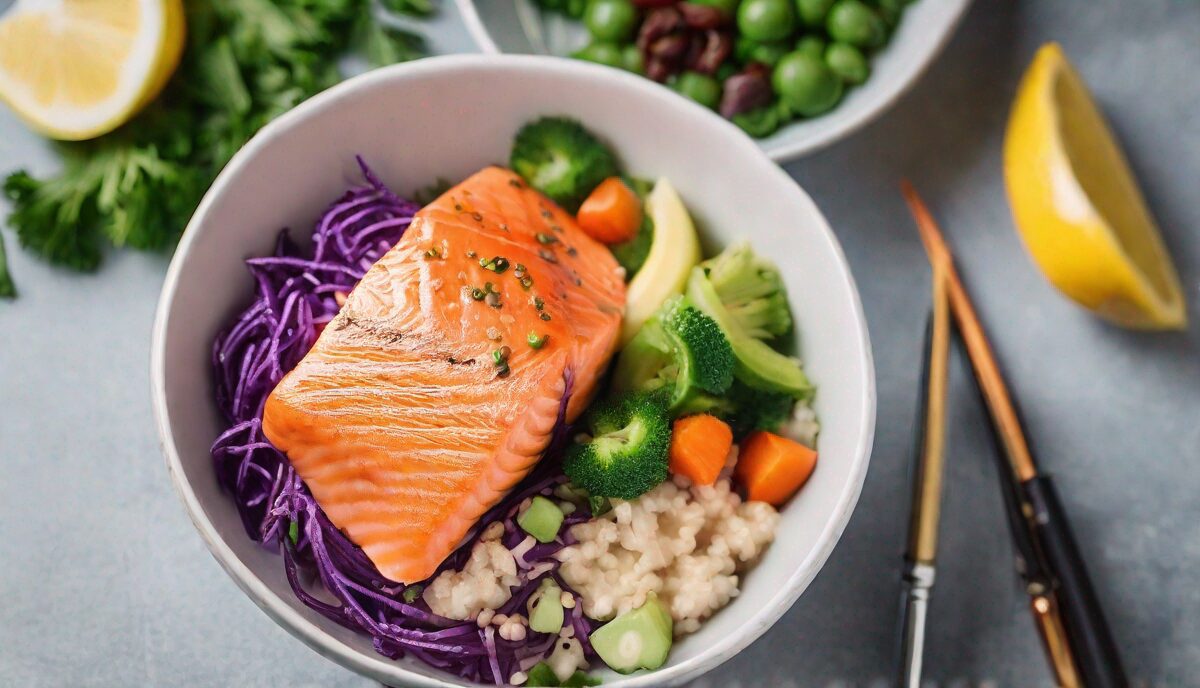
The Health Benefits of Salmon
Salmon is rich in nutrients like omega-3 fatty acids, vitamin D, and high-quality protein that support overall health. Eating salmon regularly has been linked to lower blood pressure, improved heart health, and reduced inflammation.
Easy Salmon Bowl Recipes
Salmon bowls make nutritious, satisfying meals. To get started, bake, grill, or pan sear a salmon fillet. Then serve it over a base of leafy greens, grains, or veggies like sweet potato or kale. Top with your favorite mix-ins like avocado, pickled onions, edamame, walnuts and fresh herbs.
Spicy Sriracha Salmon Bowls
- 4 salmon fillets
- Sriracha
- 2 cups brown rice
- 2 avocados
- 1 bunch kale
- Lemon juice
- Sliced cucumber
Brush salmon with sriracha and bake until flaky. Serve over brown rice, kale, avocado, cucumber and a squeeze of lemon juice.
Lemon Garlic Salmon Bowls
- 4 salmon fillets
- 1 lemon, zested and juiced
- 2 cloves garlic, minced
- 1 tbsp olive oil
- Quinoa
- Asparagus
- Cherry tomatoes
Marinate salmon in lemon juice, zest, garlic and olive oil. Bake until cooked through. Serve over quinoa with roasted asparagus and cherry tomatoes.
Mastering Salmon Textures: From Crispy Skin to Poached Perfection
While the basic bake is a reliable starting point, the true versatility of a salmon bowl lies in the texture of the protein. Achieving a restaurant-quality sear or a buttery, melt-in-your-mouth interior requires specific techniques tailored to the cut of the fish. For those who prioritize a crunch, the “cold pan” method is a game-changer for skin-on fillets. Start by placing the salmon skin-side down in a cold, non-stick skillet with a teaspoon of high-smoke-point oil, such as avocado or grapeseed oil. Turn the heat to medium-high and let the pan and the fish heat up together. This process gradually renders the subcutaneous fat, resulting in a glass-like, crispy skin that provides a necessary structural contrast to soft grains and creamy avocado.
Conversely, if you prefer a delicate, flaky texture, poaching the salmon in an aromatic liquid—often called a court-bouillon—infuses the fish with subtle flavors without the risk of drying it out. Use a mixture of water, white wine, peppercorns, bay leaves, and sliced shallots. Bring the liquid to a bare simmer (around 160°F to 180°F), submerge the fillets, and cook for roughly 8 to 10 minutes. This method is particularly effective for bowls that feature lighter bases like spring greens or cold noodle salads. For an edge case, consider the air fryer: it circulates hot air rapidly around the fish, mimicking a deep-fryer’s results with minimal oil. To avoid the common pitfall of overcooking, aim for an internal temperature of 125°F for medium-rare or 135°F for medium, as carry-over cooking will continue once the fish is removed from the heat.
Global Flavor Palettes: Beyond the Basic Bowl
To prevent meal fatigue, look to international cuisines to transform your salmon bowl into a culinary destination. A Japanese-inspired “Tokyo Bowl” moves beyond simple sriracha by utilizing a miso-maple glaze. Whisk together white miso paste, maple syrup, toasted sesame oil, and a splash of mirin. Brush this onto the salmon during the last three minutes of roasting to create a caramelized, umami-rich crust. Pair this with pickled ginger, furikake (a dry Japanese seasoning), and a base of short-grain sushi rice seasoned with rice vinegar and a pinch of sugar.
For a Mediterranean profile, pivot toward the “Santorini Bowl.” Rub the salmon with dried oregano, zest of a lemon, and smoked paprika. Instead of rice, use farro or bulgur wheat for a nutty, chewy foundation. Top the bowl with a generous dollop of homemade tzatziki (Greek yogurt, grated cucumber, garlic, and dill), kalamata olives, and a salad of diced tomatoes and cucumbers. The acidity of the yogurt and the brine of the olives cut through the richness of the salmon perfectly. If you crave heat, a “Yucatán-Style Bowl” utilizes achiote paste and citrus. Marinate the fish in orange and lime juice with cumin and garlic, then serve it alongside black beans, charred corn, and a spicy habanero-onion pickle. These regional variations ensure that the salmon bowl remains a dynamic part of your weekly rotation.
Elevating the Base: Grains, Greens, and Low-Carb Foundations
The base of your bowl provides more than just bulk; it dictates the nutritional profile and the satiety level of the meal. While brown rice is a staple, exploring ancient grains can add significant fiber and micronutrients. Farro, an ancient wheat grain, offers a complex, nutty flavor and a firm texture that doesn’t get mushy under heavy sauces. For a visually striking meal, use “forbidden” black rice, which is packed with anthocyanins—the same antioxidants found in blueberries. It provides a dramatic backdrop for the pink hues of the salmon and the vibrant greens of your vegetables.
For those seeking low-carb or ketogenic options, the base requires a different approach. Cauliflower rice is a popular substitute, but it can be bland if not prepared correctly. Sauté the cauliflower pearls with garlic and a touch of coconut milk to give them a creamy, risotto-like consistency. Alternatively, a base of shaved Brussels sprouts or a “power slaw” of shredded broccoli stems and red cabbage adds a significant crunch and holds up well if you are prepping the bowls in advance. If using leafy greens like kale, it is essential to “massage” the leaves with a small amount of olive oil and salt for 60 seconds. This breaks down the tough cellulose structure, making the kale tender and easier to digest, ensuring it complements the delicate salmon rather than overpowering it.
The Art of the Sauce: Balancing Five Basic Tastes
A bowl without a cohesive sauce often feels like a collection of disparate ingredients rather than a unified dish. The most successful salmon bowl sauces balance the five basic tastes: sweet, sour, salty, bitter, and umami. A classic tahini-lemon dressing provides creaminess (fat) and bitterness (tahini), which is then balanced by lemon juice (acid) and a touch of honey (sweet). To emulsify, slowly whisk the lemon juice into the tahini before adding water to reach your desired consistency. This prevents the sauce from separating when it hits the warm salmon.
For an umami-forward dressing, a ginger-soy vinaigrette is indispensable. Combine low-sodium soy sauce, freshly grated ginger, rice vinegar, and a hint of toasted sesame oil. If the sauce feels too sharp, a teaspoon of peanut butter or almond butter can add body and mellow the acidity. Edge cases involve using fruit-based salsas as the “sauce.” A mango-habanero salsa provides both the acid and the heat needed to brighten a grilled salmon fillet. When applying sauces, consider the temperature: cold sauces like a herby green goddess (basil, parsley, tarragon, and Greek yogurt) provide a refreshing contrast to warm salmon, while warm sauces like a light coconut-curry reduction can make the bowl feel more like a comforting stew.
Seasonal Salmon Assemblies for Year-Round Variety
Adapting your salmon bowls to the seasons not only ensures you are using the freshest produce but also aligns the meal with your body’s changing needs. In the spring, focus on “green” flavors. Pair poached salmon with blanched snap peas, shaved radishes, and a handful of fresh mint and parsley over a bed of quinoa. The lightness of the spring vegetables highlights the natural sweetness of the fish.
During the summer months, lean into the grill. Charred salmon works beautifully with stone fruits like grilled peaches or nectarines. The sugars in the fruit caramelize on the grill, creating a sophisticated pairing with the smoky fish. Add a base of arugula for a peppery bite and finish with a balsamic glaze. As autumn arrives, transition to heartier components. Roasted butternut squash, toasted pumpkin seeds (pepitas), and dried cranberries provide a festive, earthy feel. Serve this over a wild rice blend to match the rustic tones of the season. In winter, utilize citrus and root vegetables. A citrus-marinated salmon served over roasted beets and parsnips with a side of wilted spinach provides a much-needed boost of Vitamin C and iron during the colder months. This seasonal approach ensures that your salmon bowls never feel stagnant or out of place.
Smart Sourcing and Food Safety: Maximizing Quality
The success of a salmon bowl is fundamentally tied to the quality of the fish. When sourcing, look for labels like the Marine Stewardship Council (MSC) or the Aquaculture Stewardship Council (ASC), which indicate that the fish was harvested or farmed using sustainable practices. For bowls where the salmon is the star, the distinction between varieties is crucial. Sockeye salmon is known for its deep red color and intense, robust flavor, making it ideal for bold, spicy bowls. King (Chinook) salmon, with its high fat content and buttery texture, is best suited for simple preparations where its natural richness can shine.
Food safety is paramount, especially if you are experimenting with different doneness levels. While the USDA recommends an internal temperature of 145°F, many chefs prefer 125°F for a moister result. If you choose to cook to a lower temperature, ensure you are buying high-quality, fresh fish from a reputable source. For meal prepping, one of the biggest challenges is the “fishy” odor that can develop when reheating salmon in an office microwave. To avoid this, design your meal-prep bowls to be eaten cold or at room temperature. Flaked, chilled salmon is excellent in a Mediterranean-style bowl or a grain-based salad. If you must reheat, do so at a lower power setting (50%) to prevent the fats from oxidizing rapidly, which is what causes the aggressive smell and a rubbery texture.
Advanced Meal Prep: Component Storage Strategies
To make salmon bowls a sustainable part of a busy lifestyle, a strategic approach to component storage is required. Instead of assembling the entire bowl days in advance, which can lead to soggy greens and dry fish, store your components in “zones.” Grains like rice or farro can be cooked in large batches and stored for up to five days. To keep them moist, add a damp paper towel over the container when reheating. Vegetables should be stored based on their moisture content; keep roasted tubers in one container and fresh, crunchy elements like sliced radishes or cucumbers in another, ideally submerged in a bit of cold water to maintain their snap.
The salmon itself should be the last thing you cook, or if pre-cooked, it should be stored in an airtight glass container to minimize odor transfer to other fridge items. If you are using avocados, do not slice them until the moment of consumption to prevent browning. Alternatively, you can mash the avocado with a generous amount of lime juice; the acid will preserve the green color for up to 24 hours. For the sauce, use small condiment containers or “dressing pots.” Keeping the sauce separate until the very last second ensures the textures of the grains and greens remain intact. By mastering this modular approach, you can mix and match different bases, proteins, and sauces throughout the week, creating entirely different flavor profiles from the same set of prepped ingredients.
FAQ
What kind of salmon is best for bowls?
Wild-caught salmon like sockeye and king have more omega-3s than farmed salmon. But all salmon works well!
Can I use frozen salmon?
Yes, frozen and thawed salmon makes tasty bowls!
What if I don’t like salmon?
Try rotating in other omega-3-rich fish like trout, mackerel or sardines. Chicken or tofu both work too.
What toppings go well with salmon bowls?
Some tasty toppings include avocado, nuts, seeds, pickled onions, kimchi, herbs, leafy greens, quinoa, brown rice, sweet potato and roasted veggies.
Can I meal prep salmon bowls?
Yes! Cook the salmon and grains, then store them separately. Assemble bowls when ready to eat.
Related posts:
 Best Garlic Press Guide
 15-Minute Dairy-Free Dinner Ideas
 Rice Revealed: Is This Pantry Staple Actually Good for You
 5 Fish Sauce Substitutes for Cooking
 Candice Kumai’s Healthy Turmeric Fried Rice Recipe
 Magic Avocado Sauce Recipe
 Ashley Benson’s Go-To Salmon Recipe is Surprisingly Simple
 The Green Goddess Guide to Buying Leafy Perfection