Reflecting on the Journey
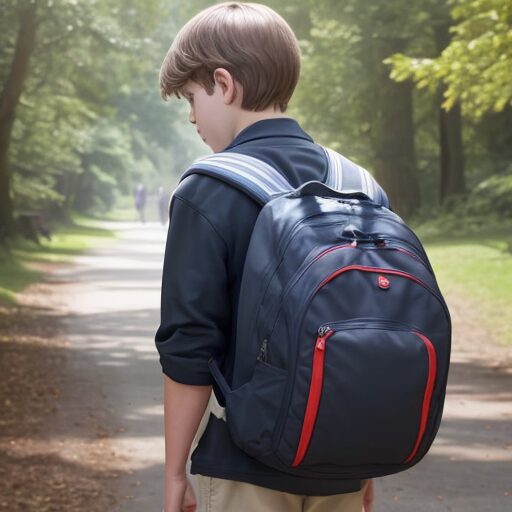
As my son prepares to go back to his residential school after summer break, I find myself reflecting on the journey that brought him here. Just a few years ago, he struggled greatly in traditional school environments. Though bright and creative, he had trouble focusing and sitting still. Every day felt like a battle for both of us.
Discovering a Specialized School
When we discovered a specialized school focused on nurturing the strengths of unique learners, it felt like a miracle. Here was a place that would appreciate his lively mind and help him thrive. On his first visit, I could see him coming alive as he connected with teachers who got him and peers that shared his worldview.
Bittersweet Goodbyes
That first separation at the start of the term was so bittersweet. My mama’s heart ached to let him go, but I could also see this was the opportunity of a lifetime for him. As I hugged him tight, I whispered words of encouragement in his ear, reminding him of the great adventure ahead.
Growth Each Year
When he returns home for visits now, I’m always struck by how much he has grown – not just physically, but emotionally and socially. The school has given him confidence in himself and helped him make meaningful connections. He has developed interests and talents I never knew he had. My heart swells with gratitude.
Looking Ahead With Hope
As another school year starts, I feel a sense of peace and assurance instead of anxiety. I know he is exactly where he needs to be, with caring mentors and peers surrounding him. The road has had twists and turns, but he is thriving. I cannot wait to see how he continues to blossom this year!
The Logistics of Transition: More Than Just a Packing List
Preparing for a residential departure involves a complex dance of physical organization and emotional bracing. When we first started this process, I thought a standard back-to-school list would suffice—pencils, notebooks, and a few new pairs of jeans. However, I quickly realized that packing for a residential school is more akin to preparing a child for a mission to an orbital station. We aren’t just sending him to learn; we are sending him to live. This means the inventory must include the ‘sensory anchors’ that keep him grounded when the environment feels overwhelming. We’ve learned to pack three sets of his favorite high-texture blankets, not because he needs three, but because the anxiety of a laundry delay can trigger a spiral that affects his entire week of learning. We also include a ‘comfort kit’ hidden at the bottom of his trunk: a specific brand of lavender-scented soap that mimics the smell of our bathroom at home, and a digital photo frame pre-loaded with images of our golden retriever, Barnaby.
There is also the practical challenge of ‘labeling the life.’ In a residential setting, personal items have a way of migrating. We spent an entire Saturday morning using a heat-press to label every single sock, shirt, and pillowcase. While it felt tedious, there was a meditative quality to it. Each label was a physical manifestation of my care, a small sticker that said, ‘This belongs to my son, and he belongs to us.’ We also have to consider the ‘transitional objects’ that bridge the gap between the chaotic freedom of summer and the structured rhythm of school. He now helps with the packing, which is a massive milestone. In the early years, he would hide under the bed when the suitcase came out. Now, he checks off his own list, ensuring his noise-canceling headphones and his specific ergonomic chair cushion are secured. This shift from passive participant to active traveler is the first sign that the school’s focus on independence is taking root before he even leaves our driveway.
Mastering the Art of the Long-Distance Check-In
Communication with a child in a residential setting is a delicate balance between staying connected and allowing space for autonomy. In the beginning, I wanted to call every night at 6:00 PM. I needed to hear his voice to know he was safe, but I soon realized that my ‘need to know’ was interrupting his ‘need to grow.’ If I called during his dorm’s social hour, I was inadvertently pulling him away from a potential friendship or a shared game of cards. We eventually established the ‘Wednesday and Sunday’ rule. These are our dedicated long-form calls where we dive deep into the nuances of his week. On other days, we rely on a shared digital journal or short, encouraging text messages. This structure helps him manage his expectations and reduces the ‘transition fatigue’ that comes with switching between his ‘school self’ and his ‘home self.’
We’ve also had to learn the language of ‘residential shorthand.’ When he says he had a ‘yellow day,’ I know exactly what that means thanks to the school’s behavioral framework. It saves us twenty minutes of frustrated questioning. One of the hardest parts of long-distance parenting is handling the ‘homesick’ call. There will inevitably be a Tuesday night when things go wrong—a difficult math test or a disagreement with a roommate—and he will call, voice trembling, asking to come home. My instinct is always to grab the car keys. However, the school has coached us on how to ‘validate and hold.’ I listen, I acknowledge his feelings, and then I remind him of his coping strategies. Usually, by the time we hang up, he’s ready to try again. Learning that I can support him without physically ‘rescuing’ him has been one of the most profound shifts in our relationship. It builds a different kind of trust—a trust in his own resilience.
The Parent’s Parallel Journey: Managing the Quiet
When the car finally pulls away and the house falls silent, there is a specific kind of ‘residential parent’ grief that no one tells you about. For years, my life was defined by the ‘battle’ mentioned earlier—the constant advocacy, the sensory meltdowns, and the hyper-vigilance required to keep him on track. When that noise suddenly stops, the silence can be deafening. It isn’t just the absence of his physical presence; it’s the absence of the role I played as his full-time caregiver and crisis manager. I found myself wandering into his empty room, adjusting his pillows, or standing in the kitchen wondering why I wasn’t making a third snack of the afternoon. It took me a full year to realize that I needed to ‘re-school’ myself during his terms away.
This period of his absence has become a time for my own emotional restoration. I’ve started to rediscover hobbies that were shelved for a decade—gardening, reading for pleasure, and even just sitting in silence without waiting for the next emergency. It’s important to acknowledge that feeling a sense of relief isn’t the same as a lack of love. For many of us with unique learners, the ‘peace and assurance’ we feel when they go back to school is a hard-won emotional state. It’s the knowledge that he is safe and supported, which finally allows our own nervous systems to downregulate. I’ve learned to use this time to fill my own cup so that when he returns for breaks, I have the patience and energy to handle the inevitable ‘re-entry friction.’ We are both growing in different directions, but the school provides the scaffolding that allows us to do so without the relationship collapsing under the weight of constant caregiving.
Navigating the Re-entry: When Two Worlds Collide
One of the most complex aspects of the residential school experience is the ‘re-entry’ phase—those first 48 hours when he comes home for a long weekend or a holiday break. He arrives home with the habits and expectations of his school environment, which is highly structured, predictable, and communal. Meanwhile, our home is a bit more relaxed and fluid. This mismatch can lead to what we call the ‘Home-School Hangover.’ He might become frustrated that lunch isn’t served at exactly 12:15 PM, or he might struggle with the lack of clear ‘visual schedules’ that decorate his dorm walls. We’ve had to learn to meet him halfway. Before he arrives, we print out a basic itinerary for the weekend so he knows what to expect. We also give him ‘decompression time’—the first few hours at home are strictly for quiet activities, allowing him to transition from the high-stimulation environment of a school with dozens of peers back to the intimacy of a family of three.
There is also the challenge of ‘sibling dynamics’ if there are other children in the home. When he returns, the hierarchy of the house shifts. His siblings have grown used to having more of our attention, and his return can trigger a mix of excitement and resentment. We’ve found that setting clear boundaries and having one-on-one time with each child helps mitigate this. We also avoid the temptation to ‘over-schedule’ his visits. It’s tempting to invite all the relatives over to see how much he’s grown, but for a unique learner, a house full of people after a long journey is often a recipe for a meltdown. We keep our ‘welcome home’ celebrations small and quiet, focusing on his favorite comfort foods and low-impact activities like watching a familiar movie. This honors his need for stability while celebrating his return.
The Triangle of Support: Partnering with Residential Staff
In a traditional school, you might see a teacher for fifteen minutes during a parent-teacher conference once a term. In a residential setting, the relationship with the staff is far more intimate and vital. They are his ‘surrogate family’ for months at a time, seeing him at his best and his worst—when he’s tired, when he’s sick, and when he’s triumphant. We’ve learned that the key to his success is maintaining a ‘Triangle of Support’ between the student, the parents, and the residential staff. This requires a high level of transparency and trust. We share our ‘home wins’ with them, and they share the ‘school wins’ with us. If he discovers a new interest in woodworking at school, we try to find a way to support that interest during his breaks. Conversely, if we find a new way to help him manage his anxiety at home, we pass that strategy along to his house parents immediately.
This partnership also means navigating the difficult moments together. When we receive an ‘incident report’ or a call about a behavioral setback, it can be easy to fall back into the old patterns of anxiety and guilt. However, the beauty of a specialized residential school is that they view these incidents as ‘learning opportunities’ rather than ‘infractions.’ We’ve learned to ask, ‘What was the trigger?’ and ‘How can we support his recovery?’ instead of ‘What did he do wrong?’ This collaborative approach removes the shame from the equation. It allows our son to see that all the adults in his life are on the same page, working toward his growth. We attend IEP meetings via Zoom with a sense of purpose, knowing that we are the experts on his history, while the staff are the experts on his current environment. Together, we create a roadmap that is far more effective than anything we could have managed on our own.
The Secret Society: Finding Community Among Residential Parents
There is a unique loneliness that comes with having a child in a residential school. Most parents at the local park or the grocery store can’t relate to the experience of ‘sending your heart away’ for months at a time. They might offer well-meaning but stinging comments like, ‘I could never let my child go like that,’ or ‘Must be nice to have so much free time.’ To counter this, we’ve sought out a community of other ‘residential parents.’ Whether it’s through a private Facebook group specifically for our school or meeting for coffee during drop-off days, these connections are our lifeline. There is a shared language here—we talk about medication adjustments, the cost of specialized footwear, and the specific ache of an empty chair at the Sunday dinner table without needing to explain ourselves.
This community provides a safe space to vent about the challenges without fear of judgment. We celebrate each other’s milestones—a child who finally made a friend, a student who passed their first independent living assessment, or a teenager who learned to advocate for their own sensory needs. These ‘small’ victories are monumental in our world. We also share practical advice, like which airlines are best for unaccompanied minors or which local hotels have the quietest rooms for visit weekends. Knowing that we aren’t alone in this journey has transformed our perspective. We aren’t ‘outsourcing’ our parenting; we are ‘expanding’ our son’s village. This shift in mindset, supported by a community that understands, has been essential for our long-term emotional health and for our son’s ability to feel proud of his school rather than embarrassed by it.
Scaffolding for the Future: Beyond the School Gates
While the focus is often on the immediate academic year, the residential experience is ultimately about preparing him for a life of independence that once seemed impossible. In a traditional setting, he might have been ‘passed along’ with accommodations that made things easier but didn’t necessarily build skill. In his residential school, the ‘hidden curriculum’ is just as important as the academic one. He is learning how to manage a budget for his weekly snacks, how to do his own laundry without shrinking his sweaters, and how to navigate social conflicts without an adult immediately stepping in to mediate. These ‘soft skills’ are the true gifts of the residential model. We’ve started to see these skills bleed into his time at home; last summer, he made his own breakfast every morning—a feat that would have been a chaotic mess just three years ago.
We are also beginning to look at ‘transition planning’ for the years after graduation. The school works with us to identify vocational interests and potential post-secondary paths that honor his unique way of thinking. Because the staff sees him in a 24/7 environment, they have insights into his strengths that we might miss. They’ve noticed his aptitude for technical problem-solving and his deep empathy for younger students, suggesting career paths in IT or peer mentoring. As he grows, the ‘scaffolding’ the school provides is slowly being removed, piece by piece, as he demonstrates he can stand on his own. Our Saturday morning thoughts are no longer consumed by ‘how will he survive today?’ but rather ‘how far can he go tomorrow?’ This shift from survival to potential is the greatest growth of all, and it’s what gives us the peace to say goodbye at the start of every new term.
FAQ
What kind of school does your son attend?
My son attends a specialized residential school focused on supporting the needs of unique learners like him, who think and interact with the world differently.
How did you discover the school?
We discovered the school while researching alternatives to traditional school environments that were not meeting my son’s learning needs. The moment we visited, I could see it was the perfect fit for him.
What makes the school different?
Unlike traditional schools, this school appreciates the strengths and gifts of unique minds. The teachers nurture creativity and self-expression. There is also a strong sense of community with peers who understand the experience of thinking differently.
How has the school helped your son?
The school has helped build my son’s confidence and self-acceptance. He has developed new interests and talents with the encouragement of his teachers. He has also made meaningful social connections with peers who share common experiences.
How do you feel as he returns to school?
While I always miss him, I now feel hope and peace instead of anxiety when he goes back. I’m assured he is thriving in an environment specially suited to nurture who he is. I cannot wait to see how he continues to blossom this year!
Related posts:
 4 parenting tips to get me through the big milestones, from potty training to first days of school
 Remembering Bill Cunningham: The Fashion Icon Who Changed Everything
 PHA Bodyweight Workout: Efficient Fitness Anywhere, Anytime
 The Chef Revolution Transforming School Lunch One Healthy Meal at a Time
 Inside Gregory’s Coffee Founder’s Surprisingly Healthy Fridge
 Father’s Day Gift Guide: Thoughtful Presents for Every Type of Dad
 Hero Instinct
 How to Help Children Grieve and Deal with Loss