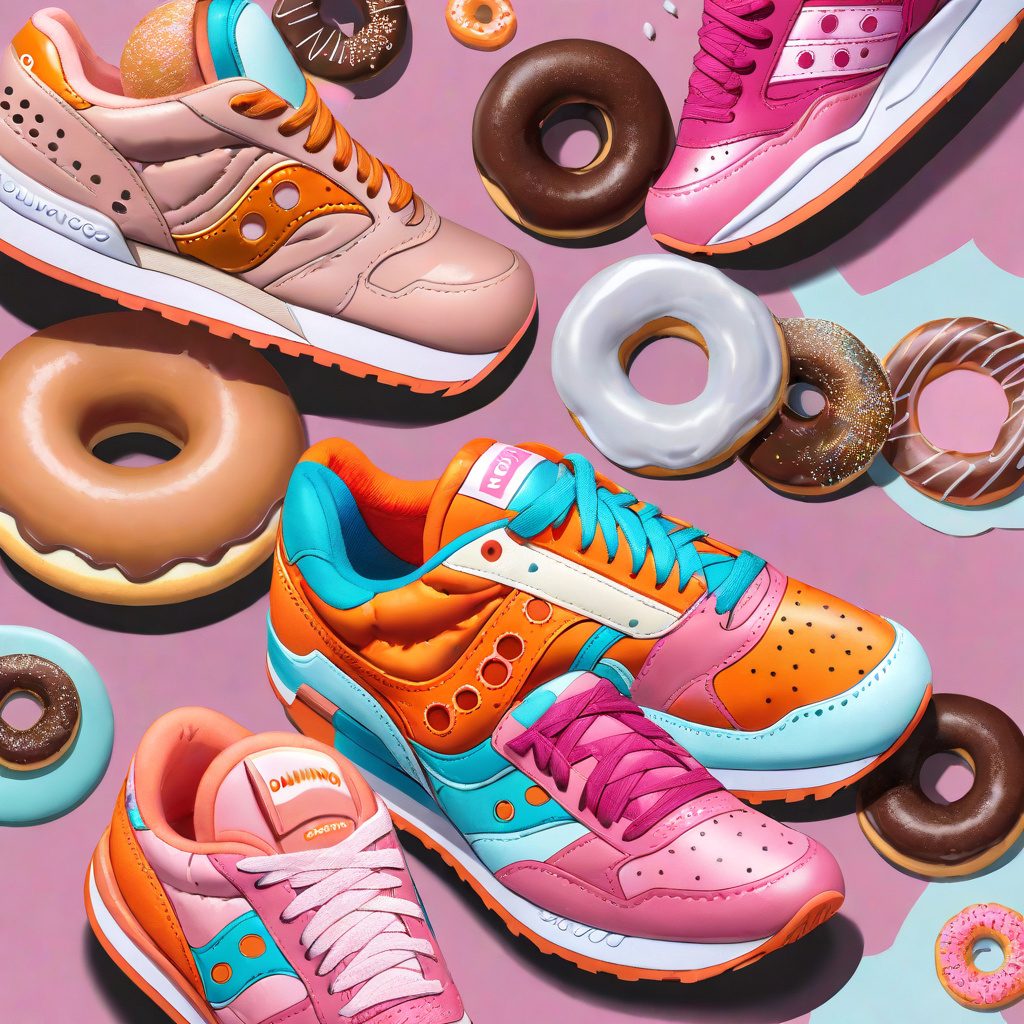
In the world of footwear collaborations, few partnerships have managed to capture the cultural zeitgeist quite like the unlikely union between Saucony, a titan of performance running, and Dunkin’, the beloved coffee and donut chain. This collaboration is more than just a marketing stunt; it represents a perfect intersection of regional pride, aesthetic playfulness, and high-quality craftsmanship. By blending the iconic orange and pink branding of Dunkin’ with the technical prowess of Saucony’s most popular silhouettes, these sneakers became instant collector items that resonated far beyond the running community.
The Origins of a Caffeinated Partnership
The collaboration first made waves in 2018, coinciding with the Boston Marathon. Given that both brands share deep roots in Massachusetts, the partnership felt like a natural tribute to local heritage. Saucony, headquartered in Waltham, and Dunkin’, which originated in Quincy, represent two pillars of the New England lifestyle: staying active and fueling up with a morning cup of coffee. The initial release featured the Kinvara 9, a lightweight trainer that was already a favorite among marathoners. By wrapping the shoe in the vibrant colors of a strawberry-frosted donut and adding coffee-bean-inspired details, the brands created a visual narrative that felt both whimsical and authentic.
Design Elements That Defined the Aesthetic
What made the Saucony x Dunkin’ collaboration stand out was the commitment to detail. These were not simply shoes with a logo slapped on the side. The designers incorporated the signature Dunkin’ color palette—bright orange and magenta—into the laces, the midsole, and the heel. Even the box was a masterpiece of thematic design, styled to look like a classic Dunkin’ donut box. For the die-hard fans, the inclusion of coffee bean-patterned liners and “America Runs on Dunkin'” branding on the tongue served as a nod to the brand’s ubiquitous slogan. This attention to detail proved that the collaboration was crafted with a deep respect for the consumer’s love of both brands.
The Evolution of the Collection
Following the massive success of the Kinvara 9, the partnership continued to evolve. Subsequent releases included the Jazz Original, a classic lifestyle silhouette that allowed the collaboration to transition from the track to the street. By choosing the Jazz Original, Saucony catered to the casual sneakerhead who might not be a runner but appreciated the retro aesthetic. These iterations featured even bolder designs, including donut-themed embroidery and sprinkles printed on the uppers. Each drop was met with high demand, proving that the “sweetest collaboration ever” had staying power.
Why This Collaboration Resonated with Fans
The success of the Saucony and Dunkin’ collaboration can be attributed to the concept of “nostalgia marketing.” For many, Dunkin’ isn’t just a coffee shop; it is a part of their daily routine, a comfort, and a symbol of home. When a brand like Saucony taps into that emotional connection, the resulting product feels personal. It wasn’t just about owning a pair of sneakers; it was about wearing a piece of culture that felt approachable and joyful. In an industry often dominated by hyper-serious tech specs and exclusive hype, the playful nature of this collaboration provided a refreshing alternative.
The Impact on Sneaker Culture
Sneaker culture has long been dominated by high-fashion houses and professional athlete signatures. The Saucony x Dunkin’ project challenged this hierarchy by proving that everyday brands could create high-heat items. It paved the way for more food-and-beverage-inspired footwear, showing brands that cross-industry partnerships can be incredibly lucrative when executed with genuine passion. This project demonstrated that when you combine a high-performance product with a brand that people love in their daily lives, the result is a cultural moment that stays relevant for years.
How to Style Your Dunkin’ Sneakers
Owning a pair of Saucony x Dunkin’ sneakers is a statement, but styling them can be a fun challenge. Because the colorways are so vibrant, they work best when paired with neutral outfits. A simple pair of black joggers or light-wash denim allows the orange and pink accents to pop without overwhelming your overall look. If you are feeling bold, you can lean into the aesthetic by wearing accessories that complement the color scheme, such as a neutral-toned beanie or a jacket with subtle orange detailing. Remember, the shoes are the centerpiece, so let them do the talking.
Maintaining Your Collectible Footwear
If you were lucky enough to snag a pair of these limited-edition sneakers, you likely want to keep them in pristine condition. Because they are often made from a mix of mesh, suede, and synthetic materials, cleaning requires a gentle touch. For the mesh sections, a soft-bristle brush and a mild detergent solution are usually enough to lift dirt. For the suede accents, use a dedicated suede eraser to buff out any marks. Avoid machine washing, as the heat and agitation can damage the delicate adhesives and color-treated materials. Storing them in a cool, dry place away from direct sunlight will prevent the vibrant colors from fading over time.
The Future of Food-Fashion Collaborations
The legacy of the Saucony and Dunkin’ collaboration continues to influence the market. We are seeing more brands seek out partnerships that blur the lines between lifestyle, food, and fitness. This trend suggests that consumers are looking for products that reflect their personality and their daily habits. While the Saucony x Dunkin’ run was limited, its impact is long-lasting. It remains a benchmark for how to successfully merge two distinct worlds into a cohesive, desirable product that brings a smile to the wearer’s face.
Technical Specifications and Performance Metrics
While the aesthetic appeal of the Dunkin’ x Saucony collaboration often dominates the conversation, it is essential to recognize the engineering beneath the frosting. The Kinvara 9, which served as the canvas for the debut release, was a significant milestone in Saucony’s evolution. Utilizing the EVERUN topsole construction, these sneakers provided substantial energy return and continuous cushioning, which was revolutionary at the time of release. The lightweight mesh upper was designed for breathability during long-distance efforts, making these not just “novelty” items, but legitimate tools for runners. By embedding these high-performance features into a visually playful silhouette, Saucony ensured that the shoe didn’t sacrifice utility for style. The heel-to-toe drop of 4mm remains a signature Saucony trait, promoting a more natural midfoot strike that appeals to serious marathoners who value biomechanical efficiency.
The Secondary Market Ecosystem and Valuation
Navigating the resale market for Saucony x Dunkin’ sneakers requires a keen understanding of rarity versus condition. Unlike mass-produced sneakers, these pairs often command prices that fluctuate based on the completeness of the original packaging. Because the “donut box” packaging was such a pivotal part of the unboxing experience, a pair sold with the original themed box can command a 20-30% premium over a pair sold loose. Collectors often look for “Deadstock” (DS) condition, meaning the shoes have never been tried on or laced. Given the age of the earlier releases, buyers should also be wary of “sole separation,” a common issue with older athletic footwear where the adhesive degrades over time. When purchasing on platforms like StockX or GOAT, always verify the authentication tags, as the high-profile nature of this collab has unfortunately birthed a minor market for replicas.
Regional Marketing and the “Boston Energy” Factor
The collaboration serves as a masterclass in hyper-local marketing that scales globally. By anchoring the campaign in the Boston Marathon, the brands tapped into a specific cultural energy—the intersection of New England stoicism and the “Dunkin’ run” culture. This strategy effectively turned local runners into brand ambassadors who felt a sense of ownership over the product. It wasn’t just a global corporate partnership; it felt like a neighborhood collaboration. This sense of place is a recurring theme in successful footwear drops, suggesting that brands seeking to replicate this success should look to their own “home turf” for inspiration. The use of specific Boston-centric imagery in promotional materials helped solidify the narrative that these shoes were a love letter to the region’s unique pace of life.
Material Science and Longevity Challenges
Working with vibrant, synthetic-heavy materials presents unique challenges in footwear manufacturing. The bright orange and pink hues used on the Saucony uppers were prone to UV degradation if exposed to prolonged sunlight. Collectors who display their shoes in glass cases often find that the magenta accents are the first to fade. Furthermore, the use of custom graphic-printed insoles—featuring sprinkles or coffee bean patterns—often sees the print peel away after just a few wears due to friction and moisture from the foot. Understanding these material limitations is crucial for owners. For those who choose to wear their pairs, applying a high-quality water and stain repellent spray immediately upon unboxing can help protect the porous mesh from accidental coffee spills or street grit, extending the life of the vibrant colorways.
The Psychology of Food-Themed Design
The success of the Saucony x Dunkin’ collaboration leans heavily into the psychology of “food cues” in design. Food is a universal language, and by mapping the visual identity of a beloved treat onto a functional object, the designers triggered a positive psychological response known as “hedonic consumption.” The bright, saturated colors are inherently stimulating, and the association with a reward (the donut) creates a subconscious link between the shoe and the act of indulgence. This is a sharp departure from the cold, clinical aesthetic of many performance running shoes. By humanizing the footwear, Saucony managed to bridge the gap between a “serious” athletic tool and a “fun” lifestyle accessory, effectively expanding their target demographic to include casual consumers who might never have considered buying a pair of running shoes for performance purposes.
Preservation Strategies for Display-Only Pairs
For the dedicated collector, the preservation of the Saucony x Dunkin’ silhouette is an archival project. If you are not wearing the shoes, the primary threats are heat, humidity, and atmospheric pollutants. It is recommended to remove the factory tissue paper, which is often acidic and can cause yellowing of the white midsoles over time. Replacing this with acid-free archival paper is a pro-tip for long-term storage. Additionally, placing a silica gel packet inside the toe box helps manage moisture levels, preventing mold growth in the mesh fibers. For those who want to keep the box pristine, wrapping it in a protective plastic sleeve or keeping it inside a secondary corrugated shipping box shielded from light will prevent the cardboard from warping or the graphic print from bleaching, ensuring the complete set remains a centerpiece of any sneaker collection for years to come.
The Evolution of Manufacturing Techniques in Co-Branded Releases
The transition from the initial Kinvara 9 release to subsequent silhouettes like the Jazz Original revealed a significant shift in Saucony’s manufacturing philosophy. While the Kinvara required a focus on performance-grade mesh and lightweight, heat-bonded overlays, the lifestyle-oriented Jazz models allowed designers to experiment with heavier textiles, such as suede and embroidered canvas. This shift is critical for collectors to understand: the durability of the “donut” embroidery on the Jazz Original is vastly different from the screen-printed graphics on the technical runners. Because the embroidery adds structural tension to the upper, these pairs are often more prone to localized seam stress if worn by individuals with a wider foot profile. Understanding these material differences allows for better care, as the suede components on the lifestyle models require moisture-wicking protection that is distinct from the synthetic-mesh care required for the performance trainers.
The Role of Packaging as a Value Multiplier
In the world of high-end sneaker collecting, the “Dunkin’ Box” occupies a legendary status. The manufacturing of these boxes was not a standard cardboard production; it involved specialized folding techniques and high-gloss lamination to replicate the look of an actual bakery box. For the secondary market, the condition of this box is frequently the deciding factor in a “Grade A” valuation. Collectors have noted that the structural integrity of the box’s tabs is highly susceptible to wear during shipping. Consequently, savvy buyers now look for listings that explicitly state the box was shipped inside a secondary “outer” container. The inclusion of the original, branded tissue paper—often printed with coffee-bean motifs—is frequently overlooked by casual sellers but is considered a non-negotiable component for serious archivists looking to complete a museum-grade set.
Biomechanical Considerations for Daily Wear
While the Kinvara platform is celebrated for its 4mm drop, which encourages a midfoot strike, it is essential to consider the impact of this geometry on non-runners. For someone accustomed to traditional, high-heel-drop lifestyle sneakers, the sudden transition to a 4mm drop can put significant strain on the Achilles tendon and calf muscles. If you are planning to wear your Saucony x Dunkin’ trainers for long periods of walking, it is recommended to “break them in” gradually. The EVA+ midsole material, while exceptionally responsive for road racing, has a compression memory that adapts to the wearer’s stride over time. By alternating these sneakers with other footwear for the first few weeks, you allow the midsole to contour to your foot shape without causing immediate material fatigue or discomfort.
Navigating Authentication in a High-Fraud Market
The immense popularity of this collaboration inevitably attracted counterfeiters. When evaluating a potential purchase, the most common “tell” is the precision of the color saturation on the midsole. Official Saucony releases utilized a high-density ink process for the orange and pink gradients, whereas replicas often exhibit “dot matrix” patterns or color bleeding at the transition points. Furthermore, the font weight on the “America Runs on Dunkin’” tongue branding is frequently off-center or slightly blurred on imitation pairs. Always inspect the stitching density around the heel counter; genuine Saucony manufacturing employs a tight, uniform stitch count that is notoriously difficult for third-party factories to replicate without industrial-grade equipment. If the price of a listing seems too good to be true, it is almost certainly a reproduction that lacks the technical integrity of the original.
The Cultural Intersection of “Coffee Culture” and Sneaker Hype
The Saucony x Dunkin’ project effectively tapped into a burgeoning trend where consumer lifestyle habits are codified through fashion. By aligning with a coffee chain, Saucony shifted the narrative of the sneaker from a “sports tool” to an “essential morning accessory.” This psychological anchoring is profound; it suggests that the sneaker is not just for the gym, but for the ritual of the morning commute. This crossover success has paved the way for other food-and-beverage brands to seek similar partnerships, yet few have managed to replicate the specific synergy of the Dunkin’ collab. The reason is simple: authenticity. Because both brands were genuinely rooted in the same geographic region, the partnership never felt forced. It serves as a case study for future collaborations, proving that shared cultural heritage is a stronger marketing asset than simple brand recognition.
Strategies for Long-Term Material Preservation
Given that these sneakers utilize a combination of synthetic mesh and organic suede, they are susceptible to environmental degradation if not stored correctly. Humidity is the primary enemy; in damp climates, the glue used to bond the midsole to the upper can weaken, leading to “sole separation.” To combat this, collectors should store their pairs in an environment with a stable relative humidity of approximately 40-50%. Additionally, avoid the common mistake of storing the shoes in plastic bags, which can trap moisture and promote mildew growth on the inner lining. Instead, use breathable, acid-free fabric bags. If you notice the white foam midsoles beginning to yellow—a natural chemical process known as oxidation—there are specialized de-oxidizing solutions available that can safely restore the brightness without damaging the structural foam, though these should be used with extreme caution and only by experienced restorers.
Frequently Asked Questions
Q: Are the Saucony x Dunkin’ sneakers still available for purchase? A: The original releases were limited-edition drops and sold out quickly. You can still find them on secondary resale markets like StockX, GOAT, or eBay, though prices vary based on condition and size.
Q: Were these shoes intended for actual running? A: Yes, the Kinvara models included in the collaboration were fully functional, high-performance running shoes. Many runners actually used them for training, while others chose to keep them as collector’s items.
Q: Did the collaboration include apparel? A: While the footwear was the primary focus, the collaboration was occasionally accompanied by limited-run merchandise like socks, hats, and t-shirts that featured the co-branded logo and the iconic donut-themed colorways.
Q: Is there any difference in sizing compared to standard Saucony shoes? A: Generally, the Saucony x Dunkin’ collaborations followed the standard sizing of the base models (like the Kinvara or Jazz). It is usually recommended to stick to your true size, but checking individual model size charts is always advised.
Q: Why did these two specific brands collaborate? A: Both Saucony and Dunkin’ are iconic Massachusetts-based brands. The partnership was a celebration of their shared New England heritage and a tribute to the “America Runs on Dunkin'” lifestyle, making it a perfect fit for a regional marketing campaign that went global.