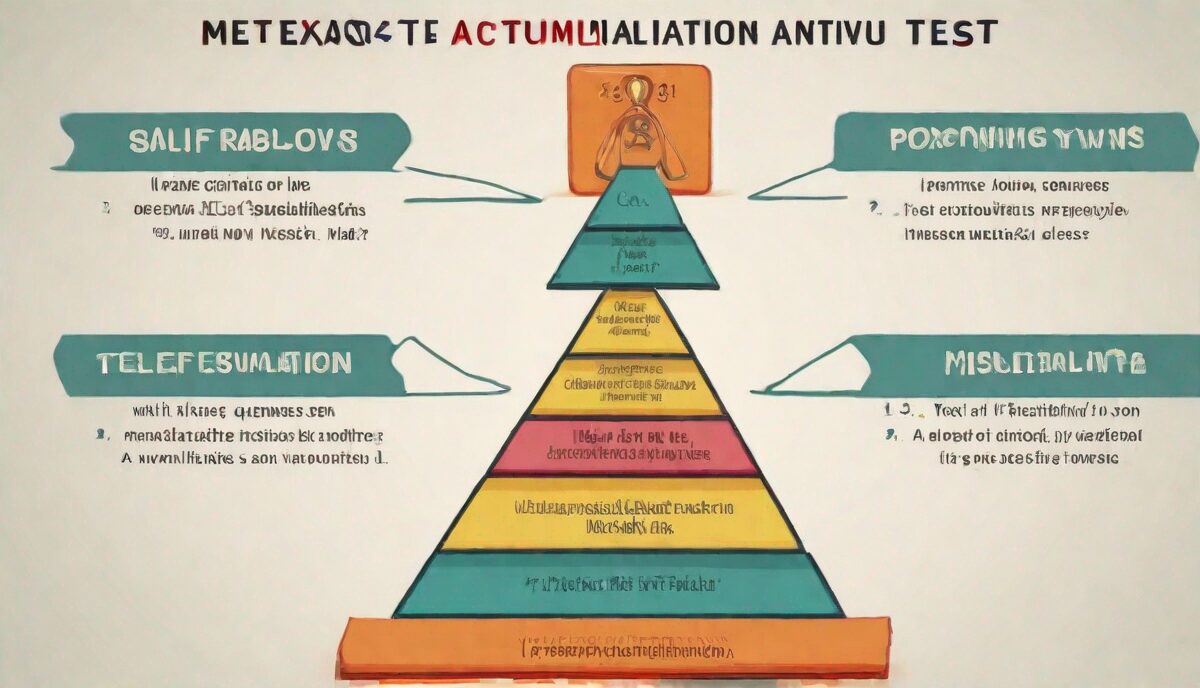
Self-actualization represents the fulfillment of one’s potential, a concept popularized by psychologist Abraham Maslow. In his hierarchy of needs, Maslow depicted self-actualization as the pinnacle of personal development. This article will delve into a 34-question test based on Maslow’s principles, helping you understand where you stand on the path to self-actualization.
Understanding Self-Actualization
Before we jump into the test itself, let’s explore what self-actualization really means. According to Maslow, self-actualized individuals are those who have realized and are fulfilling their capabilities and talents, and are engaged in the pursuit of personal growth and peak experiences. They have a strong sense of self, ethics, creativity, and are often described as fulfilled and purpose-driven.
How Can a Test Help?
A self-actualization test is an introspective tool designed to reflect on various aspects of your life and behavior that contribute to your personal growth. While no test can fully capture the complexity of the human experience, it can provide a framework to identify areas that may need attention and improvement.
34 Questions to Explore Your Potential
The following questions are inspired by Maslow’s theory of self-actualization. Answer them honestly to gauge your journey towards reaching your highest potential:
- Do you strive to solve problems outside of your personal life, contributing to society or the greater good?
- Do you feel comfortable being alone, and do you use that time for reflection or relaxation?
- Are you able to accept things as they are, even if they are not ideal?
- …
- Do you feel a sense of kinship with the human race, and a connection to others?
- Do you have a sense of humor that is not at the expense of others?
- Can you look at life objectively, and see your faults as well as your strengths?
Interpreting Your Results
After completing the test, reflect on your answers. If you find that most of your responses are affirmative, you may be well on your way to self-actualization. However, if many answers are negative, consider it an opportunity to explore areas where you can grow. Remember, self-actualization is a continuous journey, not a destination.
Implementing Change
Identifying areas for improvement is the first step. The next is to implement changes that align more closely with self-actualization principles. This may involve setting new goals, seeking out new experiences, and reflecting on personal values and behaviors.
The Anatomy of Peak Experiences
Maslow emphasized that self-actualized individuals frequently encounter “peak experiences”—moments of profound awe, transcendence, or overwhelming happiness. These are not merely fleeting pleasures but transformative events where one feels completely unified with the world. To cultivate these, one must actively seek out “flow states” as described by Mihaly Csikszentmihalyi. Consider a scenario where you are deeply engaged in a creative project, such as painting or coding, to the point where your sense of time dissolves. This is a micro-version of a peak experience. To integrate this into daily life, intentionally schedule “unstructured focus time.” Avoid the common pitfall of filling every gap in your calendar with low-level consumption, such as social media scrolling, which actively inhibits the deep cognitive immersion required for peak experiences. Instead, practice radical presence by removing digital distractions during your most productive hours.
Overcoming the Deficiency-Need Trap
A critical barrier to self-actualization is becoming stuck in the cycle of “D-needs” (deficiency needs), such as the constant pursuit of approval, financial validation, or physical comfort. While these are necessary, they are not sufficient for growth. When you prioritize extrinsic rewards over intrinsic interest, you stunt your potential. For instance, if you choose a career path solely for prestige rather than intellectual resonance, you are feeding a deficiency need. To pivot toward “being-values” (B-values), conduct a values audit. List your top five life decisions from the last year and ask: Was this driven by a desire to impress others, or by an internal drive to master a skill? By consciously shifting your focus toward mastery and autonomy, you begin to transition from a survival-oriented mindset to a growth-oriented existence.
The Role of Autonomy and Non-Conformity
Self-actualizers are famously autonomous, meaning they are not easily swayed by the pressures of societal consensus. This often manifests as a healthy form of non-conformity. However, this does not mean being contrarian for the sake of rebellion. It means having an internal compass that is stronger than external expectations. To develop this, practice “principled dissent.” When you find yourself agreeing with a group simply to avoid friction, pause and ask yourself if your agreement aligns with your core ethics. If it does not, articulate your perspective calmly and clearly. This strengthens your psychological independence and prevents the erosion of identity that occurs when one conforms to social norms that conflict with their personal truth.
Cultivating Philosophical Humility and Objectivity
A hallmark of high-functioning individuals is the ability to maintain “philosophical humor”—the capacity to see the inherent absurdity of human existence without becoming cynical or nihilistic. This requires a detached but compassionate perspective. When you encounter a setback, such as a professional failure or a difficult interpersonal conflict, attempt to look at the situation from the viewpoint of a neutral observer. Ask: “What is the objective reality here, stripped of my ego’s narrative?” This practice reduces the emotional charge of failures, turning them into data points for growth rather than indictments of your character. It allows you to maintain the equanimity necessary to continue your development regardless of external circumstances.
Deepening Interpersonal Connections (Gemeinschaftsgefühl)
Maslow identified a profound sense of identification with the human race, or *Gemeinschaftsgefühl*, as a core trait of the self-actualized. This goes beyond simple empathy; it is the recognition that the barriers between “self” and “other” are, in many ways, social constructs. To foster this, engage in “active listening” that requires you to set aside your own agenda. Practice listening to someone with the specific goal of understanding their worldview rather than formulating a rebuttal. By expanding your capacity for genuine connection, you move away from transactional relationships—where you only interact for mutual benefit—and toward transformative relationships, where both parties are elevated by the exchange of ideas and shared vulnerability.
The Paradox of Acceptance and Change
There is a delicate balance between accepting the world as it is and striving to improve it. If you accept everything, you become passive; if you demand everything change, you become bitter. The self-actualized individual masters the art of “active acceptance.” This means accepting the reality of a situation—such as a difficult political climate or a personal limitation—without letting it paralyze you. Once you accept the baseline reality, you are free to act within it. For example, rather than lamenting the state of your industry, accept the current constraints and identify one small, creative way to innovate within that space. This mindset shift transforms frustration into agency.
Integrating Shadow Elements
Self-actualization is not about achieving perfection, but about achieving wholeness. This involves integrating the “shadow”—the parts of your personality that you may find uncomfortable or socially unacceptable, such as aggression, selfishness, or fear. By acknowledging these traits rather than suppressing them, you gain control over them. If you feel a surge of jealousy, don’t hide it; examine it. Ask what it reveals about your unmet needs. By consciously integrating these aspects, you become a more authentic and grounded individual. This prevents the “false self” from taking over, ensuring that your journey toward potential is built on a foundation of total self-awareness rather than a curated, surface-level persona.
FAQ Section
What is self-actualization?
Self-actualization is the realization or fulfillment of one’s talents and potentialities, and is considered the highest level of psychological development in Maslow’s hierarchy of needs.
Can everyone achieve self-actualization?
While Maslow believed everyone has the potential for self-actualization, not everyone will reach it. It requires a certain level of personal development and circumstances.
Is the self-actualization test scientifically validated?
The test is a reflection tool based on Maslow’s theory, but it is not a scientifically validated instrument. It should be used as a guide rather than a definitive assessment.
How often should I take the self-actualization test?
There’s no set frequency, but it can be helpful to revisit the test periodically to track your personal growth and development.
What should I do after taking the test?
Use your results as a starting point for self-reflection and personal development. Identify areas for growth and set actionable goals to work towards self-actualization.
Related posts:
 Fitness Test Guide
 HPV Test: The New Alternative to Pap Smears
 Maslow’s Hierarchy of Needs Explained
 What is Humanistic Psychology?
 What is Self Actualization? Theory & Examples
 Rogers’ Actualizing Tendency Theory
 What is Peak-End Theory? A Definition (Incl. Examples)
 Dabrowski’s Theory of Positive Disintegration