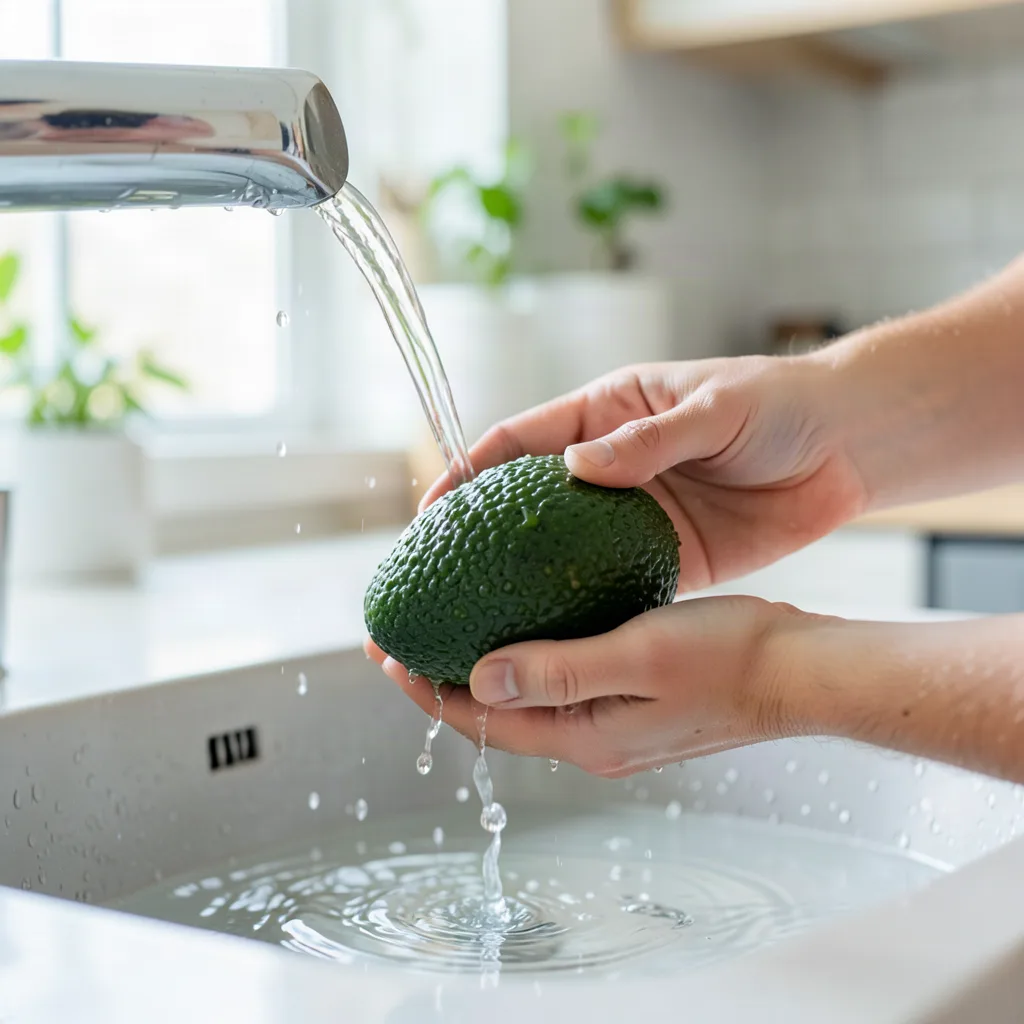
You stand in your kitchen, a perfectly ripe avocado in hand, ready to make your famous guacamole or a simple slice of toast. A question flickers through your mind: should I wash this? It seems smooth, maybe even a bit waxy. It has a peel you’re going to discard anyway. It’s a common hesitation, one that pits convenience against a growing awareness of food safety. The answer, backed by food scientists and safety agencies, is a definitive yes. Washing avocados is a small, simple step with significant implications for your health.
Key takeaways
- Bacteria on avocado skins can transfer to the edible flesh when you slice through with a knife.
- Use cool running water and a clean brush to scrub the entire surface for 20-30 seconds.
- Pay special attention to the stem area, where contaminants and dirt are most likely to lodge.
- Dry the avocado thoroughly with a clean towel before slicing to further reduce microbial presence.
- Washing is necessary for both conventional and organic avocados to remove dirt, bacteria, and waxes.
This practice isn’t about the flesh you eat; it’s about the journey that rough, bumpy skin took to get to your counter. Understanding why and how to properly wash avocados can help you avoid invisible contaminants and enjoy this nutritious fruit with greater peace of mind.
The Hidden Journey of Your Avocado
Before an avocado reaches your home, it embarks on a long journey fraught with potential contamination points. It’s grown on a tree, often in a large orchard, where it’s exposed to soil, water, wildlife, and agricultural chemicals. During harvesting, it’s handled by workers, packed into bins, and transported. At packing facilities, it may be washed, sorted, treated with fungicides or waxes, and packed again. Finally, it travels through distribution centers to grocery stores, where it’s displayed and handled by countless shoppers before you pick it up.
At every single one of these stages, microorganisms like Listeria monocytogenes, Salmonella, and E. coli can hitch a ride. A landmark study by the U.S. Food and Drug Administration (FDA) tested over 1,600 avocados and found Listeria on the skins of about 18% of them. The crucial finding? The bacteria was found only on the skins. This highlights the primary risk: transfer. When you slice through an unwashed avocado with a knife, the blade carries whatever is on the skin directly into the soft, edible flesh. Your fingers can also transfer pathogens from the skin to the flesh as you peel it.
Debunking the “I Peel It Anyway” Myth
The most common argument against washing is, “I’m not eating the skin, so why bother?” This logic is fatally flawed. Think of the avocado skin like the outer packaging of any other food. You wouldn’t open a bag of salad with dirty scissors and expect the leaves inside to stay clean. The knife is your scissors. In one motion, it pierces the contaminated outer layer and travels into the sterile interior, seeding the flesh with bacteria.
Furthermore, the avocado’s unique texture works against you. The bumpy, irregular skin of a Hass avocado provides countless microscopic nooks and crannies where pathogens can hide, making them harder to remove with a casual rinse. A proper wash is designed to dislodge these particles. Skipping this step means you’re relying on chance that your knife and hands avoid every contaminated spot—a risky gamble with your health.
Step-by-Step Guide to Washing Avocados Correctly
Washing an avocado isn’t complicated, but doing it effectively requires a specific method. A quick splash under the tap isn’t enough. Follow this thorough routine to ensure you’re removing as much contamination as possible.
- Wash Your Hands First: Always start with clean hands using soap and warm water for at least 20 seconds.
- Rinse Under Cool Running Water: Hold the avocado under a stream of cool or lukewarm water. Cold water is fine; very hot water can start to cook the delicate flesh near the skin.
- Scrub Gently But Thoroughly: Use a dedicated clean produce brush, a new kitchen sponge (reserved for produce), or even just your fingers. Scrub the entire surface, paying extra attention to the stem area (a major point of entry for contaminants) and any deep grooves in the skin. Spend at least 20-30 seconds scrubbing.
- For Added Assurance, Use a Vinegar Solution: For a deeper clean, especially if the avocado looks particularly dusty or you have concerns, create a solution of 1 part white vinegar to 3 parts water in a bowl. Soak the avocado for 5-10 minutes, then scrub and rinse under running water. The mild acidity of vinegar can help eliminate more bacteria.
- Dry with a Clean Cloth or Paper Towel: Pat the avocado dry with a clean towel. This final step helps remove any remaining microbes that were loosened but not rinsed away.
- Proceed to Cut: Only now should you place the clean, dry avocado on a clean cutting board and use a clean knife to cut it.
This process takes less than a minute but creates a critical barrier between potential pathogens and your food.
Understanding Wax and Produce Coatings
You may notice that some avocados, particularly those that are not organically grown, have a slight shine or waxy feel. This is often a food-grade coating applied after harvest. These coatings serve legitimate purposes: they reduce moisture loss, slow down the ripening process to extend shelf life, and can sometimes contain approved fungicides to prevent mold during transport and storage.
While these coatings are regulated and considered safe for consumption, they are another reason to wash. You want to remove as much of this external coating as possible before your knife penetrates it. The scrubbing action in the washing process helps break down and wash away these waxes. If you prefer to avoid them entirely, seek out organic avocados, which by certification standards cannot have synthetic waxes or fungicides applied (though they may use organic alternatives like beeswax).
Special Considerations for Organic and Conventional
Does the type of avocado change the washing protocol? In principle, no. The mechanical process of washing is the same. However, your reasons for washing may have different emphases.
- Conventional Avocados: Here, the focus is on removing potential chemical residues (pesticides, fungicides) as well as dirt and microbes. Scrubbing is especially important to tackle wax coatings.
- Organic Avocados: While certified organic farming prohibits the use of synthetic pesticides and fertilizers, it does not mean the fruit is free from natural pathogens from soil, manure, or water. The risk of microbial contamination like Salmonella or Listeria is identical, if not potentially higher, as organic farming may rely more on natural fertilizers. Washing remains non-negotiable to remove dirt, bacteria, and any allowed natural coatings.
The bottom line is that the “organic” label relates to farming practices, not post-harvest sterility. Both types require a thorough wash.
Integrating Avocado Washing into Your Kitchen Routine
Making avocado washing a habit is easier when you incorporate it into a broader kitchen food safety system. The goal is to create a default behavior for all produce.
- Designate Tools: Keep a small produce brush in a jar by your sink. Have a specific, clean kitchen towel or paper towels ready for drying.
- Wash Before Storage or Use? Experts are divided. Washing just before use is generally recommended, as excess moisture on stored produce can promote mold growth. However, washing a batch of avocados when you get home, drying them thoroughly, and then storing them can be a practical timesaver and reduces the risk of cross-contaminating your kitchen surfaces later. If you wash before storage, ensure they are completely dry.
- Clean All Surfaces: After washing and cutting any produce, get in the habit of immediately washing your cutting board, knife, and counter with hot, soapy water. This prevents the spread of any residual contaminants to other foods.
Think of it as a chain of cleanliness: clean hands, clean produce, clean tools, clean surfaces.
The Broader Impact: Food Safety Mindset
Adopting the practice of washing avocados is about more than just one fruit; it’s about cultivating a proactive food safety mindset. In a world of complex food supply chains, taking personal responsibility for the final cleaning step is a powerful form of self-care. It empowers you to reduce risks that are otherwise invisible.
This mindset extends to other produce often mistakenly skipped: melons (like cantaloupe, whose netted skin is a bacteria trap), citrus fruits you zest, mangoes, and even bananas if you handle the flesh after peeling. The principle is universal: if the edible part comes into contact with the outer surface during preparation, the outer surface needs to be clean.
By washing your avocados, you’re not just protecting yourself from a stomach bug. You’re protecting vulnerable individuals in your household—the very young, elderly, pregnant, or immunocompromised—for whom a Listeria infection can have severe consequences. It’s a simple, compassionate act of care.
The Science of Surface Adhesion: Why Water and Friction Work
To understand why the simple act of washing with water and scrubbing is so effective, we need to look at the physics and chemistry of contamination on produce surfaces. Pathogens and dirt don’t simply sit on the skin; they adhere through various mechanisms. Listeria and Salmonella produce biofilm-forming capabilities that allow them to attach to surfaces with surprising tenacity. These biofilms are communities of bacteria encased in a self-produced polymeric matrix that anchors them to the avocado’s natural wax cuticle.
The mechanical action of scrubbing under running water works through three primary mechanisms: hydraulic shear, mechanical dislodgement, and surfactant-like effects. The force of running water creates hydraulic shear that helps lift contaminants. The bristles of a produce brush or the friction from your fingers provide mechanical dislodgement, physically breaking the attachment points. Water itself acts as a polar solvent, helping to dissolve some of the natural waxes and oils that may trap contaminants. Research from the Journal of Food Protection demonstrates that a 30-second scrub under running water removes 90-99% of surface pathogens—comparable to many chemical sanitizers without their potential residues.
Consider the avocado’s stem scar, the small circular indentation where the fruit connected to the tree. This area presents a unique challenge: it’s essentially a microscopic cavern with cellulose structures that can wick contaminants inward. During washing, you must specifically target this area with your brush or fingers, angling water flow directly into the depression. The stem scar’s porous nature means that simply rinsing over it may not penetrate deeply enough to remove lodged particles. A targeted scrub with firm yet gentle pressure ensures this critical entry point is addressed.
Temperature Matters: The Cold Water vs. Warm Water Debate
You might wonder if warmer water would be more effective at killing bacteria. While heat does destroy pathogens, the temperature needed to accomplish this would damage the avocado. Water hot enough to sanitize (at least 165°F/74°C) would begin cooking the fruit’s outermost layer, affecting texture and potentially promoting spoilage. More importantly, hot water can actually “set” certain contaminants, particularly proteins and waxes, making them harder to remove. The heat can cause proteins from bacteria or organic matter to denature and bond more strongly to the avocado’s surface.
Cold water (40-70°F/4-21°C) is actually preferable for several reasons. First, it preserves the fruit’s cellular structure. Avocado cells near the skin remain intact, preventing the release of enzymes that can cause browning. Second, cold water creates a temperature differential that helps loosen some contaminants through thermal contraction—different materials contract at different rates when cooled, potentially breaking bonds. Third, and most practically, cold tap water is immediately available and safe for handling without risk of scalding.
Room temperature water is also perfectly acceptable. The key variable isn’t temperature but mechanical action. A study comparing wash efficacy at different temperatures found no statistically significant difference in pathogen removal between cold, warm, and hot water when equivalent scrubbing was applied. What mattered was duration and thoroughness of mechanical cleaning. This reinforces that your effort in scrubbing all surfaces—including the often-missed base opposite the stem—makes more difference than water temperature.
The Vinegar Solution: Chemistry Beyond Folk Wisdom
The recommendation to use diluted vinegar isn’t just kitchen lore; it’s grounded in food science. White vinegar (typically 5% acetic acid) creates an environment that’s hostile to many bacteria. At a dilution of 1:3 with water, the solution reaches approximately 1.25% acetic acid concentration. This acidity disrupts bacterial cell membranes and internal pH balance, leading to cell death for many pathogens. However, it’s not a sterilant at this concentration—it reduces bacterial load rather than eliminating it entirely.
The vinegar soak serves another crucial function: it helps dissolve the natural and applied waxes on the avocado skin. These waxes are often lipophilic (fat-loving), and the acetic acid helps break them down, exposing contaminants that might be trapped beneath. After a 5-10 minute soak, scrubbing becomes more effective because you’re working on a surface where the protective wax layer has been partially compromised.
Important nuance: always rinse thoroughly after a vinegar soak. The residual acidity, while minimal, could potentially affect the flavor if you’re zesting the skin (uncommon with avocados but worth noting) or if it transfers to your cutting board. Also, vinegar solutions lose efficacy over time and with exposure to organic matter. If you’re washing multiple avocados, refresh the solution after every 2-3 fruits, or simply use it as a final rinse after initial scrubbing rather than a soak medium. For those sensitive to vinegar odors, lemon juice diluted in water (1:4 ratio) provides similar acidity with a different scent profile, though citric acid is slightly less effective against some bacterial strains than acetic acid.
Cutting Technique: Minimizing Contamination Transfer
Even with a perfectly washed avocado, your cutting method can reintroduce contamination if not performed thoughtfully. The standard method—slicing around the pit, twisting to separate halves, then whacking the pit with a knife blade—creates multiple contamination vectors. Each time the knife contacts the skin, then penetrates to the flesh, it carries whatever micro-contaminants remain. The twisting action can cause skin particles to flake off toward the exposed flesh.
Consider this optimized cutting sequence for maximum safety: First, place the washed and dried avocado on a clean cutting board. Using a clean chef’s knife, make a shallow incision just through the skin along the equator, not cutting into the flesh. This creates a starting point. Then, using your fingers (clean, of course), peel back the skin from this incision point, working gradually around the fruit. Once peeled, place the naked avocado flesh on the board, then slice as needed. This method completely avoids having the knife blade travel from skin through to flesh.
If you prefer the traditional cut-and-twist method, implement a “blade reset” step. After initially cutting through to the pit and completing the circle, wipe the knife blade with a clean paper towel before twisting and separating the halves. This removes any skin particles that may have adhered during the initial cut. Then, after removing the pit, give the knife a quick rinse under running water and dry before dicing the flesh. This two-step cleaning of the knife—once after skin contact, once after pit removal—creates multiple barriers against transfer. For restaurant-level precaution, some professional kitchens use separate knives for the initial skin-penetrating cut and subsequent flesh preparation, treating them like the separate boards used for meats and vegetables.
Storage Implications: How Washing Affects Ripening and Shelf Life
Washing affects an avocado’s natural protective coating, which in turn influences its ripening trajectory. Avocados, like many fruits, have a natural waxy cuticle that regulates moisture loss and gas exchange. When you scrub this surface, you’re partially removing or disrupting this barrier. This can lead to faster moisture loss (desiccation) if not stored properly, but it can also allow for more uniform ripening by removing areas where the cuticle might be unevenly thick.
If you choose to wash avocados immediately upon bringing them home (a practice that saves time and contains potential contaminants to your sink area), thorough drying is non-negotiable. Use a clean kitchen towel or paper towels and pat vigorously, paying special attention to the stem scar area where water can pool. Then place them in a single layer, not touching, on a dry towel or rack for 15-30 minutes to ensure complete evaporation of any residual moisture in crevices. Only then transfer to your storage method—whether countertop ripening, refrigerator, or specialized avocado keeper.
For refrigerated storage of washed avocados, consider wrapping each fruit loosely in a paper towel before placing in the crisper drawer. The paper towel acts as a moisture buffer, absorbing any condensation while allowing the fruit to breathe. Avoid plastic bags or airtight containers for washed avocados, as these trap humidity and promote mold growth on the compromised surface. Unwashed avocados have more flexibility in storage methods because their natural protective coating remains intact. This creates a practical decision point: wash early for contamination containment but require more careful storage, or wash just before use for simpler storage but risk spreading contaminants during handling in your kitchen.
Beyond Bacteria: Chemical and Environmental Contaminants
While bacterial pathogens receive the most attention, avocados can carry other contaminants worth addressing through washing. Pesticide residues, though regulated, can persist on conventional avocados. The Environmental Working Group’s annual Shopper’s Guide to Pesticides in Produce consistently places avocados among the “Clean Fifteen” with relatively low pesticide residues, but they’re not residue-free. Washing helps remove some surface pesticides, particularly those that are water-soluble or not systemically absorbed.
More concerning are environmental contaminants like heavy metals (lead, cadmium) from soil or irrigation water, and polycyclic aromatic hydrocarbons (PAHs) from air pollution. These contaminants bind differently to the fruit’s surface than bacteria do. Heavy metals often bind to organic matter in the wax layer, while PAHs, being lipophilic, integrate into the natural oils of the skin. Scrubbing with a brush helps remove the wax layer where many of these contaminants reside. Adding a small amount of baking soda to your wash water (1 teaspoon per quart) can help with certain pesticide residues, as its mild alkalinity can break down some compounds. Rinse thoroughly afterward.
Don’t forget physical contaminants: dust, soil particles, and occasional field debris like tiny insect parts or plant fragments. These may seem harmless compared to invisible pathogens, but they can carry their own microbial loads or simply be unpleasant to have transferred to your food. The irregular surface of Hass avocados is particularly adept at trapping such particles in its recesses. A strong stream of water combined with scrubbing dislodges these physical contaminants effectively—often visibly in the wash water, providing immediate feedback that your cleaning is working.
Special Populations: When Avocado Washing Isn’t Optional
For most healthy adults, the risk from an unwashed avocado, while real, often results in nothing more than a potential mild gastrointestinal upset if contamination occurs. However, for specific populations, avocado washing shifts from recommended practice to critical necessity. Immunocompromised individuals—those undergoing chemotherapy, organ transplant recipients, people with HIV/AIDS, or those on immunosuppressive medications for autoimmune conditions—have diminished capacity to fight off pathogens. For them, Listeria monocytogenes isn’t just a food poisoning risk; it can cause listeriosis, which has a mortality rate of 20-30% in vulnerable groups.
Pregnant women represent another high-risk group. Listeriosis during pregnancy can lead to miscarriage, stillbirth, premature delivery, or life-threatening infection in the newborn. The CDC specifically advises pregnant women to avoid unpasteurized dairy and delicatessen meats, but the same precautionary principle applies to produce that may carry Listeria. Washing avocados thoroughly reduces this risk substantially. In households with vulnerable individuals, consider implementing a “double-wash” protocol: initial scrub under running water, followed by a 10-minute soak in vinegar solution, then a final scrub and rinse.
Similarly, households with young children, whose immune systems are still developing, should maintain strict washing protocols. Children under five experience higher rates of severe complications from Salmonella and E. coli infections. Elderly individuals, particularly those over 65, also face increased risk of severe outcomes from foodborne illnesses. In these situations, washing isn’t just about personal preference; it’s a concrete protective measure for those most susceptible to harm. This perspective transforms the act from a chore to an act of care—taking one minute to wash can prevent days of illness or, in worst cases, hospitalization for those you’re feeding.
FAQ: Your Avocado Washing Questions Answered
1. Does washing avocados in soapy water make them taste like soap?
No, and you should never use dish soap or detergent to wash produce. These products are not designed for consumption and can leave residues that are difficult to rinse off and may cause illness if ingested. Use only clean, cool running water and mechanical scrubbing. For a deeper clean, a diluted vinegar solution is a safe, food-grade alternative that rinses away cleanly.
2. I bought pre-washed, ready-to-eat avocado halves. Do I need to wash those?
No. Commercially pre-cut and packaged produce, including avocado, has undergone a rigorous washing and sanitizing process in a controlled facility. The FDA has specific guidelines for these operations. Washing them again at home could actually reintroduce contaminants from your sink or hands. Simply open the package and use them as directed, ensuring you consume them by the use-by date.
3. What about the pit? Should I wash the knife after removing it before scooping the flesh?
This is an excellent, nuanced question. The knife that cut through the skin touched the pit as it went in. When you twist and remove the pit, it often comes out with the knife blade. That pit has been in contact with the potentially contaminated knife. If you use a spoon to scoop the flesh afterwards, it’s generally safe. However, if you plan to use the knife again to slice or dice the avocado flesh inside the skin, it is a very good practice to quickly rinse and dry the knife blade after removing the pit to prevent any cross-contamination from the pit back to the edible flesh.
4. Is the risk the same for smooth-skinned (Florida) avocados as for bumpy (Hass) avocados?
The risk of surface contamination is fundamentally the same, as both go through similar growing and handling processes. However, the smooth skin of a Florida avocado may be slightly easier to clean thoroughly, as it lacks the deep crevices of a Hass where bacteria can hide. The washing method remains identical—scrubbing is still necessary to remove waxes and bonded contaminants.
5. Can I use a commercial produce wash spray instead of water and scrubbing?
The USDA and FDA state that plain running water is just as effective—if not more so—than commercial produce washes. Studies have shown these washes do not necessarily remove more pesticides or bacteria than a thorough water scrub, and they add an unnecessary cost. More importantly, you must still rinse off the produce wash residue with water. Sticking with the simple, proven method of water and friction is the most reliable and economical choice.
Related posts:
 Mini Avocados at Trader Joe’s
 Best Day to Buy Avocados
 The Hidden Magnesium Power of Avocados Will Blow Your Mind
 The Right Way to Cut an Avocado
The Right Way to Cut an Avocado
The Right Way to Cut an Avocado
 Why Avocado Toast Dominated Breakfast Trends in 2017
 Guac is Back: Why Avocado Prices Are Finally Going Down
 Magic Avocado Sauce Recipe