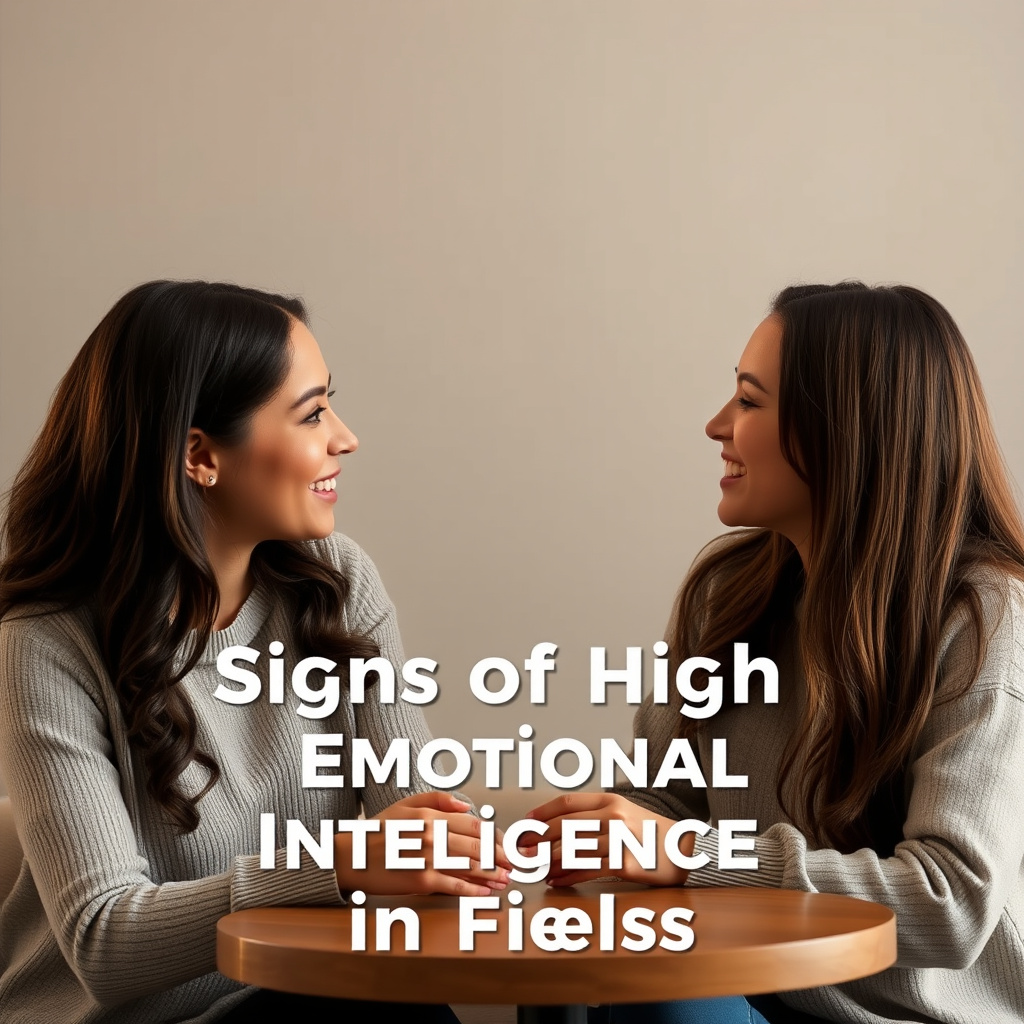
Friendships thrive when both people can recognize, understand, and manage emotions in themselves and each other. High emotional intelligence shows up in everyday moments, from the way a friend reacts to bad news to how they celebrate a promotion. Spotting these signs helps you nurture deeper connections and choose relationships that support your wellbeing.
They Listen Without Judging
An emotionally intelligent friend gives full attention when you speak. They put away distractions, maintain eye contact, and resist the urge to interrupt with advice. Instead of evaluating your story, they focus on the feelings behind the words. You might notice them nodding, paraphrasing what you said, or asking gentle follow‑up questions such as ‘How did that make you feel?’ This creates a safe space where you can share without fear of criticism.
- They silence their phone during conversations.
- They repeat key points to confirm understanding.
- They avoid phrases like ‘You should have’ or ‘That’s not a big deal.’
They Validate Feelings Before Offering Solutions
When you express frustration, a high‑EQ friend first acknowledges the emotion. They might say ‘That sounds really disappointing’ or ‘I can see why you’re upset.’ Only after you feel heard do they ask if you want help brainstorming options. This order respects your autonomy and prevents the conversation from feeling like a lecture.
Practical tip: notice whether your friend pauses after your venting and says something like ‘It makes sense that you feel that way.’ That pause signals validation.
They Communicate Boundaries Clearly
Emotionally intelligent friends know their limits and state them without guilt. They might say ‘I’m not able to talk about this right now, can we revisit it tomorrow?’ or ‘I need some alone time this evening.’ Clear boundaries protect both parties and model healthy self‑care. You’ll see them respect your boundaries in return, creating a reciprocal dynamic.
- They use ‘I’ statements rather than blame.
- They follow through on agreed limits.
- They apologize if they unintentionally cross a line.
They Show Empathy in Conflict
Disagreements are inevitable, but a friend with high emotional intelligence approaches them with curiosity rather than defensiveness. They ask ‘Can you help me understand your perspective?’ and reflect back what they hear. They avoid name‑calling, stonewalling, or bringing up past grievances. The goal becomes mutual understanding, not winning.
Actionable step: after a heated exchange, notice if your friend suggests a short break and returns with a calmer tone. That self‑regulation is a hallmark of EQ.
They Celebrate Others’ Success Without Envy
When you land a new job or finish a marathon, an emotionally intelligent friend expresses genuine joy. They might send a thoughtful message, plan a small celebration, or simply say ‘I’m so proud of you.’ Their happiness for you is not tinged with comparison or resentment. This generosity of spirit strengthens trust and encourages you to share future wins.
- They ask details about your achievement.
- They avoid shifting the focus to their own accomplishments.
- They remember milestones and follow up later.
They Adapt Their Support Style
Different situations call for different kinds of help. A high‑EQ friend reads the context and adjusts. If you’re grieving, they may offer a quiet presence or a meal. If you’re preparing for a presentation, they might rehearse with you or share resources. They ask ‘What would be most helpful right now?’ instead of assuming.
Tip: observe whether your friend checks in with a simple ‘How can I support you today?’ That question signals flexibility.
They Reflect on Their Own Emotional Patterns
Self‑awareness is the foundation of emotional intelligence. Friends who regularly examine their triggers, biases, and habits can articulate why they reacted a certain way. You might hear them say ‘I noticed I get defensive when I feel criticized, so I’m working on pausing before responding.’ This openness invites you to do the same and creates a culture of growth.
- They journal or meditate to track moods.
- They seek feedback from trusted people.
- They apologize sincerely when they recognize a misstep.
They Encourage Growth Through Honest Feedback
Constructive feedback delivered with care helps you improve without feeling attacked. An emotionally intelligent friend frames observations around behavior, not character. For example, ‘When you interrupted me during the meeting, I felt unheard’ rather than ‘You’re rude.’ They also invite you to give them feedback, modeling a two‑way learning loop.
Practice: after a project, ask your friend ‘What’s one thing I could do differently next time?’ Their willingness to answer honestly shows high EQ.
They Navigate Digital Communication with Empathy
In a world where many conversations happen over text, voice notes, or video calls, an emotionally intelligent friend knows that tone can be lost and misinterpretation is common. They take a moment to read a message twice before replying, and they ask clarifying questions such as ‘Can you tell me more about what you meant?’ instead of assuming sarcasm. When a friend sends a brief reply that could feel cold, the high‑EQ friend might respond with ‘I noticed your message was short; is everything okay?’ This small check‑in prevents resentment from building up.
- They use emojis or voice notes to convey warmth when text feels flat.
- They avoid sending long paragraphs late at night unless they know the recipient is awake.
- They set expectations about response times, saying ‘I may not reply until tomorrow morning’ to reduce anxiety.
Edge case: a friend who prefers phone calls may feel neglected if all communication shifts to messaging. The emotionally intelligent friend notices the preference and suggests a weekly call, balancing both styles.
They Manage Group Dynamics and Inclusion
Friend groups often develop unspoken hierarchies, inside jokes, or subtle exclusion. A friend with high emotional intelligence monitors these dynamics and intervenes gently. If a newer member is quiet during a planning session, they might say ‘We haven’t heard from Alex yet; what do you think?’ This invites participation without putting the person on the spot. They also notice when a dominant voice consistently steers decisions and will privately suggest a round‑robin format for future meetings.
- They rotate the role of facilitator so everyone practices leadership.
- They address side conversations that exclude others by saying ‘Let’s bring that into the main chat so everyone can weigh in.’
- They celebrate diverse communication styles, recognizing that some friends contribute best in writing while others shine verbally.
Edge case: a long‑standing clique may resist change. The high‑EQ friend persists with consistent inclusive behaviors, modeling the norm until the group culture shifts.
They Support Friends Through Major Life Transitions
Events such as moving cities, changing careers, becoming a parent, or experiencing loss reshape a person’s emotional landscape. An emotionally intelligent friend anticipates the need for different kinds of presence. During a relocation, they might help research neighborhoods, offer a virtual tour of their own area, and schedule a weekly video coffee to maintain continuity. When a friend becomes a parent, they ask ‘What does support look like for you right now?’ rather than assuming meals are welcome.
- They create a shared calendar for important dates like medical appointments or school deadlines.
- They send a brief ‘thinking of you’ note on anniversaries of a loss, acknowledging grief without demanding a response.
- They adjust the frequency of check‑ins based on the friend’s bandwidth, recognizing that overwhelm can make daily messages feel burdensome.
Edge case: a friend may reject help out of pride. The emotionally intelligent friend respects the refusal, saying ‘I’m here whenever you change your mind’ and keeps the door open without pressure.
They Recognize and Address Microaggressions and Implicit Bias
Subtle comments that marginalize identity—such as assumptions about competence based on accent or jokes that rely on stereotypes—can erode trust over time. A friend with high emotional intelligence educates themselves on common microaggressions and watches for them in conversation. When they hear a remark like ‘You’re so articulate for someone from your background,’ they might respond calmly with ‘That comment feels like it assumes a stereotype; can we talk about why it lands that way?’ This approach names the impact without attacking the speaker.
- They keep a personal log of observed patterns to discuss later in a safe setting.
- They invite the affected friend to lead the conversation about how to repair the moment.
- They commit to ongoing learning, such as reading articles or attending workshops, and share takeaways with the group.
Edge case: the person who made the comment may become defensive. The high‑EQ friend stays grounded, repeats the impact statement, and suggests a pause if emotions escalate, preserving the relationship while upholding accountability.
They Repair Relationship Ruptures with Accountability
Even strong friendships experience breaches—missed commitments, harsh words, or betrayals of confidence. An emotionally intelligent friend initiates repair by owning their part first. They might say ‘I realize I shared your private story without asking; I’m sorry for breaking your trust.’ They then ask what the other person needs to feel safe again, whether it’s a concrete behavior change, a timeline for rebuilding, or simply space. The repair process includes a follow‑up check‑in after an agreed period to assess progress.
- They avoid conditional apologies such as ‘I’m sorry if you felt hurt’ and use direct language.
- They co‑create a repair plan, writing down specific actions and review dates.
- They recognize when a rupture signals a fundamental mismatch and are willing to discuss whether the friendship can continue healthily.
Edge case: the hurt friend may not be ready to engage. The high‑EQ friend respects that timeline, offering a brief note like ‘I’m here when you’re ready’ and refraining from repeated demands for closure.
They Cultivate Psychological Safety for Ongoing Growth
Psychological safety means each person feels free to express doubts, ask naive questions, or admit mistakes without fear of ridicule. An emotionally intelligent friend builds this climate by modeling vulnerability. They might share a recent work failure and what they learned, signaling that imperfection is normal. When a friend proposes an unconventional idea, the response is ‘That’s an interesting angle; tell me more’ rather than immediate critique. Over time, this safety encourages deeper honesty, creative problem solving, and mutual development.
- They establish a ‘no‑judgment’ rule for brainstorming sessions, explicitly stating it at the start.
- They celebrate learning moments, saying ‘I’m glad we tried that approach; the insight we gained is valuable.’
- They regularly ask ‘Is there anything you’ve been holding back that you’d like to share?’ creating a structured invitation for openness.
Edge case: a friend may misuse safety to dominate conversations. The high‑EQ friend gently redirects, saying ‘I appreciate your enthusiasm; let’s make sure everyone gets a turn’ preserving the inclusive tone.
They Navigate Differing Attachment Styles with Awareness
Friends often bring distinct attachment histories into a relationship. One person may seek closeness and frequent reassurance while another values autonomy and space. An emotionally intelligent friend recognizes these patterns without labeling them as flaws. They notice when a partner pulls away after a deep conversation and instead of assuming rejection they ask gently, ‘Do you need some time alone right now?’ This curiosity prevents misinterpretation and reduces the cycle of pursuit‑withdrawal.
Practical steps include learning the basics of secure, anxious, and avoidant styles through reputable resources. When a friend discloses a past experience that shapes their current needs, the high‑EQ listener reflects back, ‘It sounds like you feel safest when you know I’m available but not intrusive.’ They then co‑create a simple agreement such as a weekly check‑in that satisfies the need for connection while honoring the need for independence.
- They observe their own triggers when a friend becomes distant and pause before reacting.
- They use language that names the feeling rather than the behavior, for example ‘I feel anxious when we don’t talk for a few days’ instead of ‘You never call.’
- They revisit the agreement after major life changes, acknowledging that attachment needs can shift.
Edge case: a friend with a disorganized style may alternate between intense closeness and sudden withdrawal. The emotionally intelligent friend maintains consistency, offers a steady presence, and encourages professional support when the pattern feels overwhelming.
They Support Friends Through Mental Health Crises While Preserving Boundaries
When a friend experiences a mental health episode, the instinct to fix or rescue can backfire. High emotional intelligence shows up as compassionate presence combined with clear limits. The friend might say, ‘I’m here to listen and help you find resources, but I’m not a therapist.’ This statement protects both parties and directs the person toward appropriate care.
Concrete actions include researching local crisis lines, offering to accompany the friend to an appointment, and setting a check‑in schedule that respects the friend’s energy. They also monitor their own emotional load, using a brief self‑check after each interaction: ‘Am I feeling drained, resentful, or overly responsible?’ If the answer is yes, they communicate the need for a pause, ‘I care about you and I need to recharge for an hour.’
- They avoid diagnosing or suggesting medication unless they are a qualified professional.
- They encourage the friend to build a support network rather than relying on a single person.
- They keep a shared document of coping strategies the friend finds helpful, updating it collaboratively.
Edge case: the friend may resist professional help due to stigma. The emotionally intelligent friend normalizes therapy by sharing their own experience, ‘When I started counseling it changed how I handle stress,’ and leaves the invitation open without pressure.
They Balance Emotional Labor and Reciprocity Over the Long Term
Friendships thrive when emotional labor — listening, remembering details, initiating contact — is roughly shared. A high‑EQ friend periodically evaluates the balance without turning it into a scorecard. They might notice they have been the one initiating plans for three months and bring it up casually: ‘I’ve been setting up our coffee dates lately; would you be up for taking the lead next time?’ This approach frames the conversation as collaboration rather than accusation.
Tools for maintaining equity include a simple shared calendar where each person adds suggested activities, and a monthly ‘friendship pulse’ text: ‘How are we doing on give‑and‑take?’ The friend also recognizes that life phases (new job, newborn, grief) temporarily shift capacity, and they adjust expectations accordingly, communicating the shift explicitly.
- They express appreciation for specific acts, ‘Thanks for remembering my presentation today,’ reinforcing positive patterns.
- They set boundaries around emotional dumping, ‘I can listen for about twenty minutes, then I need to focus on work.’
- They negotiate reciprocity in tangible ways, such as alternating who drives or who pays for meals.
Edge case: a friend may consistently under‑contribute due to unseen struggles. The emotionally intelligent friend approaches with curiosity, ‘I’ve noticed our dynamic feels lopsided; is there something going on that makes it hard for you to initiate?’ This opens space for honesty without blame.
They Honor Cultural and Neurodiverse Expressions of Emotion
Emotional expression varies widely across cultures and neurotypes. A friend with high emotional intelligence educates themselves on these differences rather than assuming a universal script. For example, some cultures value restraint and indirect communication, while others encourage overt enthusiasm. Neurodivergent friends may process emotions internally before verbalizing, or they may prefer written over spoken dialogue.
Practical habits include asking early in the friendship, ‘How do you prefer to share feelings — talking, texting, drawing?’ and respecting the answer. They avoid labeling a quiet response as indifference, instead noting, ‘You seem thoughtful; take your time.’ When a cultural norm clashes with their own style, they negotiate a hybrid approach, such as using a brief check‑in emoji for daily connection and a longer voice note for deeper topics.
- They learn basic cultural cues, like the meaning of silence in certain contexts, and adjust their expectations.
- They accommodate sensory needs, offering a low‑stimulus environment for conversations.
- They celebrate diverse emotional vocabularies, inviting the friend to teach them words that capture nuanced states.
Edge case: a friend may mask emotions to fit in, leading to delayed outbursts. The emotionally intelligent friend creates a safe “unmasking” ritual, perhaps a monthly walk where the explicit agreement is ‘no performance needed.’
They Sustain Long‑Distance Friendships Across Time Zones and Life Stages
Distance adds layers of scheduling friction and emotional drift. High‑EQ friends treat the relationship as a living system that requires intentional design. They establish a recurring “anchor” — a weekly video call, a shared playlist update, or a synchronized movie night — that survives calendar chaos. They also use asynchronous tools thoughtfully: a voice note summarizing a day’s highs and lows can convey tone better than text.
They track important dates in a shared digital calendar, setting reminders for birthdays, anniversaries, and personal milestones. When life stages diverge — one friend becomes a parent, another travels for work — they renegotiate the anchor frequency, communicating the change clearly: ‘My new schedule lets me talk Sundays at 8 pm your time; does that work?’ They also create “micro‑rituals” like sending a photo of a morning coffee, which maintains a sense of presence without demanding a full conversation.
- They agree on a “no‑pressure” policy for missed calls, acknowledging that time‑zone fatigue is real.
- They use a shared note app for collaborative dream‑planning, such as a future trip itinerary.
- They periodically assess the friendship’s health with a brief questionnaire: ‘What’s working? What feels stale?’
Edge case: one friend may feel the other is drifting because responses become slower. The emotionally intelligent friend addresses it directly, ‘I’ve noticed our replies lag; let’s talk about what we each need right now,’ preventing resentment from festering.
They Use Humor and Playfulness as Emotional Regulation Tools
Laughter can diffuse tension, signal safety, and reinforce bonds when used skillfully. An emotionally intelligent friend reads the room before deploying humor, ensuring it aligns with the other person’s current state. They might lighten a stressful planning session with a self‑deprecating quip, ‘My spreadsheet skills are a national security risk,’ which invites shared laughter without targeting the friend.
They also recognize when humor masks avoidance. If a friend jokes about a serious concern repeatedly, the high‑EQ friend gently pivots: ‘You’ve mentioned that a few times; want to talk about what’s underneath?’ This balances levity with depth. Playful rituals — inside jokes, a shared meme archive, a weekly “bad joke” exchange — become emotional anchors that can be summoned during tough times.
- They avoid sarcasm that could be misread, especially in text, and clarify intent when needed.
- They use collaborative creativity, like building a silly story together, to shift nervous system states.
- They respect boundaries around topics that are off‑limits for jokes, checking in periodically.
Edge case: a friend may use humor as a defense against vulnerability. The emotionally intelligent friend models vulnerability first, sharing a genuine fear, then invites the friend to join the playful space, creating a reciprocal safety loop.
Frequently Asked Questions
- What is emotional intelligence in friendship?
- Emotional intelligence in friendship refers to the ability of both people to recognize, understand, and manage their own emotions while responding sensitively to the emotions of the other person.
- Can emotional intelligence be developed?
- Yes, emotional intelligence can be strengthened through practices such as active listening, self‑reflection, mindfulness, and seeking feedback from trusted friends.
- How do I know if a friend lacks emotional intelligence?
- Signs include frequent interruption, dismissing your feelings, difficulty apologizing, and a tendency to make conflicts about winning rather than understanding.
- Should I end a friendship if my friend shows low emotional intelligence?
- Not necessarily. You can communicate your needs, set boundaries, and encourage growth. If the pattern persists and harms your wellbeing, reconsidering the relationship may be appropriate.
- What are quick ways to practice emotional intelligence with friends?
- Start by asking how they feel before offering advice, validate their emotions, and notice your own reactions during conversations. Small habits build larger capacity over time.
Related posts:
 Ted Talks Emotional Intelligence: 15 Best Videos On EQ
 19 Examples of Emotional Intelligence (EQ) In Action
 Top 5 Books on Emotional Intelligence + Our Staff Picks
 Emotional Intelligence Skills: Tips on Developing Your EQ
 Emotional Intelligence and Leadership Effectiveness: 22+ Tips
 What is Emotional Intelligence (EQ)? Skills, Training + Coaching Tips
 What is Social Intelligence? Scales, Theories & Strategies
 Emotional Intelligence Assessment