When we think of Hollywood icons who seem to defy the passage of time, Sofia Vergara is undoubtedly at the top of the list. Beyond the glamour of the red carpet and her infectious personality, Vergara maintains a level of physical conditioning that is both impressive and highly disciplined. While many fans assume her physique is the result of endless hours of cardio, the truth is far more targeted. Vergara has become a dedicated practitioner of Pilates, a method that focuses on core strength, postural alignment, and muscular endurance. Her routine is surprisingly intense, proving that low-impact movement can yield high-impact results.
Key takeaways
- Focus on slow, controlled movements to maximize time under tension and build lean muscle without heavy joint impact.
- Prioritize deep core engagement and diaphragmatic breathing to protect the spine and stabilize the body during workouts.
- Embrace muscular fatigue, or the shake, as an indicator that deep stabilizer muscles are being effectively recruited.
- Consistency and proper recovery, including active rest and balanced nutrition, are essential for long-term physical results.
The Philosophy of Vergara’s Pilates Approach
Sofia Vergara does not view exercise as a punishment; instead, she approaches it as a necessary component of her longevity. Her commitment to Pilates is rooted in the method’s ability to lengthen and tone muscles without the heavy joint strain associated with traditional weightlifting or high-impact plyometrics. By focusing on the “powerhouse”—the muscles of the abdomen, lower back, hips, and glutes—Vergara ensures that her body remains stable and balanced. This foundational strength is crucial for the demanding lifestyle of an actress and producer, requiring long hours on set and constant travel.
The Role of the Megaformer
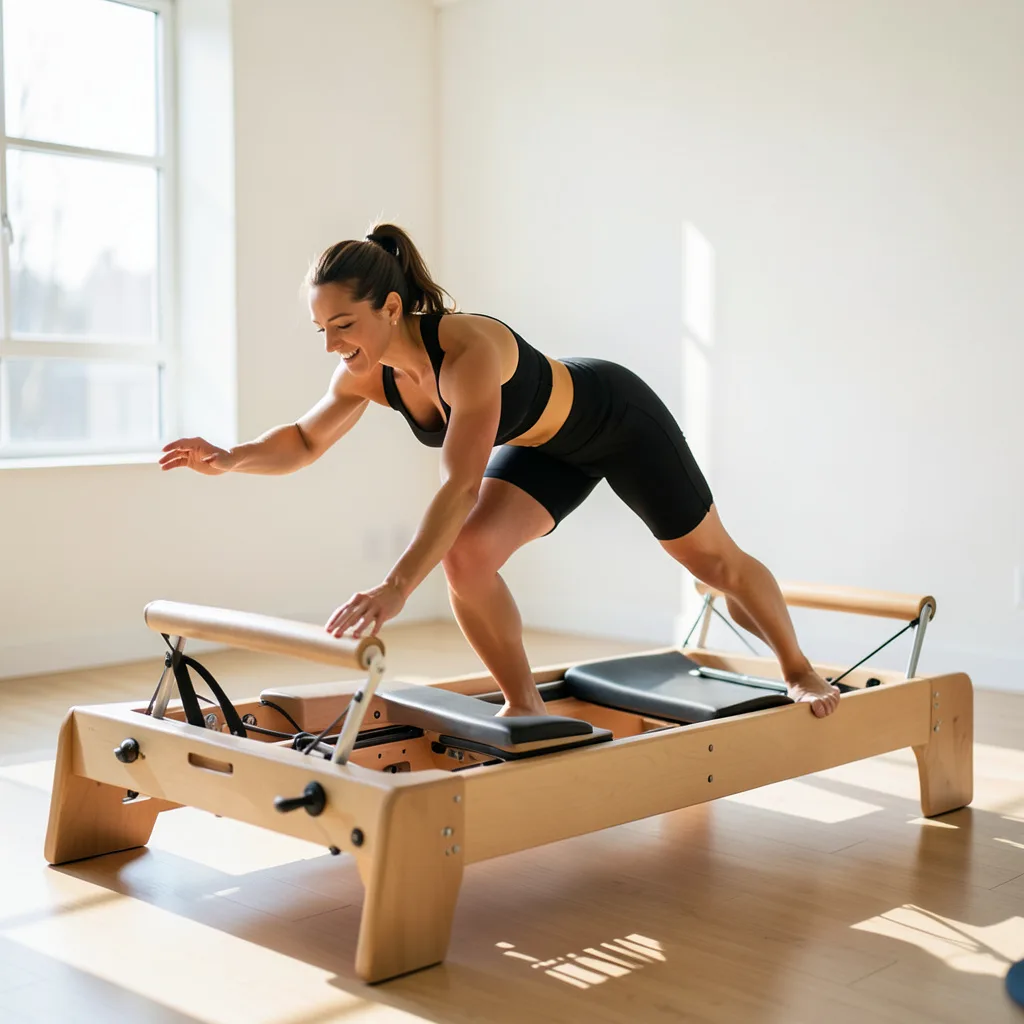
A significant portion of Vergara’s intensity comes from her preference for the Megaformer, a machine that elevates the traditional Pilates experience. Unlike a standard reformer, the Megaformer offers more resistance, longer travel time, and a greater variety of movements. It is designed to keep the muscles under constant tension, which is the hallmark of the “Lagree Fitness” style of training. For Vergara, this means that every movement is deliberate and slow, maximizing time under tension to sculpt lean muscle. This equipment allows her to perform complex compound movements that engage multiple muscle groups simultaneously.
Core-Centric Movements for Stability
At the heart of Vergara’s routine are movements that prioritize deep core engagement. Rather than focusing on superficial abdominal exercises like crunches, her regimen emphasizes deep stabilization. Exercises such as “plank-to-pike” variations or “bear crawls” on the machine force the body to maintain a neutral spine while moving against significant spring resistance. This type of training is highly effective for building the functional strength required for everyday activities, improving posture, and protecting the spine from injury. By mastering these core movements, Vergara builds a physique that looks as strong as it functions.
Lower Body Sculpting and Glute Activation
Vergara’s routine is well-known for its focus on the lower body, particularly the glutes and thighs. Exercises like the “lunge series” on the Megaformer are notoriously difficult because they require balance, coordination, and intense muscular recruitment. By moving slowly through a lunge, Vergara forces the stabilizing muscles in the hips and ankles to fire, which is far more taxing than performing a standard lunge on the floor. This method of training ensures that the muscles are fatigued in a way that promotes endurance and definition, rather than just bulk.
Upper Body Toning and Posture
While Pilates is often associated with the core and legs, Vergara’s routine includes significant upper body work. The use of cables and springs on the machine allows for controlled, high-resistance upper body movements. Exercises like “chest openers” or “tricep extensions” performed in a plank position turn an upper body move into a full-body challenge. This is essential for maintaining the graceful posture that Vergara is known for. By strengthening the muscles between the shoulder blades and the lats, she ensures that her shoulders remain back and her frame remains open, which enhances her overall silhouette.
Consistency Over Intensity
One of the most important aspects of Sofia Vergara’s fitness journey is her consistency. She has been vocal about the fact that she does not enjoy working out, yet she understands that it is a non-negotiable part of her professional and personal wellness. Her routine is not about doing one massive, grueling workout once a week; it is about showing up consistently, even when she is tired or busy. This mindset shift is what allows her to maintain her fitness level year-round. She often emphasizes that she listens to her body, adjusting the intensity of her Pilates sessions based on her energy levels while ensuring she still completes the work.
Integrating Nutrition with Pilates
It is impossible to discuss Vergara’s physique without mentioning the role of nutrition. Pilates provides the stimulus for muscle toning, but her diet provides the fuel. Vergara focuses on a balanced intake of whole foods, prioritizing lean proteins, healthy fats, and a high volume of vegetables. She is known for her moderation, often stating that she does not believe in restrictive dieting. Instead, she focuses on high-quality ingredients that support her energy levels during her intense sessions. By fueling properly, she ensures that her body has the necessary resources to repair and grow stronger after each Pilates session.
Adapting Pilates for Busy Schedules
For those looking to emulate Vergara’s results, it is important to understand that you do not need a Megaformer to get started. The principles of Pilates—controlled movement, breath, and core engagement—can be practiced on a mat at home. The key is to focus on the “slow burn.” Even without external resistance, you can increase the intensity of your Pilates practice by slowing down your tempo. A ten-second count for the eccentric (lowering) phase of a squat or push-up will dramatically increase the muscular demand. By incorporating these techniques into a 30-minute daily routine, anyone can start to see the types of postural and tonal improvements that Vergara prioritizes.
The Science of Eccentric Loading in Vergara’s Routine
A core reason Sofia Vergara’s routine yields such visible results is her mastery of eccentric loading—the phase of a movement where the muscle lengthens under tension. In a standard gym environment, many people focus on the concentric (lifting) portion of a rep, often using momentum to complete the movement. On the Megaformer, the spring resistance forces a slow, controlled release. When Vergara performs a lunge or a leg press, she spends significantly more time in the lowering phase than the pushing phase. This specific physiological stimulus creates microscopic tears in the muscle fibers that, when repaired, lead to greater density and lean definition. By avoiding the “bouncing” effect common in high-impact cardio, she ensures that every ounce of effort is directed toward muscle fiber recruitment rather than joint impact, effectively sculpting the silhouette without adding unwanted bulk.
Mastering the “Mind-Muscle” Connection
Beyond the physical mechanics, Vergara’s success is predicated on an intense mental focus that borders on meditative. In the Pilates method, the mind-muscle connection—the ability to consciously activate specific muscle groups—is paramount. During a complex move like the “mermaid” or “oblique twist,” Vergara does not simply move her limbs; she visualizes the internal engagement of her transverse abdominis and serratus anterior. This level of intentionality prevents the body from relying on “compensatory muscles.” For example, if one is performing a core exercise but lacks focus, the hip flexors often take over the load. By keeping her attention locked on the target muscle, Vergara ensures that her abdominal wall is doing the heavy lifting, which is why her core appears so refined and functionally strong even during the most grueling segments of her workout.
The Importance of Breathwork as a Performance Tool
While many view breathing as an afterthought, Vergara utilizes diaphragmatic breathing as a strategic performance tool. In her Pilates practice, the breath is synchronized with the movement to maximize intra-abdominal pressure. When she performs high-resistance leg work, she uses a rhythmic, percussive exhale during the most difficult part of the movement (the exertion). This is not just to keep oxygen flowing; it is a technique to engage the deep core stabilizers that protect the lumbar spine. By exhaling fully, she collapses the ribcage and draws the navel toward the spine, creating a “corset” effect. This technique allows her to maintain a neutral, stable spine even when the machine’s springs are at their highest resistance, effectively turning her entire midsection into a rigid, powerful pillar that supports her posture during long filming days.
Managing Fatigue and “The Shake”
If you have ever watched a Lagree-style Pilates class, you have likely seen the “shake.” This muscle trembling is the result of neuromuscular fatigue, and it is a cornerstone of Vergara’s training philosophy. Rather than viewing the shake as a sign to stop, she treats it as the point where the real transformation begins. When the nervous system can no longer fire the muscle fibers smoothly, the body is forced to recruit deep-seated stabilizer muscles that are rarely used in daily life. Vergara embraces this discomfort because she understands that the shake is the hallmark of reaching a state of muscular exhaustion that builds endurance. By consistently training right up to the edge of failure, she forces her body to adapt, resulting in the muscular stamina required to maintain a high-energy presence on stage and screen for hours at a time.
Dynamic Stability and Proprioception
Vergara’s routine is highly effective because it prioritizes dynamic stability over static strength. A static plank is one thing, but a plank performed on a moving carriage—where the surface beneath your hands or feet is shifting—requires a different level of proprioception. This is the body’s ability to sense its position in space. By incorporating moves like the “saw” or “plank-to-pike” on the Megaformer, Vergara is constantly challenging her nervous system to recalibrate. This improves her balance and coordination significantly. For the average person, this translates into better movement patterns in everyday life, from improved balance while walking in heels to better posture while sitting at a desk. The constant, subtle adjustments required to keep the carriage steady while performing limb movements are what make her routine so superior for overall body awareness.
The Role of Active Recovery and Mobility
Even with an intense schedule, Vergara recognizes that her Pilates sessions are only as effective as her recovery. She often integrates active recovery—low-intensity movement like walking or light stretching—on days between her heavy sessions. This is critical because Pilates, despite being low-impact, is high-tension. The muscles need time to repair the micro-trauma induced by the spring resistance. She also prioritizes hydration and electrolyte balance, knowing that the intense muscular contractions of her routine can lead to rapid depletion of magnesium and potassium. By treating her recovery with the same seriousness as her workout, she avoids the common pitfall of overtraining, which can lead to inflammation and plateauing. Her approach demonstrates that you cannot out-train a lack of recovery; the results happen when the body is allowed to rebuild stronger than it was before.
Frequently Asked Questions
Is Pilates enough to build muscle like Sofia Vergara? Pilates is highly effective for building lean muscle, endurance, and postural strength. While it may not build the same type of bulk as heavy weightlifting, it creates a toned, sculpted appearance by keeping muscles under constant tension. For many, it is more than sufficient for achieving a fit and healthy physique.
How often should I practice Pilates to see results? Consistency is key. Most experts, including those who train celebrities like Vergara, recommend practicing Pilates at least three times per week to see noticeable changes in muscle tone and flexibility. If you are a beginner, starting with two sessions and increasing as your stamina improves is a safe approach.
Can beginners do the intense Pilates style Vergara does? Yes, but it is important to start with foundational movements. The intensity of the Megaformer or advanced mat Pilates comes from form and control. Beginners should focus on mastering the basics—such as neutral spine, pelvic floor engagement, and proper breathing—before attempting high-resistance or complex compound movements.
Do I need special equipment to get a workout like this? While the Megaformer provides a unique challenge, you can achieve excellent results with mat Pilates. The use of props like resistance bands, Pilates rings, or small weights can help mimic the resistance provided by machines. The primary requirement for an intense workout is your own focus and the ability to control your tempo.
How does Pilates impact longevity and joint health? Pilates is renowned for being low-impact, meaning it puts very little stress on the joints compared to running or heavy lifting. By strengthening the muscles surrounding the joints and improving overall body alignment, Pilates helps prevent common injuries and keeps the body mobile and functional well into later life, which is a major factor in its popularity among health-conscious icons.
Related posts:
 This Full-Body Resistance Band Workout Will Transform Your Home Gym
 Pilates Recovery Benefits
 Pilates: The Secret to Core Strength and Stability
 PHA Bodyweight Workout: Efficient Fitness Anywhere, Anytime
 We Took an SLT Class at Their Massive New Flatiron Flagship
 Run Better, Not Harder: The Pilates Moves That Transform Your Running Game
 Pilates for Older Runners: Improving Strength and Flexibility
 Kate Hudson’s Safe Pilates Moves for Pregnancy