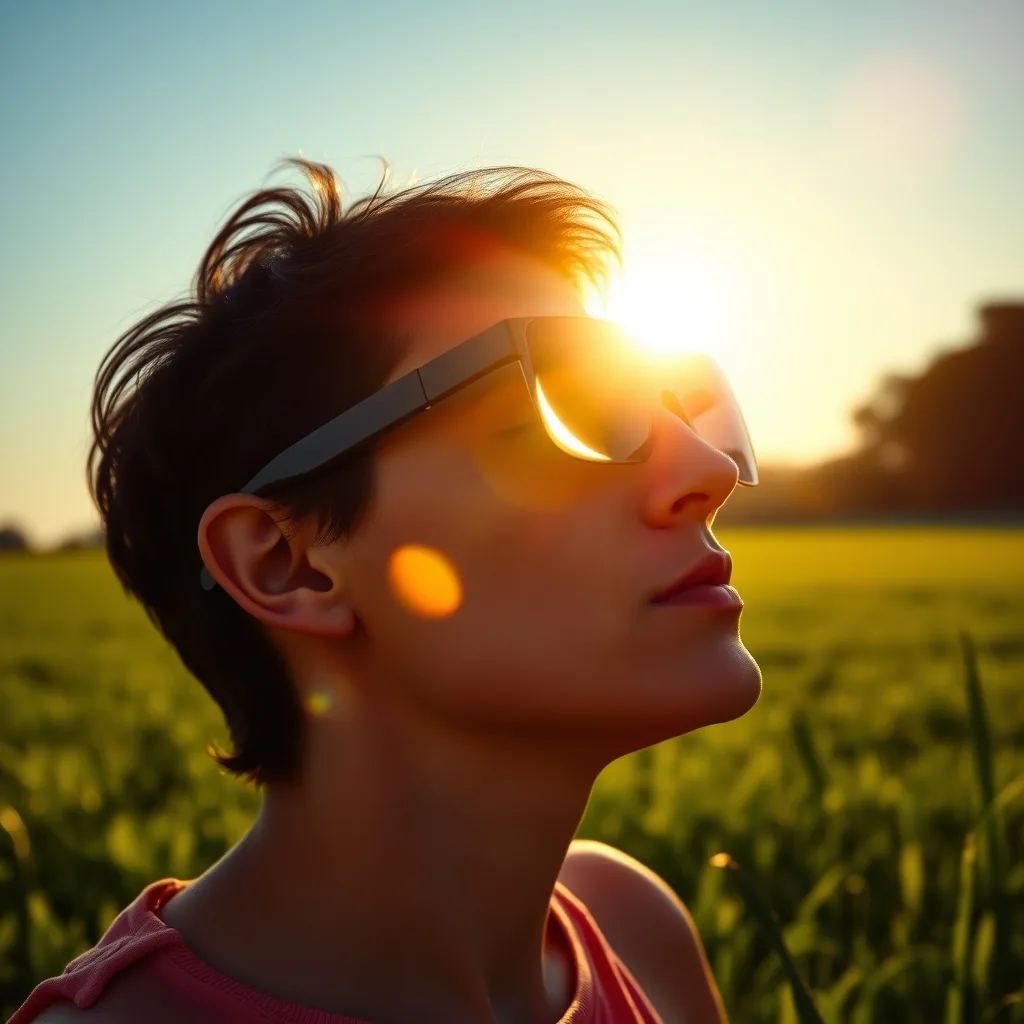
The cosmos has a unique way of reminding us of our place in the universe, and few events capture the human imagination quite like a solar eclipse. On July 2, 2019, the world witnessed a partial solar eclipse, a celestial dance where the Moon passed between the Earth and the Sun, obscuring a portion of the solar disk. While not as dramatic as a total eclipse—where the day turns to night—a partial eclipse offers a profound opportunity to reflect on the clockwork precision of our solar system and the beauty of astronomical alignment.
For those who experienced the July 2019 event or those looking to understand the mechanics of such occurrences for future sightings, understanding the nuances of visibility, safety, and observation is essential. A solar eclipse is not merely a visual spectacle; it is a lesson in geometry, physics, and the fragility of our sight. This guide delves deep into the specifics of the July 2019 event and provides a comprehensive framework for safely engaging with the wonders of the sky.
Understanding the Science of a Partial Solar Eclipse
To appreciate the event of July 2, 2019, one must first understand what defines a partial solar eclipse. In astronomical terms, a solar eclipse occurs when the Moon moves between the Sun and Earth, casting a shadow on Earth’s surface. However, because the Moon’s orbit is tilted by approximately five degrees relative to the Earth’s orbit around the Sun, the three bodies do not always align perfectly. This is why we do not experience a solar eclipse every single month during the New Moon phase.
In a total solar eclipse, the Moon completely covers the Sun, allowing the solar corona—the outermost part of the Sun’s atmosphere—to become visible. In an annular eclipse, the Moon is too far from Earth in its elliptical orbit to cover the Sun completely, resulting in a “ring of fire.” The event on July 2, 2019, was a partial solar eclipse. In this scenario, the Sun, Moon, and Earth are not perfectly aligned. The Moon only covers a slice of the Sun, creating a crescent shape in the sky.
The degree of “obscuration” varies depending on the observer’s location. Some regions saw a significant portion of the Sun vanish, while others saw only a tiny notch taken out of the solar disk. This variation is caused by the path of the Moon’s penumbra—the lighter, outer part of its shadow. Anyone standing within the penumbra witnesses a partial eclipse, whereas only those in the umbra (the darkest part of the shadow) experience totality.
Visibility Map: Where was the July 2019 Eclipse Visible?
The partial solar eclipse of July 2, 2019, was a regional event, meaning it was not visible from every point on the globe. The geometry of the alignment dictated that the shadow fell primarily across the Southern Hemisphere. If you were located in the Northern Hemisphere, specifically in North America or Europe, the Sun appeared normal throughout the day.
The primary regions of visibility included:
- South America: Large portions of the continent, including Chile, Argentina, Brazil, and Peru, had clear views of the partial eclipse. In some southern regions, the obscuration was quite significant, creating a noticeable dip in ambient light.
- South Africa: The southern tip of the African continent was well-positioned to observe the event, making it a popular day for amateur astronomers and schools to conduct outdoor lessons.
- Antarctica: As the southernmost continent, Antarctica experienced some of the highest percentages of obscuration, though the extreme conditions often make observation challenging.
- Australasia: Some peripheral areas of the region caught glimpses of the event, though the visibility was less pronounced than in South America.
Understanding visibility maps is crucial for any eclipse enthusiast. These maps are generated by calculating the exact intersection of the lunar shadow with the Earth’s rotating surface. For the July 2019 event, the “maximum eclipse” occurred when the Moon’s penumbra reached its deepest point of penetration into the Earth’s disk, creating the most dramatic crescent for observers in the southern latitudes.
Essential Safety Gear for Eclipse Viewing
The most critical aspect of any solar eclipse guide is safety. It is a common and dangerous misconception that a partial eclipse is safe to view with the naked eye because the Sun is partially covered. In reality, even if 99% of the Sun is obscured, the remaining 1% is still powerful enough to cause permanent retinal damage.
The human eye is designed to focus light onto the retina. When you look at the Sun, the lens of your eye acts like a magnifying glass, concentrating solar radiation onto a small area of the retina. This can cause “solar retinopathy,” where the light energy literally burns the photoreceptor cells. Because the retina has no pain receptors, you will not feel the damage occurring; by the time you notice a blind spot or blurred vision, the damage is already done.
To view the July 2019 eclipse (or any future solar event) safely, the following gear is mandatory:
- ISO 12312-2 Certified Eclipse Glasses: These are not ordinary sunglasses. They are made from a specialized black polymer filter (often called “solar film”) that blocks 99.99% of visible light and nearly all ultraviolet and infrared radiation. Always check for the ISO certification mark on the frame.
- Solar Filters for Binoculars and Telescopes: Never look through an optical device (binoculars, telescope, or camera lens) while wearing eclipse glasses. The concentrated light from the lens will melt the plastic filter and burn your retina instantly. Instead, a professional solar filter must be placed securely over the front aperture of the device.
- Welding Glass: Only Shade 14 welding glass is safe for direct solar observation. Lower shades are insufficient and dangerous.
How to Spot a Partial Eclipse Without Specialized Gear
If you found yourself in a visibility zone during the July 2019 eclipse without certified glasses, there are several safe, indirect methods to observe the phenomenon. These methods rely on projection rather than direct viewing, ensuring that your eyes never encounter the direct rays of the Sun.
The Pinhole Projector Method: This is the simplest and most effective DIY method. To create a pinhole projector, follow these steps:
- Take two pieces of white cardstock or heavy paper.
- Poke a small, clean hole in the center of the first piece using a pin or a needle.
- Hold the paper with the hole above your head, allowing the sunlight to pass through the hole.
- Position the second piece of paper (the screen) below it, catching the projected image.
- Adjust the distance between the two papers until a sharp, crescent-shaped image of the Sun appears on the screen.
The Colander Method: For a more whimsical experience, use a kitchen colander. Because a colander has dozens of small holes, it acts as a multi-pinhole projector. When you hold it over a flat surface (like a sidewalk or a piece of paper) during a partial eclipse, you will see dozens of tiny solar crescents dancing on the ground.
The Tree Canopy Effect: In nature, the small gaps between leaves in a tree act as natural pinhole projectors. During the July 2019 eclipse, anyone walking under a leafy canopy in the visibility zone would have noticed that the dappled sunlight on the ground was not circular, but crescent-shaped.
Photography Tips for Capturing the Partial Eclipse
Capturing a solar eclipse on camera requires more than just a steady hand; it requires a deep understanding of how sensors react to intense light. Whether using a DSLR, a mirrorless camera, or a smartphone, the primary goal is to protect the equipment and avoid overexposure.
Protecting the Sensor: Just as the human eye can be damaged, a camera’s digital sensor can be permanently scorched by concentrated sunlight. If you are using a telephoto lens, you must use a solar filter on the front of the lens. Without it, the lens focuses the Sun’s heat directly onto the sensor, which can lead to “dead pixels” or total sensor failure.
Exposure Settings: Because the Sun is an incredibly bright light source, you need to use a very fast shutter speed and a low ISO. For a partial eclipse:
- ISO: Keep this as low as possible (ISO 100 or 200) to reduce noise and prevent overexposure.
- Aperture: Use a higher f-stop (f/8 to f/16) to create a smaller aperture, which helps in sharpening the image of the solar disk.
- Shutter Speed: Start with a very fast speed (1/1000s or faster) and adjust based on the histogram.
Composition and Stability: A tripod is non-negotiable for eclipse photography. Even the slightest shake can blur the crisp edge of the lunar silhouette. To add artistic flair, try “context shots.” Instead of just photographing the Sun, capture the crescent Sun hanging over a famous landmark, a mountain range, or a silhouette of a person wearing eclipse glasses. This provides a sense of scale and location to the image.
The Psychological and Cultural Impact of Celestial Events
Beyond the science and the safety, solar eclipses like the one in July 2019 evoke a powerful psychological response. For millennia, humans have viewed eclipses with a mixture of awe and terror. In ancient times, many cultures interpreted the “disappearing sun” as an omen of disaster or a sign of divine displeasure. This cultural memory still lingers today, manifesting as a sense of anticipation and collective excitement.
Psychologically, eclipses trigger what is often described as a “cosmic perspective.” When we witness a celestial alignment, the trivialities of daily life—emails, deadlines, and social frictions—fade away. We are reminded that we are passengers on a rocky sphere orbiting a massive star in an unfathomably large galaxy. This feeling of “insignificance” is paradoxically comforting; it connects us to every other human being on Earth, as we all share the same sky.
Furthermore, the July 2019 eclipse served as a catalyst for community building. In the regions where it was visible, people gathered in parks, schools, and town squares. This shared experience fosters a sense of global citizenship, reminding us that nature does not recognize national borders. The act of looking up together creates a rare moment of unity in a fragmented world.
Planning Your Future Eclipse Viewing Experience
While the July 2019 event has passed, the cycle of eclipses continues. If you missed the 2019 partial eclipse or want to be better prepared for the next one, proactive planning is key. Solar eclipses are predictable to the second, meaning you can plan your travel and gear years in advance.
Tracking Upcoming Events: Utilize reliable astronomical resources to find out when the next eclipse will pass over your location. Websites like TimeAndDate.com and NASA’s eclipse portal provide precise maps, timing, and percentages of obscuration for every city on Earth.
Choosing Your Location: If you are chasing a total eclipse, the “path of totality” is a narrow strip of land. Being even a few miles outside this path means you will only see a partial eclipse. When planning, check the weather patterns for the region. A clear sky is the most important variable; a total eclipse is a wasted opportunity if it is obscured by heavy cloud cover.
Building an Eclipse Kit: Keep a dedicated kit ready so you aren’t scrambling at the last minute. This should include:
- A pair of ISO-certified glasses (check them for scratches or pinholes before use).
- A backup pair for a friend or family member.
- A basic pinhole projector kit (cardstock and pins).
- A high-quality tripod for your camera or smartphone.
- A portable power bank to keep your tracking apps running.
Common Myths vs. Scientific Facts about Solar Eclipses
Misinformation often spreads during celestial events, leading to either unnecessary fear or dangerous behavior. It is important to separate myth from scientific fact to ensure a safe and rewarding experience.
Myth: “Sunglasses are a safe alternative to eclipse glasses.”
Fact: This is dangerously false. Even the darkest designer sunglasses only block a tiny fraction of the harmful radiation. They do not meet the ISO 12312-2 standard and provide zero protection against retinal burns.
Myth: “You can safely look at the Sun during a partial eclipse because it is dimmer.”
Fact: The Sun’s intensity remains high enough to cause permanent eye damage regardless of how much of the disk is covered. Safety gear is required from the first second of the partial phase until the event ends.
Myth: “Solar eclipses cause bad luck or signal the fall of governments.”
Fact: Eclipses are purely gravitational and orbital events. They are the result of the predictable movement of the Moon and Earth and have no causal link to human political events or personal fortunes.
Myth: “You can use a camera’s viewfinder to safely see the eclipse.”
Fact: Looking through a viewfinder or a telescope without a professional solar filter is like looking through a magnifying glass at the Sun. It will cause immediate and severe eye injury.
Frequently Asked Questions
1. Why wasn’t the July 2, 2019, eclipse visible in the United States or Europe?
Solar eclipses are only visible from the specific part of the Earth that falls within the Moon’s shadow. On July 2, 2019, the alignment of the Sun, Moon, and Earth projected the shadow exclusively over the Southern Hemisphere, specifically across parts of South America, South Africa, and Antarctica. Because the Earth is a sphere, the curvature blocked the view for those in the Northern Hemisphere.
2. Can I use a smartphone camera to look at the eclipse safely?
While you can use your phone to take a photo, you should never use the screen as your primary way of viewing the eclipse in real-time. More importantly, if you have a zoom lens, the concentrated light can potentially damage the phone’s image sensor. For the safest experience, put a solar filter over the camera lens or use the pinhole method to project the image onto a surface and then photograph that surface.
3. What is the difference between a partial eclipse and a total eclipse?
In a partial eclipse, the Moon only covers a portion of the Sun, and the sky remains relatively bright. In a total eclipse, the Moon completely obscures the Sun’s disk, causing the sky to darken significantly, temperatures to drop, and the solar corona to become visible. A total eclipse only happens for people located within the narrow “path of totality,” whereas partial eclipses are visible over a much wider geographic area.
4. Is it safe for pets to be outside during a solar eclipse?
Generally, yes, but with caveats. Animals do not have the same conscious drive to stare at the Sun as humans do, but they can still suffer from retinal damage if they stare directly at the solar disk. The biggest issue for pets during an eclipse is often anxiety; the sudden drop in light and the strange behavior of birds and other animals can stress some dogs and cats. It is best to keep them calm and avoid encouraging them to look upward.
5. How often do partial solar eclipses occur?
Partial solar eclipses are much more common than total ones. While a total solar eclipse may only hit a specific spot on Earth once every 375 years on average, partial eclipses happen several times a year somewhere on the planet. Because the penumbra (the partial shadow) is so much larger than the umbra (the total shadow), far more people have the opportunity to witness a partial event than a total one.
Related posts:
 Understanding the Wolf Moon
 October Energy Horoscope: Cosmic Guidance for Fall
 The Full Pink Moon Is Coming and It’s Going to Transform Your Energy
 Spring New Moon Reset Ritual: Connecting with Earth’s Energy
 Your Weekly Horoscope for New Moon Energy
 Full Sturgeon Moon Guide
 The Astrological Significance of the Solar Eclipse in Gemini
 Total Solar Eclipse Horoscope Guide