Relieving Sore Hips in Your Car
Many of us spend hours sitting in our cars driving to work, running errands, or chauffeuring kids. Prolonged sitting can make our hips feel stiff and sore. Thankfully, there are stretches you can do right from the driver’s seat to find relief.
Key takeaways
- Perform seated hip flexor and piriformis stretches to target tightness in the glutes and hip area.
- Use the figure four stretch to open the hips while remaining safely seated in your vehicle.
- Practice spinal twists and child's pose to release tension throughout the hips and torso.
- Hold each stretch for at least 30 to 60 seconds to allow muscles to relax deeply.
- Only perform seated stretches while the vehicle is parked and never while driving.
Seated Hip Flexor Stretch
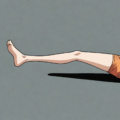
Extend your right leg as far as you comfortably can, with your foot resting on the floor. Place both hands on your left thigh. Gently lean your torso forward over the left leg, feeling a stretch in the front of your right hip. Hold for 30 seconds and repeat on the other side.
Seated Piriformis Stretch
Cross your right ankle over your left knee. Grasp the back of your right thigh and gently pull toward your chest until you feel the stretch in your right glute and hip area. Hold for 30 seconds and switch legs.
Seated Figure 4 Stretch
Cross your right ankle over your left knee, forming a ‘4’ shape with your legs. Place both hands behind your left thigh and gently press the right knee away from you, opening up the right hip. Hold for 30 seconds and switch legs.
Seated Spinal Twist
Sit up tall with both feet on the floor. Place your right hand on the back of the seat behind you and your left hand across your right thigh. Twist your upper body to the right as far as feels comfortable. Hold for 30 seconds and repeat on the opposite side.
Child’s Pose
Kneel on the floor in front of your seat with knees hip-width apart. Stretch your torso forward to rest your chest on your thighs and reach your arms extended in front. Allow your hips to relax toward your heels. Hold for 30 seconds.
Optimizing Your Seat Ergonomics for Hip Health
Before you even begin your first stretch, consider the mechanics of your seat. Most car seats are designed for vehicle control rather than anatomical support, often leading to a ‘slumped’ posture that forces the hip flexors into a permanently shortened state. To mitigate this, check your seat height; your hips should ideally be at the same level as, or slightly higher than, your knees. If your seat is too low, you create an acute angle at the hip joint, which compresses the psoas muscle and restricts circulation. Use a firm lumbar support cushion or a rolled-up towel placed behind your lower back to maintain the natural inward curve of your spine. This slight forward tilt of the pelvis prevents the rounding of the lower back, which is a primary culprit in radiating hip pain. By adjusting the seat track to ensure your knees are slightly bent even when the pedals are fully depressed, you prevent the ‘locked-out’ leg position that causes the pelvic girdle to rotate backward, further tightening the hip stabilizers.
The Role of Breathwork During Stretches
Stretching is often treated as a mechanical act, but its efficacy is significantly bolstered by intentional breathing. When you are in the middle of a long commute, your nervous system is likely in a ‘fight or flight’ state, which keeps your muscles in a defensive, contracted mode. To counteract this, utilize ‘diaphragmatic breathing’ while performing your seated stretches. As you move into a figure-four or spinal twist, inhale deeply through your nose, expanding your ribcage rather than your chest. As you exhale slowly through pursed lips, consciously visualize the tension leaving your hip socket. Research indicates that deep, rhythmic exhales trigger the parasympathetic nervous system, which signals the muscle spindles in your hips to ‘let go’ of their guarding reflex. If you find yourself holding your breath, you are likely pushing the stretch too far; back off slightly until you can maintain a steady, calm breathing pattern, as this is the threshold where true muscle lengthening occurs.
Addressing the Psoas and TFL: The Hidden Culprits
While general hip stretches are helpful, targeting specific muscles like the Tensor Fasciae Latae (TFL) and the psoas can provide more precise relief. The TFL, located on the outer hip, often becomes inflamed during long drives because it works overtime to stabilize the leg while your foot is hovering over the gas pedal. To target this, try a seated ‘side-bend’ stretch: while remaining seated firmly, reach your right arm over your head toward the driver’s side door, while simultaneously pushing your right hip down into the seat cushion. This lateral release creates space in the hip capsule and alleviates the ‘pinching’ sensation often felt on the outside of the thigh. For the psoas—the deep muscle connecting your spine to your femur—try a ‘seated lunge’ variation. Scoot toward the edge of your seat, drop your right knee toward the floor while keeping your left foot planted, and gently tuck your tailbone under. This posterior pelvic tilt isolates the psoas, providing a deep, targeted release that standard forward-leaning stretches often miss.
Managing ‘Driver’s Sciatica’ and Nerve Gliding
Sometimes, hip pain is actually nerve-related, often manifesting as numbness or a dull ache that mimics joint soreness. This is frequently referred to as ‘driver’s sciatica,’ caused by the compression of the sciatic nerve against the hard surface of the car seat. Rather than just static stretching, which can sometimes aggravate an irritated nerve, incorporate ‘nerve glides.’ Sit tall and extend your right leg straight out. While keeping your foot flexed, tilt your head back as you inhale, and as you exhale, drop your chin to your chest while bending your knee. This subtle, rhythmic movement helps the nerve slide through the surrounding tissues without excessive tension. Perform this 10 times per leg. If you experience sharp, shooting pain or tingling, stop immediately, as this indicates the nerve is overly sensitive and requires rest rather than mobilization.
The Importance of Micro-Breaks and Movement Snacks
The human body is not built for the static loads imposed by modern commuting. Even the best stretching routine will be ineffective if you remain in the same position for four hours straight. Implement ‘movement snacks’ every 45 to 60 minutes. This doesn’t mean you need to exit the vehicle for a full gym session; simply shifting your weight, performing ankle circles, or doing seated ‘pelvic tilts’ (rocking your pelvis forward and backward) keeps the synovial fluid in your hip joints moving. This fluid is essential for lubricating the cartilage and preventing the ‘stiff-start’ feeling that happens when you finally open the car door. If you are on a long trip, pull into a rest stop and spend just two minutes walking briskly. The act of walking uses the hip flexors and extensors in their full range of motion, effectively ‘resetting’ the muscles before they have a chance to lock into a shortened, painful state.
FAQ
Is it safe to stretch in a moving vehicle?
Only do seated stretches that allow you to remain safely buckled in. Avoid movements that make the vehicle less stable or take your eyes off the road.
How often should I stretch my hips?
Aim to stretch your hips daily, especially if you sit for long periods. Even a few quick hip stretches can keep muscles from getting too tight.
How long should I hold a hip stretch?
Hold hip stretches for at least 30 seconds. For tight hips, consider holding gentle stretches for 60 seconds to allow deeper relaxation of the muscles.
Will stretching provide long-term relief?
Stretching can help relieve temporary soreness and tension. For lasting relief, strengthen your hips and glutes with exercises too.
Are there lifestyle changes that can help?
Sitting less, staying active, losing weight if needed, and practicing good posture can all take pressure off sore hips.