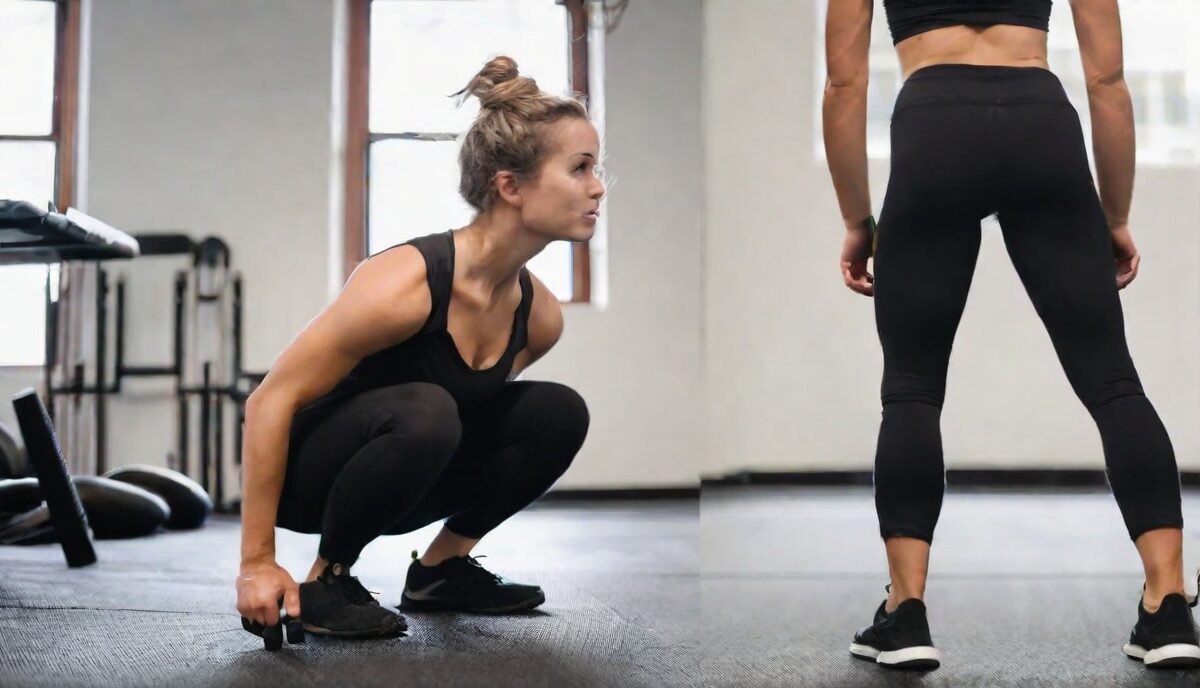
When it comes to building lower body strength, squats are often considered the gold standard. However, not everyone can perform squats due to various reasons like knee pain, lack of equipment, or simply looking for variety in their workout routine. Fortunately, there are numerous squat alternatives that can effectively target the same muscle groups and help you achieve your fitness goals.
1. Lunges
Lunges are an excellent squat alternative that targets the quadriceps, hamstrings, and glutes. They also help improve balance and coordination. To perform a lunge:
- Stand tall with feet hip-width apart.
- Step forward with one leg, lowering your hips until both knees are bent at a 90-degree angle.
- Push back up to the starting position.
- Repeat on the other leg.
2. Step-Ups
Step-ups are another effective exercise that mimics the squat movement. This exercise targets the quadriceps, hamstrings, and glutes. To perform step-ups:
- Find a sturdy bench or step.
- Place one foot on the bench and push through your heel to lift your body up.
- Step back down with the same leg and repeat.
- Switch legs and repeat.
3. Bulgarian Split Squats
The Bulgarian split squat is a challenging exercise that targets the same muscles as the squat. It also helps improve balance and stability. To perform Bulgarian split squats:
- Stand a few feet in front of a bench or step.
- Place one foot behind you on the bench.
- Lower your body until your front thigh is parallel to the ground.
- Push back up to the starting position.
- Repeat on the other leg.
4. Glute Bridges
Glute bridges are a great exercise for targeting the glutes and hamstrings. They also help strengthen the lower back. To perform glute bridges:
- Lie on your back with your knees bent and feet flat on the ground.
- Lift your hips towards the ceiling, squeezing your glutes at the top.
- Lower back down and repeat.
5. Deadlifts
Deadlifts are a compound exercise that targets multiple muscle groups, including the glutes, hamstrings, and lower back. To perform deadlifts:
- Stand with feet hip-width apart, holding a barbell or dumbbells in front of you.
- Hinge at the hips and lower the weight towards the ground, keeping your back straight.
- Lift the weight back up by thrusting your hips forward and standing tall.
Leveraging Machine-Based Movements for Maximum Hypertrophy
While free weights are often lauded for their functional benefits, machine-based alternatives offer a level of stability that allows you to push your muscles to absolute failure without the risk of losing balance. The Leg Press is perhaps the most versatile in this category. By adjusting your foot placement on the sled, you can shift the emphasis of the exercise. A high foot placement targets the glutes and hamstrings more aggressively by increasing the degree of hip flexion, while a lower placement increases knee flexion, placing the brunt of the work on the quadriceps. To avoid lower back strain, ensure your tailbone remains glued to the seat throughout the entire range of motion; allowing the pelvis to tilt upward at the bottom of the rep (often called a “butt wink”) can lead to spinal compression.
The Hack Squat machine is another formidable alternative, particularly for those who find the balance of a barbell squat difficult. Because the machine travels on a fixed track and supports the back, you can place your feet further forward than you would in a traditional squat. This setup isolates the quadriceps with surgical precision. For an advanced variation, try the ‘Reverse Hack Squat,’ where you face the machine. This shift in orientation transforms the movement into a hip-dominant powerhouse, placing immense tension on the posterior chain while providing a tactile guide for maintaining a flat back.
For those in a rehabilitation phase or dealing with significant asymmetry, the Single-Leg Press is an essential tool. It eliminates the ability of the stronger leg to compensate for the weaker one, a common issue in bilateral movements. When performing single-leg work on a machine, focus on the eccentric (lowering) phase. A slow, four-second descent can trigger significant muscle fiber recruitment and strengthen the connective tissues around the knee, which is often a weak point for those seeking squat alternatives.
Mastering Unilateral Stability with Advanced Single-Leg Variations
Moving beyond the basic lunge, the Skater Squat is a sophisticated unilateral movement that bridges the gap between a lunge and a full pistol squat. Unlike a Bulgarian split squat, the back foot in a skater squat does not rest on a bench; it hovers in the air, only lightly touching the ground at the bottom of the movement. This requires intense stabilization from the hip abductors and the core. To perform this correctly, lean your torso slightly forward and reach your arms out in front of you as a counterbalance. This exercise is particularly effective for athletes who need to develop “braking power”—the ability to decelerate quickly during sports.
The Pistol Squat, or single-leg squat, is the ultimate expression of lower body strength and mobility. However, many find the full version inaccessible. A highly effective alternative is the ‘Box Pistol Squat.’ By sitting back onto a bench or box and then standing up on one leg, you remove the balance-intensive bottom portion of the move while still building the necessary raw strength. As you progress, lower the height of the box. An edge case to consider here is ankle dorsiflexion; if your heel lifts off the ground, place a small weight plate under your heel or focus on calf mobility. This modification allows you to maintain a upright posture and prevents the knee from taking excessive shear force.
Another overlooked variation is the ‘Step-Down,’ which is essentially the reverse of a step-up. Standing on the edge of a platform, you slowly lower your non-working leg until the heel kisses the floor, then drive back up. This focuses almost entirely on the eccentric control of the quadriceps and the stabilization of the patella. It is a staple in physical therapy for strengthening the VMO (vastus medialis oblique), the teardrop-shaped muscle that is crucial for knee health.
The Landmine Series: A Joint-Friendly Path to Power
The landmine—a barbell anchored in a rotating floor pivot—offers a unique arc of motion that is often much more comfortable for individuals with chronic back or shoulder issues. The Landmine Goblet Squat is a premier alternative because the weight is positioned in front of your center of mass, acting as a counterbalance that allows you to sit deeper into the movement with a vertical spine. Because the bar moves in a slight forward-and-back arc rather than a straight vertical line, it encourages a natural hip hinge that reduces the load on the lumbar vertebrae.
Beyond the basic squat, the Landmine Reverse Lunge provides a stability advantage over the traditional dumbbell version. Holding the end of the barbell in the hand opposite to your front working leg creates a cross-body stabilization demand that engages the obliques and the glute medius. This is an excellent choice for those who struggle with the “wobble” often felt during free-standing lunges. The fixed path of the landmine provides a subtle guide, allowing you to focus entirely on the mind-muscle connection in the glutes.
For those looking to target the inner thighs and glutes simultaneously, the Landmine Sumo Squat is unparalleled. By taking a wide stance and holding the end of the bar between your legs, you can access a range of motion that is difficult to achieve with a standard barbell. The angle of the landmine allows for a deep stretch of the adductors at the bottom. To maximize this, stand on two small platforms or weight plates to create extra clearance for the barbell, allowing you to descend past the point where the plates would normally hit the floor.
Specialized Posterior Chain Focus: Hinges and Curls
While the original article mentions the deadlift, the Romanian Deadlift (RDL) is a more specific squat alternative for those focusing on the “posterior power” aspect. The primary difference lies in the starting position and the range of motion. In an RDL, you start from a standing position and lower the weight only until you feel a maximal stretch in the hamstrings, keeping the knees slightly bent but fixed. This constant tension is superior for muscle growth compared to the standard deadlift, where the weight rests on the floor between reps. Focus on “shaving your legs” with the bar—keeping it in constant contact with your thighs and shins to prevent the weight from pulling your lower back into a rounded position.
The Good Morning is another potent alternative, though it requires strict form. By placing the bar on your upper back (as you would for a squat) and hinging at the hips, you create a massive lever arm that challenges the hamstrings and erector spinae. This exercise is often avoided due to fear of injury, but when performed with light to moderate weights and a focus on pushing the hips back, it is one of the best movements for building a “bulletproof” lower back. If a barbell feels too risky, the seated Good Morning—performed on a bench—isolates the lower back and hamstrings even further by removing the contribution of the calves and lower legs.
For those without access to heavy weights, the Nordic Hamstring Curl is a gold-standard bodyweight alternative. Kneeling on the floor with your ankles secured, you slowly lower your torso toward the ground using only your hamstrings to control the descent. This exercise is scientifically proven to reduce the risk of hamstring strains and builds a level of eccentric strength that squats simply cannot match. If you cannot perform a full rep, use your hands to push off the floor (a “power assisted” rep) to get back to the starting position.
Cable-Based Alternatives for Constant Mechanical Tension
Cables offer a distinct advantage over free weights: constant tension throughout the entire range of motion. In a traditional squat, the tension on the muscles often drops off at the top of the movement. The Cable Pull-Through solves this by providing a horizontal resistance that peaks as you reach full hip extension. By standing away from the cable machine and reaching between your legs to grab the rope attachment, you can perform a hinge movement that is exceptionally glute-dominant. It is an ideal alternative for those who find deadlifts too taxing on their central nervous system.
The Cable Belt Squat is another ingenious alternative, especially for those with spinal injuries or upper body limitations. By wearing a dip belt attached to a low pulley or a dedicated belt squat machine, you load the hips directly, completely bypassing the spine. This allows you to train the legs to absolute failure without the back becoming the limiting factor. It also allows for unique variations, such as ‘marching’ in place while under load, which builds incredible hip flexor and stabilizer strength.
For lateral strength—an area often neglected by the sagittal plane movement of the squat—the Cable Side Lunge is indispensable. By holding a cable handle at chest height while stepping out to the side, the lateral pull of the machine forces your adductors and glutes to work harder to stabilize the movement. This is a critical exercise for anyone looking to improve their agility or prevent common groin injuries associated with lateral sports.
Explosive Alternatives for Metabolic Conditioning and Power
If your goal is not just strength but also explosive power, the Kettlebell Swing is the ultimate squat alternative. While it is a hinge movement rather than a squat, it targets the same muscle groups—glutes, hamstrings, and core—but adds a cardiovascular and explosive element. The key is to ensure the movement is a snap of the hips, not a front raise with the arms. The kettlebell should feel weightless at the top of the arc as your glutes lock out. This movement builds the “functional” strength needed for jumping and sprinting.
Plyometric alternatives like Box Jumps and Broad Jumps offer a high-intensity way to recruit fast-twitch muscle fibers. A Box Jump focuses on vertical power and, importantly, reduces the impact on the joints during the landing compared to jumping on flat ground. To make this an effective strength alternative, focus on the “explosive” portion—the jump itself—and step down carefully rather than jumping back down, which protects the Achilles tendon. Broad jumps, conversely, focus on horizontal power and require a massive contribution from the glutes and hamstrings to propel the body forward.
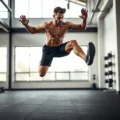
For those looking for a metabolic burn, the Jump Lunge (or Split Jump) is a high-octane alternative. By switching legs in mid-air, you add a significant balance and coordination challenge to the traditional lunge. This exercise is particularly effective for developing ‘starting strength’—the ability to generate force quickly from a standstill. Because of the high impact, these should be programmed sparingly, perhaps at the beginning of a workout when the central nervous system is fresh, or as a finisher to maximize caloric expenditure.
Adapting to Biomechanical Constraints: The Cyclist Squat and Wide Stance Variations
Sometimes the best alternative to a traditional squat is a modified version that accounts for specific anatomical limitations. The Cyclist Squat is designed specifically for those with poor ankle mobility or those who want to maximize quadricep development. By placing the heels on a high wedge or a pair of dumbbells (elevating them 2-4 inches) and keeping the feet close together, you shift the center of gravity. This allows the knees to travel far forward, creating a deep stretch in the quads while keeping the torso completely upright. This variation is a favorite among bodybuilders for its ability to target the “sweep” of the outer thigh.
On the opposite end of the spectrum is the Wide Stance Sumo Squat, which can be performed with a single dumbbell or kettlebell. This variation is often much more comfortable for individuals with long femurs who find that traditional squats cause them to lean too far forward. The wide stance opens up the hips and allows for a more vertical descent, shifting the load from the lower back to the adductors and the gluteus maximus. When performing these, focus on pushing your knees outward so they stay in line with your toes, which protects the medial collateral ligament (MCL) from strain.
Finally, for those who experience hip pinching (impingement) during deep movements, the ‘Box Squat’ (using a barbell but sitting back onto a box) is a game-changer. The box acts as a definitive depth marker and allows you to break the eccentric-concentric chain. By pausing on the box, you dissipate the “stretch reflex,” forcing your muscles to work harder to generate force from a dead stop. This not only builds incredible “hole strength” but also allows you to sit further back into the hips, which can often bypass the specific angles that cause hip pain in a traditional free-standing squat.
FAQ
1. Are squat alternatives as effective as squats?
Yes, many squat alternatives can be just as effective as traditional squats in targeting the lower body muscles. It’s important to choose exercises that you can perform with proper form to avoid injury and maximize benefits.
2. Can I do these exercises at home?
Absolutely! Many of the squat alternatives listed, such as lunges, glute bridges, and step-ups, can be done at home with minimal or no equipment.
3. How often should I incorporate these exercises into my routine?
For optimal results, aim to include lower body strength exercises 2-3 times per week. Ensure you give your muscles time to recover between sessions.
4. What if I experience pain while doing these exercises?
If you experience pain while performing any exercise, stop immediately and consult a healthcare professional. It’s important to listen to your body and avoid pushing through pain.
5. Can these exercises help with weight loss?
While strength training exercises like these can help build muscle, they can also contribute to weight loss by increasing your metabolism. Combining these exercises with a balanced diet and cardio can enhance weight loss efforts.
Related posts:
 The Victoria’s Secret Fashion Show Glutes Workout Revealed
 The Matching Workout Sets That Will Make You Actually Want to Exercise
 PHA Bodyweight Workout: Efficient Fitness Anywhere, Anytime
 Perfect Your Glute Bridge
 Perfect Your Squat Form
 Dealing with Tight Hamstrings
 Managing Hip Pain from Sitting
 Master the Jump-Lunge-Squat Combo