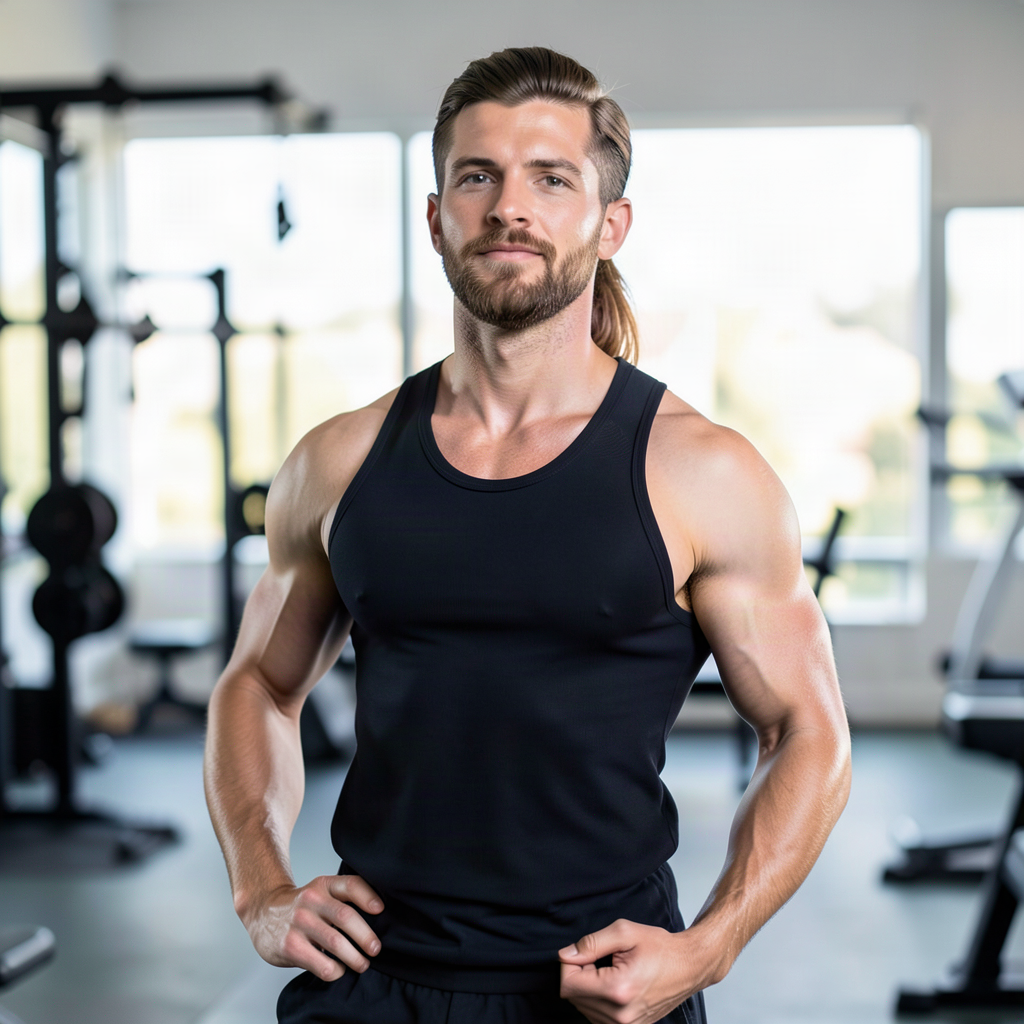
When people think of core training, they often imagine a yoga mat, a hard floor, and endless crunches. While floor-based work has its place, the core is a functional powerhouse designed to stabilize your spine and facilitate movement in an upright position. Standing ab exercises offer a unique advantage: they force your body to engage its stabilizing muscles to maintain balance while simultaneously working the primary abdominal wall. By shifting your core training to a standing position, you improve your posture, functional strength, and overall balance, all without ever needing to get down on the ground.
Key takeaways
- Engage your deep stabilizing muscles and protect your spine by performing core exercises in an upright, standing position.
- Incorporate movements like standing knee-to-elbow crunches, woodchoppers, and bird-dogs to build rotational power and abdominal stability.
- Use anti-rotation exercises and weighted carries to challenge your core against external forces and improve functional endurance.
- Focus on maintaining a braced, neutral spine throughout each movement to ensure maximum muscle activation and safety.
- Integrate these exercises into your routine 3-4 times per week for consistent improvements in core tone and balance.
The Anatomy of Standing Core Strength
To effectively train your core, you must understand that the core is not just the “six-pack” muscle, or rectus abdominis. It includes the obliques, the transverse abdominis (your deep internal corset), and the multifidus muscles along your spine. In a standing position, these muscles work in concert to resist rotational forces and gravity. When you lift a leg or move your arms while standing, your transverse abdominis must fire immediately to protect your lower back. This constant engagement is what makes standing core work so effective for real-world movement and athletic performance.
The Standing Knee-to-Elbow Crunch
This movement is a foundational exercise that mimics a traditional bicycle crunch but removes the strain on your neck and shoulders. Stand with your feet hip-width apart and place your hands behind your ears, keeping your elbows wide. Engage your core, lift your right knee toward your chest, and simultaneously rotate your torso to bring your left elbow toward the right knee. Focus on the contraction in your obliques rather than just pulling your knee up. Return to the starting position with control and repeat on the other side. Aim for 20 repetitions per side to feel the heat in your midsection.
Standing Oblique Side Bends
Often overlooked, the obliques are essential for spinal health and creating a defined waistline. Stand tall with your feet slightly wider than shoulder-width. Place one hand behind your head and let the other arm hang naturally by your side. Slowly lean to the side, sliding your hand down your leg toward your knee, focusing on the contraction of the lateral core muscles. Avoid leaning forward or backward; imagine you are pressed between two panes of glass. Return to a neutral standing position using the power of your side abs. This exercise prevents “cheating” by forcing you to rely solely on your internal oblique muscles to return to center.
The Standing Woodchopper
The woodchopper is a dynamic, functional movement that targets the entire core through rotation. Start by standing with feet shoulder-width apart. Clasp your hands together or hold a light weight. Reach your hands up toward your right shoulder, pivoting your left foot slightly. In one fluid motion, pull your hands diagonally across your body down toward your left hip, bending your knees slightly as you follow through. Your torso should rotate, but your hips should remain stable. This exercise builds rotational power and core stability, which are essential for everyday activities like lifting heavy objects or reaching for items on high shelves.
Standing March with Core Engagement
While a march might seem simple, it becomes a high-intensity core exercise when performed with intention. Stand tall and lift your right knee until your thigh is parallel to the floor. As you lift the knee, draw your navel toward your spine and slightly contract your ribcage. To increase the difficulty, lift both arms straight overhead. As you march, you will find that your core must work overtime to prevent your torso from swaying side to side. This is an excellent exercise for improving balance and deep abdominal stability, as it challenges the body to maintain vertical alignment while one limb is in motion.
The Standing Windmill
This exercise requires focus and coordination, making it a stellar addition to any routine. Stand with your feet wider than your shoulders and turn your toes slightly outward. Raise your arms out to the sides in a T-shape. Hinge at your hips and reach your right hand toward your left foot, keeping both legs as straight as possible while maintaining a flat back. Your left hand should reach toward the ceiling, creating a straight line from your bottom hand to your top hand. Look up at your top hand to encourage thoracic rotation. Use your core to hinge back up to the starting position. This movement stretches the hamstrings while firing up the entire core complex.
Standing Bird-Dog
Typically performed on the floor, the standing bird-dog is a fantastic challenge for balance and stability. Stand on your left leg and hinge slightly forward at the hips. Extend your right leg straight back behind you while simultaneously reaching your arms forward. Keep your core tight to prevent your lower back from arching. Hold this position for three seconds, focusing on the tension in your lower back and abdominal wall, then return to standing. This exercise demands intense concentration and deep core activation to keep you from falling over, making it one of the most effective ways to build a stable foundation.
Integrating Standing Core Work into Your Routine
You do not need to dedicate an entire hour to standing core work to see results. Because these exercises are functional, they can be integrated into your existing workout plan or performed during short breaks throughout the day. If you are doing a strength training routine, add two sets of standing woodchoppers as a finisher. If you work at a desk, perform two minutes of standing marches or side bends every hour to reset your posture and activate your core muscles. Consistency is the secret to sculpting, so aim to perform these movements 3-4 times per week.
Harnessing Anti-Rotation for Spinal Resilience
The core’s primary biological function is not just to flex, but to act as a structural anchor that prevents unwanted movement. Anti-rotation exercises, or “pallof”-style movements, teach the core to resist external forces. To perform a standing anti-rotation press, stand perpendicular to a cable machine or a resistance band anchored at chest height. Hold the handle with both hands pressed against your sternum. As you press your arms straight out in front of you, the band will attempt to twist your torso toward the anchor point. Your objective is to lock your ribcage in place, resisting that pull entirely. By holding the extension for ten seconds, you recruit the deep obliques and the quadratus lumborum to stabilize the lumbar spine, a feat that floor-based movements often fail to replicate because gravity does not provide the same lateral challenge.
The Standing Single-Arm Overhead Carry
Often referred to as a “Farmer’s Carry” variation, this exercise is the gold standard for functional core endurance. Hold a kettlebell or dumbbell in your right hand and press it directly overhead, locking your elbow. Keep your feet hip-width apart and walk forward with a slow, deliberate pace for 30 seconds. Because the weight is offset, your body will naturally want to lean toward the side of the load or collapse at the waist. You must fight this impulse by engaging the opposite side of your torso and your deep stabilizers. This creates a unilateral load that forces the core to work in an asymmetrical environment, mimicking the real-world demands of carrying groceries or lifting a child, all while keeping the spine perfectly vertical.
Lateral Core Stabilization with the Standing Gate Opener
Dynamic movement creates a unique challenge for the core, as it must switch from stabilization to activation in milliseconds. The Standing Gate Opener targets the hip flexors and the deep transverse abdominis simultaneously. Stand tall and lift your left knee, then rotate it outward in a wide circular motion, as if stepping over a high gate. Crucially, your torso must remain fixed forward; do not let your shoulders follow the knee. By keeping your chest squared to the front while your hip joint moves through its full range of motion, you force the core to act as a buffer. This prevents the lower back from “swaying” or compensating for the hip rotation, effectively isolating the deep abdominal wall and improving pelvic stability.
The Standing Scapular Wall Slide for Postural Alignment
A weak upper back and rounded shoulders often give the illusion of a protruding stomach. By fixing your posture, you immediately improve the aesthetic appearance of your core. Stand with your heels, glutes, and upper back pressed against a wall. Extend your arms into a “W” shape against the wall. As you slide your arms upward toward an “I” shape, you must keep your lower back from arching away from the wall. This requires a massive isometric contraction of the rectus abdominis and the internal obliques. This exercise bridges the gap between thoracic mobility and core strength, ensuring that your abdominal engagement is supported by a strong, upright skeletal structure.
Integrating Resistance Bands for Constant Tension
Bodyweight movements are excellent, but adding variable resistance through bands can take your standing routine to an elite level. Use a resistance band tied to a door handle at waist height. Perform a standing torso twist by holding the band with both hands and rotating your ribcage—not just your arms—away from the anchor. The beauty of the band is that the tension increases the further you move, forcing your obliques to work exponentially harder at the end range of the contraction. Unlike a dumbbell, which relies on gravity, the band provides horizontal resistance, which is far more taxing on the abdominal wall while standing upright. Focus on a two-second hold at the peak of the twist to maximize muscle fiber recruitment.
The Standing “Dead Bug” Variation
While the classic Dead Bug is a staple of floor work, its standing counterpart, the “Standing Cross-Crawl,” is an essential tool for brain-body coordination and core firing. Stand with your feet slightly wider than shoulder-width. Simultaneously reach your right arm toward the ceiling and lift your left knee. The goal is to create a diagonal line of tension across your body. As you return to center, avoid letting your ribcage flare out. This exercise is particularly effective for those with a tendency to anterior pelvic tilt, as it encourages the pelvis to tuck slightly under the ribcage, creating a neutral and strong starting position. Perform these in a slow, controlled rhythm to ensure you aren’t using momentum to swing your limbs.
Frequently Asked Questions
Q: Can I get visible abdominal results without floor exercises? A: Yes. Visible abdominal definition is largely dependent on body fat percentage and consistent muscle engagement. Standing exercises effectively target the transverse abdominis, obliques, and rectus abdominis, which contributes to core firmness and improved posture, leading to a more toned appearance.
Q: How do I know if I am engaging my core correctly while standing? A: A simple way to check is to place your fingers on your lower abdomen, just inside your hip bones. As you prepare to move, imagine you are bracing for a gentle poke to the stomach. You should feel the muscles underneath your fingers tighten and firm up. Maintain this bracing sensation throughout the entire movement.
Q: Can standing ab exercises help with lower back pain? A: Many people experience lower back pain due to a weak core that fails to support the spine. Standing core exercises help strengthen the deep stabilizing muscles that protect the vertebrae. If you have existing back pain, perform these exercises slowly and stop if you feel any sharp or pinching sensations.
Q: Should I use weights with these standing exercises? A: Start with your body weight to master the form and balance. Once you can perform each movement with perfect control, you can add light dumbbells or a medicine ball to increase the resistance. Never sacrifice your form for heavier weight, as the goal is core activation, not momentum.
Q: How long should I hold a standing balance exercise? A: For dynamic movements like the march or the bird-dog, aim for a 3-5 second hold at the point of maximum tension. This time-under-tension helps build muscular endurance and improves your proprioception, which is your body’s ability to sense its position in space.
Related posts:
 PHA Bodyweight Workout: Efficient Fitness Anywhere, Anytime
 The Safe Ab Exercises Every Pregnant Woman Should Know
 Transform Your Living Room Into a Stretch Studio With These Wall Moves
 Effective Workouts You Can Do While Lying Down
 Rotational Core Exercises for Strength
 5-Minute Core Blast Workout
 Desk Yoga for Back Pain Relief
 Lindsay Ellingson’s Stress-Relieving Yoga Move