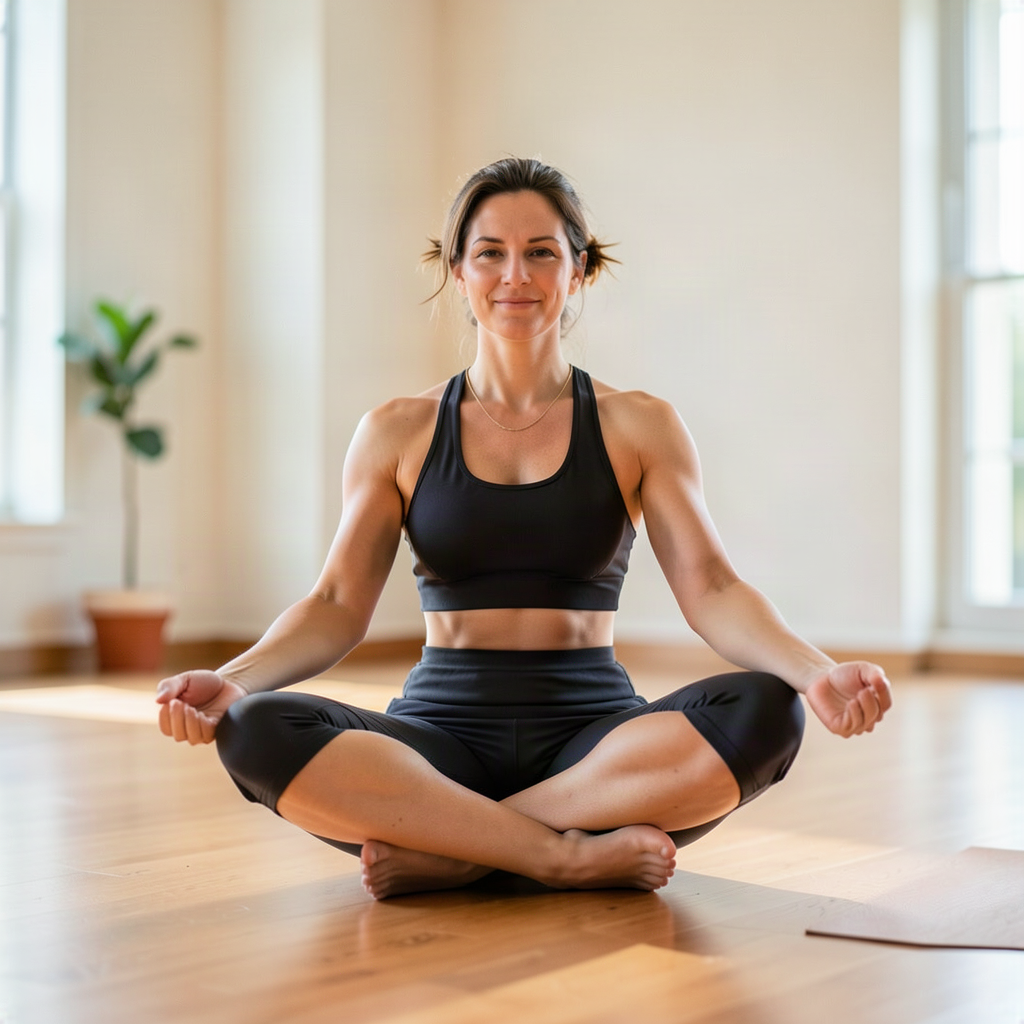
Standing yoga sequences form the backbone of a balanced practice, offering a unique blend of stability, strength, and mindfulness. Unlike floor-based movements, standing poses require the body to navigate gravity in an upright position, which helps improve posture, functional mobility, and balance. Whether you are a beginner looking to build a foundation or an experienced practitioner seeking to refine your alignment, this sequence provides a comprehensive approach to energizing the body and calming the mind.
The Importance of Grounding in Standing Poses
Grounding is the foundational principle of all standing yoga. It refers to the deliberate connection between your feet and the earth. To begin any standing sequence, stand in Tadasana (Mountain Pose). Spread your toes wide and imagine roots extending from your heels, the balls of your feet, and your outer edges into the floor. By distributing your weight evenly, you engage the stabilizing muscles in your ankles and calves. This active engagement protects your joints and ensures that the energy generated in the legs can travel upward through the spine, creating a sense of lightness and poise.
Tadasana: The Blueprint for Alignment
Tadasana is often mistaken for simply standing still, but it is actually an active pose that teaches the body proper vertical alignment. Stand with your feet hip-width apart. Engage your quadriceps to lift your kneecaps slightly without locking them. Draw your navel gently toward your spine to engage the core. Roll your shoulders back and down, allowing your chest to open while keeping your chin parallel to the floor. By mastering Tadasana, you create a “blueprint” for all other standing postures, ensuring that your spine remains neutral and your breath remains fluid throughout the entire session.
Building Heat with Sun Salutation Variations
Before moving into static holds, it is essential to prepare the joints with dynamic movement. Incorporate a modified Sun Salutation by reaching your arms overhead into Urdhva Hastasana (Upward Salute), then folding forward into Uttanasana (Standing Forward Fold). Keep a micro-bend in your knees if you feel tightness in your hamstrings. This transition warms the posterior chain and encourages blood flow. Repeat this cycle three to five times to elevate your heart rate and prepare your muscles for the deeper engagement required in the later stages of the sequence.
Warrior I and II: Cultivating Stability and Power
Warrior poses are the quintessential standing postures for building lower-body endurance. In Warrior I (Virabhadrasana I), focus on squaring your hips toward the front of the room while keeping your back heel grounded at a 45-degree angle. This pose stretches the hip flexors and strengthens the glutes. Transitioning into Warrior II (Virabhadrasana II), open your hips to the side and extend your arms parallel to the floor. Keep your front knee stacked directly over your ankle. These poses teach you how to remain calm under the “pressure” of physical effort, mirroring the resilience needed in everyday life.
Utthita Trikonasana: Expanding the Lateral Line
Extended Triangle Pose (Utthita Trikonasana) is excellent for opening the side body and improving spinal flexibility. From a wide stance, turn your right foot out and reach your torso forward before hinging down. Instead of focusing on touching the floor, place your hand on a block or your shin. The goal is to keep your top shoulder stacked over your bottom one, creating a straight line from your fingertips to your heel. This pose requires balance and internal rotation of the hips, helping to refine your sense of proprioception—your body’s ability to sense its position in space.
Balancing Poses: Vrikshasana for Mental Focus
Standing sequences are incomplete without a balancing pose. Vrikshasana (Tree Pose) challenges your concentration and core stability. Shift your weight into your left foot and place the sole of your right foot on your inner calf or inner thigh—avoiding the knee joint. Bring your hands to heart center or extend them overhead. If you wobble, look at a non-moving point on the wall in front of you, known as a drishti. Balancing postures are highly effective for mental health because they force the mind to stop wandering and focus entirely on the present moment, acting as a form of moving meditation.
Utkatasana: Strengthening the Core and Legs
Chair Pose (Utkatasana) is a powerful way to integrate the strength built in previous poses. Stand with feet together or hip-width apart and sit your hips back as if sitting into an invisible chair. Keep your chest lifted and your arms reaching upward. This pose engages the quadriceps, glutes, and the entire core musculature. It is physically demanding, but by maintaining deep, steady breaths, you learn to manage discomfort. Utkatasana improves metabolism and builds the stamina necessary for more advanced yoga practices.
Cooling Down and Transitioning
After completing the intense standing work, transition back to a neutral standing position. Take a few rounds of deep, slow breaths, allowing your heart rate to return to normal. Perform a gentle forward fold to release any residual tension in the lower back. Finally, return to Tadasana, closing your eyes for a moment to observe the effects of the sequence. Notice the increased blood flow, the grounding sensation in your feet, and the clarity in your mind. This concluding phase is just as important as the active poses, as it allows the nervous system to shift from a state of exertion to a state of restorative calm.
Proprioceptive Refinement Through Micro-Adjustments
Beyond the gross alignment of limbs, the secret to deep standing work lies in the micro-adjustments that occur within the kinetic chain. In any standing posture, practice “isomeric activation”—the process of pulling your feet toward one another without actually moving them on the mat. This action engages the adductors and pelvic floor, creating a sense of lift that prevents the joints from collapsing under the weight of gravity. In Warrior II, for example, imagine dragging your front heel toward your back arch; this subtle internal tension stabilizes the pelvis and protects the sacroiliac joint. By cultivating this internal awareness, you transform static shapes into active, living structures that support the skeletal system rather than merely stressing the muscles.
The Role of Bandhas in Standing Stability
The concept of ‘Bandhas’ or energy locks serves as the invisible scaffolding for standing sequences. Mula Bandha (the root lock) involves a gentle contraction of the pelvic floor muscles, which acts as a foundational anchor for the entire torso. When you stand in a challenging pose like Utkatasana, engaging Mula Bandha provides a lift that lightens the load on your lower back. Simultaneously, Uddiyana Bandha (the abdominal lock) supports the spine by drawing the navel toward the back body. Practicing these locks while standing requires high levels of coordination, but once mastered, they prevent the common issue of “dumping” weight into the lumbar spine, ensuring that the core remains the primary driver of vertical posture.
Navigating Asymmetry and Dominance
Every individual possesses inherent physical asymmetries, often rooted in daily habits like carrying heavy bags on one shoulder or favoring one leg while standing. Standing sequences offer a diagnostic window into these imbalances. Observe your practice: does one side of the body feel noticeably more flexible, or does your balance falter significantly on the left versus the right? To address this, spend an extra three breaths on your ‘tighter’ side during poses like Trikonasana or Vrikshasana. Do not aim for identical mechanical replication; instead, aim for equivalent levels of effort and sensation. This mindful approach to asymmetry prevents the development of chronic compensations and fosters a more holistic, symmetrical physical development over time.
Utilizing Props to Deepen Proprioceptive Awareness
While many practitioners view yoga blocks as tools for beginners, they are essential instruments for refining the nervous system’s map of the body. When practicing Ardha Chandrasana (Half Moon Pose), for instance, placing a block under the bottom hand allows the torso to remain parallel to the floor, preventing the chest from collapsing toward the mat. This external support provides the feedback necessary for the brain to learn the correct spatial orientation of the limbs. By removing the struggle of reaching the floor, the nervous system can relax into the pose, allowing for more precise adjustments in the rotation of the hips and the extension of the spine. Use props not as crutches, but as facilitators of better alignment.
The Mechanics of Rotation in Standing Twists
Standing twists, such as Parivrtta Trikonasana (Revolved Triangle), introduce a complex layer of spinal mechanics that demand careful execution. The rotation should originate from the thoracic spine (the mid-back) rather than the lumbar spine (the lower back). To achieve this, ground your feet firmly to create a stable base, then focus on drawing the belly button toward the spine before initiating the twist. Think of your spine as a spiral staircase; as you exhale, lengthen your crown away from your tailbone to create space between the vertebrae before rotating. If you feel pinching in the lower back, reduce the intensity of the twist. Standing twists are unparalleled for massaging the internal organs and improving the mobility of the rib cage, which significantly enhances respiratory capacity.
Managing the Nervous System via Breath-to-Movement Ratio
The pace of your breath is the primary regulator of your autonomic nervous system during a standing sequence. When holding strenuous postures, the natural tendency is to shorten the breath or hold it entirely, which signals the body to enter a ‘fight or flight’ state. Consciously override this by maintaining a steady, audible Ujjayi breath, even during the most demanding phases. A useful technique is to match the duration of your inhale and exhale, perhaps counting to four for each. By forcing the breath to remain rhythmic, you communicate safety to your brain, lowering cortisol levels and allowing your muscles to release tension that would otherwise cause fatigue. This intentional breathing turns a physical workout into a profound exercise in emotional and nervous system regulation.
Integrating Transitional Flow for Functional Mobility
While static holds are vital for strength, linking poses together in a continuous, fluid flow—often referred to as Vinyasa—builds cardiovascular endurance and improves functional mobility. Instead of pausing between Warrior I and Warrior II, treat the transition as a pose in itself. Focus on maintaining a consistent level of engagement in your core and legs as you pivot your feet and shift your center of gravity. This fluid transition trains the body to remain stable while moving through space, which is the definition of functional strength. By treating the space between the poses with the same level of attention as the poses themselves, you develop a seamless, graceful, and highly efficient way of moving that translates directly into better coordination in your daily life.
The Biomechanics of Foot Anchoring and Arch Support
To truly unlock the potential of a standing sequence, one must look beneath the surface of the skin to the intricate network of the foot. The foot is not a passive pedestal but a dynamic sensory organ. Beyond the basic instruction of spreading toes, consider the ‘tripod foot’ concept: distribute your weight precisely between the center of the heel, the base of the big toe, and the base of the pinky toe. When these three points are active, you create a natural arch lift that prevents pronation (rolling inward) or supination (rolling outward). This structural integrity prevents the ‘domino effect’ of misalignment that often travels up to the knees and hips. Practice lifting the arches of your feet while keeping the toes relaxed; this subtle muscular lift, known as ‘Pada Bandha,’ serves as the base-level activation that informs the stability of your entire sequence.
Refining Pelvic Neutrality in Dynamic Transitions
The pelvis acts as the gateway between the upper and lower body, and its orientation dictates the health of your lumbar spine during standing movements. In high-intensity poses like Warrior I, there is a common tendency to over-arch the lower back as the arms reach overhead. To correct this, visualize your pelvis as a bowl filled with water; imagine tipping the ‘bowl’ forward slightly to avoid spilling out the back, which effectively engages the lower abdominals and lengthens the sacrum toward the heels. Maintaining this neutral pelvic tilt during transitions—such as moving from a forward fold back up to standing—protects the spinal discs and ensures that the power of the legs is transferred directly into the core rather than being lost in a swayback posture.
The Role of Eccentric Loading in Muscle Development
While many practitioners focus on the ‘effort’ phase of a pose, such as the initial lunge into Warrior II, the ‘eccentric’ phase—the slow, controlled movement into and out of the shape—is where true strength is built. Instead of snapping into a lunge, move with deliberate, slow resistance as if you are moving through water. By slowing down the descent, you force the stabilizing muscles around the hip and knee joints to work harder to control the speed of the movement. This eccentric load improves joint durability and proprioceptive control, teaching your muscles how to handle weight and gravity safely. By adopting this ‘slow-motion’ approach, you turn a twenty-minute sequence into a high-intensity neuromuscular workout that builds lean muscle and functional stability.
Optimizing Shoulder Girdle Mechanics for Overhead Poses
Standing poses like Urdhva Hastasana (Upward Salute) often result in ‘shoulder shrugging,’ where the trapezius muscles tighten and pull the shoulders toward the ears. This restricts the range of motion and creates unnecessary tension in the neck. To optimize your overhead alignment, focus on external rotation of the upper arms (biceps rotating forward) even as your palms face each other. This motion clears space for the scapulae to glide down the back, creating a stable, wide base for the arms. When you keep the shoulders ‘broad’ rather than ‘high,’ you allow the chest to open without compromising the integrity of the neck. This adjustment is critical in standing poses as it prevents the upper body from becoming a source of fatigue, allowing you to sustain the pose for longer durations with ease.
Advanced Integration: The Kinetic Chain of the Lower Body
To deepen the efficacy of your sequence, visualize the muscles of the legs as a spiral. In poses like Parsvakonasana (Extended Side Angle), imagine the femur bone (thigh bone) spiraling outward within the hip socket, while the skin and muscle of the inner thigh spiral inward toward the midline. This ‘co-contraction’ creates a sense of immense stability and ‘hugging’ of the bone, which provides a profound feeling of lightness in the pose. This is the difference between simply holding a shape and actively inhabiting it. When you engage this spiral energy, you move away from passive stretching and into active lengthening, which is significantly more effective at increasing mobility while simultaneously protecting the ligaments of the knee.
Addressing the ‘Hidden’ Tightness in the Psoas
The psoas muscle is the primary hip flexor and a major player in standing posture, yet it is frequently over-tightened by prolonged sitting. In any standing lunge variation, the back leg is responsible for stretching this muscle. To maximize the release of the psoas, do not just lunge forward; instead, focus on the ‘tailbone tuck’ and the active engagement of the glute on the back leg. When the glute fires, it creates a reciprocal inhibition that signals the psoas to release. This simple, focused engagement allows for a much deeper opening in the front of the hip than force alone could ever achieve. By focusing on the glute-psoas relationship, you can alleviate lower back pain and improve your upright posture significantly after only a few sessions.
FAQ: Frequently Asked Questions
Q: How often should I practice this standing sequence? A: You can practice this sequence as often as daily. If you are a beginner, starting with three times a week is sufficient to see improvements in balance and strength without overtaxing your muscles.
Q: Can I modify these poses if I have knee pain? A: Yes, always prioritize comfort. Use blocks under your hands in Triangle Pose, keep a generous bend in the knees during forward folds, and avoid deep lunges if they cause sharp pain. Consult a physician if you have chronic joint issues.
Q: What is the benefit of keeping a ‘drishti’ during balancing poses? A: A drishti, or focused gaze, helps stabilize your nervous system. By fixing your vision on one point, you reduce visual stimuli, which helps the brain coordinate balance more effectively.
Q: Should I hold these poses for a specific amount of time? A: Generally, holding active poses for 5 to 10 deep, slow breaths is ideal. This duration is long enough to engage the muscles but short enough to maintain proper form and steady breathing.
Q: Can this sequence be done without a yoga mat? A: While a mat provides grip and cushioning, you can perform these poses on any stable, non-slip surface. Ensure you have enough space to extend your arms and legs fully without hitting obstacles.
Related posts:
 Lena Dunham Demonstrates the Perfect Cat-Cow Pose for Beginners
 Fitness Trainers Say This Move Beats Squats Every Time
 Celebrity Trainer Charlee Atkins’ Go-To Hip Opening Sequence
 Yoga Tips for Beginners
 Perfect Your Glute Bridge
 Effective Workouts You Can Do While Lying Down
 Lindsay Ellingson’s Stress-Relieving Yoga Move
 Perfect Your Squat Form