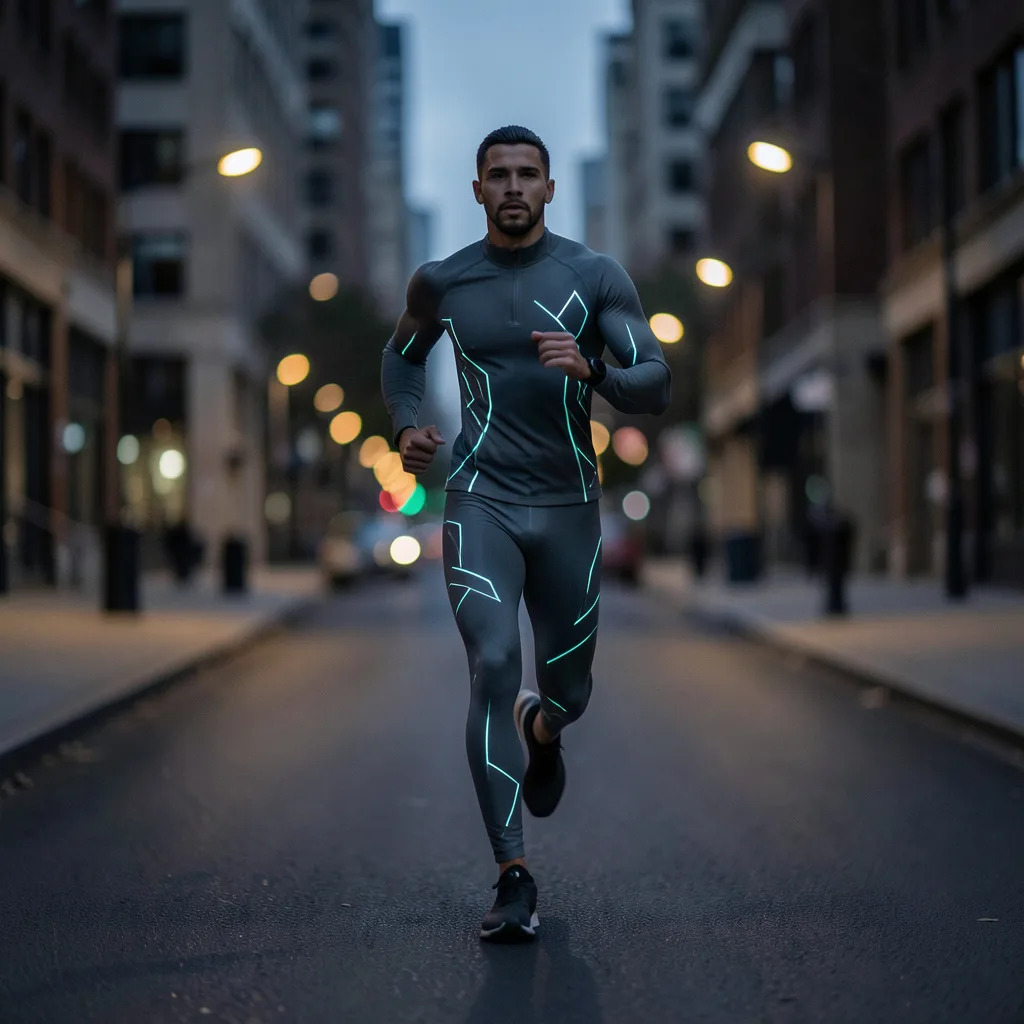
Whether you love sunrise jogs, moonlit bike rides, or late‑evening yoga in the park, staying visible to motorists and fellow exercisers is a non‑negotiable safety priority. Modern reflective activewear lets you combine that essential visibility with the sleek aesthetics you expect from today’s performance apparel. In this guide we’ll explore the science behind reflective fabrics, how to pick pieces that complement your personal style, and practical ways to integrate them into every season’s workout wardrobe—all while keeping your gear looking fresh and functioning at its best.
Key takeaways
- Prioritize high-intensity reflective fabrics that maintain brightness over 50+ washes for long-term safety and performance.
- Choose strategically placed reflective elements along seams or side panels to maintain a stylish, minimalist aesthetic.
- Wash reflective gear inside-out in cold water using gentle, fragrance-free detergent to prevent premature degradation of reflective particles.
- Combine passive reflective clothing with LED accessories or smart jackets to maximize visibility in diverse weather and lighting conditions.
Why Visibility Matters in Outdoor Workouts
Statistics from transportation safety agencies consistently show that low‑light conditions dramatically increase the risk of collisions between cyclists, runners, and motor vehicles. Even a brief glance at a reflective stripe can give a driver an extra half‑second to react, which can be the difference between a close pass and a serious incident. Beyond traffic, visibility also helps other pedestrians and park users anticipate your movements, reducing accidental trips or bumps. The core benefit of reflective activewear is therefore two‑fold: it protects you from external hazards and fosters a sense of confidence that lets you focus on performance rather than fear.
The Evolution of Reflective Fabrics
Reflectivity isn’t a new concept—early safety gear relied on simple glass beads sewn onto clothing. Over the past two decades, textile engineers have introduced micro‑prismatic and glass‑bead technologies that bend light back toward its source, creating a bright “glow” without the need for external illumination. Modern fabrics embed these particles directly into fibers, allowing the material to stretch, wick sweat, and retain a soft hand feel. Some brands also combine reflective yarns with antimicrobial treatments and UV‑protective finishes, delivering a truly multi‑functional garment. Understanding this evolution helps you recognize quality markers such as “high‑intensity reflective (HIR)” or “dual‑directional reflectivity,” which indicate superior performance in both direct and peripheral light.
Choosing Reflective Activewear That Matches Your Style
Style is personal, but there are universal design principles that let reflective details enhance rather than dominate an outfit. Look for pieces where reflective elements are strategically placed—along seams, on side panels, or as subtle piping—so they accentuate your body’s natural lines. For a minimalist look, opt for a matte black leggings with thin silver stitching; for a bold statement, try a neon‑green jacket with large reflective logos. Mixing textures (e.g., matte neoprene with glossy reflective strips) creates visual interest while keeping the overall silhouette cohesive. When building a capsule collection, choose a neutral base (black, navy, charcoal) and add one or two accent colors that coordinate with your existing gear.
Key Features to Look For Beyond Reflectivity
- Moisture‑wicking capability: Look for fabrics labeled “polyester‑spandex blend” or “engineered knit” that move sweat away from the skin.
- Four‑way stretch: Ensures freedom of movement during high‑intensity intervals.
- Breathability: Mesh panels or laser‑cut perforations prevent overheating.
- Seam construction: Flat‑lock seams reduce chafing, especially important when reflective strips run along the inner thigh.
- Durability of reflectivity: High‑intensity reflective (HIR) finishes retain brightness after 50+ washes, whereas standard glass‑bead prints may fade faster.
Balancing these performance attributes with aesthetics will give you a garment that looks great, feels comfortable, and stays visible for the long haul.
How to Layer Reflective Pieces for Different Weather Conditions
Layering is essential when temperatures swing from chilly dawns to warm afternoons. A versatile system might include:
- Base layer: A lightweight, moisture‑wicking tee with subtle reflective piping along the shoulders.
- Mid layer: A fleece or soft‑shell jacket featuring larger reflective panels on the back and sleeves—ideal for early‑morning runs when the sun is low.
- Outer shell: A waterproof, breathable raincoat with high‑intensity reflective strips on the hood and hem. Look for sealed seams to keep rain out while preserving reflectivity.
When the weather is warm, you can skip the mid layer and rely on a reflective‑accented tank top paired with reflective leggings. In colder climates, consider adding a reflective‑lined beanie or headband; the tiny reflective dots on the fabric can be just as effective as a larger strip on a jacket.
Caring for Reflective Garments to Preserve Performance
Improper care can dull reflective particles and reduce moisture‑wicking efficiency. Follow these guidelines:
- Wash inside‑out: This protects the reflective side from friction against other garments.
- Cold water cycle: Hot water can degrade the adhesive that holds micro‑prismatic particles.
- Gentle, fragrance‑free detergent: Avoid fabric softeners, which can coat reflective surfaces and lower brightness.
- Avoid high‑heat drying: Air‑dry or tumble dry on low heat; excessive heat can cause the reflective coating to crack.
- Store flat: Hanging heavy reflective jackets can stretch seams and cause the reflective film to warp.
Regularly inspect seams for loose threads and re‑stitch if necessary. If reflectivity does fade, some manufacturers offer a “re‑coat” service where the garment is re‑applied with fresh reflective particles.
Integrating Reflective Gear Into Your Routine
Simply owning reflective pieces isn’t enough; you need to make them a habit. Here are actionable steps:
- Plan reflective checkpoints: Choose three moments in a week—e.g., a Tuesday night run, a Saturday bike commute, and a Sunday early‑morning hike—where you intentionally wear reflective gear.
- Pair with accessories: Reflective shoe laces, ankle bands, or a bright safety vest can boost visibility without compromising style.
- Use technology: Sync a headlamp or clip‑on LED light with a reflective jacket that has a built‑in pocket for the device; the light amplifies the reflective effect.
- Practice “visibility drills”: Stand at a crosswalk after dark and ask a friend to spot you from 30 feet away. Adjust garment placement if any area remains unseen.
- Document progress: Take a quick photo of your outfit each time you wear reflective gear. Over a month you’ll see patterns in what works best for different activities.
These habits turn safety into a seamless part of your fitness routine rather than an after‑thought.
Budget‑Friendly Options and Where to Shop
High‑end brands often price reflective jackets above $150, but quality options exist at lower price points. Consider these strategies:
- Outlet stores: Many major sports retailers have outlet locations where last‑season reflective pieces are discounted 30‑50%.
- Online flash sales: Websites like Nordstrom Rack, Backcountry, and REI Co‑op’s “Clearance” section regularly feature reflective leggings and tees under $60.
- Direct‑to‑consumer brands: Companies that sell exclusively online can keep costs down; look for transparent return policies and customer reviews that mention durability.
- Second‑hand platforms: Apps such as Poshmark or Depop often list lightly used reflective jackets. Verify the reflectivity by checking product photos in low‑light settings.
- DIY upgrades: If you already own a favorite pair of leggings, you can add reflective tape (commercially sold in 1‑inch or 2‑inch widths) along the side seams. Choose tape rated for washability and follow the manufacturer’s heat‑press instructions.
By mixing premium statement pieces with affordable basics, you can build a complete reflective wardrobe without exceeding a reasonable budget.
Safety Tips Beyond Clothing
Reflective apparel is a powerful tool, but it works best alongside other safety practices:
- Route planning: Choose well‑lit streets, bike lanes, or paths with minimal vehicular traffic for early‑morning sessions.
- Use audible alerts: A bell, horn, or even a portable speaker playing low‑volume music can alert nearby pedestrians to your presence.
- Carry identification: A small ID tag with emergency contact information is useful if you’re alone and need assistance.
- Stay aware: Keep headphones at a volume that still allows you to hear traffic, and periodically glance over your shoulder.
- Group workouts: When possible, train with a partner or join a local night‑run club; visibility increases exponentially with multiple reflective participants.
Combining these strategies with reflective activewear creates a layered safety net that lets you enjoy your workouts at any hour.
Smart Reflective Wear: Integrating LEDs and Sensors
While traditional reflective fabrics rely on external light sources, the next wave of activewear combines passive reflectivity with active illumination. Small, flexible LED strips can be woven directly into seams or printed onto polymer layers, allowing the garment to emit light when powered by a thin, rechargeable battery pack. The key advantage is that illumination can be programmed to pulse, change color, or increase intensity based on ambient conditions detected by built‑in light sensors.
Practical implementation:
- Power management: Most commercial smart jackets use a lithium‑polymer cell rated at 200‑400 mAh. A low‑power micro‑controller monitors ambient lux; when it drops below a preset threshold (e.g., 10 lux), the LEDs automatically switch on. Users can override this behavior via a discreet button on the cuff.
- Connectivity: Bluetooth Low Energy (BLE) modules let athletes sync the garment with a smartphone app. The app can display battery level, set custom flash patterns for group rides, or even share location data with emergency contacts.
- Safety data: Studies from the University of Michigan’s Transportation Research Institute show that LED‑enhanced jackets improve detection distance by up to 30 % compared with high‑intensity reflective (HIR) fabrics alone, especially in foggy or rainy conditions where reflected light is scattered.
Edge cases to consider include:
- Cold‑weather performance: Battery chemistry can degrade below ‑10 °C. Selecting a battery with a built‑in thermal management circuit or placing the pack close to the body (e.g., inside a zip‑pocket) mitigates power loss.
- Water resistance: LED modules must meet an IPX4 or higher rating to survive splashes during mountain biking or kayaking. Look for garments that list “sealed LED housing” in the specs.
- Regulatory compliance: Some jurisdictions limit the brightness of wearable LEDs to avoid driver glare. Verify that the luminous intensity stays under 200 cd/m² for continuous operation.
Integrating smart illumination does not replace reflective fabric; rather, it creates a dual‑mode system where the garment remains visible even when a car’s headlights are not directly aimed at the wearer.
Reflective Gear for Specialized Activities
Different outdoor pursuits place unique demands on visibility solutions. Below are three activity‑specific configurations that go beyond the generic layering approach discussed previously.
Cycling – Full‑Body Visibility Kit
Road cyclists benefit from a 360° visibility package:
- Reflective jersey: High‑visibility panels on the front, back, and sleeves, combined with reflective piping along the side seams to catch side‑on traffic.
- Reflective shoe covers: Lightweight neoprene sleeves that wrap around the toe and heel, ensuring the pedal’s motion is visible from the side.
- Reflective helmet shell: Some carbon‑fiber helmets incorporate a thin reflective film under the paint, visible when the rider leans forward.
- Bike-mounted lights with reflective lenses: Using lenses that have a mirrored coating can bounce light back toward oncoming drivers, effectively turning the bike into a moving beacon.
Edge case: Night‑time group rides often suffer from “visibility fatigue” where drivers become accustomed to a single light source. Alternating flash patterns between riders (e.g., one rider uses a steady beam, another a slow pulse) maintains driver attention.
Trail Running – Low‑Light Terrain Adaptation
Off‑road environments introduce variable lighting, dust, and foliage. Reflective solutions must be both durable and flexible enough to avoid snagging on branches.
- Reflective gaiters: Cover the ankle and lower shin, protecting both the leg and the reflective strip from mud and debris.
- Mesh‑backed reflective vests: A breathable mesh base reduces heat buildup while the reflective overlay remains fully exposed.
- Reflective trail shoes: Shoes with a reflective heel tab and a reflective midsole can be seen from both the front and the side, crucial when navigating steep descents.
Edge case: In high‑altitude environments, UV exposure can degrade some reflective coatings faster. Selecting garments with UV‑stabilized reflectivity (often labeled “UV‑resistant HIR”) extends lifespan.
Water Sports – Reflectivity on Wet Surfaces
Kayakers, paddleboarders, and open‑water swimmers need visibility that works when the fabric is saturated.
- Hydrophobic reflective film: A thin polymer layer that repels water, keeping the reflective particles exposed even when the garment is soaked.
- Reflective buoyancy aids: Life‑vests with integrated reflective strips that maintain brightness under spray and sunlight.
- Reflective sunglasses straps: A small but effective detail; the strap reflects light from the sun, making the wearer’s head more noticeable from a distance.
Edge case: Saltwater can cause corrosion on metal fasteners. Opt for stainless‑steel or coated hardware to preserve both structural integrity and reflective performance.
Legal Standards and Certification Across Regions
Visibility requirements are not uniform worldwide. Understanding the legal landscape helps you avoid fines and ensures your gear meets the minimum safety thresholds for the area where you train.
North America
- U.S. Federal Motor Vehicle Safety Standards (FMVSS) 108: Defines minimum retroreflectivity values for “high‑visibility safety apparel.” The standard requires a minimum of 1.5 cd/m² at a 2‑meter observation angle for Class 2 garments.
- Canadian Standard CAN/CSA‑Z94.3‑18: Similar to FMVSS but adds a requirement for a minimum of 0.7 cd/m² at a 10‑degree angle, encouraging multi‑directional reflectivity.
Europe
- EN 471 (replaced by EN ISO 20471 in 2016): Sets three classes of high‑visibility clothing. Class 3, the highest, demands at least 300 mm² of reflective material on the torso and 150 mm² on each arm/leg, with a minimum luminance of 70 cd/m².
- UK’s “High‑Visibility Clothing (HVC) Regulations”: Mirrors EN ISO 20471 but also requires a “high‑visibility colour” (fluorescent yellow, orange, or red) for any garment used on public roads.
Asia‑Pacific
- Australia’s AS 1742.3‑2015: Focuses on “high‑visibility clothing” for workers and cyclists, specifying a minimum retroreflective area of 150 mm² on the torso for Class 2 garments.
- Japan’s JIS Z 8715: Requires a reflective coefficient of at least 0.8 for safety vests used on roads.
When buying reflective activewear, look for the relevant certification label printed on the garment’s tag. If the label is missing, request a product data sheet from the manufacturer; reputable brands will provide test results from accredited labs such as UL or SGS.
Edge case: Some local municipalities have stricter ordinances for night‑time cyclists, mandating a minimum of 500 mm² of reflective material on the rear of a jacket. In these cases, a supplemental reflective vest can be worn underneath a regular jacket to meet the requirement without sacrificing style.
Environmental Impact and Sustainable Reflective Materials
Reflective technology has traditionally relied on petro‑derived polymers and glass‑bead production processes that generate waste. However, a growing segment of the industry is adopting greener alternatives without compromising performance.
Recycled‑Polyester Fibers with Embedded Reflectors
Brands are now using post‑consumer PET bottles that are chemically recycled into fibers. The reflective particles are bonded during the melt‑spinning stage, eliminating the need for a separate coating step. This reduces water usage by up to 40 % compared with conventional dye‑and‑coat methods.
Bio‑Based Reflective Pigments
Researchers at the University of Leeds have developed a reflective pigment derived from chitin—a natural polymer found in crustacean shells. The particles are micro‑prismatic, offering comparable HIR performance to glass beads while being biodegradable at the end of the garment’s life cycle.
Closed‑Loop Take‑Back Programs
Several manufacturers now offer a “return‑for‑recycle” service: customers ship back worn‑out reflective jackets, and the company separates the reflective layer from the base fabric. The reflective film is reclaimed for new products, while the base fabric is shredded and repurposed into insulation or stuffing.
Practical steps for consumers:
- Check the product description for terms like “recycled content,” “bio‑based reflector,” or “closed‑loop.”
- Verify third‑party certifications such as GRS (Global Recycled Standard) or Cradle‑to‑Cradle™.
- Prioritize items with a transparent supply‑chain map, often linked from the brand’s sustainability report.
Edge case: In hot climates, some recycled polyester blends can retain heat longer than virgin polyester. To counteract this, look for garments that incorporate a “phase‑change material (PCM)” layer, which absorbs excess body heat and releases it when the temperature drops, all while maintaining reflectivity.
Building a Travel‑Ready Reflective Wardrobe
Frequent travelers need a compact, versatile kit that can transition from a city marathon to a mountain trail without taking up precious luggage space.
Multi‑Use Core Pieces
- Convertible reflective jacket: Features zip‑off sleeves, turning it into a reflective vest for warmer days. The core torso panel remains HIR, while the sleeves can be stored in a compression sack.
- Reflective compression tights with zip‑off leg panels: The lower leg portion can be detached, converting the garment into a short‑sleeve reflective top for hot climates.
- Packable reflective rain poncho: Made from a thin, waterproof film with embedded reflective fibers, it folds into a 10 × 10 cm pouch that fits inside any backpack.
Compression Packing Techniques
To maximize space, roll garments rather than fold them, then place the roll inside a vacuum‑seal bag. The compression reduces volume by up to 70 %, but be cautious: prolonged vacuum sealing can stress elastic fibers. A practical compromise is to use a “partial‑seal” method—press out most air, then zip the bag halfway.
Strategic Layering for Climate Variability
When traveling between time zones, you may encounter sudden temperature swings. Pack a lightweight, reflective base layer (e.g., a 3‑oz polyester tee) that can be worn alone or layered under a fleece. The base layer’s reflective piping ensures visibility even if the outer layer is removed.
Accessory Mini‑Kit
Include a small zip‑lock bag containing:
- Two pairs of reflective ankle bands (quick‑swap for shoes).
- A roll of waterproof reflective tape (1‑inch width) for on‑the‑go repairs.
- A compact, rechargeable LED clip that can attach to any pocket.
- A travel‑size detergent pod formulated for technical fabrics, ensuring you can wash reflective items in hotel laundries without damaging them.
Edge case: In destinations with strict customs regulations (e.g., some Middle Eastern countries), reflective garments may be considered “non‑traditional clothing” and subject to additional inspection. Keeping a digital copy of the product’s certification can expedite the process.
Customizing Reflectivity for Body Types and Visibility Zones
Not all athletes have the same silhouette, and visibility needs differ based on where a person’s movement is most pronounced. Tailoring reflective placement can dramatically improve detection without over‑cluttering the outfit.
For Tall, Lean Runners
Longer limbs create larger “blind spots” for drivers when the runner is angled away from the road. Strategically placed reflective strips along the outer thigh and calf can break up the silhouette and provide side‑on cues. A thin reflective band that wraps around the lower calf, just above the shoe, ensures the foot strike is visible.
For Shorter, Stockier Cyclists
Because the torso occupies a larger portion of the visual field, concentrating high‑intensity reflective panels on the chest and upper back yields the greatest impact. Adding a reflective “belt” around the waist can delineate the rider’s profile, helping drivers gauge distance more accurately.
For Plus‑Size Participants
Reflective coverage should be generous enough to accommodate fabric stretch without exposing gaps. Wide‑band reflective piping along the side seams of leggings and the outer edge of a jacket prevents “peeling” of reflective material when the garment expands during high‑intensity movement.
For Children and Seniors
Smaller stature means that a single reflective element can be missed entirely if not positioned correctly. For children, a reflective hood with a brim adds a visible focal point at head height. For seniors, reflective cuffs on sleeves and pants help caregivers spot them from a distance, especially in low‑light indoor facilities.
DIY Personalization
Many brands sell modular reflective patches with adhesive backs that can be repositioned. When customizing:
- Test the patch under a flashlight before final placement to ensure adequate brightness.
- Secure the patch with a heat‑press (if the fabric tolerates 150 °C) or use a fabric‑friendly adhesive for delicate knits.
- Mark the intended spot with a washable fabric pen; this prevents misalignment when the garment is wet.
Edge case: Some individuals have skin sensitivities to the adhesive used in patches. In those instances, opt for “snap‑on” reflective clips that attach to existing loops or D‑rings on the garment, eliminating direct skin contact.
By thoughtfully aligning reflective zones with the wearer’s anatomy and typical motion patterns, you create a safety system that feels intuitive, looks intentional, and maximizes the chance of being seen when it matters most.
Frequently Asked Questions
Q1: How does reflective fabric work in complete darkness?
A: Reflective material does not emit light; it redirects light that hits it. In total darkness there is no source for the material to reflect, so it appears invisible. Pairing reflective clothing with a small light source—such as a headlamp or bike light—ensures the strips become visible from a distance.
Q2: Can I wash reflective leggings with regular laundry detergent?
A: Yes, but use a mild, fragrance‑free detergent, wash inside‑out on a cold, gentle cycle, and avoid fabric softeners. This preserves both the moisture‑wicking fibers and the reflective coating.
Q3: Are there health concerns with the glass‑bead particles in reflective fabrics?
A: The glass beads are sealed within the fabric fibers, preventing direct skin contact. Reputable brands test for skin‑irritation compliance, so there are no known health risks when the garments are used as intended.
Q4: How often does reflective performance degrade?
A: High‑intensity reflective finishes typically retain 80‑90% of their brightness after 30–50 washes. Regular care—cold washes, air‑drying, and avoiding high heat—extends this lifespan. If brightness noticeably drops, consider re‑coating services or replacing the garment.
Q5: Can I combine multiple reflective pieces without looking “over‑the‑top”?
A: Absolutely. The key is balance: choose one statement piece (e.g., a reflective jacket) and complement it with subtler items (e.g., reflective piping on leggings). Mixing reflective colors—silver, neon, or metallic—can create a cohesive look when coordinated with your overall color palette.
Related posts:
 The Athleisure Outerwear Taking Over This Fall
 This Antimicrobial Jacket Could Change the Future of Protective Gear
 Jennifer Garner’s North Face Fashion
 The Art of Upcycling: Giving Your Clothes a Second Life
 Zipper Disasters: Why Your Clothes Keep Snagging in the Wash and How to Stop It
 The Best Bra Tops for Comfort and Support
 How to Repair Clothes Instead of Replacing
 Why White Activewear Is Having a Major Moment