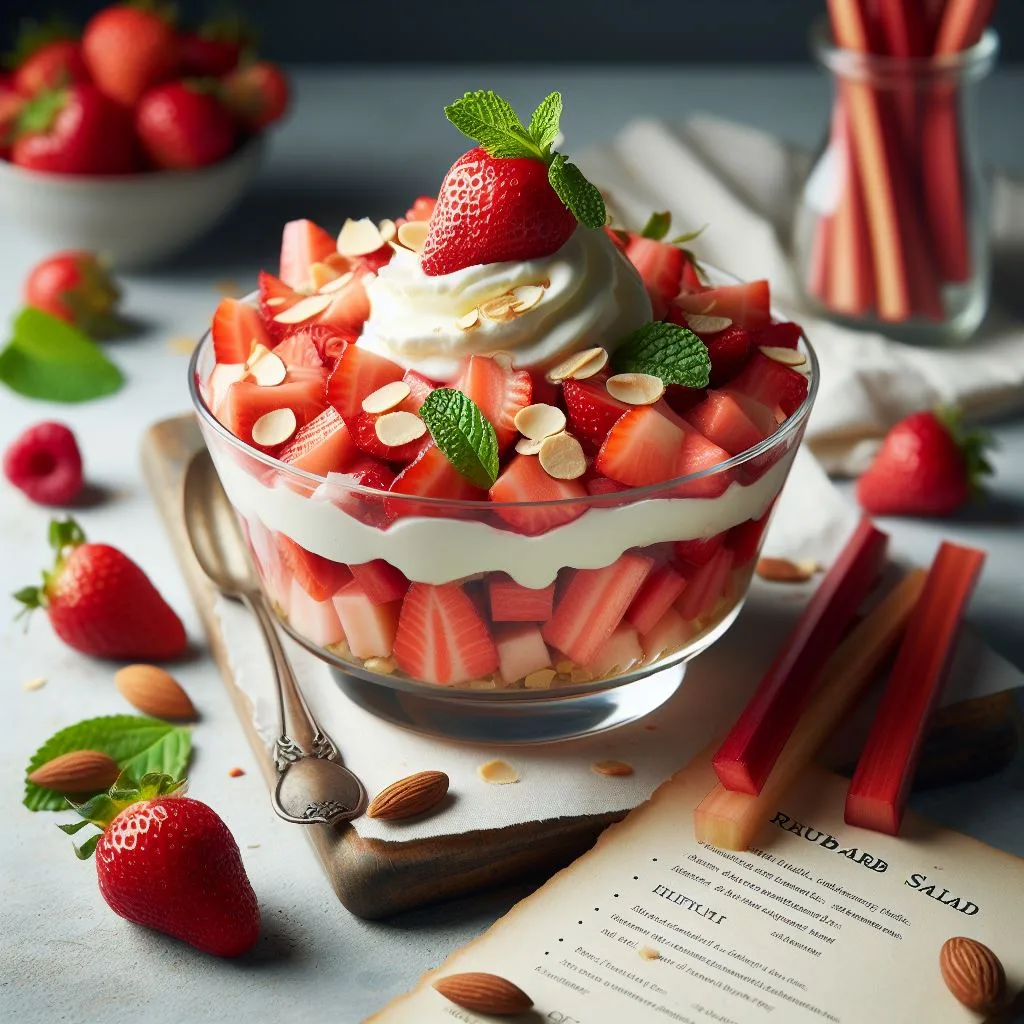
Spring is in the air, and with it comes the delectable pairing of strawberries and rhubarb in a refreshing salad. This Strawberry Rhubarb Salad recipe is not only a feast for the eyes but also a fusion of sweet and tangy flavors that will tantalize your taste buds. Perfect for picnics, brunch, or a healthy snack, this salad is sure to become a seasonal favorite.
Ingredients for the Perfect Blend
- 2 cups fresh strawberries, hulled and sliced
- 1 cup rhubarb, thinly sliced
- 2 tablespoons honey or maple syrup
- 1 tablespoon balsamic vinegar
- 1 teaspoon lemon zest
- 2 teaspoons lemon juice
- Pinch of salt
- Fresh mint leaves for garnish
Steps to Create Your Salad
- Begin by combining the honey or maple syrup, balsamic vinegar, lemon zest, lemon juice, and salt in a large bowl. Whisk these ingredients together to create your dressing.
- Add the sliced strawberries and rhubarb to the bowl and gently toss them with the dressing to coat evenly.
- Let the salad sit for about 10 minutes to allow the flavors to meld together. The rhubarb will soften slightly and the strawberries will release their natural juices, creating a more cohesive dish.
- Garnish with fresh mint leaves before serving to add a refreshing aroma and a touch of greenery.
Nutritional Benefits of Strawberry Rhubarb Salad
This salad isn’t just delicious; it’s also packed with health benefits. Strawberries are rich in antioxidants and vitamin C, while rhubarb provides fiber and vitamin K. Together, they create a nutritious dish that supports overall health.
Serving Suggestions
Our Strawberry Rhubarb Salad pairs wonderfully with grilled chicken or fish for a balanced meal. It’s also a delightful addition to any spring or summer feast, offering a light and fruity option amongst heavier dishes.
Customizing Your Salad
Feel free to add your own twist to this recipe by including ingredients like nuts for crunch, goat cheese for creaminess, or other fruits to complement the strawberries and rhubarb. The possibilities are endless!
Sourcing and Selecting the Ideal Produce for Peak Flavor
The success of a strawberry rhubarb salad hinges entirely on the quality and maturity of the raw ingredients. When sourcing rhubarb, it is essential to understand the distinction between hothouse (or forced) rhubarb and field-grown varieties. Hothouse rhubarb, typically available in very early spring, boasts a brilliant crimson color and a more delicate, less stringy texture. Its flavor is milder, making it the premier choice for a raw salad where the stalk’s natural crunch is the star. Field-grown rhubarb, which arrives later in the season, is sturdier with a deeper green-to-red gradient. If you are using field-grown stalks, look for younger, thinner stems about the diameter of a finger; these are less likely to be woody or overly fibrous.
Strawberries require an equally discerning eye. For a salad that maintains its structural integrity, opt for varieties like the ‘Albion’ or ‘Seascape,’ which are known for their firmness and high sugar-to-acid ratio. If you are lucky enough to find wild strawberries or ‘Mara des Bois,’ their intense floral aroma will elevate the dish to a gourmet level. Avoid berries that have white or green shoulders near the cap, as these will be crunchy and tart, clashing with the already acidic rhubarb. Instead, seek out berries that are fragrant and red all the way through. For an interesting visual and flavor contrast, consider mixing in a few white ‘Pineberries,’ which offer a subtle pineapple undertone that complements the balsamic notes in the dressing.
Beyond the primary fruits, the quality of your secondary aromatics matters. If using mint, ensure it is the ‘Spearmint’ variety for a sweet finish, or ‘Chocolate Mint’ for a surprising depth. When selecting a lemon for zest, choose organic, unwaxed fruit to avoid the bitter chemical aftertaste often found on conventional citrus. The weight of the lemon in your hand should feel heavy for its size, indicating a high juice content that will provide the necessary acidity to balance the honey.
Advanced Knife Skills: Taming the Rhubarb Stalk
Because rhubarb is naturally fibrous, the way it is cut significantly impacts the mouthfeel of the salad. While standard slicing is effective, employing advanced knife techniques can transform the texture from “crunchy” to “elegant.” One highly recommended method is the julienne cut. By slicing the rhubarb into matchstick-sized pieces, you increase the surface area exposed to the dressing, allowing the acids and sugars to penetrate the fibers more quickly. This results in a softer bite while retaining a satisfying snap.
Another sophisticated approach is to use a vegetable peeler to create long, translucent rhubarb ribbons. These ribbons curl beautifully when tossed with the dressing, creating a voluminous, airy salad that looks professional. If the rhubarb stalks are particularly thick or old, you may find a tough outer skin that feels like dental floss. In this edge case, use a paring knife to catch the edge of the skin at one end and pull it down the length of the stalk to de-string it, much like you would with celery. This ensures that every bite is tender.
For the strawberries, consistency is key for even maceration. Slicing them into uniform rounds (coins) or vertical wedges helps them release juice at the same rate as the rhubarb. If you are using very small berries, leaving them whole or simply halving them provides a pleasant textural contrast to the thinly sliced rhubarb. Always hull the strawberries using a small paring knife or a specialized huller to remove the tough white core without wasting the sweet flesh of the berry.
The Chemistry of Maceration and Flavor Development
Maceration is the process where the addition of sugar (honey or maple syrup) and acid (balsamic vinegar and lemon juice) draws out the moisture from the fruit through osmosis. In this salad, maceration serves two purposes: it creates a natural syrup that coats the ingredients and it chemically “cooks” the raw rhubarb. Rhubarb contains high levels of oxalic acid and cellulose; the introduction of the balsamic dressing begins to break down these cell walls. While the existing recipe suggests 10 minutes, extending this to 20 or 30 minutes can result in a more tender rhubarb experience for those who find the raw stalk too aggressive.
However, there is a fine line to tread. Over-macerating can lead to the strawberries becoming mushy and losing their vibrant red hue, turning the salad a muddy pink. To prevent this, consider a two-stage maceration process. Toss the rhubarb in the dressing first and let it sit for 15 minutes. Add the strawberries only in the last 5 to 10 minutes before serving. This ensures the rhubarb is sufficiently softened while the strawberries remain plump and firm.
Temperature also plays a vital role in flavor perception. Cold suppresses the sweetness of the strawberries and the subtle floral notes of the honey. For the best experience, allow the salad to sit at room temperature during the maceration process. This encourages the volatile aromatic compounds in the mint and lemon zest to activate, ensuring the salad is fragrant and flavorful rather than just cold and tart.
Complex Flavor Profiles: Beyond the Basic Dressing
While the combination of balsamic and honey is a classic, the flavor profile can be expanded to suit more adventurous palates. To add a layer of warmth, consider incorporating a pinch of freshly cracked black pepper or a tiny amount of finely grated pink peppercorns. The heat of the pepper cuts through the sugar and highlights the earthiness of the rhubarb. If you prefer a more herbaceous lean, replacing half of the mint with fresh tarragon or basil can introduce anise-like notes that pair exceptionally well with strawberries.
The choice of vinegar can also be adjusted for different effects. While traditional balsamic provides a rich, syrupy depth, a high-quality white balsamic or a champagne vinegar will keep the colors of the salad bright and translucent. For a more tropical twist, a splash of coconut nectar can replace the honey, and a hint of lime juice can stand in for the lemon. If the rhubarb is exceptionally tart, adding a drop of vanilla extract to the dressing can trick the palate into perceiving more sweetness without actually increasing the sugar content.
For those who enjoy a bit of savory complexity, a small amount of finely minced shallot or a dash of poppy seeds can be whisked into the dressing. The shallot provides a subtle piquancy that bridges the gap between the fruit and the balsamic, while the poppy seeds add a microscopic crunch and a visual element reminiscent of traditional summer dressings. These additions transform the dish from a simple fruit salad into a sophisticated side dish suitable for high-end dinner parties.
Structural Integration: Adding Grains, Greens, and Proteins
To turn this strawberry rhubarb salad into a more substantial meal, consider the addition of structural components. Adding a base of peppery arugula or bitter radicchio provides a counterpoint to the sweetness of the fruit. The bitterness of these greens balances the oxalic acid in the rhubarb, creating a more rounded flavor profile. When adding greens, it is best to toss them in at the very last second to prevent wilting from the acidic dressing.
Grains such as chilled quinoa, farro, or pearl couscous can also be folded in. These grains act as little sponges, soaking up the excess strawberry-rhubarb juice that pools at the bottom of the bowl. This not only prevents waste but also adds a satisfying chew and a boost of complex carbohydrates. If you are following a gluten-free diet, toasted pine nuts or hemp hearts can provide that same structural density without the grain.
Protein additions can further diversify the dish. While grilled chicken is a standard pairing, the salty tang of prosciutto or bresaola creates a “sweet and salty” dynamic that is highly addictive. For a vegetarian option, consider the addition of creamy elements. While goat cheese is a popular suggestion, a dollop of fresh ricotta or even a few pearls of fresh mozzarella can provide a mild, milky contrast to the sharp rhubarb. The fats in the cheese help to coat the tongue, softening the impact of the acid and making the salad feel more indulgent.
Troubleshooting and Seasonal Adaptations
One common issue with fruit-based salads is the “bleeding” of colors and flavors over time. If you find your salad is becoming too liquid, it is likely because the fruit was too ripe or the maceration period was too long. An expert fix is to drain the excess juice into a small saucepan, simmer it until it reduces by half into a thick glaze, and then drizzle it back over the salad just before serving. This concentrates the flavor and improves the presentation.
In cases where rhubarb is unavailable, or if you are at the very end of the season when the stalks are too woody to eat raw, you can employ a “flash-blanch” technique. Submerge the sliced rhubarb in boiling water for exactly 30 seconds, then immediately plunge it into an ice bath. This softens the fibers and removes some of the extreme tartness while preserving the color. This technique is also useful if you are serving the salad to children or individuals who may be sensitive to the firm texture of raw rhubarb.
As the season shifts from spring to summer, you can adapt the recipe to include other stone fruits. Sliced cherries or apricots work beautifully alongside the strawberry-rhubarb base. The cherries add a deep sweetness and a different kind of acidity, while apricots provide a velvety texture. Even in the winter, you can recreate a version of this salad using quick-pickled rhubarb (made with vinegar, sugar, and spices) and high-quality frozen strawberries that have been thawed and thoroughly patted dry. While the texture will be softer, the essential flavor profile of the spring season remains intact.
Aesthetics and Plating for Maximum Impact
Visual appeal is a significant component of the dining experience, especially with a dish as colorful as a strawberry rhubarb salad. To prevent the salad from looking flat, use a wide, shallow bowl rather than a deep one. This allows you to spread the ingredients out, ensuring that the bright red strawberries and the architectural slices of rhubarb are all visible. Avoid over-mixing once the salad is in the serving dish; instead, use a pair of tongs to gently lift and tuck the ingredients into a mound.
Garnish placement should be intentional. Instead of just scattering the mint leaves, try chiffonading them—stacking the leaves, rolling them tightly, and slicing them into thin ribbons. This releases more of the mint’s essential oils and creates a beautiful “confetti” effect. For an extra touch of elegance, edible flowers like pansies, violas, or nasturtiums can be added. Nasturtiums, in particular, offer a peppery bite that complements the rhubarb’s acidity.
FAQ about Strawberry Rhubarb Salad
- Can I make this salad ahead of time?
- Yes, you can prepare the salad up to a day in advance. However, it’s best to add the dressing just before serving to keep the fruits fresh and vibrant.
- Is rhubarb safe to eat raw?
- Rhubarb stalks are safe to eat raw, but the leaves are toxic and should never be consumed.
- How can I store leftover salad?
- Leftovers can be stored in an airtight container in the refrigerator for up to 2 days.
- Can I use frozen strawberries and rhubarb?
- While fresh is best for texture and flavor, you can use frozen fruits if necessary. Thaw and drain them well before use.
- What if my rhubarb is too tart?
- If your rhubarb is particularly tart, you can add a bit more honey or maple syrup to the dressing to balance the flavors.
Related posts:
 The Whole Foods Salad Bar Insider’s Guide to Maximum Nutrition
 The Truth About Honey: Does Liquid Gold Really Last Forever?
 Savor the Season: Delightful Strawberry Recipes to Try
 Strawberries Top This Year’s Dirty Dozen List and We’re Officially Shook
 Delightful Rhubarb Recipes for Spring and Summer
 Wellness Influencers Share Their Most Instagram-Worthy Salad Creations
 The One-Ingredient Swap That Makes Any Salad Dressing Healthier
 The Sweet Science: Why Honey in Your Coffee Is a Game-Changer