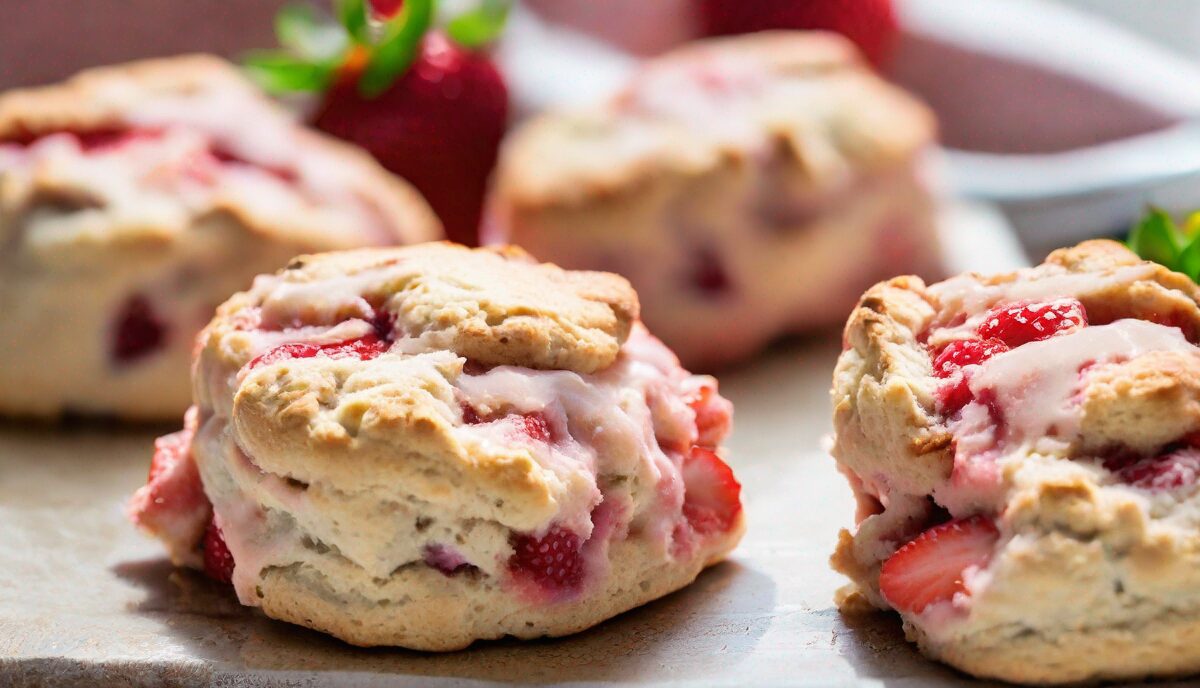
The Joy of Baking with Fresh Produce
As the weather warms and local farms begin harvesting, it’s a joyous time to bake with peak-season fruits like juicy strawberries and tart rhubarb. When combined, these springtime ingredients create delightful flavors and textures perfect for weekend brunches. Rather than focusing solely on search engine optimization, let’s explore the happiness that home baking can spark.
Scones: A Simple Quick Bread
Scones make an easy sweet bread requiring minimal ingredients you likely have on hand. Flaky and ever-so-slightly sweet, they pair nicely with fruit additions like fresh strawberries and rhubarb. We’ll walk through a simple recipe shortly, but first let’s answer some frequently asked questions about scones.
Mastering the Moisture: Managing High-Water Content Fruit
One of the most common pitfalls when baking with strawberries and rhubarb is the “soggy center” syndrome. Because these fruits have high water content, they can release juices into the dough during the baking process. To prevent this, toss your diced fruit in a tablespoon of flour before folding it into the dry mixture; this thin coating acts as a sponge, absorbing excess moisture. Furthermore, ensure your rhubarb is diced into very small, uniform pieces—no larger than a quarter-inch—to ensure they soften completely while the scone bakes, preventing raw, fibrous bites. If your strawberries are particularly large or “watery,” consider roasting them slightly in a low-heat oven for 10 minutes and cooling them before use, which concentrates their flavor and reduces the liquid volume significantly.
The Science of Temperature: Why Cold Butter is Non-Negotiable
The secret to a scone’s signature flaky architecture lies in the physical state of your butter. When cold butter is cut into the flour, it creates tiny, distinct pockets of fat. As the scones hit the high heat of a 425°F oven, the water in the butter evaporates, creating steam that physically pushes the layers of flour apart, resulting in that coveted lift. To master this, keep your butter in the freezer for 15 minutes before dicing it. If the dough feels warm or the butter begins to smear while you are handling it, pause immediately. Place the bowl in the refrigerator for 10 minutes to firm up the fats. A common professional trick is to use a box grater to shred frozen butter directly into the flour mixture, which creates smaller, more uniform “shards” of fat that distribute more evenly than hand-diced cubes.
Beyond the Basic Glaze: Elevating Your Scone Texture
While sanding sugar provides a satisfying crunch, layering flavor through a glaze can elevate your scones from a breakfast staple to a sophisticated dessert. A simple lemon-zest icing—made by whisking powdered sugar with fresh lemon juice and a teaspoon of zest—complements the tartness of the rhubarb perfectly. To apply, wait until the scones are completely cool; otherwise, the glaze will melt into the crumb rather than setting into a crisp shell. For a more decadent finish, consider a brown butter drizzle. By cooking your butter until the milk solids turn golden brown and nutty, you create a complex, earthy foundation that balances the bright acidity of the strawberries. Always whisk your glaze until it reaches the consistency of heavy cream; if it is too thick, it will be cloying, and if too thin, it will slide right off the pastry.
Structural Integrity: The Art of the ‘Shaggy’ Mix
Over-mixing is the enemy of a tender scone. When you add your wet ingredients, stop stirring the moment you no longer see dry pockets of flour. The dough should look “shaggy” and slightly untidy. This is intentional. Every time you fold or knead the dough, you are developing gluten. While gluten is essential for bread, it makes scones tough and chewy. To handle the dough effectively without over-working it, use a bench scraper to fold the dough over itself three or four times. This layering process mimics the technique used for puff pastry, creating natural sheets of dough. If the dough is too sticky to handle, resist the urge to add more flour, which can dry out the final product; instead, lightly grease your hands with a tiny bit of neutral oil or keep them heavily dusted with flour.
Flavor Pairings and Botanical Additions
Strawberry and rhubarb are a classic pairing, but they serve as a versatile canvas for other seasonal aromatics. Consider folding in a teaspoon of finely minced fresh ginger to highlight the bite of the rhubarb, or adding a tablespoon of fresh thyme leaves to bridge the gap between the fruit and the buttery, savory nature of the scone base. For those who enjoy floral notes, a half-teaspoon of dried lavender or a splash of rose water in your cream mixture adds an elegant depth that makes the scones feel like a tea-party centerpiece. If you prefer a more robust flavor profile, toasted almonds or pecans provide a necessary textural contrast to the soft fruit, adding a subtle earthiness that grounds the high-toned sweetness of the strawberries.
Troubleshooting Common Scone Failures
If your scones are spreading into flat pancakes instead of rising tall, your oven temperature is likely too low, or your butter was too warm when it entered the oven. Always use an oven thermometer to verify your preheat; home ovens are notoriously inaccurate. If the scones are dry or crumbly, you may have used too much flour or not enough fat. Remember to use the “spoon and level” method for measuring flour rather than scooping directly with your measuring cup, which packs the flour down and can lead to using 20% more than the recipe intends. Finally, if the fruit is bleeding into the dough and turning it an unappealing shade of pink, ensure you are folding the fruit in at the very last second—the less you agitate the fruit, the more intact it will remain, keeping the dough clean and the bite-to-fruit ratio balanced.
Storage and Revitalization Strategies
Scones are best consumed the day they are baked, but they can be kept for up to two days in an airtight container at room temperature. If they lose their crispness, do not reach for the microwave, which will make them rubbery. Instead, place them on a baking sheet in a 350°F oven for 5 to 7 minutes. This “re-baking” process evaporates the moisture that accumulated during storage and restores the crunch of the exterior. For longer-term storage, the best approach is to freeze the unbaked, shaped wedges individually on a tray. Once solid, transfer them to a freezer-safe bag. This allows you to bake a single scone on a Tuesday morning without needing to commit to a full batch, ensuring every morning can start with the aroma of fresh, hot pastry.
Frequently Asked Questions
What ingredients are needed for scones?
Basic scone ingredients include flour, baking powder, salt, butter, milk or cream, and sugar or another sweetener. Eggs are optional. From there you can add mix-ins like fruit, chocolate chips, nuts, or dried fruit.
How do you shape and cut scones?
After mixing the dough, gently shape it into a round disk about 1-inch thick on a floured surface. Use a knife or biscuit cutter to cut out triangular wedges from the disk.
How long do you bake scones and at what temperature?
Bake scones at 425°F for 12-15 minutes until lightly browned. Smaller scones may cook faster than larger ones.
Can scones be frozen?
Yes, shaped unbaked scones freeze well for up to 3 months. Bake directly from frozen, adding a few more minutes to the bake time.
What is the best way to serve scones?
Serve scones warm or at room temperature. If desired, add a pat of butter or smear of jam or whipped cream for extra decadence.
Strawberry Rhubarb Scones
This simple scone recipe highlights the sweet-tart flavors of seasonal strawberries and rhubarb. For a special treat, enjoy with your family or friends on a lazy weekend morning.
Ingredients:
- 2 cups flour
- 1/3 cup sugar
- 2 teaspoons baking powder
- 1/2 teaspoon salt
- 6 tablespoons cold butter, diced
- 1 egg
- 1/2 cup heavy cream
- 1 cup diced fresh strawberries
- 1/2 cup diced rhubarb
- 2 teaspoons vanilla extract
- Sanding sugar or sparkling sugar for topping (optional)
Instructions:
- Preheat oven to 425°F. Line a baking sheet with parchment.
- In a large bowl, whisk together the flour, sugar, baking powder and salt.
- Using a pastry blender or fork, cut in the cold butter until mixture resembles coarse crumbs. Stir in the diced strawberries and rhubarb until combined.
- In a small bowl, whisk together the egg, heavy cream, and vanilla.
- Add the egg mixture to the dry ingredients and stir just until a shaggy dough forms.
- Turn dough out onto a lightly floured surface. With floured hands, gently pat into a 1-inch thick round.
- Use a 2-3 inch biscuit cutter to cut scones out of the dough, pressing straight down firmly without twisting the cutter.
- Place scones on prepared baking sheet. Gather scraps together to cut additional scones.
- If desired, brush tops lightly with cream and sprinkle with sanding sugar.
- Bake for 12-15 minutes until lightly golden. Enjoy warm or at room temperature.
The Little Joys
More than optimizing for search, baking scones reminds us of the little joys in life. The delight children take from forming their own mini scones. The coziness of a peaceful morning spent with loved ones. The way fresh fruit fills the kitchen with sweet aroma. Amidst the busyness of life, let’s not forget to enjoy special moments like these.
Related posts:
 Partake’s Pizza Crust Mix: A Gluten-Free, Allergen-Friendly Option
 Delightful Rhubarb Recipes for Spring and Summer
 5 Sugar-Free Dessert Recipes
 Guilt-Free Cinnamon Roll Recipe
 Sweet Tooth Salvation: Sugar-Free Keto Dessert Bites That Actually Taste Amazing
 Essential Baking Tools for Your Kitchen
 Strawberry Rhubarb Salad Recipe
 18 Christmas Cookie Recipes That Are Surprisingly Healthy